
by Richard Subber | Dec 30, 2018 | Book reviews, Books, Poetry, Reviews of other poets
clunky is the word…
Book review:
The Cradle Place
by Thomas Lux (1946-2017)
New York: Houghton Mifflin Company, 2004
61 pages
Some folks think Thomas Lux deserves to be a prize winner.
Not likely. He offers joyfully erratic, uncivil, and unimaginable poems.
Lux inclines to clunky excess in his descriptions. No spirits are born in The Cradle Place.
Although the jacket notes refer to “refreshing iconoclasms,” I couldn’t find any.
Mary Oliver doesn’t have to move over…
* * * * * *
Book review. Copyright © Richard Carl Subber 2018 All rights reserved.
Thieves in the Night
A story of Israel…(book review)
by Arthur Koestler
click here
–
As with another eye: Poems of exactitude with 55 free verse and haiku poems,
and the rest of my poetry books are for sale on Amazon (paperback and Kindle)
and free in Kindle Unlimited, search Amazon for “Richard Carl Subber”
* * * * * *
by Richard Subber | Dec 19, 2018 | Book reviews, Books, History
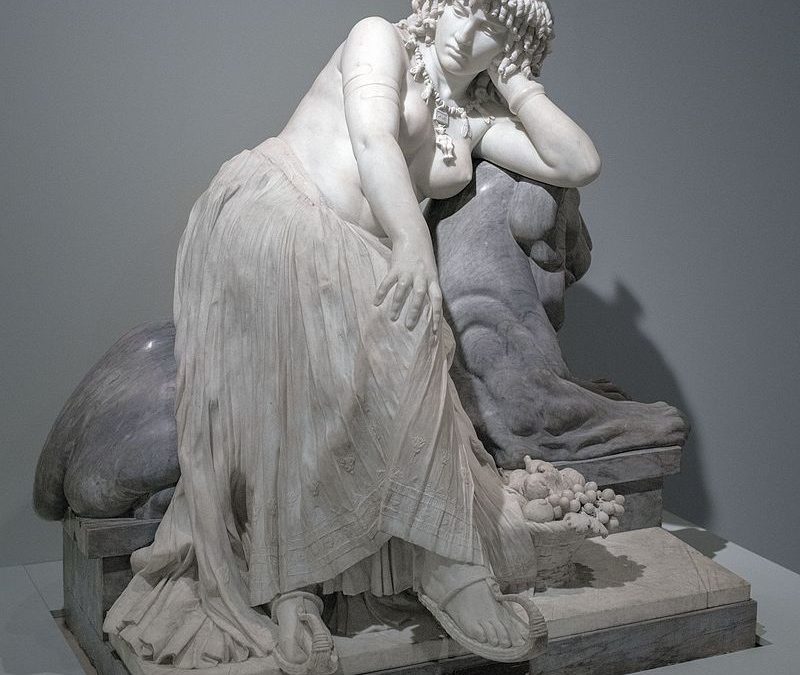
Cleopatra: she was a taker…
Book review:
Cleopatra: A Life
by Stacy Schiff
New York: Little, Brown and Company, 2010
Schiff is a Pulitzer Prize winner
Cleopatra: A Life is a compelling, stunningly contextual biography. It makes sense of the canonical, jumbled, and inconsistent biographical accounts of ancient writers who didn’t know Cleopatra personally. In many ways, it’s more modern than ancient.
Cleopatra, apparently, was the richest person in the known Western world while she reigned as Cleopatra VII, the last Pharaoh of the Ptolemaic dynasty, and the last queen of Egypt.
As a ruler, she had her ups and downs, but during her ups, she was the most powerful ruler in that world.
Cleopatra was a goddess, a celebrity, a winning general, a political mastermind, a serial murderess, an utterly enchanting lover, a startlingly well-educated, knowledgeable, and curious mover and shaker…think of Isis, Madonna, Patton, Golda Meir, Lucrezia Borgia, Marie Curie, and Aphrodite combined in a Type A personality with more or less unlimited worldly power…
The political action in Cleopatra: A Life is, sad to say, is all too familiar….I want to emphasize the context that Schiff describes: entirely recognizable governmental and organizational failures/corruption were pervasive in Cleopatra’s Egypt, and they are easily described and understood in modern terms.
Venal bureaucrats “walked like an Egyptian” …
you wouldn’t have had to search too long or too hard in Alexandria circa 50 BC to find one. You say “no surprise”? Well, of course, no surprise.
The Egyptian empire governed by Cleopatra was notoriously and vastly bureaucratized, and possibly the most significant enabling factor was the rich productivity of the Nile delta, renewed (almost) annually by the life-giving flood of the Nile. At the time, this stupefying agricultural abundance fed not only Egypt but also Rome—this was one factor motivating the famous attentions of Caesar and Marc Antony to the affairs in Egypt, including Cleopatra.
The riches of Egypt created an almost failsafe environment for heedless waste and mismanagement without fatal consequences—and also corruption at a level that everyone with any say in the matter could easily tolerate. Cleopatra, and her siblings and forebears, in the Ptolemaic dynasty were divinely in charge, with no effective restraint except the occasional Roman legion or two, and Rome was easily bought off. There was more than enough booty to go around for all who could claim a share.
At the time, there were persistent royal proclamations urging the ideal “good official” to be “vigilant, upright, a beacon of goodwill.” These were perhaps well-intentioned but wholly ineffective. There was too much booty to be had and insufficient penalties for taking more than one’s decent share. And the people of Cleopatra’s Egypt? These were descendants of the people who perhaps willingly labored to build the pyramids, these were people who thought Cleopatra was a goddess, these were people who believed in the everlasting rectitude of the dynastic and religious hierarchies that manifestly benefited a tiny elite…why did the people embrace all of that?
Cleopatra: A Life is a good read…you might have to remind yourself from time to time that none of it was written by Gordon Gekko.
You can click here for Gekko’s “greed is good” speech
* * * * * *
Book review. Copyright © Richard Carl Subber 2018 All rights reserved.
Book review: The House by the Sea
These are May Sarton’s travels, in her mind…
click here
–
Above all: Poems of dawn and more with 74 free verse poems,
and the rest of my poetry books are for sale on Amazon (paperback and Kindle)
and free in Kindle Unlimited, search Amazon for “Richard Carl Subber”
* * * * * *

by Richard Subber | Dec 1, 2018 | Book reviews, Books, Human Nature
a miss on tactics,
a miss on strategy…
Book review:
Moral Tribes:
Emotion, Reason,
and the Gap
Between Us and Them
by Joshua Greene
New York, Penguin Press, 2013
422 pages
“This book is an attempt to understand morality from the ground up.” Greene’s sincere aim is a bit too breezy for me.
Reluctantly, I admit I don’t have time to read a book like Moral Tribes right now. I feel like I’m too busy sticking fingers into the terrifying political dike that is threatening to collapse in America, indeed, in the world.
I’m interested in learning more about Greene’s approach in Moral Tribes: “understanding the deep structure of moral problems as well as the differences between the problems that our brains were designed to solve and the distinctively modern problems we face today.”
I don’t have enough time or energy to indulge Greene’s apparently sincere efforts to develop “a practical philosophy that can help us solve our biggest problems.”
America’s problems—Americans’ problems—are all too clear and at least one part of the fix is all too clear: there are lots of folks who can live with and live for the hatred they feel, and they’re voting; there are lots of folks who are afraid of some of the kinds of people who are getting elected and exercising political power to the detriment of most Americans, and too many of these fearful folks aren’t voting.
I think a dominating element of a practical philosophy for America right now is “Get out the vote!”
* * * * * *
Book review. Copyright © Richard Carl Subber 2018 All rights reserved.
A poem about the right thing
…and the lesser incarnation…
“Vanity”
–
many waters: more poems with 53 free verse poems,
and the rest of my poetry books are for sale on Amazon (paperback and Kindle)
and free in Kindle Unlimited, search Amazon for “Richard Carl Subber”
* * * * * *

by Richard Subber | Nov 25, 2018 | Book reviews, Books
channeling Gordon Gekko…
Book review:
The Financier
by Theodore Dreiser (1871-1945)
First published 1912, Harper and Bros., New York.
The Financier was written before its time.
It’s just amazing that Dreiser wrote this gritty novel in 1912, before anyone even thought of derivatives, credit default swaps, sub-prime “liar loan” mortgages, no-fault (for bankers and brokers, that is) national financial meltdowns, and politically-motivated government shutdowns. Frank Cowperwood is the ethically-challenged “financier” whose star and fortunes rise so marvelously and then collapse with equal flare. He seems so absolutely convincingly contemporary that I had recurring transient episodes of reverse déjà vu as I learned about his desperate ambition and burnout.
Frank is a first-rate villain in The Financier. He burns his friends and enemies with equal disdain, he channels Gordon Gekko with suitably theatrical energy, and he is most deliciously unrepentant when his schemes go awry, his loans get called, and then his empire crashes around him.
I guess that I must emphasize “deliciously unrepentant” because, unlike the contemporary villainous free spirits of Wall Street, Frank promptly goes to jail for his crimes.
The Financier so obviously is the kind of novel that might be written by a baroque clone of Michael Lewis. If you’d like to work out a bit of the residual rage you feel about the man-made financial cesspool we wallow in, then try this American classic.
* * * * * *
Book review. Copyright © Richard Carl Subber 2018 All rights reserved.
–
Writing Rainbows: Poems for Grown-Ups with 59 free verse and haiku poems,
and the rest of my poetry books are for sale on Amazon (paperback and Kindle)
and free in Kindle Unlimited, search Amazon for “Richard Carl Subber”
* * * * * *
by Richard Subber | Nov 10, 2018 | Book reviews, Books, History, World history
A hero, not a saint
Book review:
Lafayette
by Harlow Giles Unger (b.1931)
Hoboken, NJ: John Wiley & Sons, Inc., 2002
452 pages
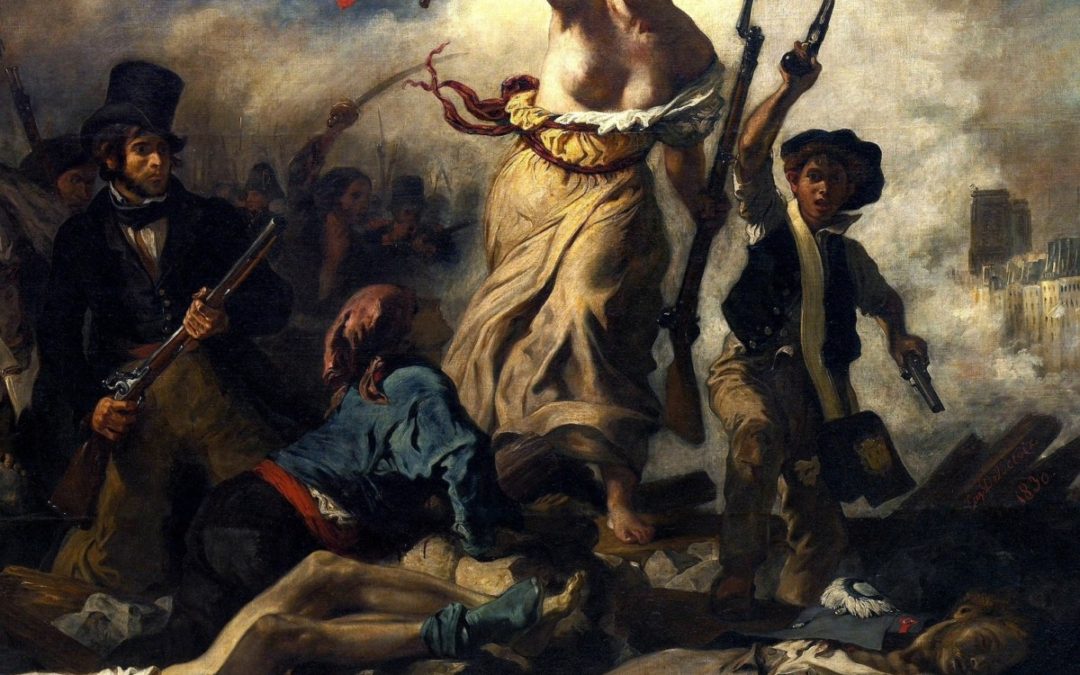
I acknowledge the obvious: Unger fully entertains in recounting that Marie-Joseph-Paul-Yves-Roch-Gilbert du Motier de la Fayette was a national, military, political and, indeed, a paternal hero to millions in America and France during the American and (several) French revolutions.
There is no doubt that, despite the fact that he was one of the richest French nobles of his time, Lafayette was publicly and privately dedicated to republican government and a social/economic order that was far more egalitarian than the monarchical and aristocratic structures that prevailed.
Was he a great man? Unger, like many of his biographers, says yes. Lafayette was a courageous battlefield leader, he was an enlightened manorial lord who enhanced the lives of his peasants, and he was both outspoken and fearless, repeatedly, in literally dangerous political situations for a couple decades in Revolutionary and Napoleonic France. Unger amply—even poetically—demonstrates these lifelong characteristics of the man Americans called “our Marquis.”
I also feel obliged to call attention to some countervailing factors that Unger fully describes but does not adequately interpret.
Lafayette put his money where his mouth was. He repeatedly used his great personal wealth to pay and outfit the troops he commanded, when government funds and supplies ran low. I suggest a case could be made that the Marquis, uniquely among American commanders, paid for his military success in the Revolutionary War. Throughout the war, the options and operations of colonial commanders were significantly hindered by short funds and short supplies. If Lafayette had not been able to pay, feed, clothe, and arm his troops with his personal resources, could he have been as winning a general as he was? I suspect the answer is “No.”
Some biographers refer to Lafayette as the “victor” at Yorktown in 1781. Unger calls him a “hero” of Yorktown. Lafayette was not the only American general at Yorktown, and he wasn’t the only French general. Lafayette did use his small force to isolate Cornwallis in Yorktown, but he had to wait until Washington, Rochambeau and others arrived with sufficient forces before he participated in the final assaults.
In France he repeatedly declined to step up to the plate and take executive leadership, during the revolutionary and Napoleonic convulsions, when the French people and the contentious military/political factions would have handed the throne or the presidency of France to him on a velvet pillow. The Marquis repeatedly risked his life to defuse explosive situations by his personal, courageous intervention. However, Unger fastidiously details Lafayette’s repeated reluctance to take the final step and take control when, arguably, he could have stabilized dangerous situations, and forestalled or prevented catastrophic consequences. Lafayette wasn’t responsible for the violence, but, time after time, he left a void that unfortunately was filled by lesser men.
Was Lafayette a great man? Yes. A successful general? Yes. Was he a really lucky guy? Yes. Did he and his reputation benefit immensely from great wealth and fortuitous circumstances? Yes. Did he live up to his potential in serving France and the French nation? Maybe not.
There’s just one other thing: Unger profligately demonstrates that Lafayette and Washington had a deeply affectionate man-to-man—explicitly, like father and son—relationship, by using far too many excerpts from their numerous letters. It’s no biggie, but I had to stop reading them about halfway through the book…they bonded, I get it.
* * * * * *
Book review. Copyright © Richard Carl Subber 2018 All rights reserved.
–
As with another eye: Poems of exactitude with 55 free verse and haiku poems,
and the rest of my poetry books are for sale on Amazon (paperback and Kindle)
and free in Kindle Unlimited, search Amazon for “Richard Carl Subber”
* * * * * *
