
by Richard Subber | Oct 18, 2026 | Human Nature, Reflections
such gentle tendernesses…
Movie review:
Driving Miss Daisy
I guess it’s fair to say that every old lady who can’t drive any more needs a guy like Hoke Colburn to take her where she needs to go.
Even if she’s almost too cranky for words.
Jessica Tandy is the almost inexpressively cranky old lady named Daisy Werthan, who keeps on giving Hoke (played by Morgan Freeman) a run for his money every time he takes her for a run in her big old car down there in Alabama. At first she doesn’t seem to mind much at all that Hoke is a black man. Maybe the fact that she’s an old Jewish lady has something to do with that.
A couple subplots in Driving Miss Daisy (1989, rated PG, 99 minutes) are welcome extensions of what becomes the blossoming relationship between Hoke and Miss Daisy.
You don’t need to work too hard to figure out how the story ends.
You do need to keep watching with love in your heart, right up to the end, so you can feel the luxury of a good ending, and watch one of the best movie endings you’re likely to see: there are almost indescribably gentle tendernesses.
Almost forgot: there is a filmed version of a 2013 Australian theater production of Driving Miss Daisy starring Angela Lansbury and James Earl Jones. It’s not as good as the 1989 movie. Ditto for the 1992 TV version starring Joan Plowright and Robert Guillaume.
* * * * * *
Movie review. Copyright © Richard Carl Subber 2026 All rights reserved.
“…and dipped in folly…”
only Poe knows how to say it…
–
many waters: more poems with 53 free verse poems,
and the rest of my poetry books are for sale on Amazon (paperback and Kindle)
and free in Kindle Unlimited, search Amazon for “Richard Carl Subber”
* * * * * *
by Richard Subber | Oct 4, 2026 | History, Reflections, Tidbits, World history
OK, it’s not “Take Five”…
Music to Nikkal’s ears
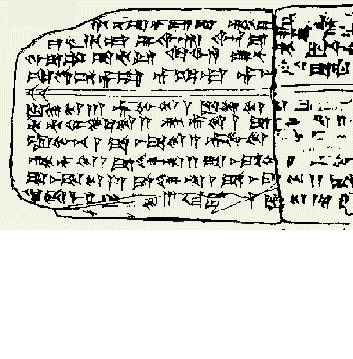
It’s been about 3,500 years since anyone dusted off a lyre to play this Hurrian hymn (H6) dedicated to the Akkadian goddess Nikkal-wa-Ib, the goddess of orchards whose name means “Great Lady and Fruitful.”
The words and music were discovered about 70 years ago in the ruins of Ugarit, an ancient Syrian city. It took about 20 years to interpret the inscriptions on the cuneiform tablets.
Michael Levy, a musician/composer whose specialty is ancient musical instruments, has embedded the original melody (listen here) in this composition with several themes, performed on a replica of an ancient lyre.
It’s not “Lay Down Sally” and it’s not “White Christmas” and it’s not “Take Five.”
It is an intriguing offering of what the Akkadians might have listened to when they were in the groove, when they were celebrating the festival of Nikkal.
It’s so easy for this music of the Bronze Age to survive for centuries.
It’s so easy to listen.
* * * * * *
Copyright © Richard Carl Subber 2026 All rights reserved.
“Fishering,” by Brian Doyle
…what meets the eye…
–
Empyrean: new poems with 57 free verse poems,
and the rest of my poetry books are for sale on Amazon (paperback and Kindle)
and free in Kindle Unlimited, search Amazon for “Richard Carl Subber”
* * * * * *

by Richard Subber | Sep 26, 2026 | Book reviews, Books, Human Nature
the doctor wants to help you,
you good with that?
Book review:
Black Man in a White Coat:
A Doctor’s Reflections on Race and Medicine
by Dr. Damon Tweedy
New York: Picador, 2015
294 pages
There is only one mystery about Black Man in a White Coat. The mystery existed for me before I read it. I had a more informed understanding of the mystery after I read it. Why is Tweedy’s story so damnably true?
Tweedy is a black doctor in a world with mostly white doctors, a world with too many people who disdain black doctors or don’t want to be treated by them.
Read Dr. Tweedy’s candid and insightful story of his own life—professional and personal—walk a mile in his shoes, and then tell a friend how you feel about your own life.
* * * * * *
Book review. Copyright © Richard Carl Subber 2026 All rights reserved.
Book review: The Scarlet Letter
the beating hearts…by Nathaniel Hawthorne
–
In other words: Poems for your eyes and ears with 64 free verse and haiku poems,
and the rest of my poetry books are for sale on Amazon (paperback and Kindle)
and free in Kindle Unlimited, search Amazon for “Richard Carl Subber”
* * * * * *

by Richard Subber | Sep 24, 2026 | Reflections, Tidbits
you can imagine dancing…
“As we age, we are bound to find comfort
from the notion that it takes generations
for a way of life to fade.
We are familiar
with the songs our grandparents favored, after all,
even though we never danced to them ourselves.”
from A Gentleman in Moscow
by Amor Towles (b. 1964)
New York: Penguin Books, 2016
462 pages
p. 144
* * * * * *
Copyright © Richard Carl Subber 2026 All rights reserved.
Book review: The Snow Goose
…sensual drama, eminently poetic…
by Paul Gallico
–
In high meadows: poems abide with 60 free verse poems,
and the rest of my poetry books are for sale on Amazon (paperback and Kindle)
and free in Kindle Unlimited, search Amazon for “Richard Carl Subber”
* * * * * *
by Richard Subber | Sep 20, 2026 | History, Theater and play reviews, World history
from the heart, a patriot
Movie review:
Darkest Hour
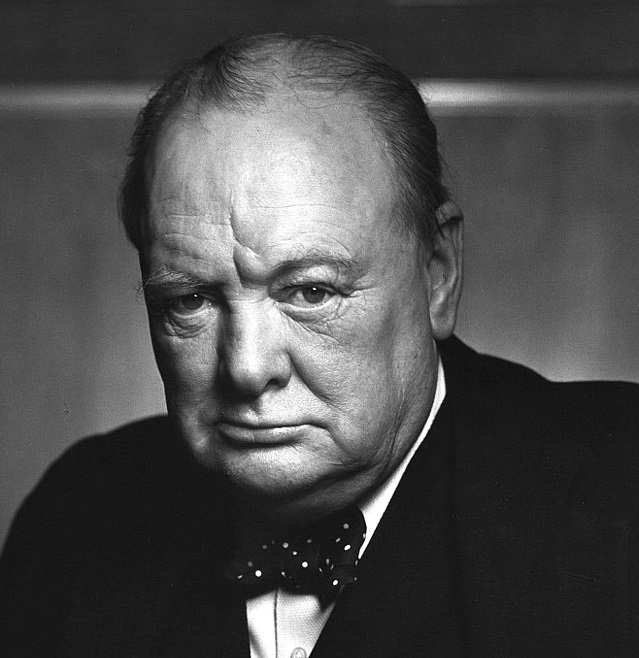
Gary Oldman was 59 years old when he won an Oscar (Best Actor) for giving us a completely believable Winston Churchill who decided in June 1940 to fight Hitler instead of settling for a completely risky peace agreement.
Darkest Hour (2019, rated PG-13, 125 minutes) is a gem. Oldman is Churchill: overweight, jowly, devotee of long cigars and whiskey, imperious, meekly in love with Clementine (he called her “Clemmie,” she called him “Pig”), a flamboyant patriot, and wartime leader.
Churchill was a career politician, of course, and Oldman deftly portrays his Machiavellian strengths and weaknesses.
Churchill was an aristocratic patriot in the core of his being.
Less than a month after he became prime minister, Churchill energized Parliament:
“We shall defend our island…we shall fight on the beaches…on the landing grounds…in the fields…in the streets…in the hills…we shall never surrender.”
Darkest Hour is Churchill’s (Oldman’s) bright triumph.
* * * * * *
Movie review. Copyright © Richard Carl Subber 2026 All rights reserved.
Book review: The Sea Runners
…it informs, it does not soar…
by Ivan Doig
–
In high meadows: poems abide with 60 free verse poems,
and the rest of my poetry books are for sale on Amazon (paperback and Kindle)
and free in Kindle Unlimited, search Amazon for “Richard Carl Subber”
* * * * * *

by Richard Subber | Sep 15, 2026 | Book reviews, Books, Human Nature
it’s good storytelling
Book review:
Brian’s Hunt
by Gary Paulsen (1939-2021)
New York: Ember, Random House Children’s Books, 2003
103 pages
Gary Paulsen writes for young people, but any adult reader can readily see that the stories are realistic, and fully readable. It’s good storytelling.
Brian’s Hunt is about a teenage boy who is at home in the woods, can survive on his own, and ultimately hunts a bear that is hunting him. Brian is a completely credible character. When he walks at the water’s edge, the reader can feel the mud between his toes.
The story line is simple and singular. The challenges of life in the wild are all too easy to experience vicariously. There is learning.
There is the satisfaction of the preferred outcome.
* * * * * *
Book review. Copyright © Richard Carl Subber 2026 All rights reserved.
Dead Wake: The Last Crossing of the Lusitania (book review)
consistent tension, a page turner…
by Erik Larson
–
As with another eye: Poems of exactitude with 55 free verse and haiku poems,
and the rest of my poetry books are for sale on Amazon (paperback and Kindle)
and free in Kindle Unlimited, search Amazon for “Richard Carl Subber”
* * * * * *
