by Richard Subber | Oct 4, 2026 | History, Reflections, Tidbits, World history
OK, it’s not “Take Five”…
Music to Nikkal’s ears
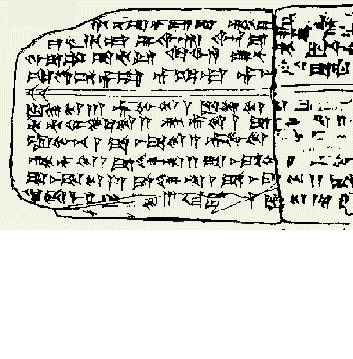
It’s been about 3,500 years since anyone dusted off a lyre to play this Hurrian hymn (H6) dedicated to the Akkadian goddess Nikkal-wa-Ib, the goddess of orchards whose name means “Great Lady and Fruitful.”
The words and music were discovered about 70 years ago in the ruins of Ugarit, an ancient Syrian city. It took about 20 years to interpret the inscriptions on the cuneiform tablets.
Michael Levy, a musician/composer whose specialty is ancient musical instruments, has embedded the original melody (listen here) in this composition with several themes, performed on a replica of an ancient lyre.
It’s not “Lay Down Sally” and it’s not “White Christmas” and it’s not “Take Five.”
It is an intriguing offering of what the Akkadians might have listened to when they were in the groove, when they were celebrating the festival of Nikkal.
It’s so easy for this music of the Bronze Age to survive for centuries.
It’s so easy to listen.
* * * * * *
Copyright © Richard Carl Subber 2026 All rights reserved.
“Fishering,” by Brian Doyle
…what meets the eye…
–
Empyrean: new poems with 57 free verse poems,
and the rest of my poetry books are for sale on Amazon (paperback and Kindle)
and free in Kindle Unlimited, search Amazon for “Richard Carl Subber”
* * * * * *
by Richard Subber | Sep 20, 2026 | History, Theater and play reviews, World history
from the heart, a patriot
Movie review:
Darkest Hour
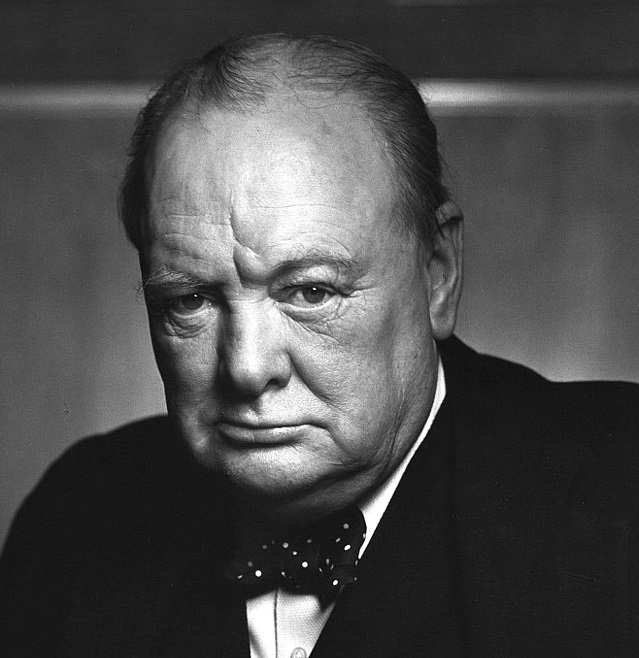
Gary Oldman was 59 years old when he won an Oscar (Best Actor) for giving us a completely believable Winston Churchill who decided in June 1940 to fight Hitler instead of settling for a completely risky peace agreement.
Darkest Hour (2019, rated PG-13, 125 minutes) is a gem. Oldman is Churchill: overweight, jowly, devotee of long cigars and whiskey, imperious, meekly in love with Clementine (he called her “Clemmie,” she called him “Pig”), a flamboyant patriot, and wartime leader.
Churchill was a career politician, of course, and Oldman deftly portrays his Machiavellian strengths and weaknesses.
Churchill was an aristocratic patriot in the core of his being.
Less than a month after he became prime minister, Churchill energized Parliament:
“We shall defend our island…we shall fight on the beaches…on the landing grounds…in the fields…in the streets…in the hills…we shall never surrender.”
Darkest Hour is Churchill’s (Oldman’s) bright triumph.
* * * * * *
Movie review. Copyright © Richard Carl Subber 2026 All rights reserved.
Book review: The Sea Runners
…it informs, it does not soar…
by Ivan Doig
–
In high meadows: poems abide with 60 free verse poems,
and the rest of my poetry books are for sale on Amazon (paperback and Kindle)
and free in Kindle Unlimited, search Amazon for “Richard Carl Subber”
* * * * * *
by Richard Subber | Aug 15, 2026 | Books, History, Reflections, World history
The faux convenience of historical eras…
It was the Renaissance, everybody knows that, right?
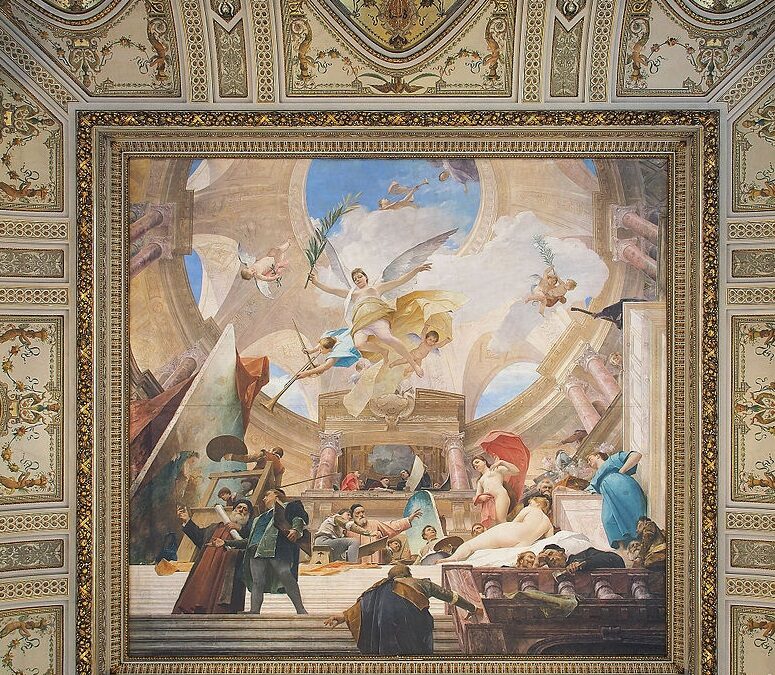
You know about the Middle Ages, right? Roughly a thousand years in European history, from the fall of Rome in 476 to the beginning of the Renaissance in the 14th century or so. The Renaissance itself lasted several hundred years, into the 17th century.
The thing is, the folks who lived through those extended dynamic eras didn’t know what they were doing. I mean, they didn’t know it was “the Middle Ages” or “the Renaissance.”
Those words weren’t used in the English language until the early 18th century.
During the Middle Ages, for example, medieval writers referred to historical events as “ancient” and described their own times as “modern.” Beauty is in the eye…
Pundits or philosophers of the future may call our current era the Age of Tomfoolery, or maybe something else…
We’ll never know.
Source:
Owen Barfield, History in English Words (Hudson, NY: The Lindisfarne Press, 1953), 167.
* * * * * *
Book review. Copyright © Richard Carl Subber 2026 All rights reserved.
“The beginning is always today.”
(quote, Mary Shelley)
so get started…
–
My first name was rain: A dreamery of poems with 52 free verse and haiku poems,
and the rest of my poetry books are for sale on Amazon (paperback and Kindle)
and free in Kindle Unlimited, search Amazon for “Richard Carl Subber”
* * * * * *
by Richard Subber | Mar 31, 2026 | American history, Books, History, Human Nature, Politics, Power and inequality, World history
guns and germs…
Book review:
1491: New Revelations of the Americas Before Columbus
by Charles Mann
New York: Vintage Books, 2011
553 pages
Everything you never knew about civilized people in the Americas before the Europeans arrived and killed most of them (OK, many died in battle, but it was European diseases, mostly). Maybe close to 100 million “native” people died within 100 years or so of the “discovery” by Columbus…but hold on, this book is not about Wounded Knee-type criticism or ex post facto self-flagellation.
In 1491, Mann beautifully describes the marvelous sophistication of cultures, cities, agriculture, arts and science that blossomed in North America, Central America, and South America thousands of years ago, in many cases predating achievements and growth and civilization in Europe. Yes, the Incas never used the wheel except for children’s toys. And yes, the Mississippian city of Cahokia was a bustling port and a trading center with population equal to Paris in France—and that was 500 years before Columbus sailed.
And yes, there were grand cities (e.g., Cahokia) in the Americas before there was pyramid-building in Egypt. And yes, the Olmec culture in what is now Mexico invented the zero whole centuries before mathematicians in India did the same.
My recollection of schoolboy learning about the history of the Americas is that the dates and events were tied to discovery and conquest and colonization by Europeans. The implication was that, before the white men with guns, germs, and steel arrived, nothing much was going on in whole continents characterized more by “virgin land” and “endless wilderness” than by people who had agriculture, city life, art, trade, commerce, religion, science, kings, and philosophers.
Mann offers 1491: New Revelations of the Americas Before Columbus. For me, the joy of reading this book is learning about the multiplicity of cultures that flourished in the Americas, and learning how they tamed and managed and very greenly conserved their environment…and for me, the sad revelation of this book is understanding that the peoples of the Americas were human beings whose achievements were noble and notable, and yet, lamentably, their cultural legacies are largely lost and the losses are barely mourned.
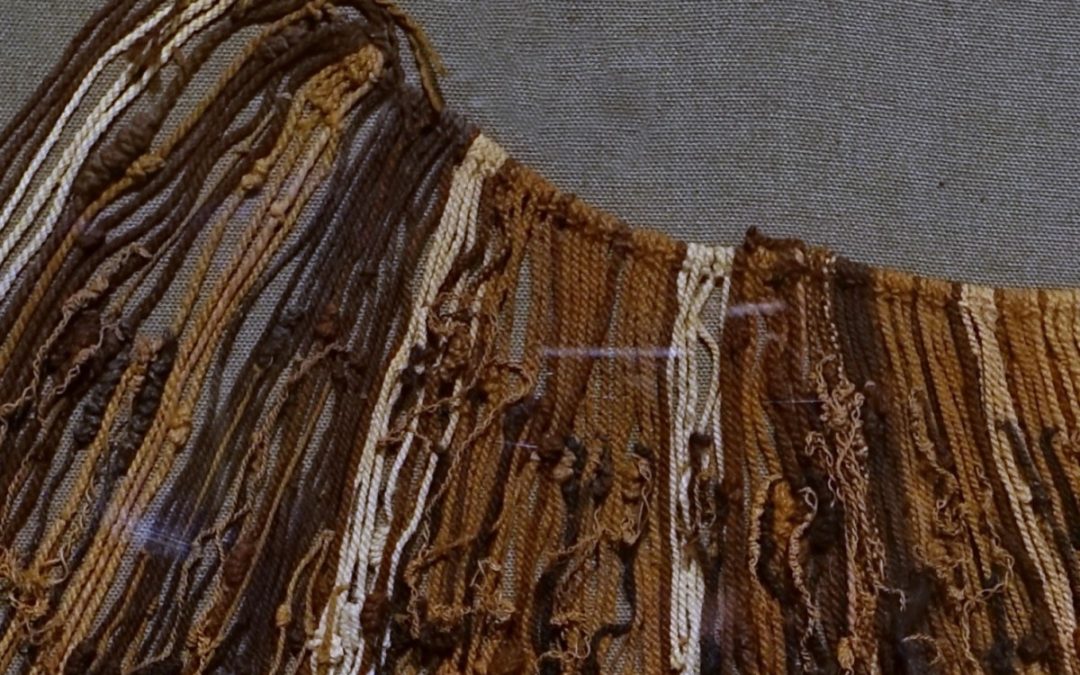
In 1533 Pizarro and his conquistadors at Cuzco precipitated the decline of the 300-year-old Inca empire in Peru. Fifty years later, the Spanish colonial administrators in Peru ordered the burning of all the Incan “khipu” knotted string records because they were “idolatrous objects.” Khipu were the Incas’ only form of writing. The smoke from the burning of their books gets in your eyes, forever and ever.
* * * * * *
Book review. Copyright © Richard Carl Subber 2026 All rights reserved.
Book review: Shantung Compound
They didn’t care much
about each other…
by Langdon Gilkey
–
Writing Rainbows: Poems for Grown-Ups with 59 free verse and haiku poems,
and the rest of my poetry books are for sale on Amazon (paperback and Kindle)
and free in Kindle Unlimited, search Amazon for “Richard Carl Subber”
* * * * * *
by Richard Subber | Jan 29, 2026 | American history, Book reviews, Books, History, Reflections, World history
…the last battle never comes…
Book review:
We Were Soldiers Once…and Young
Lt. Gen. Harold G. Moore (ret.) and Joseph L. Galloway
New York: Random House, 1992
412 pages
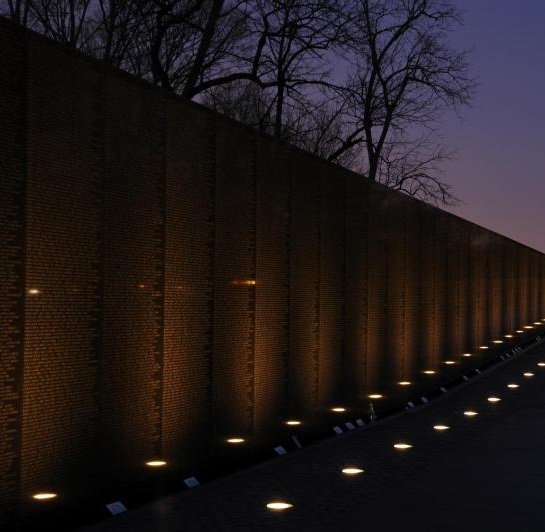
Like Moore and Galloway, I salute the brave American and North Vietnamese soldiers who fought and died in the Ia Drang Valley in November 1965 in the first major combat action of the War in Vietnam.
We Were Soldiers Once…and Young is a bloody testament to the grinding horror of war. It’s too much to read all at once. It has too much death.
A North Vietnamese commander who was on the ground in the valley recalled, many years after the war, that his guiding principle had been “win the first battle.”
He forgot to mention that no one knows how to win the last battle and end all of it.
* * * * * *
Book review. Copyright © Richard Carl Subber 2026 All rights reserved.
Movie review: A Doll’s House
Henrik Ibsen’s classic on abuse…
–
Seeing far: Selected poems with 47 free verse and haiku poems,
and the rest of my poetry books are for sale on Amazon (paperback and Kindle)
and free in Kindle Unlimited, search Amazon for “Richard Carl Subber”
* * * * * *
by Richard Subber | Dec 9, 2025 | American history, Book reviews, Books, History, Revolutionary War, World history
Did the British really try to win?
I have a lot to learn. With the humility of a student, I ask: how hard did the British try to win the American Revolutionary War?
It’s a research topic that intrigues me. I’m using the question to guide my reading. I’m careful to remind myself, often, that I don’t know the full answer. I think I know enough to believe that the bottom line is: the British wanted to win the war, but they never made the commitment required to do it.
I think I know enough to confirm the validity of the question. Britain had substantial economic engagement with the North American colonies in the latter part of the 18th century. The British West Indies—the Caribbean “sugar islands”—also were an important component of the British Atlantic colonial world. Britain had additional commitments in Florida, as well as military outposts, trading posts and other dependencies in Ireland, the Mediterranean, India, Africa, Central America, the Bahamas, the Bermudas, Nova Scotia, Quebec and Hudson’s Bay. Britain was intensely engaged in diplomacy and threatening entanglements with France, Spain and other European powers. Britain was an economic power, not a military titan.
King George and the British government did not have unlimited military resources. Army and naval forces were allocated to the rebellious American colonies, just as they were to the West Indies and other areas of vital interest. French and Spanish forces continually threatened the British Caribbean islands, an economic bastion of the British monarchy. There were not enough British ships and troops to establish compelling military superiority in every arena of British interest.
Ultimately, British admirals could not prevent a localized French naval superiority in the Chesapeake Bay that forced Cornwallis to surrender his under-sized army to Washington and Rochambeau at Yorktown in October, 1781. The war didn’t end then, but after Yorktown it became manifestly unwinnable for Britain.
Did the British government send enough troops and ships to North America to get the job done when the rebellion broke out? Was winning the war a pre-eminent priority for King George and his ministers? Doubtless the British wanted to win. How hard did they try? Initially they thought the rebellion would wither. Later, I think, they had more important fish to fry.
I’m not looking for a simple answer. I’m interested, first, in understanding the meaningful frames of reference for considering the question.
Sources:
Bowler, R. Arthur. Logistics and the Failure of the British Army in American, 1775-1783. Princeton, NJ: Princeton University Press, 1975.
Corwin, Edward S. French Policy and the American Alliance of 1778.1916. Reprint, Hamden, CT: Archon Books, 1962.
Duffy, Michael. Soldiers, Sugar and Seapower: The British Expeditions to the West Indies and the War Against Revolutionary France. Oxford: Clarendon Press, 1987.
Gipson, Lawrence Henry. The Triumphant Empire: The Empire Beyond the Storm, 1770-1776, vol. 13 of The British Empire Before The American Revolution. New York: Alfred A. Knopf, Inc., 1967.
O’Shaughnessy, Andrew Jackson. An Empire Divided: The American Revolution and the British Caribbean. Philadelphia: University of Pennsylvania Press, 2000.
Seton-Watson, Robert William. Britain In Europe: 1789-1914, A Survey of Foreign Policy. 1937. Reprint, Cambridge: The Cambridge University Press, 1955.
* * * * * *
Book review. Copyright © Richard Carl Subber 2025 All rights reserved.
Home Team: Poems About Baseball (book review)
Edwin Romond hits another homer…
–
many waters: more poems with 53 free verse poems,
and the rest of my poetry books are for sale on Amazon (paperback and Kindle)
and free in Kindle Unlimited, search Amazon for “Richard Carl Subber”
* * * * * *
