by Richard Subber | Oct 13, 2026 | Book reviews, Books, Poetry, Reviews of other poets
warmly readable…
Book review:
Sweet Juice and Ruby-Bitter Seed
by Merryn Rutledge
American Fork, Utah: Kelsay Books, 2023
69 pages
Merryn Rutledge writes poems like few people write poems.
There is no relentless rhyming, no uselessly bizarre collection of unrelated words.
These are poems written from the heart. They are invitations to feel what she feels.
They are warmly readable, both in silence and in your own voice.
These poems will lead you on some trails you may not have visited.
* * * * * *
Book review. Copyright © Richard Carl Subber 2026 All rights reserved.
A poet is a “maker”
…and it doesn’t have to rhyme…
–
Writing Rainbows: Poems for Grown-Ups with 59 free verse and haiku poems,
and the rest of my poetry books are for sale on Amazon (paperback and Kindle)
and free in Kindle Unlimited, search Amazon for “Richard Carl Subber”
* * * * * *

by Richard Subber | Oct 10, 2026 | Language, My poetry, Poetry
she reaches higher
brass and velvet
She does not murmur,
she will not pause,
she takes a breath
to make more song,
her singing races the keyboard
and she wins,
she embraces each tempo
and each lilt lingers,
her song gets bigger,
she reaches higher,
she brightens the airs,
her power leaps from her lips
and her heart and her smile,
her smile does not end,
the high notes are so trusting,
they chase the silence,
they wrap all ears,
they surround such blues
as may still linger,
they make a vital mix
of sound and wonder,
the words take forms we have not seen,
the sense of the song
is the swoon of the sound,
such wistful verve and rampant rhythm,
the call of the wild
revolves and turns
and emboldens,
such wonderment!
She ravishes each melody
and tempts lovers to echo the songs,
the mountains of sound
that climb from her lips,
the whirlwinds of song.
She is more than a music maker,
she is music with smiles,
her voice is brass, velvet,
a storm, a lullaby,
cymbals, the wanton wind,
treasure for poets.
She sings embraces,
her voice chases sadness,
in her gush of words
and melodies
there are no questions.
August 4, 2026
Inspired by the singing and piano playing of Violet Hanks, 12 years old,
at Linden Ponds in Hingham, MA
* * * * * *
My poetry. Copyright © Richard Carl Subber 2026 All rights reserved.
Book review: “Bartleby, the Scrivener”
Loneliness beyond understanding…
by Herman Melville
–
As with another eye: Poems of exactitude with 55 free verse and haiku poems,
and the rest of my poetry books are for sale on Amazon (paperback and Kindle)
and free in Kindle Unlimited, search Amazon for “Richard Carl Subber”
Your comments are welcome—tell me what you’re thinking.
* * * * * *

by Richard Subber | Oct 8, 2026 | Book reviews, Books, Poetry, Reviews of other poets
…or grab a flashlight…
Book review:
Spoon River Anthology
by Edgar Lee Masters (1868-1950)
New York: The Macmillan Company, c1914-1944, publ. 1967
306 pages
The reputation of Spoon River Anthology is indisputable.
The reality is a matter for each reader.
For my taste, this is an exotic but deadened miscellany that tirelessly revisits a few themes. I won’t say there’s no inspiration, but you need a miner’s headlamp to find it here and there.
Many of the folks who are pushing up daisies near the Spoon River just weren’t really terribly interesting people when they were alive.
* * * * * *
Book review. Copyright © Richard Carl Subber 2026 All rights reserved.
Book review: The Comanche Empire
the other story of the American West…
–
Seeing far: Selected poems with 47 free verse and haiku poems,
and the rest of my poetry books are for sale on Amazon (paperback and Kindle)
and free in Kindle Unlimited, search Amazon for “Richard Carl Subber”
* * * * * *
by Richard Subber | Oct 6, 2026 | My poetry, Poetry
in birdish dreams
waiting
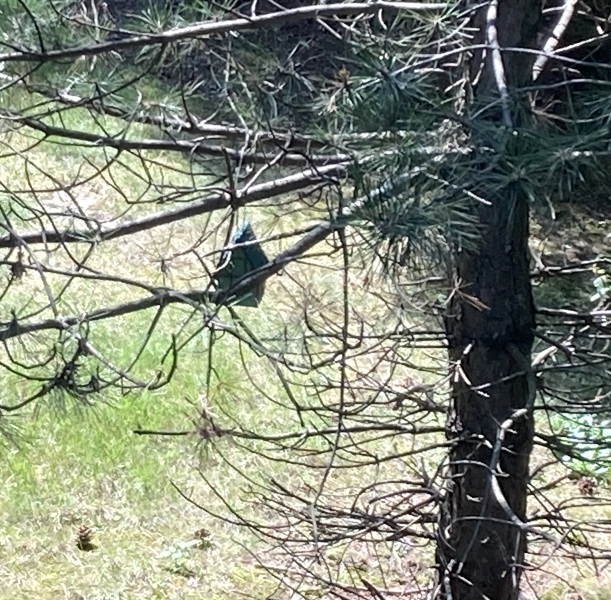
it hangs there,
forlorn, forborne,
a carelessly unused house,
abandoned, so it seems,
it does not glitter
in birdish dreams,
it does not make a home,
it is no shelter
for a tiny tenant
who perches at the door,
there is no tremble
of nesting work within,
there is no twitter of welcome
from a she-bird on her eggs,
there is no sentinel song
to protect a domain,
it’s a little green house,
it guards no living thing,
it adorns the tree
and awaits a rush of wings…
August 3, 2026
* * * * * *
My poetry. Copyright © Richard Carl Subber 2026 All rights reserved.
Book review: Shawshank Redemption
A world I do not want to know…
by Stephen King
–
My first name was rain: A dreamery of poems with 52 free verse and haiku poems,
and the rest of my poetry books are for sale on Amazon (paperback and Kindle)
and free in Kindle Unlimited, search Amazon for “Richard Carl Subber”
Your comments are welcome—tell me what you’re thinking.
* * * * * *
by Richard Subber | Oct 4, 2026 | History, Reflections, Tidbits, World history
OK, it’s not “Take Five”…
Music to Nikkal’s ears
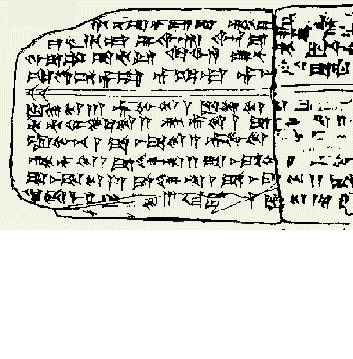
It’s been about 3,500 years since anyone dusted off a lyre to play this Hurrian hymn (H6) dedicated to the Akkadian goddess Nikkal-wa-Ib, the goddess of orchards whose name means “Great Lady and Fruitful.”
The words and music were discovered about 70 years ago in the ruins of Ugarit, an ancient Syrian city. It took about 20 years to interpret the inscriptions on the cuneiform tablets.
Michael Levy, a musician/composer whose specialty is ancient musical instruments, has embedded the original melody (listen here) in this composition with several themes, performed on a replica of an ancient lyre.
It’s not “Lay Down Sally” and it’s not “White Christmas” and it’s not “Take Five.”
It is an intriguing offering of what the Akkadians might have listened to when they were in the groove, when they were celebrating the festival of Nikkal.
It’s so easy for this music of the Bronze Age to survive for centuries.
It’s so easy to listen.
* * * * * *
Copyright © Richard Carl Subber 2026 All rights reserved.
“Fishering,” by Brian Doyle
…what meets the eye…
–
Empyrean: new poems with 57 free verse poems,
and the rest of my poetry books are for sale on Amazon (paperback and Kindle)
and free in Kindle Unlimited, search Amazon for “Richard Carl Subber”
* * * * * *
