
by Richard Subber | Oct 10, 2026 | Language, My poetry, Poetry
she reaches higher
brass and velvet
She does not murmur,
she will not pause,
she takes a breath
to make more song,
her singing races the keyboard
and she wins,
she embraces each tempo
and each lilt lingers,
her song gets bigger,
she reaches higher,
she brightens the airs,
her power leaps from her lips
and her heart and her smile,
her smile does not end,
the high notes are so trusting,
they chase the silence,
they wrap all ears,
they surround such blues
as may still linger,
they make a vital mix
of sound and wonder,
the words take forms we have not seen,
the sense of the song
is the swoon of the sound,
such wistful verve and rampant rhythm,
the call of the wild
revolves and turns
and emboldens,
such wonderment!
She ravishes each melody
and tempts lovers to echo the songs,
the mountains of sound
that climb from her lips,
the whirlwinds of song.
She is more than a music maker,
she is music with smiles,
her voice is brass, velvet,
a storm, a lullaby,
cymbals, the wanton wind,
treasure for poets.
She sings embraces,
her voice chases sadness,
in her gush of words
and melodies
there are no questions.
August 4, 2026
Inspired by the singing and piano playing of Violet Hanks, 12 years old,
at Linden Ponds in Hingham, MA
* * * * * *
My poetry. Copyright © Richard Carl Subber 2026 All rights reserved.
Book review: “Bartleby, the Scrivener”
Loneliness beyond understanding…
by Herman Melville
–
As with another eye: Poems of exactitude with 55 free verse and haiku poems,
and the rest of my poetry books are for sale on Amazon (paperback and Kindle)
and free in Kindle Unlimited, search Amazon for “Richard Carl Subber”
Your comments are welcome—tell me what you’re thinking.
* * * * * *

by Richard Subber | Sep 8, 2026 | Language, My poetry, Poetry
each layered wave…
Ashore
This place, it has no words for me.
The ocean makes its thrum,
it pulls the bow across the longest string…
Each layered wave aspires to end in surf,
and lightly bears its encumbering crest,
wavers at the sandy lip
and rolls beneath the swell,
makes room for every motion
that was born afar in blue water,
and sidles now to make a final turn,
becomes mere rhythm…
May 6, 2021
Ogunquit, ME
It was high tide at the Beachmere Inn.
The broad curve of the bay accepted the languid procession of modest waves…
it all seemed so unexceptional,
but I know that each wave is unique until it gets to the shore line.
The tableau did not speak to me.
I know that my presence was not needed.
Published in Creative Inspirations, January-February 2023.
My poem “Ashore” was published in my eighth collection of 57 poems, Empyrean: new poems.
You can buy it on Amazon (paperback and Kindle),
or get it free in Kindle Unlimited, search for “Richard Carl Subber”
* * * * * *
My poetry. Copyright © Richard Carl Subber 2026 All rights reserved.
A Farewell to Arms (book review)
classic Ernest Hemingway
with relentlessly realistic dialogue…
–
In high meadows: poems abide with 60 free verse poems,
and the rest of my poetry books are for sale on Amazon (paperback and Kindle)
and free in Kindle Unlimited, search Amazon for “Richard Carl Subber”
Your comments are welcome—tell me what you’re thinking.
* * * * * *

by Richard Subber | Aug 18, 2026 | Book reviews, Books, Joys of reading, Language
…death is an anticlimax…
Book review:
Les Liaisons Dangereuses
by Pierre-Ambroise Choderlos de Laclos
Originally published 1782
Translated as Dangerous Liaisons by Ernest Dowson, New York: Doubleday, 1998
Illustrations by Sylvain Sauvage
Les Liaisons Dangereuses is not a garden of delight.
This is a book about love, but the reader will find precious little of it in these pages.
An acquaintance dismissed this voluptuous tale, thus: “All they do is talk.”
Let’s begin there. The language is rich. I daresay that Laclos turns language into an erogenous zone in Les Liaisons Dangereuses.
If you aspire to a working understanding of good and evil, you could do worse than listen to the riveting chatter of the leading personae, who choose each word with careful, deliciously ribald, austerely cruel, and domineering intent. You really don’t want to be a friend, and you most assuredly don’t want to be an enemy.
Men, en garde! The Marquise de Merteuil impulsively thinks of cojones as table ornaments.
Ladies, away! The Vicomte de Valmont is a pirate lover, he sees women as prize ships ready for boarding.
One might wish to believe that the others are innocents: Cécile Volanges, Danceny, the Présidente de Tourvel. But, hold. Each of them seeks to play the game of love, but they are hardly able to distinguish winning from losing.
Yes, this is a boundless exposé of the worst elements—of human intrigue, self indulgence, hubris, vaunting egos, and careless poaching of souls—that masquerade as amour.
Yes, in a sense, the characters are stereotypes, but each is, remarkably, ingeniously, ingenuously, a masterpiece of the type. Laclos uses every pertinent word to make them real.
Yes, Les Liaisons is an ultimately degraded experience for both the characters and readers…ultimately, the reader must condemn the Marquise and the Vicomte for so many lives destroyed…death is an anticlimax in Les Liaisons Dangereuses.
The Marquise and the Vicomte are burdened with a moral framework that shuns the absolute—they have unimaginably unsatisfied desires, and no intellectual elaboration of right and wrong.
Yet, a gentle reader may offer these two a bare shred of pity.
The Marquise de Merteuil and the Vicomte de Valmont swirl through their lives, casually jousting with each other as they amuse themselves in controlling the fates of other men and women, but remaining unaware that they are not in control of their own fates.
Note for bibliophiles: Whether you read this in the original French, or in the lush translation by Ernest Dowson, accept the pain of experiencing a literary style that is no longer in vogue, prepare yourself for Laclos’ fabulous late 18th century style that discards a simple declarative sentence, readily, with apparent joy, whenever a sentence heavily laden with clauses, phrases, and modifiers will do just as well, heedless of the effect on a reader, whose inclination may be to appreciate the writhing drama of this story, with somewhat fewer words.
* * * * * *
Book review. Copyright © Richard Carl Subber 2026 All rights reserved.
Book review: “Bartleby, the Scrivener”
Loneliness beyond understanding…
by Herman Melville
–
many waters: more poems with 53 free verse poems,
and the rest of my poetry books are for sale on Amazon (paperback and Kindle)
and free in Kindle Unlimited, search Amazon for “Richard Carl Subber”
* * * * * *

by Richard Subber | Aug 13, 2026 | Book reviews, Books, Joys of reading, Language
good story-telling…
Kaa’s Hunting (1893)
in The Jungle Book (1894)
by Rudyard Kipling (1865-1936)
Kaa’s Hunting (1893) fills you with thoughts of comradeship, adventure, bravery, loyalty, and jungle stuff. It’s a good introduction to Kipling’s style and to his deep dives into real and fictionalized life events.
Mowgli the man-cub learns much after he is abducted by the monkey people.
The reader learns much about tolerating the way things are, and about doing the right thing to make things better.
* * * * * *
Book review. Copyright © Richard Carl Subber 2026 All rights reserved.
Book review: The Bartender’s Tale
Ivan Doig’s story, I mostly loved it…
–
Empyrean: new poems with 57 free verse poems,
and the rest of my poetry books are for sale on Amazon (paperback and Kindle)
and free in Kindle Unlimited, search Amazon for “Richard Carl Subber”
* * * * * *
by Richard Subber | Aug 11, 2026 | Language, My poetry, Poetry
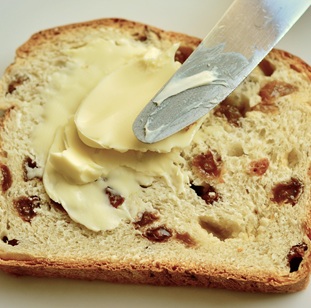
say it out loud…
buttah
What is so easy about
learning an accent?
Sit down at the diner,
and hear the gent
in the next booth
ordering his meal,
and listen to him
saying “buttah” for his toast
and “buttah” for his muffin,
and so casually you think you know
his parents
and his birth place
and his region,
and his different-ness
and his limits,
and his prescribed life
and his narrow self…
He is so knowable,
but wait—
he listens when you speak…
May 24, 2026
* * * * * *
My poetry. Copyright © Richard Carl Subber 2026 All rights reserved.
Movie review: Same Time, Next Year
all-American adultery, oh yeah…
–
As with another eye: Poems of exactitude with 55 free verse and haiku poems,
and the rest of my poetry books are for sale on Amazon (paperback and Kindle)
and free in Kindle Unlimited, search Amazon for “Richard Carl Subber”
Your comments are welcome—tell me what you’re thinking.
* * * * * *

by Richard Subber | Aug 9, 2026 | Language, Poetry, Reviews of other poets, Tidbits
…words can be pictures…
“The world is never the same
once a good poem has been added to it.”
Dylan Thomas (1914-1953)
Welsh poet and writer
Dylan could have said “A poet is never the same after writing a good poem,” or “A person is never the same after reading or hearing a good poem.”
I’m in love with words, and I love to use the best words to create poems that have clarity and character.
Sometimes I think of my work as “literal poetry.” I don’t put my pen down until I’ve said exactly what I feel, exactly what I mean to say, so that you, as the reader or listener, will have no doubt about it. I want to write poems that don’t need to be explained—what you see is what it is. I want to write poems that express deep human emotions, and thoughtful observations, and precise meanings.
I am a poet, a writer, a teacher, a moralist, a historian, and an unflinching student of human nature. I think a lot. I strive to express truth and give context—both rational and emotional—to reality.
I think words can be pictures, and lovely songs, and bodacious scents, and private flavors, and early morning caresses that wake each part of me, one at a time. I know some of those words, and, from time to time, I write some of them.
I read a lot of poetry, including the classic poets like Homer and poets in America and poets around the world who have written since ancient times to modern times. Occasionally I find a poem, or a phrase, or an image that is intensely intuitive, or wonderfully imaginative, or just plain beautiful. I offer those words from other poets for your enjoyment.
* * * * * *
Copyright © Richard Carl Subber 2026 All rights reserved.
“Fishering,” by Brian Doyle
…what meets the eye…
–
In other words: Poems for your eyes and ears with 64 free verse and haiku poems,
and the rest of my poetry books are for sale on Amazon (paperback and Kindle)
and free in Kindle Unlimited, search Amazon for “Richard Carl Subber”
* * * * * *
