by Richard Subber | Aug 29, 2026 | American history, Book reviews, Books, History, Joys of reading, Revolutionary War
a primary mover
Book review:
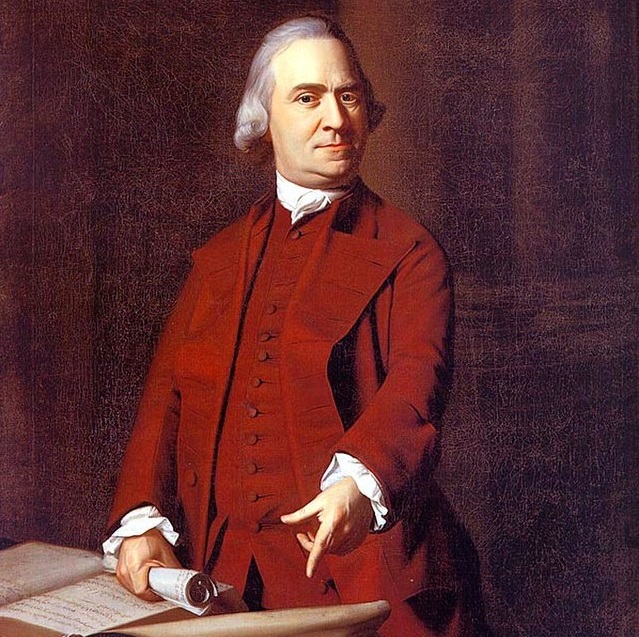
The Revolutionary: Samuel Adams
by Stacy Schiff (b1961)
New York: Little, Brown and Company, 2022
422 pages
If this is your first encounter with Stacy Schiff, you can guess it won’t be your last.
She writes powerful prose that makes you want to linger over the words, to learn more deeply, and to experience her transformation of history into something believable and real.
Samuel Adams was a primary mover of the American revolution.
The British loyalists on this side of the pond and the king and Parliament on the other side recognized his vital role in bringing the colonial Americans around to their ultimate decision to cut the ties that bound them to England and its king.
Samuel Adams tells a whole lot more about the story of the man than you learned before.
Take some time to read it.
* * * * * *
Book review. Copyright © Richard Carl Subber 2026 All rights reserved.
Book review: Waterloo
The slightly Hollywood bravery
of Richard Sharpe,
the butcher’s work done at the battle…
by Bernard Cornwell
–
Empyrean: new poems with 57 free verse poems,
and the rest of my poetry books are for sale on Amazon (paperback and Kindle)
and free in Kindle Unlimited, search Amazon for “Richard Carl Subber”
* * * * * *
by Richard Subber | Jun 18, 2026 | American history, Book reviews, Books, Democracy, History, Politics, Revolutionary War
the so-called “Founding Fathers” feared chaos
Book review:
The American Revolution: A History
by Gordon S. Wood, New York: A Modern Library Chronicles Book/The Modern Library, c2002 repr. 2003
190 pages
American Revolution is well worth a read, especially if you think the average bear knows less than you know about the Revolutionary period.
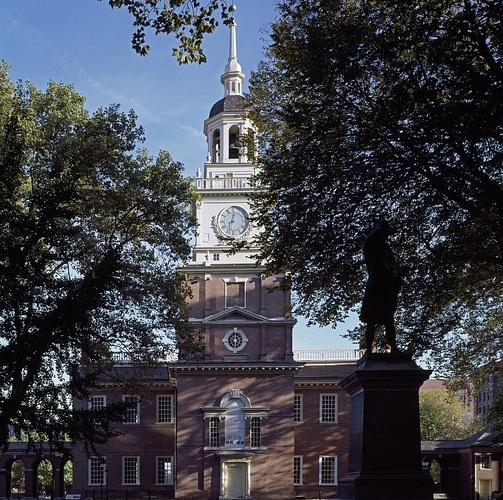
For example, Wood suggests that the strong federal Constitution adopted in 1788 was a direct consequence of the “factious and tyrannical” majorities of voters who, in the 1780s, filled their bumbling, politicized state legislatures with ambitious local spokesmen for special interests. The framers of the Constitution saw a chaos of “elective despotism,” with “a spirit of locality” destroying “the aggregate interests of the community.”
That problem hasn’t been solved yet.
I’m going to keep reading more of Gordon Wood’s books, and I guess I’m going to get used to telling myself to keep reading each of them every time I get to a place that makes me think I want to stop.
For me, I think it’s mostly an issue of Wood’s style and not his acumen, knowledge, or scholarship. He slips occasionally into what I guess I’ll call his casual mode, using somewhat colloquial language, simplified (I resist saying simplistic) characterizations, and dismissive descriptions. Maybe I need to suspect that Wood’s editor needs a couple wake-up calls.
It’s such a relief to get past those clunky segments. For example, in discussing the religious and cultural milieu of the post-war period, Wood refers repeatedly to the “common people” with no clear definition of the folks he’s discussing.
* * * * * *
Book review. Copyright © Richard Carl Subber 2026 All rights reserved.
Book review: The Sea Runners
…it informs, it does not soar…
by Ivan Doig
–
My first name was rain: A dreamery of poems with 52 free verse and haiku poems,
and the rest of my poetry books are for sale on Amazon (paperback and Kindle)
and free in Kindle Unlimited, search Amazon for “Richard Carl Subber”
* * * * * *
by Richard Subber | Dec 16, 2025 | American history, Book reviews, Books, History, Language, Revolutionary War
what does “self-evident” mean?
Book review:
The Greatest Sentence Ever Written
by Walter Isaacson (b1952)
New York: Simon & Schuster, 2025
67 pages
First, let’s get this straight: it’s worth your time to read this little book.
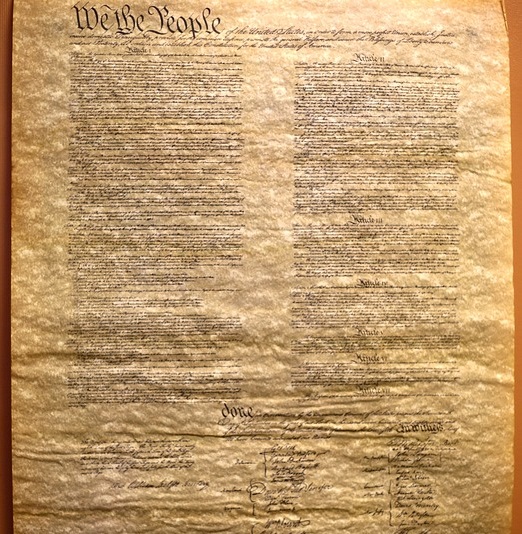
Maybe you think you know all you want to know about the Declaration of Independence, but I think you’ll learn at least a couple things of interest as you read The Greatest Sentence Ever Written.
For starters, Thomas Jefferson did not “write” the Declaration. He more or less wrote the first draft, and then his committee—including Benjamin Franklin and John Adams—applied their pens, and then the Continental Congress had its final say.
Isaacson’s “greatest sentence” is the second sentence of the Declaration, beginning “We hold these truths to be self-evident…” The words of the sentence had specific meanings for educated men (no ladies in the Congress) with Enlightenment prejudices in the late 18th century, and the committee and Congress changed a number of the words in Jefferson’s draft. For example, Jefferson originally wrote “We hold these truths to be sacred and undeniable…”
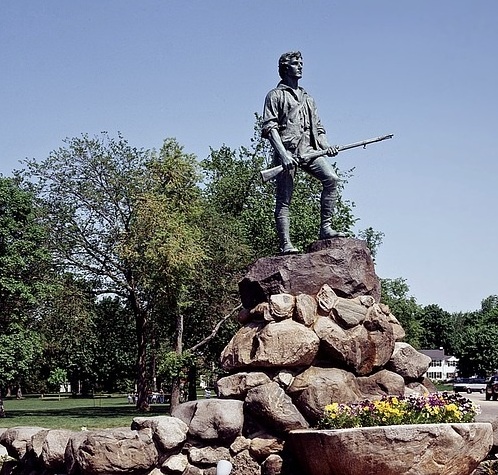
Keep these “undeniable” circumstances in mind: in July 1776 no member of the Congress knew how the whole “revolution” thing would turn out, and the Declaration did not start the revolution: the shooting war had started more than a year earlier in Lexington and Concord.
Isaacson is a popular biographer, and this little book is a good example of his writing talents.
For a more in-depth treatment by a noted historian, try reading American Scripture: Making the Declaration of Independence by Pauline Maier.
* * * * * *
Book review. Copyright © Richard Carl Subber 2026 All rights reserved.
Book review: Grace Notes
Is it prose or poetry?
by Brian Doyle
–
many waters: more poems with 53 free verse poems,
and the rest of my poetry books are for sale on Amazon (paperback and Kindle)
and free in Kindle Unlimited, search Amazon for “Richard Carl Subber”
* * * * * *
by Richard Subber | Dec 9, 2025 | American history, Book reviews, Books, History, Revolutionary War, World history
Did the British really try to win?
I have a lot to learn. With the humility of a student, I ask: how hard did the British try to win the American Revolutionary War?
It’s a research topic that intrigues me. I’m using the question to guide my reading. I’m careful to remind myself, often, that I don’t know the full answer. I think I know enough to believe that the bottom line is: the British wanted to win the war, but they never made the commitment required to do it.
I think I know enough to confirm the validity of the question. Britain had substantial economic engagement with the North American colonies in the latter part of the 18th century. The British West Indies—the Caribbean “sugar islands”—also were an important component of the British Atlantic colonial world. Britain had additional commitments in Florida, as well as military outposts, trading posts and other dependencies in Ireland, the Mediterranean, India, Africa, Central America, the Bahamas, the Bermudas, Nova Scotia, Quebec and Hudson’s Bay. Britain was intensely engaged in diplomacy and threatening entanglements with France, Spain and other European powers. Britain was an economic power, not a military titan.
King George and the British government did not have unlimited military resources. Army and naval forces were allocated to the rebellious American colonies, just as they were to the West Indies and other areas of vital interest. French and Spanish forces continually threatened the British Caribbean islands, an economic bastion of the British monarchy. There were not enough British ships and troops to establish compelling military superiority in every arena of British interest.
Ultimately, British admirals could not prevent a localized French naval superiority in the Chesapeake Bay that forced Cornwallis to surrender his under-sized army to Washington and Rochambeau at Yorktown in October, 1781. The war didn’t end then, but after Yorktown it became manifestly unwinnable for Britain.
Did the British government send enough troops and ships to North America to get the job done when the rebellion broke out? Was winning the war a pre-eminent priority for King George and his ministers? Doubtless the British wanted to win. How hard did they try? Initially they thought the rebellion would wither. Later, I think, they had more important fish to fry.
I’m not looking for a simple answer. I’m interested, first, in understanding the meaningful frames of reference for considering the question.
Sources:
Bowler, R. Arthur. Logistics and the Failure of the British Army in American, 1775-1783. Princeton, NJ: Princeton University Press, 1975.
Corwin, Edward S. French Policy and the American Alliance of 1778.1916. Reprint, Hamden, CT: Archon Books, 1962.
Duffy, Michael. Soldiers, Sugar and Seapower: The British Expeditions to the West Indies and the War Against Revolutionary France. Oxford: Clarendon Press, 1987.
Gipson, Lawrence Henry. The Triumphant Empire: The Empire Beyond the Storm, 1770-1776, vol. 13 of The British Empire Before The American Revolution. New York: Alfred A. Knopf, Inc., 1967.
O’Shaughnessy, Andrew Jackson. An Empire Divided: The American Revolution and the British Caribbean. Philadelphia: University of Pennsylvania Press, 2000.
Seton-Watson, Robert William. Britain In Europe: 1789-1914, A Survey of Foreign Policy. 1937. Reprint, Cambridge: The Cambridge University Press, 1955.
* * * * * *
Book review. Copyright © Richard Carl Subber 2025 All rights reserved.
Home Team: Poems About Baseball (book review)
Edwin Romond hits another homer…
–
many waters: more poems with 53 free verse poems,
and the rest of my poetry books are for sale on Amazon (paperback and Kindle)
and free in Kindle Unlimited, search Amazon for “Richard Carl Subber”
* * * * * *
by Richard Subber | Apr 20, 2025 | American history, Book reviews, Books, History, Revolutionary War
King George wanted to win the war…
the other guys, not so much…
Book review:
Iron Tears:
America’s Battle for Freedom,
Britain’s Quagmire: 1775:1783
Stanley Weintraub (1929-2019)
New York: Free Press, 2005
375 pages
For some time I have indulged my suspicion that the British never really tried very hard to win the Revolutionary War.
Stanley Weintraub’s Iron Tears isn’t the first book that has reinforced my understanding of this most iconic event in American history. If you’re interested, try Nick Bunker’s An Empire on the Edge or Andrew Jackson O’Shaughnessy’s An Empire Divided.
Weintraub offers a solidly researched and richly anecdotal account of the military details and the political wrangling that prolonged the war for several years until the British ministers and politicians finally admitted to themselves that they couldn’t win the war.
King George III was fatuously optimistic and persistently unrealistic—to the bitter end—about the prospects for winning a war that he desperately identified with his own persona and his royal stature.
Weintraub makes it irrefutably clear that at no time during the Revolutionary War did the British send enough men and ships to win in North America, that is, to put down the rebellion and re-establish full constitutional Parliamentary control of the 13 colonies. Hint: the British “sugar island” colonies in the Caribbean were more important, and the British never stopped looking over their shoulders at prospective and real war with France, Spain, and other countries.
On October 18, 1781, General Washington accepted the capitulation of the army of General Cornwallis at Yorktown. On November 25, an official dispatch with the bad news finally reached Lord North, the British prime minister, at Downing Street. It is reported that he exclaimed “Oh God! It is all over!”
Quite possibly he was overcome with grief and relief.
* * * * * *
Book review. Copyright © Richard Carl Subber 2025 All rights reserved.
Book review: A Cold Welcome
The culprit was global cooling,
500 years ago…
by Sam White
–
Above all: Poems of dawn and more with 73 free verse poems,
and the rest of my poetry books are for sale on Amazon (paperback and Kindle)
and free in Kindle Unlimited, search Amazon for “Richard Carl Subber”
* * * * * *
by Richard Subber | Jan 7, 2025 | American history, Book reviews, Books, Democracy, History, Politics, Revolutionary War
…John Adams,
in the thick of it…
Book review:
John Adams
by David McCullough (1933-2022)
Simon & Schuster, New York, 2001
751 pages
Maybe you’re like me. Maybe you don’t think biography is the best way to do history. David McCullough’s Pulitzer Prize-winner is a reason to change your mind a bit.
John Adams, simply, is a really good book. McCullough helps you to warm up to this American icon and to his personal experience in leading the American Revolution and the first formative years of the American republic.
Adams, our first vice president and second president, was among the few who were in the thick of it from the beginning, and he never shrank from doing what he expansively viewed as his duty to his new country.
McCullough’s prose is a delightful experience for the serious historian and for the armchair dabbler who likes a good read. From cover to cover, John Adams is a lush, genuine presentation of a man, his loved ones, his career, his commitment to do good works and his never-flagging appreciation that the object of government should be to do the people’s business and make possible
* * * * * *
Book review. Copyright © Richard Carl Subber 2025 All rights reserved.
–
My first name was rain: A dreamery of poems with 53 free verse and haiku poems,
and the rest of my poetry books are for sale on Amazon (paperback and Kindle)
and free in Kindle Unlimited, search Amazon for “Richard Carl Subber”
* * * * * *
