by Richard Subber | Aug 27, 2026 | American history, History, Human Nature, Politics, Power and inequality
Do a good thing today…
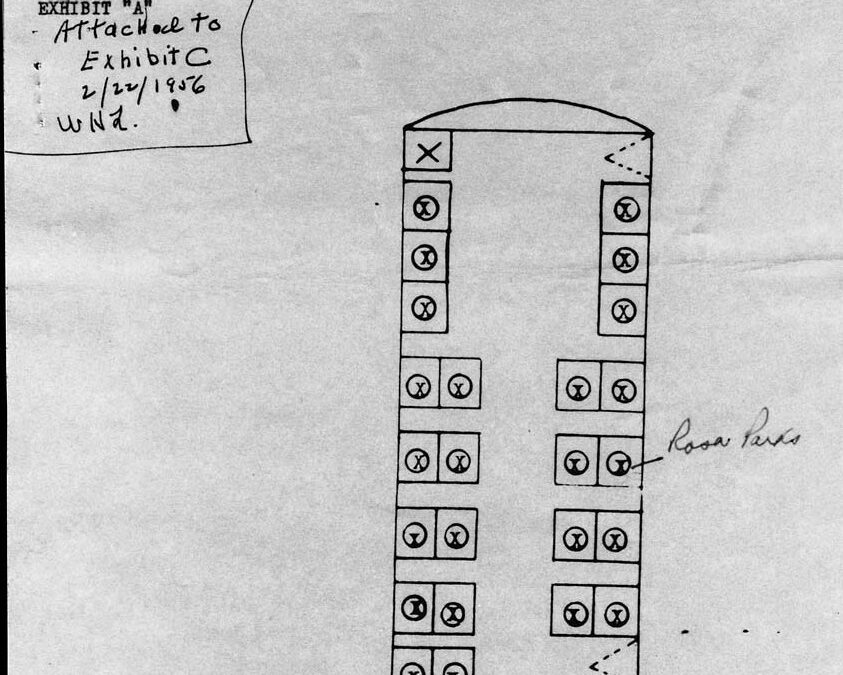
“…the only tired I was, was tired of giving in.”
Rosa Louise McCauley Parks (1913-2005)
You remember…Rosa Parks wouldn’t give her seat
to a white man on the bus in Montgomery in 1955…
* * * * * *
Copyright © Richard Carl Subber 2026 All rights reserved.
The Scarlet Letter, victim of Hollywood
Nathaniel Hawthorne’s version is best
–
Seeing far: Selected poems with 47 free verse and haiku poems,
and the rest of my poetry books are for sale on Amazon (paperback and Kindle)
and free in Kindle Unlimited, search Amazon for “Richard Carl Subber”
* * * * * *

by Richard Subber | Aug 4, 2026 | American history, Book reviews, Books, History, Politics, Power and inequality
too many Americans died…
Book review:
The Premonition: A Pandemic Story
by Michael Lewis
New York: W. W. Norton and Company, 2021
The Premonition is the compelling work by Michael Lewis (of The Big Short fame).
You’ll recognize the narrative nonfiction style—this is the Michael Lewis stuff you love to read.
The Premonition is a fully frightening account of the deadly inability of the Trump government (including the CDC) and corporate America to deal effectively with the COVID-19 pandemic that killed more than 1.2 million Americans. Too many Americans died because Trump and his lackies and the private sector wouldn’t try to do what they were responsible to do.
Lewis won’t make you feel good about the institutions of American national government and the so-called capitalist system.
He is eminently clear, and relentlessly anecdotal.
Michael Lewis never met an anecdote that wasn’t worth repeating.
* * * * * *
Book review. Copyright © Richard Carl Subber 2026 All rights reserved.
Book review: Shawshank Redemption
A world I do not want to know…
by Stephen King
–
Seeing far: Selected poems with 47 free verse and haiku poems,
and the rest of my poetry books are for sale on Amazon (paperback and Kindle)
and free in Kindle Unlimited, search Amazon for “Richard Carl Subber”
* * * * * *
by Richard Subber | Jul 9, 2026 | Books, Politics, Power and inequality
the right way to get down to business…
Book review:
Managing in the Next Society
by Peter F. Drucker (1909-2005), management guru
New York: Truman Talley Books, St. Martin’s Press, 2002
I love reading Drucker.
He is a deliberately perceptive and honest observer of management and the corporate world.
It’s too bad he’s not alive today to take a good look at men and women of business, and their businesses.
Drucker had many compelling insights about how to manage people and operations in a world that he assumed, de facto, was mostly populated by people who mostly want to do the right thing.
Too bad that’s not the world we live in.
Reading Drucker is an afternoon delight—that’s about how long it lasts.
* * * * * *
Book review. Copyright © Richard Carl Subber 2026 All rights reserved.
84, Charing Cross Road (book review)
Helene Hanff, on reading good books…
–
In other words: Poems for your eyes and ears with 64 free verse and haiku poems,
and the rest of my poetry books are for sale on Amazon (paperback and Kindle)
and free in Kindle Unlimited, search Amazon for “Richard Carl Subber”
* * * * * *
by Richard Subber | May 9, 2026 | American history, Book reviews, Books, Power and inequality
they had full lives…
Book review:
Daily Life of Native Americans:
From Post-Columbian through
Nineteenth-Century America
Alice Nash and Christoph Strobel
Westport, CT: Greenwood Press, 2006
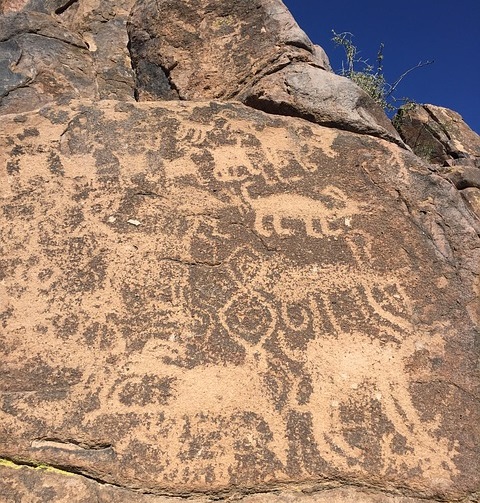
Daily Life of Native Americans is a completely accessible and well-researched account of the daily lives—in social, religious, emotional, and human frames of reference—of Native Americans in the early centuries of their interaction with other peoples of the world.
Nash and Strobel provide ample context for the challenging and devastating changes that Indians faced, surmounted, and accepted in the decades after Europeans “discovered” that two unknown continents existed, populated by millions of people who had developed their own civilizations for thousands of years.
The end-of-chapter notes and the bibliography are a bounty for students of history.
* * * * * *
Book review. Copyright © Richard Carl Subber 2026 All rights reserved.
Book review: Waterloo
The slightly Hollywood bravery
of Richard Sharpe,
the butcher’s work done at the battle…
by Bernard Cornwell
–
As with another eye: Poems of exactitude with 55 free verse and haiku poems,
and the rest of my poetry books are for sale on Amazon (paperback and Kindle)
and free in Kindle Unlimited, search Amazon for “Richard Carl Subber”
* * * * * *
by Richard Subber | Mar 31, 2026 | American history, Books, History, Human Nature, Politics, Power and inequality, World history
guns and germs…
Book review:
1491: New Revelations of the Americas Before Columbus
by Charles Mann
New York: Vintage Books, 2011
553 pages
Everything you never knew about civilized people in the Americas before the Europeans arrived and killed most of them (OK, many died in battle, but it was European diseases, mostly). Maybe close to 100 million “native” people died within 100 years or so of the “discovery” by Columbus…but hold on, this book is not about Wounded Knee-type criticism or ex post facto self-flagellation.
In 1491, Mann beautifully describes the marvelous sophistication of cultures, cities, agriculture, arts and science that blossomed in North America, Central America, and South America thousands of years ago, in many cases predating achievements and growth and civilization in Europe. Yes, the Incas never used the wheel except for children’s toys. And yes, the Mississippian city of Cahokia was a bustling port and a trading center with population equal to Paris in France—and that was 500 years before Columbus sailed.
And yes, there were grand cities (e.g., Cahokia) in the Americas before there was pyramid-building in Egypt. And yes, the Olmec culture in what is now Mexico invented the zero whole centuries before mathematicians in India did the same.
My recollection of schoolboy learning about the history of the Americas is that the dates and events were tied to discovery and conquest and colonization by Europeans. The implication was that, before the white men with guns, germs, and steel arrived, nothing much was going on in whole continents characterized more by “virgin land” and “endless wilderness” than by people who had agriculture, city life, art, trade, commerce, religion, science, kings, and philosophers.
Mann offers 1491: New Revelations of the Americas Before Columbus. For me, the joy of reading this book is learning about the multiplicity of cultures that flourished in the Americas, and learning how they tamed and managed and very greenly conserved their environment…and for me, the sad revelation of this book is understanding that the peoples of the Americas were human beings whose achievements were noble and notable, and yet, lamentably, their cultural legacies are largely lost and the losses are barely mourned.
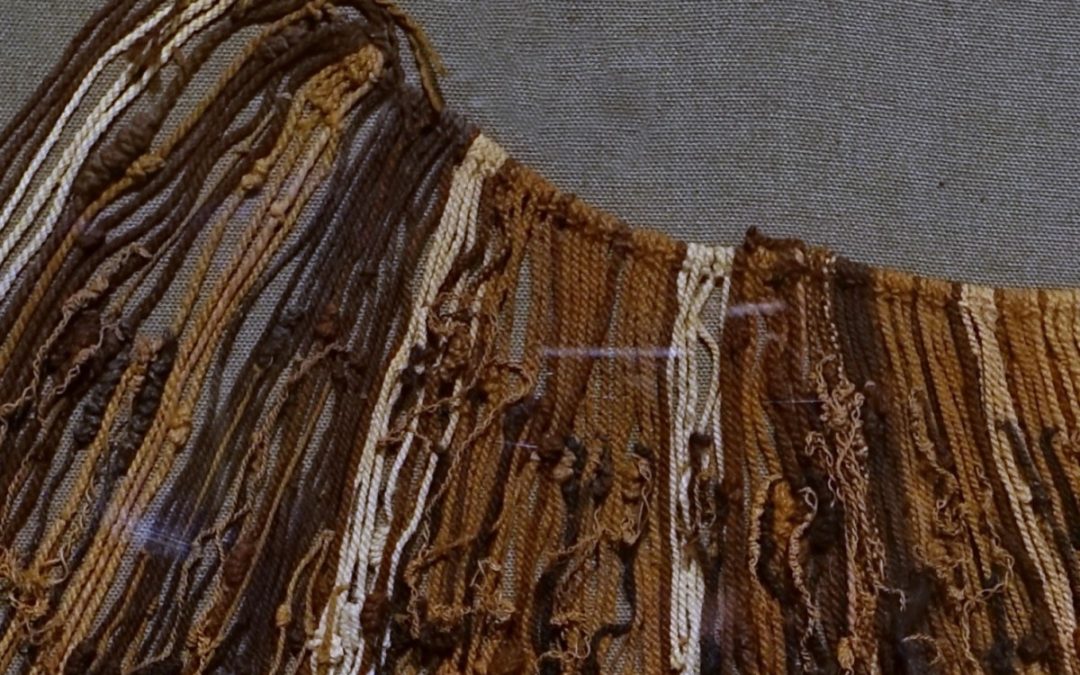
In 1533 Pizarro and his conquistadors at Cuzco precipitated the decline of the 300-year-old Inca empire in Peru. Fifty years later, the Spanish colonial administrators in Peru ordered the burning of all the Incan “khipu” knotted string records because they were “idolatrous objects.” Khipu were the Incas’ only form of writing. The smoke from the burning of their books gets in your eyes, forever and ever.
* * * * * *
Book review. Copyright © Richard Carl Subber 2026 All rights reserved.
Book review: Shantung Compound
They didn’t care much
about each other…
by Langdon Gilkey
–
Writing Rainbows: Poems for Grown-Ups with 59 free verse and haiku poems,
and the rest of my poetry books are for sale on Amazon (paperback and Kindle)
and free in Kindle Unlimited, search Amazon for “Richard Carl Subber”
* * * * * *
by Richard Subber | Mar 19, 2026 | American history, Book reviews, Books, History, Politics, Power and inequality
it’s about money, not journalism
Book review:
Newspapers and Democracy:
International Essays on a Changing Medium
Anthony Smith, ed.
Cambridge, MA: The MIT Press, 1980
Newspapers and Democracy may be of most interest to informed readers who understand the basics of the history and the modern business model of newspapers, and want more historical context.
The essays were published in 1980. There is no mention of the internet or Google or social media or any of the digital manifestations that have crowded the traditional newspaper audience into a small corner.
There is no substantial or convincing assessment of the putative public service mission of “the press” that has been blatantly claimed by newspaper owners and journalists for at least more than 60 years.
Newspapers and Democracy is a museum piece, not an explanation of the alleged “power” of the alleged “free press.”
* * * * * *
Book review. Copyright © Richard Carl Subber 2026 All rights reserved.
–
Seeing far: Selected poems with 47 free verse and haiku poems,
and the rest of my poetry books are for sale on Amazon (paperback and Kindle)
and free in Kindle Unlimited, search Amazon for “Richard Carl Subber”
* * * * * *
