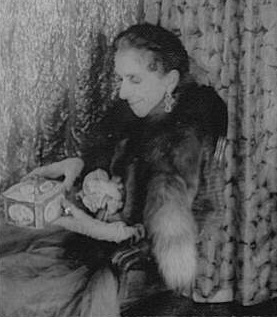
Book review: Seven Gothic Tales

Book review: Seven Gothic Tales

They’re not flamboyant,

     but they are fabulous…


Book review:

Seven Gothic Tales


by Isak Dinesen (1885-1962)

Dorothy Canfield, Introduction

New York: Harrison Smith and Robert Haas, Inc., 1934

420 pages


Isak Dinesen’s story doesn’t stop with Out of Africa. For starters, Isak Dinesen isn’t her name, but you probably know that.

Baroness Karen Christenze von Blixen-Finecke (née Dinesen) was a Danish author who wrote using several pen names, notably Isak Dinesen.

Her oeuvre is lush and memorable. Out of Africa is a compelling classic tale of life and love. Who wouldn’t love Denys Finch Hatton? After you’ve read Babette’s Feast, you don’t have any trouble recalling what it’s about. The films by the same names are authentic delights.

Seven Gothic Tales isn’t flamboyant, but it is fabulous. If you’re a writer, you may feel—a lot, or a little—that you wish you could write like Isak Dinesen. If you’re not a writer, you could wish that you may be one in another life.

Her muse is fertile and friendly—she manages, on page after page, to write what Coleridge identified as “the best words.” The storytelling is warm, the characters are vivid and realistic, and the context is so desirable.

Two of my favorite Gothic tales are “The Old Chevalier” and “The Poet.” The narrator in “The Old Chevalier” mentions, with approval, “I…do not think that I could ever really love a woman who had not, at some time or other, been up on a broomstick.” In “The Old Poet,” one of the characters is “the Councilor,” who “maintained an idea of paradise, for his generation had been brought up on the thought of life everlasting, and the idea of immortality came naturally to him.”

Isak Dinesen writes with casual skill to create worlds in which humanity thrives, and she fills Seven Gothic Tales with civilized entertainment.  

*   *   *   *   *   *

Book review. Copyright © Richard Carl Subber 2018 All rights reserved.


Forget about Buffy the Vampire Slayer

Dracula is a scary book, really…

by Bram Stoker

click here

many waters: more poems with 53 free verse poems,
and the rest of my poetry books are for sale on Amazon (paperback and Kindle)
and free in Kindle Unlimited, search Amazon for “Richard Carl Subber”

*   *   *   *   *   *
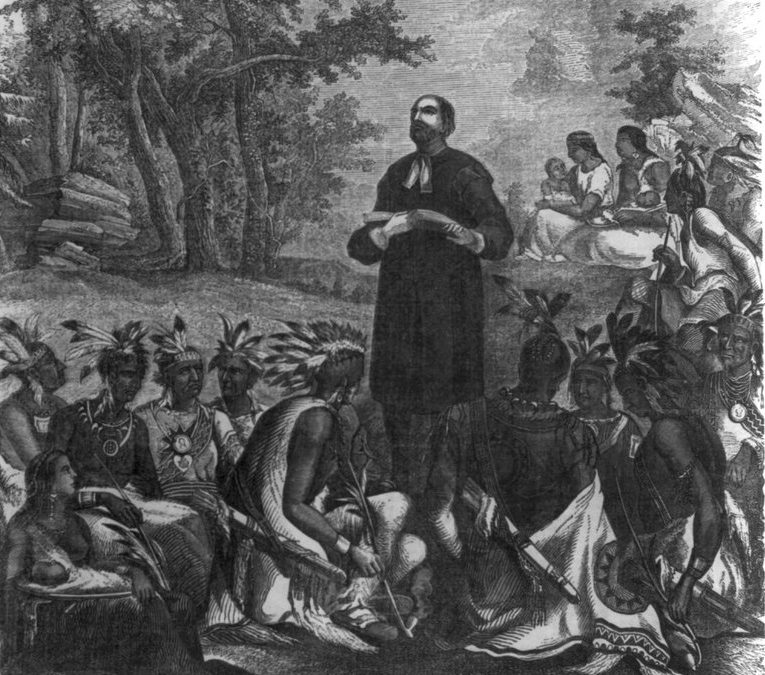
Book review: John Eliot: The Man Who Loved The Indians

Book review: John Eliot: The Man Who Loved The Indians

…a conversational biography…


Book review:

John Eliot:

The Man Who Loved The Indians


by Carleton Beals

New York: Julian Messner, Inc., 1957

192 pages


This is an entertaining biography of the Puritan minister who was known during his lifetime (1604-1690) as the “Apostle to the Indians.” Rev. John Eliot was the colonial leader who was most influential in cooperating with Indian leaders to establish the “Praying Indian” towns in the Massachusetts Bay Colony.

Beals creates a fictionalized biography of convenient length. The narrative is filled with dialogue that is relevant to the story, but is, of course, completely inauthentic in the sense that there is only a fragmentary record of Eliot’s conversations with his fellow colonials and with American Indians. This isn’t a big deal. However, Beals’ conversational tone is not to my taste for serious biographical treatments.

John Eliot: The Man Who Loved The Indians is based on substantial research and offers a bibliography of 46 sources, including many that are well respected and well known to historians and students of the colonial period. There is a useful index.

Beals offers an appealing, if one-sided, complement to serious investigation of cultural and political dynamics in 17th century New England.

Caveat: Beals, without apology, writes his story using the European context. To be sure, Waban and the other Indians are characters in the story.

Beals doesn’t spend a lot of time on the brutality of their demise.

*   *   *   *   *   *


Book review. Copyright © Richard Carl Subber 2018 All rights reserved.


Book review: The Reader (Der Vorleser)

It’s more than a rehash of WWII…

by Bernhard Schlink

click here


As with another eye: Poems of exactitude with 55 free verse and haiku poems,
and the rest of my poetry books are for sale on Amazon (paperback and Kindle)
and free in Kindle Unlimited, search Amazon for “Richard Carl Subber”

*   *   *   *   *   *

Follow Rick on Facebook

Thoughtful book reviews by Rick Subber

Nothing Found

Book review: Lord of the Flies

Book review: Lord of the Flies

Hedonism, barbarism, reality…


Book review:

Lord of the Flies


by William Golding (1911-1993)

Published 1954


It’s just possible that you’ve never heard of this book (or the 1963 movie). Try the book first. Its sustained drama shames the movie. Half of the movie is about boys in tattered clothing running through the forest—that’s not what Lord of the Flies is all about.

I dare to give this briefest possible summary: a transoceanic flight loaded with young British schoolboys crashes near an uninhabited island. The surviving boys (no adults) struggle to create and maintain a primitive civitas.

They fail. Their attempt at the simplest kind of self-government is wrecked by a cohort of boys who are persuaded by the charismatic, sociopathic Jack to indulge their inclinations to hedonism and barbarism. Ralph’s idealistic efforts to establish order are fruitless. Jack’s “hunters” end up killing two of their fellows before the grown-ups arrive to rescue them.

Golding’s Lord of the Flies pushes any defender of the common good to despair of “civilized” behavior that benefits all.


p.s. there are painfully disturbing similarities between Lord of the Flies and Shantung Compound: The Story of Men and Women Under Pressure (give this one a try, too).

NB. “Beelzebub” or “Baal-zebub” is translated “lord of the flies.”

*   *   *   *   *   *

Book review: Hag-Seed

by Margaret Atwood…it ain’t Shakespeare

click here


Book review. Copyright © Richard Carl Subber 2018 All rights reserved.


My first name was rain: A dreamery of poems with 52 free verse and haiku poems,
and the rest of my poetry books are for sale on Amazon (paperback and Kindle)
and free in Kindle Unlimited, search Amazon for “Richard Carl Subber”

*   *   *   *   *   *
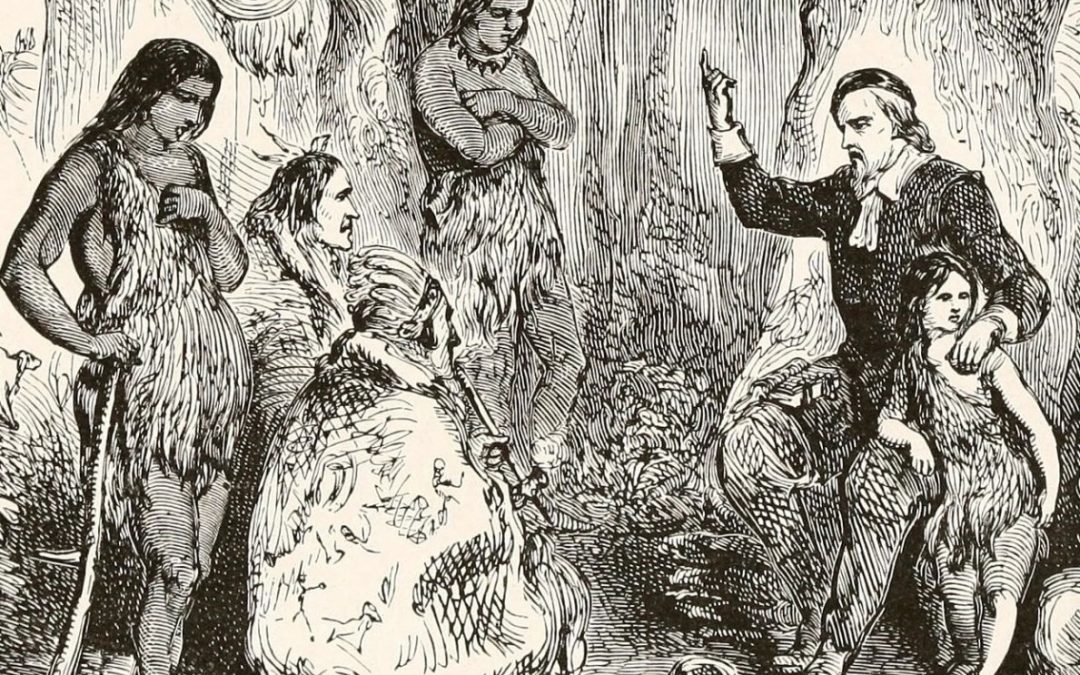
Book review: John Eliot: “Apostle to the Indians”

Book review: John Eliot: “Apostle to the Indians”

…a very busy life…


Book review:

John Eliot: “Apostle to the Indians”


by Ola Elizabeth Winslow (1885-1977)

Boston: Houghton Mifflin Company, 1968

225 pages


John Eliot is a detailed, respectful biography of the mid-17th century Puritan minister who organized Praying Indian towns in the Massachusetts Bay Colony and translated (with the help of James the Printer and other Indians) the Geneva Bible into the Algonquian language of the eastern Massachusetts Indians.

Winslow offers a  competent account of Eliot’s very busy life, and provides decent political and sociological context for his personal, tenacious, and domineering commitment to “civilize” the Indians and convert them to Christianity. Eliot’s tribulations and triumphs are clearly presented, and Winslow underscores the judgment of his contemporaries and of three centuries of scholarship that demonstrate that Eliot was a vigorous, decent, and exemplary man who did his lifelong best to promote the welfare of the Indians—as he conceived it.

There is a useful index, an extensive bibliography, and instructive notes to the text.

Caveat: Prof. Winslow was no ethnohistorian, and she wrote in a style that may be more valuable to a student than to a sincere historian. She endorses, without any apparent reluctance, the discredited conception of the indigenous Indians as “savages” who were “degraded” and burdened with “dark” minds that invited the self-conceived redemptive efforts of the colonists to “civilize” them and bring them into the English church.

This careless error—indeed, this gratuitous insult to 17th century native Americans who had a vibrant culture, lifestyle, and faith—is a very annoying distraction.

*   *   *   *   *   *

Book review. Copyright © Richard Carl Subber 2018 All rights reserved.


A poet is a “maker”

…and it doesn’t have to rhyme…

click here


many waters: more poems with 53 free verse poems,
and the rest of my poetry books are for sale on Amazon (paperback and Kindle)
and free in Kindle Unlimited, search Amazon for “Richard Carl Subber”


*   *   *   *   *   *
Follow Rick on Facebook

Thoughtful book reviews by Rick Subber

Nothing Found

Book review: Harriet Beecher Stowe: A Spiritual Life

Book review: Harriet Beecher Stowe: A Spiritual Life

a zealous missionary

           without portfolio…


Book review:

Harriet Beecher Stowe:

A Spiritual Life


by Nancy Koester

William B. Eerdmans Publishing Company, Grand Rapids, MI, 2014

371 pages, with index


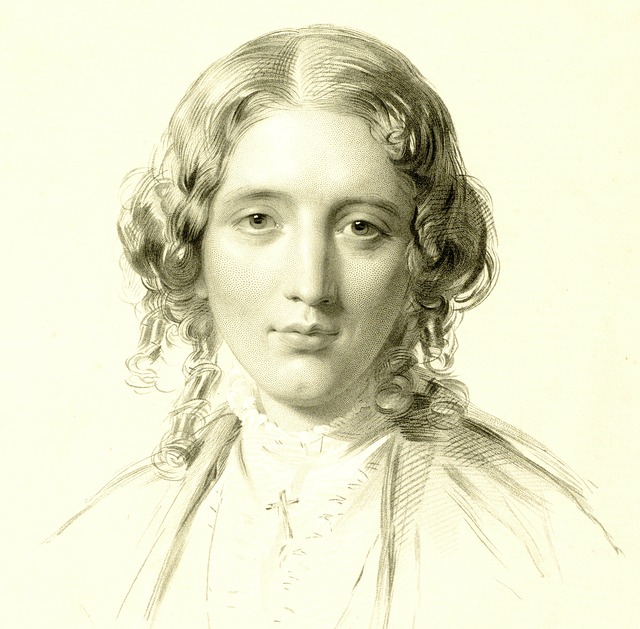
A Spiritual Life is a robust telling of the story of Harriet Beecher Stowe.

From the first page to the last, you can’t doubt that Stowe cared deeply about most aspects of private life, her faith, and the all-encompassing religious framework of the civitas. As a woman in the mid-19th century, she was a zealous missionary without portfolio.

No surprise here, Koester gives comprehensive analysis of the writing and impact of Uncle Tom’s Cabin (published 1852). It was a best-seller in the United States and in Great Britain. It moved multitudes to hate slavery or hate Harriet Beecher Stowe. It did not, despite President Lincoln’s mocking jest when he met Stowe at the White House, start “this great war.” During the run-up to the American Civil War, Uncle Tom’s Cabin did help to clarify existing polemical doctrines of opposing camps.

Koester’s aim is to illuminate Stowe’s spiritual life and her very public commitment to advocating her faith and the importance of religious observance and conviction.

If that’s not to your taste, I think reading A Spiritual Life will be drudgery. For me, it was illuminating.

For my taste, Koester mentions but does not usefully detail the context of other aspects of Stowe’s life and impact on American society. She was a woman who conspicuously did not abide by the social conventions that dictated a passive, private, familial role for women. She wrote and was published extensively (I was surprised to learn that she was a prolific writer, including novels, tracts and political broadsides). She had lots of contact with the great and near-great, including President Lincoln and Queen Victoria. Stowe more or less supported her extended family with her writing—it would be interesting to know how much money she made from her writing, because Stowe persisted in a socially risky career and lifestyle that might have been unattainable without a (relatively) high income. I suspect that Stowe was not one of the 99% in her time.

Koester nobly attempts to make her case that Harriet Beecher Stowe was a mover and shaker, non pareil, in the anti-slavery movement before, during and after the Civil War. I suggest that this is a circumstantial biography of a notable lady who was notably revered—and notably tolerated—by a great many of her contemporaries.

If the South actually had won the Civil War, I think it’s possible that Uncle Tom’s Cabin, and Harriet Beecher Stowe, would be more than a tad less familiar to us.

*   *   *   *   *   *

Book review. Copyright © Richard Carl Subber 2018 All rights reserved.

-​

many waters: more poems with 53 free verse poems,
and the rest of my poetry books are for sale on Amazon (paperback and Kindle)
and free in Kindle Unlimited, search Amazon for “Richard Carl Subber”

*   *   *   *   *   *

Follow Rick on Facebook

Thoughtful book reviews by Rick Subber

Nothing Found

Pin It on Pinterest