
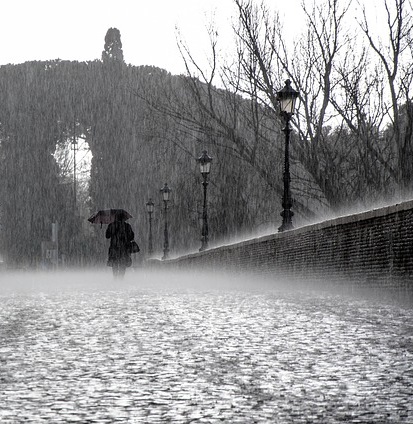
Taking another look at Longfellow’s poetry…
Say “repine” a couple times…
I read lots of poetry—colonial, classic American, modern—and I don’t find much that I like.
I’m a bit puzzled by this. I think hard about what I like and dislike about poetry, especially my own poetry. I confess my sincere failure to discern anything meaningful in the kind of poetry I classify as “obscure,” you know, the wayward romp through disconnected words and disjoint images, and the wanton disregard of verb tense/pronoun antecedents/subject and verb relationships/sentence structure—I think you may have seen this kind of stuff:
“Sky falls cloud sheep bray at starry islands in my hoping
are them my lost love I step around the dog poo….”
I just rapped that out. It doesn’t make me proud.
I’m trying to get to the point:
I’ve read a bit of Henry Wadsworth Longfellow (1807-1882). Longfellow was a lyric poet who tried his hand at free verse, although much of his work is constrained to the often stultifying shackle of line after line and page after page of rhyme. Longfellow wrote at length. I confess I can’t make myself keep turning the pages to read “Evangeline” and “The Song of Hiawatha.” I do understand that this fashion of poetry was written and enjoyed before the successive advents of radio, TV, Sony Walkman, the internet, and social media. I guess reading a poem for an hour or so was more doable in the 19th century.
Longfellow does offer something to me in his more bite-size poetry. He was a capable wordsmith and he dreamed out images and insights and perspectives that appeal to me, and even nudge my sometime muse to wakefulness.
In “Snow-Flakes” he placidly described a snowfall:
“Out of the bosom of the Air,
…The troubled sky reveals
The grief it feels.
This is the poem of the air…”
In “The Rainy Day” he said something we all know:
“…Be still, sad heart! and cease repining;
Behind the clouds is the sun still shining;
Thy fate is the common fate of all,
Into each life some rain must fall,
Some days must be dark and dreary.”
Thus, in Longfellow, something of poetry.
Admit it, we don’t use “repine” often enough in our casual conversations.
* * * * * *
Book review. Copyright © Richard Carl Subber 2025 All rights reserved.
Book review: The Financier
Theodore Dreiser’s villain…
click here
–
Seeing far: Selected poems with 47 free verse and haiku poems,
and the rest of my poetry books are for sale on Amazon (paperback and Kindle)
and free in Kindle Unlimited, search Amazon for “Richard Carl Subber”
* * * * * *