
by Richard Subber | Dec 18, 2025 | Tidbits
ain’t it the truth…
“It does not require many words
to speak the truth.”
Chief Joseph or Hin-mah-too-yah-lat-kekt (“Thunder rolling down the mountain”) (1840-1904)
Chief of the Wallowa of the Nez Perce (Niimiipu)
Let’s keep telling the truth about what’s going on in America.
* * * * * *
Copyright © Richard Carl Subber 2025 All rights reserved.
A Farewell to Arms (book review)
classic Ernest Hemingway
with relentlessly realistic dialogue…
–
Seeing far: Selected poems with 47 free verse and haiku poems,
and the rest of my poetry books are for sale on Amazon (paperback and Kindle)
and free in Kindle Unlimited, search Amazon for “Richard Carl Subber”
* * * * * *
by Richard Subber | Dec 16, 2025 | American history, Book reviews, Books, History, Language, Revolutionary War
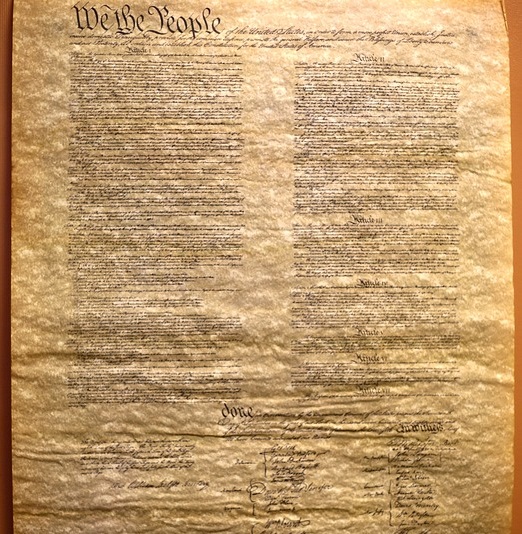
what does “self-evident” mean?
Book review:
The Greatest Sentence Ever Written
by Walter Isaacson (b1952)
New York: Simon & Schuster, 2025
67 pages
First, let’s get this straight: it’s worth your time to read this little book.
Maybe you think you know all you want to know about the Declaration of Independence, but I think you’ll learn at least a couple things of interest as you read The Greatest Sentence Ever Written.
For starters, Thomas Jefferson did not “write” the Declaration. He more or less wrote the first draft, and then his committee—including Benjamin Franklin and John Adams—applied their pens, and then the Continental Congress had its final say.
Isaacson’s “greatest sentence” is the second sentence of the Declaration, beginning “We hold these truths to be self-evident…” The words of the sentence had specific meanings for educated men (no ladies in the Congress) with Enlightenment prejudices in the late 18th century, and the committee and Congress changed a number of the words in Jefferson’s draft. For example, Jefferson originally wrote “We hold these truths to be sacred and undeniable…”
Keep these “undeniable” circumstances in mind: in July 1776 no member of the Congress knew how the whole “revolution” thing would turn out, and the Declaration did not start the revolution: the shooting war had started more than a year earlier in Lexington and Concord.
Isaacson is a popular biographer, and this little book is a good example of his writing talents.
For a more in-depth treatment by a noted historian, try reading American Scripture: Making the Declaration of Independence by Pauline Maier.
* * * * * *
Book review. Copyright © Richard Carl Subber 2026 All rights reserved.
Book review: Grace Notes
Is it prose or poetry?
by Brian Doyle
–
many waters: more poems with 53 free verse poems,
and the rest of my poetry books are for sale on Amazon (paperback and Kindle)
and free in Kindle Unlimited, search Amazon for “Richard Carl Subber”
* * * * * *

by Richard Subber | Dec 13, 2025 | Theater and play reviews
we’re talking heart and soul…
Movie review:
The Hustler
Okay, first things first: the pool table action in The Hustler (1961, not rated, 134 minutes) is rather tame. Most of the shots are obscurely impossible, but successful.
Paul Newman as “Fast Eddie” Felson, the “hustler” who finally wins the big game for big stakes, is, of course, iconic. His character is repetitive and becomes predictable: “I can beat him” isn’t a line of script, it’s a refrain.
Jackie Gleason’s role has name recognition (as “Minnesota Fats”) but it is two-dimensional and secondary. George C. Scott (as Bert Gordon) is a stereotype with a bankroll.
Everybody smokes too much. Ugh!
You should try The Hustler again to take another look at Piper Laurie (as Sarah Packard). She is the largely unheralded heavy hitter in this film. She is the foil for Newman’s thrashing self-doubt. She is the paragon of sensitivity and desperately loving kindness that the men in this tragedy barely hope to become. She speaks truth to gutless macho men. She was nominated for an Academy Award as Best Actress.
Newman and Gleason and Scott are the action in The Hustler.
Piper Laurie is the heart and soul.
* * * * * *
Movie review. Copyright © Richard Carl Subber 2025 All rights reserved.
Book review: Who Built America?
…including people
who got their hands dirty
by Christopher Clark and Nancy Hewitt
–
In other words: Poems for your eyes and ears with 64 free verse and haiku poems,
and the rest of my poetry books are for sale on Amazon (paperback and Kindle)
and free in Kindle Unlimited, search Amazon for “Richard Carl Subber”
* * * * * *
by Richard Subber | Dec 11, 2025 | My poetry, Poetry
smiling is important…
step by step
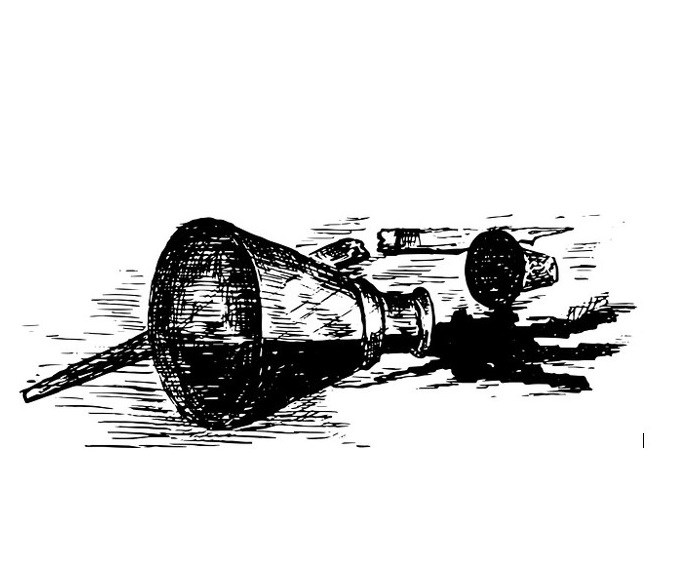
Write it, rhyme it,
write it down.
Write it slowly,
verb and noun.
Smile as much as will abide,
don’t allow your smile to hide.
Chase it, grab it,
cherish the elusive rhyme.
August 30, 2025
* * * * * *
My poetry. Copyright © Richard Carl Subber 2025 All rights reserved.
Book review: Shawshank Redemption
A world I do not want to know…
by Stephen King
–
Above all: Poems of dawn and more with 74 free verse poems,
and the rest of my poetry books are for sale on Amazon (paperback and Kindle)
and free in Kindle Unlimited, search Amazon for “Richard Carl Subber”
Your comments are welcome—tell me what you’re thinking.
* * * * * *
by Richard Subber | Dec 9, 2025 | American history, Book reviews, Books, History, Revolutionary War, World history
Did the British really try to win?
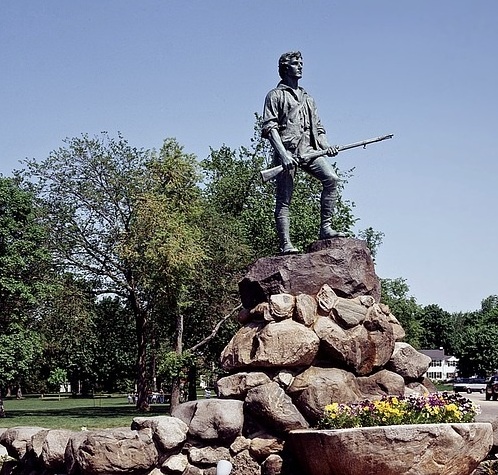
I have a lot to learn. With the humility of a student, I ask: how hard did the British try to win the American Revolutionary War?
It’s a research topic that intrigues me. I’m using the question to guide my reading. I’m careful to remind myself, often, that I don’t know the full answer. I think I know enough to believe that the bottom line is: the British wanted to win the war, but they never made the commitment required to do it.
I think I know enough to confirm the validity of the question. Britain had substantial economic engagement with the North American colonies in the latter part of the 18th century. The British West Indies—the Caribbean “sugar islands”—also were an important component of the British Atlantic colonial world. Britain had additional commitments in Florida, as well as military outposts, trading posts and other dependencies in Ireland, the Mediterranean, India, Africa, Central America, the Bahamas, the Bermudas, Nova Scotia, Quebec and Hudson’s Bay. Britain was intensely engaged in diplomacy and threatening entanglements with France, Spain and other European powers. Britain was an economic power, not a military titan.
King George and the British government did not have unlimited military resources. Army and naval forces were allocated to the rebellious American colonies, just as they were to the West Indies and other areas of vital interest. French and Spanish forces continually threatened the British Caribbean islands, an economic bastion of the British monarchy. There were not enough British ships and troops to establish compelling military superiority in every arena of British interest.
Ultimately, British admirals could not prevent a localized French naval superiority in the Chesapeake Bay that forced Cornwallis to surrender his under-sized army to Washington and Rochambeau at Yorktown in October, 1781. The war didn’t end then, but after Yorktown it became manifestly unwinnable for Britain.
Did the British government send enough troops and ships to North America to get the job done when the rebellion broke out? Was winning the war a pre-eminent priority for King George and his ministers? Doubtless the British wanted to win. How hard did they try? Initially they thought the rebellion would wither. Later, I think, they had more important fish to fry.
I’m not looking for a simple answer. I’m interested, first, in understanding the meaningful frames of reference for considering the question.
Sources:
Bowler, R. Arthur. Logistics and the Failure of the British Army in American, 1775-1783. Princeton, NJ: Princeton University Press, 1975.
Corwin, Edward S. French Policy and the American Alliance of 1778.1916. Reprint, Hamden, CT: Archon Books, 1962.
Duffy, Michael. Soldiers, Sugar and Seapower: The British Expeditions to the West Indies and the War Against Revolutionary France. Oxford: Clarendon Press, 1987.
Gipson, Lawrence Henry. The Triumphant Empire: The Empire Beyond the Storm, 1770-1776, vol. 13 of The British Empire Before The American Revolution. New York: Alfred A. Knopf, Inc., 1967.
O’Shaughnessy, Andrew Jackson. An Empire Divided: The American Revolution and the British Caribbean. Philadelphia: University of Pennsylvania Press, 2000.
Seton-Watson, Robert William. Britain In Europe: 1789-1914, A Survey of Foreign Policy. 1937. Reprint, Cambridge: The Cambridge University Press, 1955.
* * * * * *
Book review. Copyright © Richard Carl Subber 2025 All rights reserved.
Home Team: Poems About Baseball (book review)
Edwin Romond hits another homer…
–
many waters: more poems with 53 free verse poems,
and the rest of my poetry books are for sale on Amazon (paperback and Kindle)
and free in Kindle Unlimited, search Amazon for “Richard Carl Subber”
* * * * * *
