
by Richard Subber | Jun 9, 2026 | Human Nature, My poetry, Poetry, Reflections
heartbeats on display
allegro
The boy was bouncing,
hopping, jumping,
he was on the move,
kids make their world a motion,
an energy,
a swirl,
they test their arms,
and legs,
and fingers,
and their voices,
and their faces,
and ways to look around
and through their spaces,
and sounds that are new words
in their worlds,
they do not share
their racing thoughts,
but they put their heartbeats on display,
their disporting has no end.
Do you remember that part of you
is a child?
Will you let that part of you
bounce with joy?
Your inner child wants to jump,
now.
March 28, 2026
* * * * * *
My poetry. Copyright © Richard Carl Subber 2026 All rights reserved.
The Reader (Der Vorleser)
Not just a rehash of WWII…
by Bernhard Schlink
–
In other words: Poems for your eyes and ears with 64 free verse and haiku poems,
and the rest of my poetry books are for sale on Amazon (paperback and Kindle)
and free in Kindle Unlimited, search Amazon for “Richard Carl Subber”
Your comments are welcome—tell me what you’re thinking.
* * * * * *
by Richard Subber | Jun 6, 2026 | American history, Book reviews, Books, History
They’re not in the family albums…
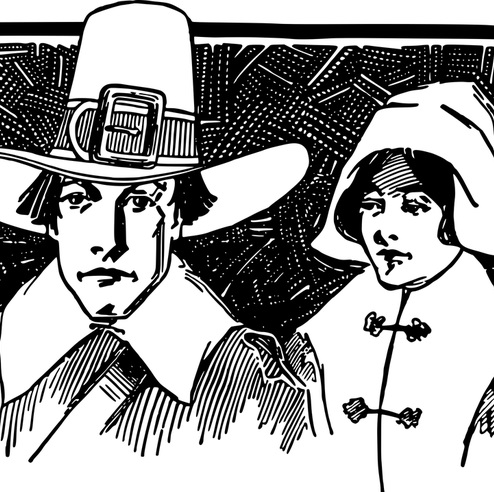
I guess only American kids who are too young for preschool have never seen a picture of the Pilgrims who went ashore in Cape Cod Bay in November 1620.
There were 102 passengers on the Mayflower. Maybe you know that only about half of them were religious Separatists, the refugees from persecution in England that we now know as Pilgrims. Many in the other half came, for non-religious reasons, to what no one was yet calling “New England.”
The “Pilgrim” image is so well known I won’t annoy you with an extended description. You know, the black hat with the buckle, the fowling piece with a bulge at the end of the barrel, the (arguably apocryphal) Thanksgiving scene with Indians and overflowing tables and rosy-cheeked women and kids having a good time…
Here’s a thing: more or less, we don’t know what the Pilgrims looked like. There is only one surviving portrait (Edward Winslow) of those hardy pioneers. Francis Dillon, in his book The Pilgrims, says that the surviving first-person accounts include a description of someone’s beard, and a reference to the height and hair color of one man.
Otherwise, nada. Of course, no selfies. Nothing on YouTube. No family albums.
How many people alive right now in America have never been photographed?
Four hundred years from now, it’s a good bet that someone will be able to figure out how good looking you are right now.
Source:
The Pilgrims, New York: Doubleday & Company, Inc., 1975
by Francis Dillon
from the Preface
* * * * * *
Book review. Copyright © Richard Carl Subber 2026 All rights reserved.
Book review: Lord of the Flies
Never more relevant…
by William Golding
–
many waters: more poems with 53 free verse poems,
and the rest of my poetry books are for sale on Amazon (paperback and Kindle)
and free in Kindle Unlimited, search Amazon for “Richard Carl Subber”
* * * * * *

by Richard Subber | Jun 4, 2026 | American history, History, Tidbits
It’s a good story, at least…
“The most valuable of all talents is that of
never using two words
when one will do.”
Thomas Jefferson (1743-1826)
3rd President of the United States
He was a Republican when it was rather democratic to be a Republican.
The historical record doesn’t really suggest that Jefferson was as tight-lipped as this maxim implies.
Perhaps it would be more meaningful for ordinary folks like us if he had said something like “don’t use 38 words when a few of them, well-chosen, will do the job.”
Furthermore, let’s keep in mind the contemplative observation by the English poet Samuel Taylor Coleridge (1772-1834) that praiseworthy prose and poetry—and in general, talking—has a lot to do with using “the best words.”
‘nuff said.
* * * * * *
Copyright © Richard Carl Subber 2026 All rights reserved.
Book review: The Comanche Empire
the other story of the American West…
–
many waters: more poems with 53 free verse poems,
and the rest of my poetry books are for sale on Amazon (paperback and Kindle)
and free in Kindle Unlimited, search Amazon for “Richard Carl Subber”
* * * * * *
by Richard Subber | Jun 2, 2026 | My poetry, Poetry
The Book of Days
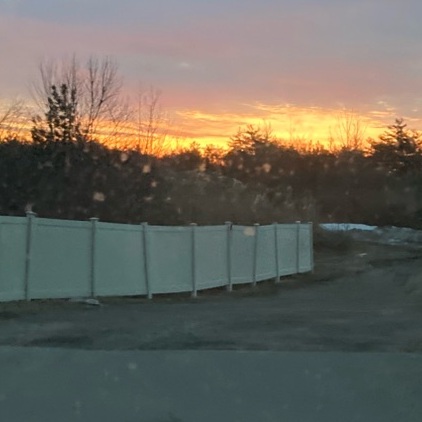
The dawn’s early light can be pleasure enough for the whole day.
There are words enough to tell the story of “the temptation of day to come.”
It is my delight to write some of them for your delectation.
night ignited
The star of day makes an oven,
sears the edge of dawn,
spurns the trees,
it makes no smoke,
but there is fire in the sky,
tumult without motion,
a caldron without sound,
a heat that does not burn.
March 15, 2026
* * * * * *
My poetry. Copyright © Richard Carl Subber 2026 All rights reserved.
Book review: The Poems of Robert Frost
he hears bluebirds talking…
–
many waters: more poems with 53 free verse poems,
and the rest of my poetry books are for sale on Amazon (paperback and Kindle)
and free in Kindle Unlimited, search Amazon for “Richard Carl Subber”
Your comments are welcome—tell me what you’re thinking.
* * * * * *

by Richard Subber | May 31, 2026 | Human Nature, Theater and play reviews
many splendored smiles…
Movie review:
Carol
starring Cate Blanchett and Rooney Mara
Cate Blanchett has a many-splendored smile. You see several of them in Carol (2015, rated R, 118 minutes).
Blanchett’s smile is deep, almost inexplicably alluring, enduring, and profoundly feminine. Sexy? You decide.
Rooney Mara is an almost new pair of eyes for me (think The Girl with the Dragon Tattoo). She uses her face like Blanchett does: her face exalts her feelings, you wouldn’t mind seeing it on a stadium-size screen.
Carol is a 1950s-era exploration of how two ladies can fall in love and then wander in their lives until they figure out what love means. Carol (Blanchett) discovers Therese (Mara)—or is it the other way?—and they can’t escape living their previous lives while they mature into their new life together.
The movie is based on the novel The Price of Salt by Patricia Highsmith.
* * * * * *
Movie review. Copyright © Richard Carl Subber 2026 All rights reserved.
The “dime novels” in the Civil War
Think “blood-and-thunder”…
–
Writing Rainbows: Poems for Grown-Ups with 59 free verse and haiku poems,
and the rest of my poetry books are for sale on Amazon (paperback and Kindle)
and free in Kindle Unlimited, search Amazon for “Richard Carl Subber”
* * * * * *
