
by Richard Subber | Apr 22, 2025 | Human Nature, My poetry, Poetry
the dusty baby seats…
Baby seats
I’m eating breakfast
in a room
half-filled with old folks,
they need four score of candles
on the birthday cake,
they remember old, old songs,
sometimes all the words,
they’ve lost the dearest ones
they married,
they blubber and laugh
when the grandkids come,
and they slowly eat their breakfast
with old friends,
and they never see
the dusty baby seats
that fill a tidy corner
and wait for the generation
that will happily use them.
September 19, 2024
* * * * * *
My poetry. Copyright © Richard Carl Subber 2025 All rights reserved.
–
In other words: Poems for your eyes and ears with 64 free verse and haiku poems,
and the rest of my poetry books are for sale on Amazon (paperback and Kindle)
and free in Kindle Unlimited, search Amazon for “Richard Carl Subber”
Your comments are welcome—tell me what you’re thinking.
* * * * * *
by Richard Subber | Apr 20, 2025 | American history, Book reviews, Books, History, Revolutionary War
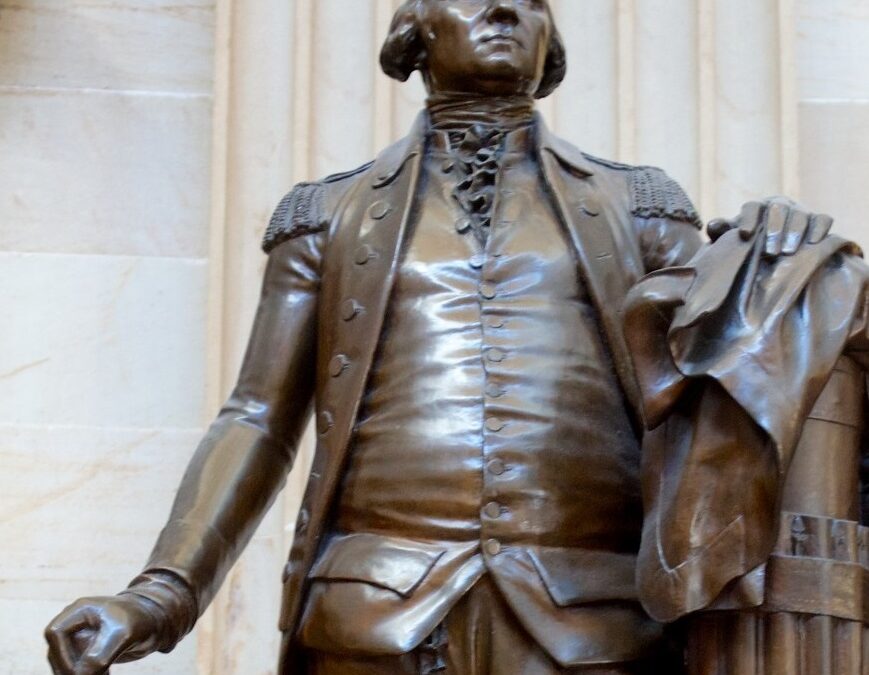
King George wanted to win the war…
the other guys, not so much…
Book review:
Iron Tears:
America’s Battle for Freedom,
Britain’s Quagmire: 1775:1783
Stanley Weintraub (1929-2019)
New York: Free Press, 2005
375 pages
For some time I have indulged my suspicion that the British never really tried very hard to win the Revolutionary War.
Stanley Weintraub’s Iron Tears isn’t the first book that has reinforced my understanding of this most iconic event in American history. If you’re interested, try Nick Bunker’s An Empire on the Edge or Andrew Jackson O’Shaughnessy’s An Empire Divided.
Weintraub offers a solidly researched and richly anecdotal account of the military details and the political wrangling that prolonged the war for several years until the British ministers and politicians finally admitted to themselves that they couldn’t win the war.
King George III was fatuously optimistic and persistently unrealistic—to the bitter end—about the prospects for winning a war that he desperately identified with his own persona and his royal stature.
Weintraub makes it irrefutably clear that at no time during the Revolutionary War did the British send enough men and ships to win in North America, that is, to put down the rebellion and re-establish full constitutional Parliamentary control of the 13 colonies. Hint: the British “sugar island” colonies in the Caribbean were more important, and the British never stopped looking over their shoulders at prospective and real war with France, Spain, and other countries.
On October 18, 1781, General Washington accepted the capitulation of the army of General Cornwallis at Yorktown. On November 25, an official dispatch with the bad news finally reached Lord North, the British prime minister, at Downing Street. It is reported that he exclaimed “Oh God! It is all over!”
Quite possibly he was overcome with grief and relief.
* * * * * *
Book review. Copyright © Richard Carl Subber 2025 All rights reserved.
Book review: A Cold Welcome
The culprit was global cooling,
500 years ago…
by Sam White
–
Above all: Poems of dawn and more with 73 free verse poems,
and the rest of my poetry books are for sale on Amazon (paperback and Kindle)
and free in Kindle Unlimited, search Amazon for “Richard Carl Subber”
* * * * * *
by Richard Subber | Apr 12, 2025 | Book reviews, Books, Poetry, Reviews of other poets
Say “repine” a couple times…
I read lots of poetry—colonial, classic American, modern—and I don’t find much that I like.
I’m a bit puzzled by this. I think hard about what I like and dislike about poetry, especially my own poetry. I confess my sincere failure to discern anything meaningful in the kind of poetry I classify as “obscure,” you know, the wayward romp through disconnected words and disjoint images, and the wanton disregard of verb tense/pronoun antecedents/subject and verb relationships/sentence structure—I think you may have seen this kind of stuff:
“Sky falls cloud sheep bray at starry islands in my hoping
are them my lost love I step around the dog poo….”
I just rapped that out. It doesn’t make me proud.
I’m trying to get to the point:
I’ve read a bit of Henry Wadsworth Longfellow (1807-1882). Longfellow was a lyric poet who tried his hand at free verse, although much of his work is constrained to the often stultifying shackle of line after line and page after page of rhyme. Longfellow wrote at length. I confess I can’t make myself keep turning the pages to read “Evangeline” and “The Song of Hiawatha.” I do understand that this fashion of poetry was written and enjoyed before the successive advents of radio, TV, Sony Walkman, the internet, and social media. I guess reading a poem for an hour or so was more doable in the 19th century.
Longfellow does offer something to me in his more bite-size poetry. He was a capable wordsmith and he dreamed out images and insights and perspectives that appeal to me, and even nudge my sometime muse to wakefulness.
In “Snow-Flakes” he placidly described a snowfall:
“Out of the bosom of the Air,
…The troubled sky reveals
The grief it feels.
This is the poem of the air…”
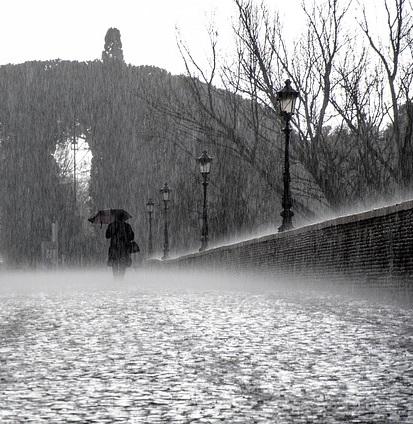
In “The Rainy Day” he said something we all know:
“…Be still, sad heart! and cease repining;
Behind the clouds is the sun still shining;
Thy fate is the common fate of all,
Into each life some rain must fall,
Some days must be dark and dreary.”
Thus, in Longfellow, something of poetry.
Admit it, we don’t use “repine” often enough in our casual conversations.
* * * * * *
Book review. Copyright © Richard Carl Subber 2025 All rights reserved.
Book review: The Financier
Theodore Dreiser’s villain…
–
Seeing far: Selected poems with 47 free verse and haiku poems,
and the rest of my poetry books are for sale on Amazon (paperback and Kindle)
and free in Kindle Unlimited, search Amazon for “Richard Carl Subber”
* * * * * *
by Richard Subber | Apr 10, 2025 | Language, Poetry, Tidbits
poetry can be rain…
“One evening in the maize-field…to amuse myself,
I spoke to the field laborers, who were mostly quite young,
in Swaheli [sic] verse. There was no sense in the verse,
it was made for the sake of rhyme…
They were quick to understand that the meaning of poetry
is of no consequence,
and they did not question the thesis of the verse,
but waited eagerly for the rhyme, and laughed at it when it came….
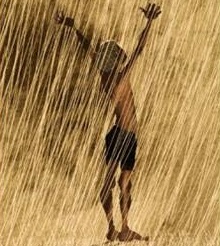
As they had become used to the idea of poetry, they begged:
‘Speak again. Speak like rain.’ ”
quote from Out of Africa, pp. 285-286
Isak Dinesen (Karen Blixen) (1885-1962)
New York: The Modern Library, 1937, 1992
399 pages
* * * * * *
Copyright © Richard Carl Subber 2025 All rights reserved.
–
Above all: Poems of dawn and more with 73 free verse poems,
and the rest of my poetry books are for sale on Amazon (paperback and Kindle)
and free in Kindle Unlimited, search Amazon for “Richard Carl Subber”
* * * * * *

by Richard Subber | Apr 8, 2025 | Books, My poetry, Poetry, Reflections, Tidbits
blinking, not blinking…
Owning the trail
The sun was high,
the patient rays
striped the forest floor,
tree tops swayed enough
to nudge the shadows,
a bird sang half a song
way down the hill,
an angry squirrel
sailed across the trail
and stared at me,
he didn’t blink.
I walked the next turn,
and stared without blinking,
an eight-point buck
looked back at me,
he stood still
as his woman and kid
rambled across the path
and disappeared
in the hydrangea,
he didn’t budge,
he seemed to be daring me
to make a move.
He showed no fear,
he owned the trail,
I was the stranger with two legs,
I looked at him for moments,
I faced him moments more
as I shuffled back
around the turn,
and shambled from his world.
The sun was high,
the shadows trembled,
I walked away through empty woods.
February 6, 2025
* * * * * *
My poetry. Copyright © Richard Carl Subber 2025 All rights reserved.
Writing Rainbows: Poems for Grown-Ups with 59 free verse and haiku poems,
and the rest of my poetry books are for sale on Amazon (paperback and Kindle)
and free in Kindle Unlimited, search Amazon for “Richard Carl Subber”
Your comments are welcome—tell me what you’re thinking.
* * * * * *
