by Richard Subber | Sep 28, 2024 | American history, Books, History, Power and inequality
not what you learned in school…
Book review:
Facing East from Indian Country:
A Native History of Early America
Daniel K. Richter (b1954)
American historian, a Pulitzer Prize finalist
Cambridge, MA: Harvard University Press, 2001
You can count on Richter to provide a full course meal of insights and commentaries and knowledge about the original peoples of North America.
Dig in to Facing East from Indian Country to learn about how the Indians felt and what they understood about the Europeans who invaded their lands.
Nearly all of what we know about the Indians in pre-colonial and colonial times was written down by Europeans, but Richter is dedicated to discerning the Indians’ meaning, intent and recognition from the contexts and styles of those accounts.
You guessed it: it ain’t the American history you learned in school.
* * * * * *
Book review. Copyright © Richard Carl Subber 2024 All rights reserved.
Book review: Shawshank Redemption
This is a world I do not want to know…
by Stephen King
–
Seeing far: Selected poems with 47 free verse and haiku poems,
and the rest of my poetry books are for sale on Amazon (paperback and Kindle)
and free in Kindle Unlimited, search Amazon for “Richard Carl Subber”
* * * * * *
by Richard Subber | Sep 26, 2024 | Tidbits
spread the word
The wise one said:
“I’ve started telling everyone
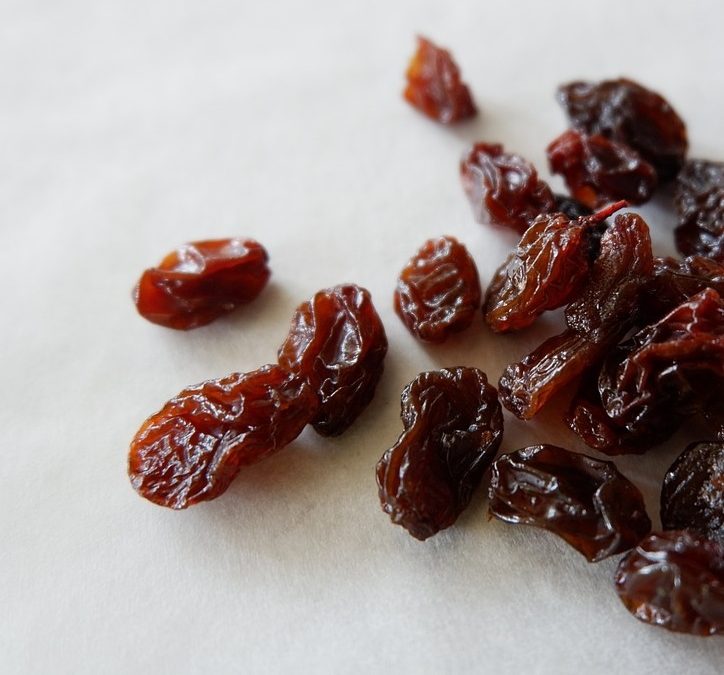
about the benefits of eating dried grapes.
It’s all about raisin awareness.”
Just take some time to think about what’s important to you.
* * * * * *
Copyright © Richard Carl Subber 2024 All rights reserved.
Book review: “Bartleby, the Scrivener”
Loneliness beyond understanding…
by Herman Melville
–
Seeing far: Selected poems with 47 free verse and haiku poems,
and the rest of my poetry books are for sale on Amazon (paperback and Kindle)
and free in Kindle Unlimited, search Amazon for “Richard Carl Subber”
* * * * * *
by Richard Subber | Sep 24, 2024 | My poetry, Poetry, Reflections
we share awareness
Occurrence
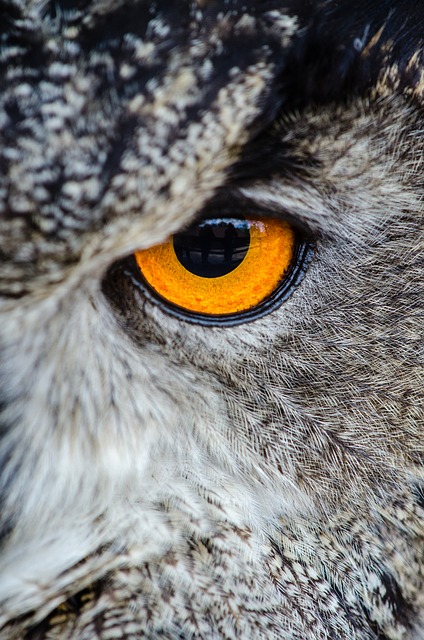
The unseen owl, that one call.
Nothing more.
What was his need? What desire?
Was it a song, so brief?
It pulsed the still night air,
a reaching sound,
meant for some creature to hear,
and I am near.
I call out my one note.
It is no answer, but affirmation:
owl, you are there, I am here.
I think to open my mouth again,
but at once I understand:
my one note is “I” —
invited by the owl’s like call.
I know the creature has heard me,
and now we share awareness,
a known, a kindred comfort.
We accept the reassurance of echo,
an essence of sensation and being,
the wonder of what we cannot see
that is yet real.
Together we call out our declaration,
in these moments we feel secure
against the near boundary of the unknown.
January 12, 2016
“Occurrence” was published online on March 26, 2020, in Literati Magazine
My poem “Occurrence” was published in my sixth collection of 73 poems, Above all: Poems of dawn and more.
You can buy it on Amazon (paperback and Kindle),
or get it free in Kindle Unlimited, search for “Richard Carl Subber”
My poem “Occurrence” was published in my third collection of 64 poems, In other words: Poems for your eyes and ears.
You can buy it on Amazon (paperback and Kindle),
or get it free in Kindle Unlimited, search for “Richard Carl Subber”
* * * * * *
My poetry. Copyright © Richard Carl Subber 2024 All rights reserved.
Book review: Sketches by Boz
…those Miss Willises sure are a scream…
by Charles Dickens
–
Seeing far: Selected poems with 47 free verse and haiku poems,
and the rest of my poetry books are for sale on Amazon (paperback and Kindle)
and free in Kindle Unlimited, search Amazon for “Richard Carl Subber”
Your comments are welcome—tell me what you’re thinking.
* * * * * *

by Richard Subber | Sep 22, 2024 | Book reviews, Books, History, Human Nature, Power and inequality, World history
not everything is vanity
Book review:
The Bombing of Auschwitz:
Should the Allies have Attempted It?
Michael J. Neufeld and Michael Berenbaum, eds.
New York: St. Martin’s Press, 2000
350 pages with extensive notes, bibliography, and index
The Bombing of Auschwitz: Should the Allies have Attempted It? is a retrospective, somewhat repetitive but broadly didactic selection of 15 arguments for and against the bombing of Auschwitz, with more than 40 primary source documents.
You’ll learn a lot about the terrible dilemma that the Allies faced—and some of them tried to ignore—during World War II. If the Allies had tried to bomb the crematoria, would Jewish lives have been saved? At what cost to the overall war effort?
Neufeld and Berenbaum offer 15 points of view, but, of course, the questions can’t be answered with full confidence.
Sadly, we can’t re-do the solitary track of history.
* * * * * *
Book review. Copyright © Richard Carl Subber 2024 All rights reserved.
Book review: Lord of the Flies
Never more relevant…
by William Golding
–
Seeing far: Selected poems with 47 free verse and haiku poems,
and the rest of my poetry books are for sale on Amazon (paperback and Kindle)
and free in Kindle Unlimited, search Amazon for “Richard Carl Subber”
* * * * * *

by Richard Subber | Sep 19, 2024 | My poetry, Poetry, Reflections
in Neander time
empyrean
She walked each day
beneath the great above,
she had no word for it,
she had no need for a sound
to name what everyone saw,
from time to time she looked up,
this woman who searched for berries
and drew water from the Neander,
she saw the high colors, the nomad clouds,
the bright specks in the night,
she knew the certain track
of the star of day,
all beyond her reach, beyond her ken,
she knew their home was in the great above,
she had no reverent word for it,
she reached for another berry,
without thinking, she looked up…
June 8, 2024
it’s been there for a long time…
* * * * * *
My poetry. Copyright © Richard Carl Subber 2024 All rights reserved.
Book review: The Map of Knowledge
a slo-mo version of Fahrenheit 451
by Violet Moller
–
Seeing far: Selected poems with 47 free verse and haiku poems,
and the rest of my poetry books are for sale on Amazon (paperback and Kindle)
and free in Kindle Unlimited, search Amazon for “Richard Carl Subber”
Your comments are welcome—tell me what you’re thinking.
* * * * * *
