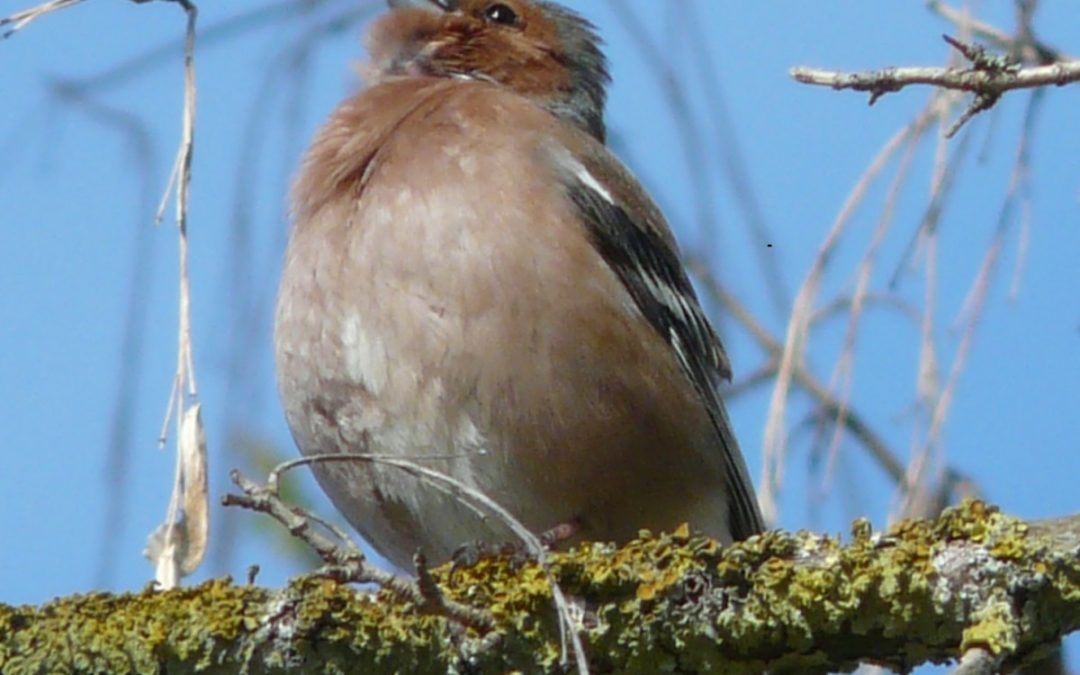
by Richard Subber | Jul 23, 2024 | Book reviews, Books, Human Nature
talk a lot, pick a little…
Book review:
What the Robin Knows:
How Birds Reveal the Secrets of the Natural World
Jon Young
Boston: Mariner Books-Houghton Mifflin Harcourt, 2012
241 pages
“Just as scientists have identified elements of human speech that reflect a speaker’s emotions, field experiments have shown that the calls of many animals provide listeners with information about objects and events in the environment. Like human speech, therefore, animal vocalizations simultaneously provide others with information that is both semantic and emotional.”
p. 105 from What the Robin Knows
The birds talk to each other. All species of birds and many species of other animals also listen to birds. Both prey and predator species listen to the birds. We can listen to birds.
I suspect that Young’s widely experienced detail must be a bit deceptive. I suspect there is more randomness than Young explains. If there weren’t some randomness, the predators would have figured out the patterns long ago.
…and some other thoughts: suppose the birds are really talking…what if your dog can talk and chooses not to?
* * * * * *
Book review. Copyright © Richard Carl Subber 2024 All rights reserved.
“Fishering,” by Brian Doyle
…what meets the eye…
As with another eye: Poems of exactitude with 55 free verse and haiku poems,
and the rest of my poetry books are for sale on Amazon (paperback and Kindle)
and free in Kindle Unlimited, search Amazon for “Richard Carl Subber”
* * * * * *
by Richard Subber | Jul 18, 2024 | My poetry, Poetry, Reflections
think like a chipmunk…
Busy
The chippie halts on the second step.
I’ve seen him there, he will not stay,
his hole is close, he will not stray,
he skips across my little yard
but not too far.
I want to ask him, just this once,
if he’d like to scout a cozy place
he’s never seen,
he stares at me, no fear,
I’d like a little chat, I think,
I’d like to hear his thoughts,
but I can see
he has no time to talk.
October 23, 2019
Inspired by Rosemerry Wahtola Trommer’s “Following Mr. Berry’s Instructions,”
as published October 23, 2019, on her website, A Hundred Falling Veils
“You have to be able to imagine lives that aren’t yours.”
Wendell Berry
* * * * * *
My poetry. Copyright © Richard Carl Subber 2024 All rights reserved.
Book review: The Bridges of Madison County
If you’re looking for
highly stoked eroticism
and high-rolling lives
that throw off sparks when they touch,
then look elsewhere.
by Robert Waller
–
In other words: Poems for your eyes and ears with 64 free verse and haiku poems,
and the rest of my poetry books are for sale on Amazon (paperback and Kindle)
and free in Kindle Unlimited, search Amazon for “Richard Carl Subber”
Your comments are welcome—tell me what you’re thinking.
* * * * * *

by Richard Subber | Jul 16, 2024 | Theater and play reviews
“Wolverines!”
Movie review:
Red Dawn
Red Dawn is more than a shoot ‘em up movie.
Red Dawn (1984, PG-13, 114 minutes) is all-American stuff—the mountaineering teenage heroes, with Boy Scout gear and some guns, prevail over the invading Russian paratroopers. It makes you want to shout “Wolverines!” It was still a Cold War environment in 1984, just sayin’.
Jed (Patrick Swayze) and his friends try to talk out their issues of patriotism, humanity, privation, and growing up. There is death, and triumph, and betrayal, and pride, and growing up.
It helps that the Russian soldiers are by-the-book brutal characters, not too smart, and they can’t seem to beat a small gang of teens (“Wolverines!”) who are “hiding” in the mountains.
There’s another Red Dawn film, done in 2012 (PG-13, 93 minutes), with a similar story line. It’s a remake, but it’s not fully baked, it’s mostly action and shooting. Don’t bother with it.
* * * * * *
Movie review. Copyright © Richard Carl Subber 2024 All rights reserved.
Go Down Together…Bonnie and Clyde (book review)
they were violent criminals
–
In other words: Poems for your eyes and ears with 64 free verse and haiku poems,
and the rest of my poetry books are for sale on Amazon (paperback and Kindle)
and free in Kindle Unlimited, search Amazon for “Richard Carl Subber”
* * * * * *
by Richard Subber | Jul 13, 2024 | My poetry, Poetry, Reflections
bucket list?
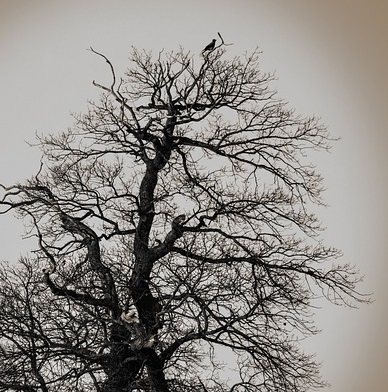
way up there
I’ve never been to the top-most twig,
it’s not on my list,
I know that’s true.
I saw her,
swaying as the tree tops
let the breezes do their thing,
otherwise she did not move.
I envied her pacific view,
and briefly wondered
what she cares to see,
when all around her does not hide,
when down means not too far,
when far away is not that far
for wings that wait to spread…
I guess she’s seen it all
ten thousand times,
I guess she might glance
for a moment at me,
and murmur “you wouldn’t believe…”
I think I might,
but I’m content
to let her be alone,
to be that high.
April 8, 2024
* * * * * *
My poetry. Copyright © Richard Carl Subber 2024 All rights reserved.
–
In other words: Poems for your eyes and ears with 64 free verse and haiku poems,
and the rest of my poetry books are for sale on Amazon (paperback and Kindle)
and free in Kindle Unlimited, search Amazon for “Richard Carl Subber”
Your comments are welcome—tell me what you’re thinking.
* * * * * *

by Richard Subber | Jul 9, 2024 | My poetry, Poetry
tinkle, sway, hum…
Winter, add Woo, stir
…all the notes make medleys,
it’s a quiet nightclub sound,
it’s okay to listen
with the other ear,
and hear the lilt and the lift
and the living rhythms
without trying too hard
to pay attention,
and nod in time
when an old refrain
makes a hole in the buzz,
and you hear again
those words that throb and skip
and nestle into
those last few tinkling keys…
Hingham, MA
April 2, 2024
Bob Winter at the keyboard
and Elaine Woo at the mic
made really beautiful music at Linden Ponds
on an otherwise really ordinary April afternoon.
* * * * * *
My poetry. Copyright © Richard Carl Subber 2024 All rights reserved.
Book review: The Financier
He is Theodore Dreiser’s villain…
–
Above all: Poems of dawn and more with 73 free verse poems,
and the rest of my poetry books are for sale on Amazon (paperback and Kindle)
and free in Kindle Unlimited, search Amazon for “Richard Carl Subber”
* * * * * *
