by Richard Subber | Mar 5, 2023 | American history, Book reviews, Books, History
they weren’t heroic…
Book review:
Go Down Together:
The True, Untold Story of Bonnie and Clyde
by Jeff Guinn (b1951)
New York: Simon and Schuster, 2009
467 pages
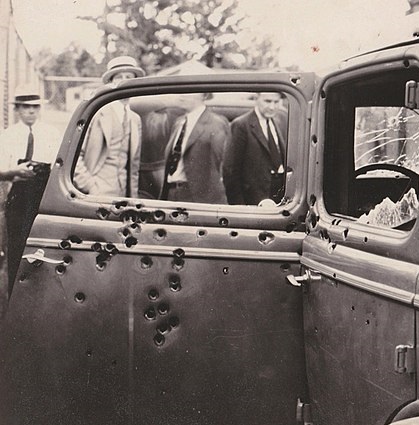
Newspaper coverage in the early 1930s turned Bonnie Parker and Clyde Barrow into nationwide celebrities. Movies and books have perpetuated the carelessly positive news coverage, and the often fictional heroic antics of the crime duo.
The matter-of-fact treatment in Go Down Together makes the unvarnished reality more clear: Bonnie and Clyde were wacky, violent, and vicious criminals who killed 13 people and spent their 21-month crime spree on the run, mostly living “…the mundane, routine Barrow Gang misery of camping in cars and dining on cans of cold beans.”
They were killed in an ambush on May 23, 1934, in Louisiana. Several officers of the law fired about 160 bullets at them in less than 20 seconds—neither Bonnie nor Clyde fired a single shot.
Nothing about Bonnie and Clyde makes a pretty picture.
* * * * * *
Book review. Copyright © Richard Carl Subber 2023 All rights reserved.
–
As with another eye: Poems of exactitude with 55 free verse and haiku poems,
and the rest of my poetry books are for sale on Amazon (paperback and Kindle)
and free in Kindle Unlimited, search Amazon for “Richard Carl Subber”
* * * * * *

by Richard Subber | Feb 25, 2023 | American history, Book reviews, Books, History, World history
engrossing, but not Larson’s best…
Book review:
Dead Wake: The Last Crossing of the Lusitania
by Erik Larson (b1954)
Crown Publishers, New York, 2015
430 pages
I’m a fan of Erik Larson, starting with The Devil in the White City. Dead Wake offers a similar reading experience in Larson’s “no frippery” prose, and with a consistent tension that makes it a page turner.
I confess that it’s hard to avoid the somewhat deadening spoiler in this story: from Page 1, we know how it’s going to end. Torpedoed by Germany’s U-20, the Lusitania went down in about 18 minutes. Larson’s approach is exclusively chronological; it’s not a bad thing, but I found myself almost thinking out loud—“let’s get on with it”—as I navigated through the certainly more than adequate number of anecdotal scenes involving the ill-fated passengers and their clothing/meals/flirtations/premonitions/self-assurances…
Full disclosure: to the end, I was rooting for passenger Theodate Pope to get some love in her life. On the other hand, I now know far more than I care to know about President Wilson’s mushy courting of Edith Galt (who became his second wife).
The thing is, Larson tells a great yarn here but he doesn’t invite the reader to grapple with it. It falls short of shattering, consequential drama. The sociable elements—the almost chatty context—of much of his tale seem to displace full engagement with the terror of the event, and the outcomes that it hastened.
Larson tries to invest this story with solemnity, respect, and understanding.
Dead Wake is a dutiful—indeed, engrossing—account, but it doesn’t quite rise to the occasion.
* * * * * *
Book review. Copyright © Richard Carl Subber 2023 All rights reserved.
Play review: A Doll’s House
Henrik Ibsen’s classic on abuse…
–
As with another eye: Poems of exactitude with 55 free verse and haiku poems,
and the rest of my poetry books are for sale on Amazon (paperback and Kindle)
and free in Kindle Unlimited, search Amazon for “Richard Carl Subber”
* * * * * *

by Richard Subber | Jan 11, 2023 | Books, Reflections, Tidbits
“The beginning is always today.”
Mary Wollstonecraft Shelley (1797-1851)
Today started when you woke up. Think about beginnings.
Thanks to my trusted advisor for this one.
Shelley wrote Frankenstein; or, The Modern Prometheus (1818), and by the way, if you’ve only watched the movie, you don’t know the Frankenstein story. Read the book.
* * * * * *
Copyright © Richard Carl Subber 2023 All rights reserved.
–
many waters: more poems with 53 free verse poems,
and the rest of my poetry books are for sale on Amazon (paperback and Kindle)
and free in Kindle Unlimited, search Amazon for “Richard Carl Subber”
* * * * * *
by Richard Subber | Aug 31, 2022 | Book reviews, Books, Joys of reading, Theater and play reviews
the movies ignore the real story…
Movie review:
The Scarlet Letter
by Nathaniel Hawthorne (1804-1864)
Published 1850
I watched three films based on Nathaniel Hawthorne’s iconic story, The Scarlet Letter. My small sample (there are at least nine movies based on the story) confirms that Hollywood really can’t stand the story as Hawthorne wrote it.
Read my review of Hawthorne’s book, click here.
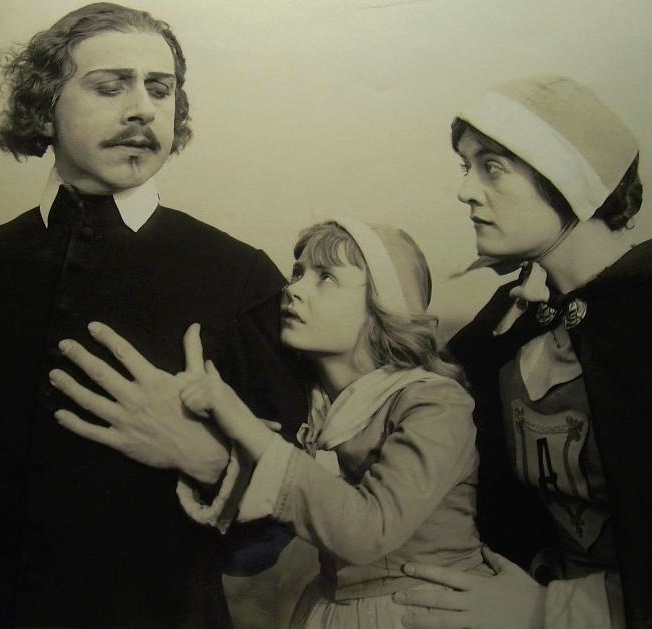
In 1934 Colleen Moore played Hester Prynne and Hardie Albright played Rev. Arthur Dimmesdale in the tale about Puritan condemnation of adultery and children born out of wedlock. Hester is sentenced to wear an embroidered scarlet letter “A” on her bosom, and Dimmesdale endlessly rationalizes his decision to conceal his role as the mysterious father of little Pearl. The movie reflects the production limitations and typical dramatic direction in the 1930s—there’s a lot of staring into the camera, and crowded action scenes.
Meg Foster played Hester and John Heard played Dimmesdale in the 1979 TV miniseries about The Scarlet Letter. There are recognizable scenes from the book. The script is nondescript. It’s a ponderous distillation of Hawthorne’s words.
The 1996 version with Demi Moore as Hester and Gary Oldman as Dimmesdale apparently is the latest in the unsatisfying series of film versions of The Scarlet Letter. It is an almost lurid mal-adaptation of the book. The hot scenes featuring Hester and Dimmesdale attracted to each other are a complete invention—Hawthorne eschews any explicit reference or description of physical intimacy between his principal characters. Demi and Gary get it on, but it ain’t Hawthorne.
In all three films, the role of little Pearl is deliberately underplayed. The child is a principal factor in the story—her feelings, her joie de vivre, her contemplations, her maturation are fully explored in the book, and ignored in the movies.
The mental and emotional quagmires that are explored and endured by Hester and Dimmesdale are generally ignored in the movies. None of the movies uses the ending that fulfills the book.
In short, in my mind, if you want to claim that you are familiar with the themes, plot, and denouement of The Scarlet Letter, you have to read the book.
All of the movies are scandalously thin and false charades of the powerful drama of Hawthorne’s story that was published very successfully in 1850.
If you think you remember reading it a long time ago, try it again.
* * * * * *
Movie review. Copyright © Richard Carl Subber 2022 All rights reserved.
Book review: Shantung Compound
They really didn’t care much
about each other…
by Langdon Gilkey
–
My first name was rain: A dreamery of poems with 52 free verse and haiku poems,
and the rest of my poetry books are for sale on Amazon (paperback and Kindle)
and free in Kindle Unlimited, search Amazon for “Richard Carl Subber”
* * * * * *
by Richard Subber | Apr 22, 2022 | American history, Book reviews, Books, History, Human Nature
toil and trouble….and craziness
Book review:
The Witches: Salem, 1692
by Stacy Schiff (b1961)
Little, Brown and Company, New York, 2015
498 pages
It may be that Stacy Schiff has neglected to include some fact or sentiment about the Salem witch trials, but I can’t imagine what it might be. The Witches is an expansive compendium of the whos and whats and whys and wherefores of this compelling—yet essentially impenetrable—story about a community gone crazy.
Maybe you had to be there to understand it.
It’s too easy to suggest that the McCarthy Communism hunting in 1954 is a modern analogy, but it won’t work. The whole dreadful McCarthy thing was a political football, approaching a sideshow even though it attracted the nominal attention of the nation and destroyed many lives.
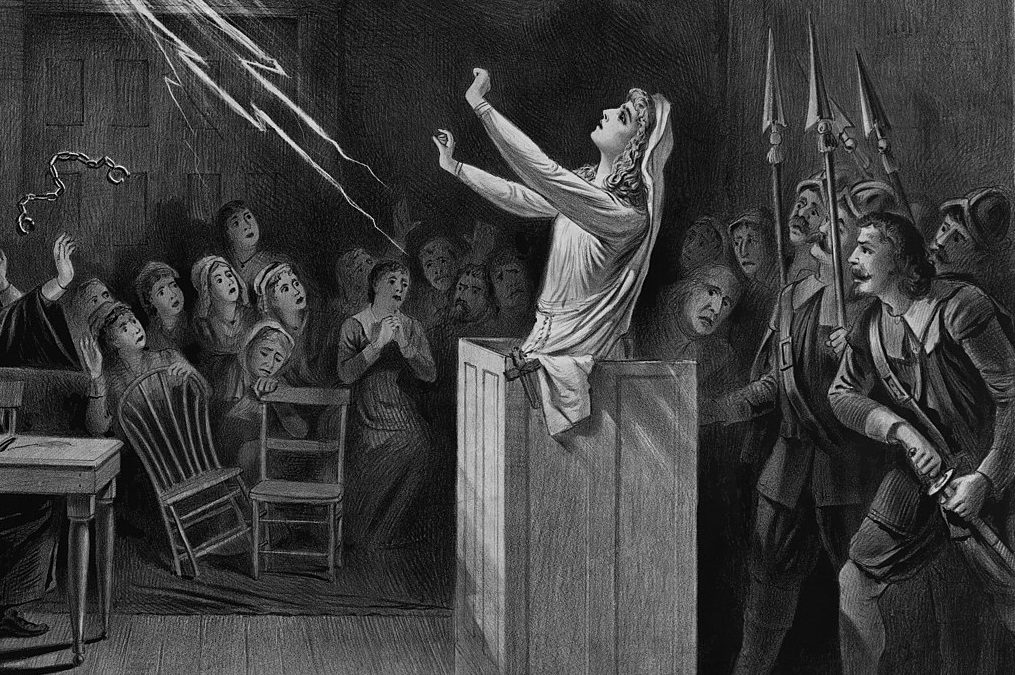
The Salem witch trials (and the witch hunting that went on in neighboring towns) consumed the waking hours of all the townsfolk, who were deeply convinced that witches exist and that they were in league with satanic forces.
For my taste, Schiff tells too much of the story. I would have been content with a less detailed account. There is repetition that is dispensable.
For my taste, she struck a good balance between telling the story as it happened, and inviting the reader to suspect that the teenage girls were fooling all along, and that too many accusers had a personal reason to “get” the accused, and that too many religious and civic leaders who struggled unsuccessfully with their religious faith and the opposing impulses of their arguably decent selves had quickly figured out that the witch craze was a very nasty game.
You don’t need to read the whole book to figure out that there was some very destructive bogus stuff going on in the Massachusetts Bay Colony in 1692.
You don’t need to read the whole book to be convinced that some folks aren’t continuously motivated by a decent streak of good will and a desire to support communal well-being.
* * * * * *
Book review. Copyright © Richard Carl Subber 2022 All rights reserved.
–
My first name was rain: A dreamery of poems with 52 free verse and haiku poems,
and the rest of my poetry books are for sale on Amazon (paperback and Kindle)
and free in Kindle Unlimited, search Amazon for “Richard Carl Subber”
* * * * * *
