
by Richard Subber | Nov 11, 2025 | Book reviews, Books, Joys of reading, Language, Poetry, Reflections, Reviews of other poets
you don’t have to put it down…
Book review:
A Thousand Mornings
by Mary Oliver (1935-2019)
New York, The Penguin Press, 2012
82 pages
If you know nothing about Mary Oliver, this book is as good as any to make your acquaintance.
The poems in A Thousand Mornings are recognizable Mary Oliver stuff:
“…which thought made me feel
for a little while
quite beautiful myself.” (“Poem of the one world”)
“I hardly move though really I’m traveling
a terrific distance.
Stillness. One of the doors
into the temple.” (“Today”)
This is a slim volume, a light collection.
You can read it in one sitting if you want to.
You just might want to.
* * * * * *
Book review. Copyright © Richard Carl Subber 2025 All rights reserved.
Book review: The Financier
Theodore Dreiser’s villain…
–
Seeing far: Selected poems with 47 free verse and haiku poems,
and the rest of my poetry books are for sale on Amazon (paperback and Kindle)
and free in Kindle Unlimited, search Amazon for “Richard Carl Subber”
* * * * * *

by Richard Subber | Nov 6, 2025 | Book reviews, Books, Human Nature
your own slow smile grows…
Book review:
The Price of Salt
by Patricia Highsmith (1921-1995)
Victoria, British Columbia, Canada: Must Have Books, 1952,2021
166 pages
“…(Carol’s) slow smile growing, before her arm lifted suddenly,
her hand waved a quick, eager greeting that Therese had never seen before.
Therese walked toward her.”
As you read the last words of The Price of Salt, your own slow smile grows. It’s a love story that ends happily.
The story of the love story is challenging—it embraces peaks of happiness and vales of sadness and anger. Like every love story, I guess.
Carol and Therese are different personalities, they imagine different lives—but they never stop seeing their future lives together after their completely serendipitous first meeting. They never stop struggling to get to the future. Therese says: “Everything’s not as simple as a lot of combinations.”
Highsmith tells a compelling story, but she makes the reader work for it. The prose is congested, there are quirky side trips in the action, the men in their lives are more caricature than personality, and both Carol and Therese repeatedly invite the reader’s patience as they try to think about what they’re thinking about.
It doesn’t stop the smiles from growing.
* * * * * *
Book review. Copyright © Richard Carl Subber 2025 All rights reserved.
Book review: The Comanche Empire
the other story of the American West…
–
In other words: Poems for your eyes and ears with 64 free verse and haiku poems,
and the rest of my poetry books are for sale on Amazon (paperback and Kindle)
and free in Kindle Unlimited, search Amazon for “Richard Carl Subber”
* * * * * *
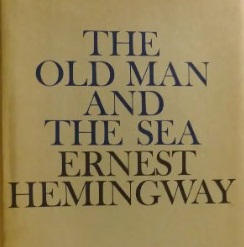
by Richard Subber | Oct 30, 2025 | Book reviews, Books, Human Nature, Joys of reading
the fish isn’t the thing…
Book review:
The Old Man and the Sea
Ernest Hemingway (1899-1961)
New York: Charles Scribner’s Sons, 1952
127 pages
The old man has a name. Santiago. He is a perilously old fisherman. He has befriended a boy, a helper—but he fishes alone.
The Old Man and the Sea isn’t about the sea. You know what it’s about. It’s about the old man, a big fish, and the vicissitudes of life concentrated in one long, lonely, painful, heroic, unsatisfying, and redemptive fishing trip.
Santiago lives a life after he hooks a marlin that is too big for him to catch. He suffers, he marvels, he learns about himself, he lives a dire philosophy, he yearns for help as he endures the hours, he accepts again and again that he is responsible for his life that may end quickly.
Santiago unknowingly shares his boat with fate and chance. He gives up his illusion of control when the sharks begin to destroy his prize.
He returns to his solitary life ashore, and the battered carcass of the fish tells no tales.
* * * * * *
Book review. Copyright © Richard Carl Subber 2025 All rights reserved.
Book review: The Blithedale Romance
by Nathaniel Hawthorne, not his best…
–
As with another eye: Poems of exactitude with 55 free verse and haiku poems,
and the rest of my poetry books are for sale on Amazon (paperback and Kindle)
and free in Kindle Unlimited, search Amazon for “Richard Carl Subber”
* * * * * *

by Richard Subber | Oct 26, 2025 | Book reviews, Books, Books Commentary, Joys of reading
Spread the word
Book review:
History in English Words
Owen Barfield
Hudson, NY: The Lindisfarne Press, 1953
240 pages
I have found a beautiful book, and I want to share it with you. Indulge me.
Owen Barfield, an Oxford graduate who loves language even more than I love it, wrote History in English Words. In his Foreword, W. H. Auden calls this delicate, powerful work “a weapon in the unending battle between civilisation and barbarism.” All foes of barbarism should procure a copy immediately.
This is not an easy read, but it’s easy to keep reading it. Barfield brings his remarkable erudition to nearly every page; the reader learns much about words—in English, Latin, Greek, Sanskrit, and the Indo-European protolanguage—and learns much about history, philosophy, religion, literature, culture, mind, and the deep structures of consciously human society. I’m not kidding. This book is unique in my experience.
Here’s a casual teaser:
“…it has been said that there are more [new words] in Shakespeare’s plays than in all the rest of the English poets put together.”
Examples of the Bard’s imagination:
advantageous, amazement, critic, dishearten, dwindle, generous, invulnerable, majestic, obscene, pedant, pious, radiance, reliance, sanctimonious
Throughout 240 pages, Barfield implicitly emphasizes a dynamic point: new words are created continuously in all languages by all peoples, and old words continuously acquire new meanings in all cultures.
The way we think and express our thoughts and feelings today could not have been done—in the fullness of our modern meanings and understandings—as little as 100 years ago.
Take a minute and speak three carefully considered sentences about three topics that you think are important or exciting. Almost certainly, no human being has ever before experienced your exact thought processes and used precisely your words to express them.
Spread the word.
* * * * * *
Book review. Copyright © Richard Carl Subber 2025 All rights reserved.
–
My first name was rain: A dreamery of poems with 52 free verse and haiku poems,
and the rest of my poetry books are for sale on Amazon (paperback and Kindle)
and free in Kindle Unlimited, search Amazon for “Richard Carl Subber”
* * * * * *

by Richard Subber | Oct 14, 2025 | Book reviews, Books, Books Commentary, Joys of reading, Language
a one-man library…
Book review:
Literary Life: A Second Memoir
by Larry McMurtry (1936-2021)
Simon & Schuster, 2009
McMurtry moves me to want more, read more….
It’s incredibly easy to read McMurtry—I’ve read Books: A Memoir, Walter Benjamin at the Dairy Queen, and now Literary Life. It seems, repeatedly, that he writes in an off-hand way; thoughts and scenes and chapters can end very abruptly. Yet, the work seems polished. The prose is spare, as Larry acknowledges.
I am titillated by his familiar references to so many authors and works. I would love to be a “man of letters,” as McMurtry claims to be. The draw for me is McMurtry’s immersion in books. I would be thrilled to own 200,000 books. Desperately thrilled.
I’m pretty sure that McMurtry’s passionate engagement with books and authors is a believable lifestyle. His many references to re-reading books is a believable commitment.
I have for some time, since I retired, envisioned taking the pledge to read the entire oeuvre of an author I like. Now I am moved to read McMurtry’s books. I plan to re-read Books and Literary Life to get clues about how to read them. I’ll consider reading his works in order by pub date, except for the Lonesome Dove and Berrybender tetralogies, of course.
I don’t think I’ll be disappointed.
* * * * * *
Book review. Copyright © Richard Carl Subber 2025 All rights reserved.
Book review: Hag-Seed
by Margaret Atwood…it ain’t Shakespeare
–
Above all: Poems of dawn and more with 74 free verse poems,
and the rest of my poetry books are for sale on Amazon (paperback and Kindle)
and free in Kindle Unlimited, search Amazon for “Richard Carl Subber”
* * * * * *

by Richard Subber | Oct 9, 2025 | American history, Book reviews, Books, Politics, Power and inequality
…lethargy, ineptitude, arrogance…
Book review:
War at The Wall Street Journal:
Inside the Struggle
to Control an American Business Empire
by Sarah Ellison
New York: Houghton, Mifflin, 2010.
Everything I always wanted to know about Rupert Murdoch’s (News Corp.) purchase of Dow Jones & Co. and the Wall Street Journal.
The basic story is the disgusting inability of the extended Bancroft family to actually exercise the prudent guardianship of the Journal which most of them claimed to feel as a birthright and sacred obligation. Instead, this pack of very wealthy and somewhat dissipated family heirs finally ended up just going for the gold (Rupert overpaid big time for the Journal).
It’s also fascinating and unavoidable to see the lethargy, ineptitude, and arrogance of the pampered editorial staff of the Journal. They just didn’t see The Fall coming and they were clueless about how to deal with the changing marketplace and the transformation of journalism.
They still are. Sic semper.
p.s. If you don’t know all of the myriad characters, it’s a bit difficult to keep track of the action
because Ellison names dozens of people, more or less, on every page.
* * * * * *
Book review. Copyright © Richard Carl Subber 2025 All rights reserved.
“…and dipped in folly…”
only Poe knows how to say it…
–
As with another eye: Poems of exactitude with 55 free verse and haiku poems,
and the rest of my poetry books are for sale on Amazon (paperback and Kindle)
and free in Kindle Unlimited, search Amazon for “Richard Carl Subber”
* * * * * *
