
by Richard Subber | Jun 5, 2025 | Human Nature, Joys of reading, Reflections, Tidbits
just the same…
“I do miss her,” he answered, and sighed again.
“Folks all kep’ repeatin’ that time would ease me,
but I can’t find it does.
No, I miss her just the same every day.”
Fisherman Elijah Tilley talks about his deceased wife, he calls her “poor dear,”
in Sarah Orne Jewett: Novels and Stories
by Sarah Orne Jewett (1849-1909)
The Library of America
New York: Literary Classics of the United States, Inc., 1994
p. 477
* * * * * *
Copyright © Richard Carl Subber 2025 All rights reserved.
–
Above all: Poems of dawn and more with 73 free verse poems,
and the rest of my poetry books are for sale on Amazon (paperback and Kindle)
and free in Kindle Unlimited, search Amazon for “Richard Carl Subber”
* * * * * *

by Richard Subber | May 27, 2025 | Book reviews, Books, Human Nature, Joys of reading, Language, Reflections
these characters are yearning, yearning…
Book review:
Victory
by Joseph Conrad (1857-1924)
New York: Doubleday, Doran & Company, Inc., 1928
412 pages
It may be that it is enough to say about Victory that it is lush prose that wraps around your mind and leaves you sated at the end of every chapter.
Conrad’s style, I dare to say, is not for every modern taste. It is dialogue-rich. The action is spare. For me, the essential appeal of Victory is the reflective context of the characters’ state of mind: their imaginations, their aspirations, their candid self-assessments.
In Victory, there is enough honesty, enough resignation, enough disappointment, enough yearning to make you feel like you want to claim that your life is good.
At least, good enough.
* * * * * *
Book review. Copyright © Richard Carl Subber 2025 All rights reserved.
–
Writing Rainbows: Poems for Grown-Ups with 59 free verse and haiku poems,
and the rest of my poetry books are for sale on Amazon (paperback and Kindle)
and free in Kindle Unlimited, search Amazon for “Richard Carl Subber”
* * * * * *

by Richard Subber | May 10, 2025 | American history, Book reviews, Books, Democracy, History, Joys of reading, Politics, Power and inequality
seemingly unavoidable…
Book review:
The Demon of Unrest
by Erik Larson (b1954)
New York: Crown Publishing Group, div. of Penguin Random House, 2024
565 pages
You’ll recognize the casually engaging prose and the dedicated storytelling style of Erik Larson. It’s a pleasure to read everything he writes.
Larson digs deep to explore the nature of the “demon of unrest” that made trouble for decades and wouldn’t stop provoking the evil sentiments and the violent politics that preceded the historic outbreak of the American Civil War in the Charleston harbor in April 1861.
The Demon of Unrest names and spotlights all the characters who played mostly behind-the-scenes roles as Lincoln and Davis and Beauregard and Scott and Seward and Ruffin and their well-known colleagues blustered and schemed and waited and welcomed and feared the seemingly unavoidable war to end slavery.
No matter how much you know, you’ll learn something more about the assault on Ft. Sumter by reading this book.
* * * * * *
Book review. Copyright © Richard Carl Subber 2025 All rights reserved.
–
As with another eye: Poems of exactitude with 55 free verse and haiku poems,
and the rest of my poetry books are for sale on Amazon (paperback and Kindle)
and free in Kindle Unlimited, search Amazon for “Richard Carl Subber”
* * * * * *
by Richard Subber | May 8, 2025 | Joys of reading, Language, Tidbits
ink stains on the philosopher’s stone…
“The true alchemists do not change lead into gold;
they change the world into words.”
William H. Gass (1924-2017)
American novelist, philosopher
Gass had his way with words. If you’re a serious reader, check him out.
* * * * * *
Copyright © Richard Carl Subber 2025 All rights reserved.
–
In other words: Poems for your eyes and ears with 64 free verse and haiku poems,
and the rest of my poetry books are for sale on Amazon (paperback and Kindle)
and free in Kindle Unlimited, search Amazon for “Richard Carl Subber”
* * * * * *

by Richard Subber | Apr 26, 2025 | Book reviews, Books, Joys of reading, Language
Romantic historical fiction doesn’t get any better…
Consider the art of Rafael Sabatini (1875-1950)
Novelist extraordinaire
Sabatini was a more popular writer during his lifetime, when his trademark works of romantic, principled historical fiction were more accessible and more acceptable. If you have not read Scaramouche, you have deprived yourself. You will feel yourself to be a better, more lavishly happy person after you read it for the first time. There is the occasional swordplay in his novels, however, I warn you, most of the time his characters do nothing but talk. I think that’s all you need for a book review.
My interest here is to share a sample of his ingenious and engaging prose. This is from Saint Martin’s Summer...in fact, these are the first two paragraphs of the first chapter:
“My Lord of Tressan, His Majesty’s Seneschal of Dauphiny, sat at his ease, his purple doublet all undone, to yield greater freedom to his vast bulk, a yellow silken undergarment visible through the gap, as is visible the flesh of some fruit that, swollen with over-ripeness, has burst its skin.
“His wig—imposed upon him by necessity, not fashion—lay on the table amid a confusion of dusty papers, and on his little fat nose, round and red as a cherry at its end, rested the bridge of his horn-rimmed spectacles. His bald head—so bald and shining that it conveyed an unpleasant sense of nakedness, suggesting that its uncovering had been an act of indelicacy on the owner’s part—rested on the back of his great chair, and hid from sight the gaudy escutcheon wrought upon the crimson leather. His eyes were closed, his mouth open, and whether from that mouth or from his nose—or, perhaps, conflicting for issue between both—there came a snorting, rumbling sound to proclaim that my Lord the Seneschal was hard at work upon the King’s business.”
Maybe that’s all you need for a book review.
Eat your heart out, John Grisham.
* * * * * *
Book review. Copyright © Richard Carl Subber 2025 All rights reserved.
Book review: American Colonies
So many and so much
came before the Pilgrims
by Alan Taylor
–
My first name was rain: A dreamery of poems with 53 free verse and haiku poems,
and the rest of my poetry books are for sale on Amazon (paperback and Kindle)
and free in Kindle Unlimited, search Amazon for “Richard Carl Subber”
* * * * * *
by Richard Subber | Mar 29, 2025 | Book reviews, Books, Books Commentary, Joys of reading, Language, Poetry
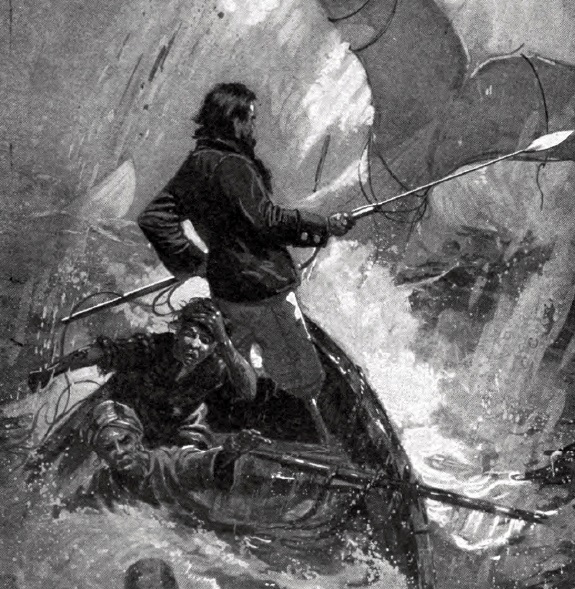
Moby-Dick and stuff….
I know whale tales aren’t for everyone.
If you’re still with me, you might be interested to know that Herman Melville’s iconic whale story was published 174 years ago (titled: “The Whale”) in London, and then, a month later, in New York.
The original American title is Moby-Dick; or, The Whale. Melville actually went to sea as a crewman on a whaling vessel, and based his novel in part on a real sperm whale named Mocha Dick, known to South Pacific sailors in the 1840s.
Early in his career Melville was briefly acclaimed for some of his South Pacific stories, such as Typee, but he was obscure during the last 30 years of his life. He earned only $1,200 or so from the sale of about 3,200 copies of Moby-Dick, which was out of print when he died in 1891.
A first American edition of the book can easily be secured if you have about $80,000 (free shipping!) to spend.
Melville wrote in a variety of genres—again, not for all tastes. I’m a big fan of Moby-Dick, and I’m also an advocate for Bartleby, the Scrivener: A Story of Wall Street. Nothing of the South Pacific here. The circumstances of this desiccated short story are curious, even eccentric, incredulous. The withered and aloof Bartleby is presented, examined and disdained, until his very dispirited isolation makes him the object of the narrator’s genuine but increasingly troubled caretaking.
Don’t overlook Billy Budd, Sailor. It’s a searing morality play.
You may be surprised to know that Melville also wrote poetry. One critic has somewhat ponderously suggested that Moby-Dick is filled with Melville’s incipient poetry. I certainly believe that a story can contain a poem, but I don’t see anything like that in Moby-Dick.
* * * * * *
Book review. Copyright © Richard Carl Subber 2025 All rights reserved.
The “dime novels” in the Civil War
Think “blood-and-thunder”…
–
My first name was rain: A dreamery of poems with 52 free verse and haiku poems,
and the rest of my poetry books are for sale on Amazon (paperback and Kindle)
and free in Kindle Unlimited, search Amazon for “Richard Carl Subber”
* * * * * *
