
by Richard Subber | Dec 3, 2024 | Book reviews, Books, Human Nature, Joys of reading, My poetry, Poetry, Reflections, Theater and play reviews
unforgettable…
Movie review and book review:
Atonement
Atonement is a story of lives of irredeemable sadness. Ian McEwan wrote the book that is faithfully portrayed in this 2007 film (rated R, 123 minutes)—it got seven Oscar nominations—starring Keira Knightley (Cecilia), James McAvoy (Robbie), Romola Garai (child Briony), Saoirse Ronan (18-year-old Briony), and Vanessa Redgrave (mature Briony).
In brief: Briony, a child, tells a dreadful lie about her sister’s lover, forcing Cecilia and Robbie to live separate, desperately tormented lives during World War II.
This poem is my “Thumbs Up” review of the movie and the book.
Unforgettable
This memory is lava hot,
it mingles, lava slow,
in all my thoughts,
in all my mind.
It is a crumble, peat, dark,
peat rich, no single whole,
but bits of all.
I cannot grasp it entire.
It fills me,
it is full of me,
full with my dread imaginings,
full with my discarded dreams,
so full…
It burns, it sears,
a red haze in my every gaze,
a scarlet shackle on each heartbeat.
I accept the impotence of atonement.
My long-ago childish deed cannot be undone,
that indulgence in excitement
and attention and novelty
and vengeance and purest love.
Unbidden, I saw an act I didn’t understand,
two lovers, I cherished them,
their coupling had no inner meaning for me,
yet showed they had more love for each other
than each for me…
Later, a twisted crime he did not—could not—commit,
yet I accused—“I saw him”—I lied,
to hurt him and to keep her, apart, for me.
That lie broke them.
At that moment, the words tasted brave
and older than my years.
The taste became gall.
Later, I was to know that I killed them.
My life has been my penance.
Now I understand what I could not see
and could not then feel.
Now I feel their horror that I invented
in place of their happiness.
Now I endure the unhappiness
they could not escape,
the terror born of a child’s simple plan
in a child’s heart.
…I keep those false words—“I saw him”—
spoken in righteous innocence,
in unknowable ignorance,
in unremembered pleasure…
I did not know I was trading my portion of happiness
for a memory that I keep
in a hole in my heart.
* * * * * *
Movie review. Book review. Copyright © Richard Carl Subber 2024 All rights reserved.
–
In other words: Poems for your eyes and ears with 64 free verse and haiku poems,
and the rest of my poetry books are for sale on Amazon (paperback and Kindle)
and free in Kindle Unlimited, search Amazon for “Richard Carl Subber”
* * * * * *
by Richard Subber | Nov 23, 2024 | Book reviews, Books, Poetry, Reviews of other poets
Teasdale teases…
Book review:
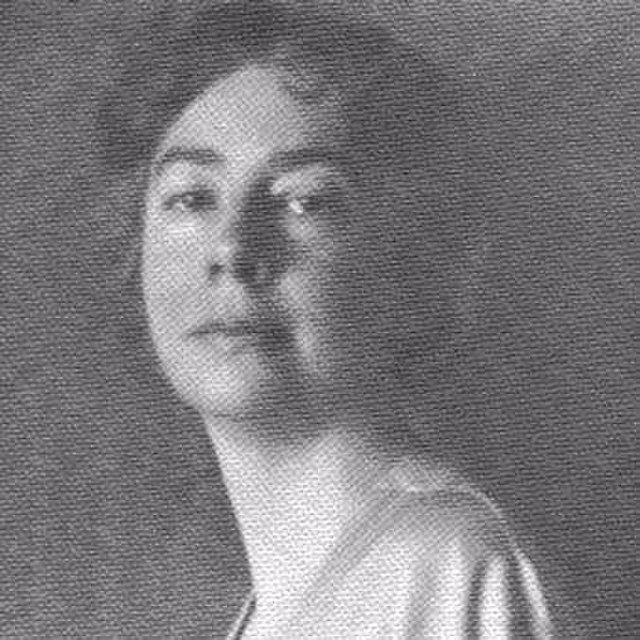
The Collected Poems of Sara Teasdale
by Sara Teasdale (1884-1933)
New York: The Macmillan Co., 1937.
311 pages
Sara Teasdale wrote about 350 poems, and some of them are quite long.
She is literate—no doubt about that, there are plenty of classical allusions to the gods.
For my taste, there is no personality in her Collected Poems—she writes “about” stuff instead of illuminating stuff.
In 1918 she won a Pulitzer Prize for poetry—it must have been a lean year.
There are bright notes here and there:
“Ah, Love, there is no fleeing from thy might,
No lonely place where thou hast never trod,
No desert thou hast left uncarpeted.”
from “Sappho,” p. 109
* * * * * *
Book review. Copyright © Richard Carl Subber 2024 All rights reserved.
Book review: To Serve Them All My Days
by R. F. Delderfield
A beloved teacher,
you know this story…
–
Above all: Poems of dawn and more with 73 free verse poems,
and the rest of my poetry books are for sale on Amazon (paperback and Kindle)
and free in Kindle Unlimited, search Amazon for “Richard Carl Subber”
* * * * * *
by Richard Subber | Nov 23, 2024 | Book reviews, Books, Joys of reading, Language, Power and inequality
men are not women…
Book review:
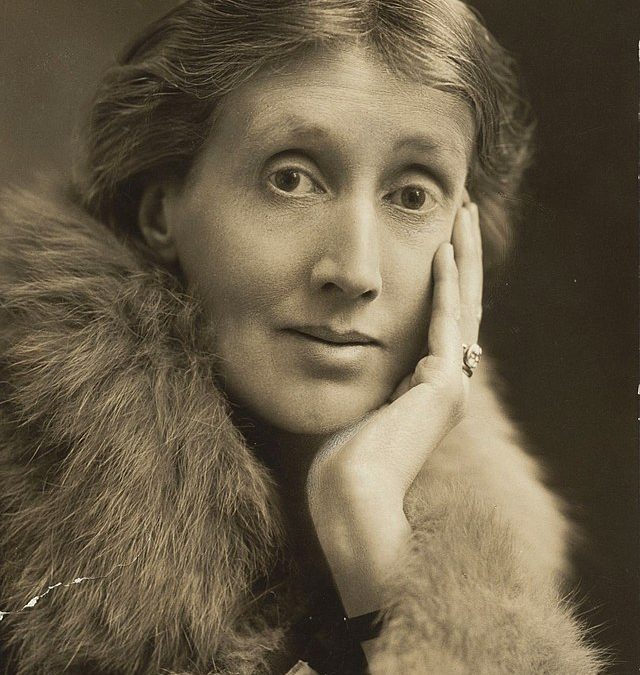
A Room of One’s Own
by Virginia Woolf (1882-1941)
San Diego, CA: A Harvest/HBJ Book, 1929, published 1957
118 pages
Virginia Woolf was no stranger to controversy, in her writing and in her life. In A Room of One’s Own, she wrote: “…when a subject is highly controversial…one cannot hope to tell the truth. One can only show how one came to hold whatever opinion one does hold.” (p. 4)
She refers to “men who have no apparent qualification save that they are not women” (p. 27) and she quotes fellow writer Samuel Butler (1835-1902): “Wise men never say what they think of women.” (p. 29)
A so-called Modernist, she wrote: “Women have served all these centuries as looking-glasses possessing the magic and delicious power of reflecting the figure of a man at twice its natural size.” (p. 35)
Even this short work is longer than it needs to be. Woolf’s prose just gushes with energy and insight and realistic gloom. One wonders whether a man has ever written such words.
Woolf claims that a writer needs “a room of one’s own.”
I think a writer can do very well indeed by making a space in which to write,
a space in the mind or somewhere in the house.
* * * * * *
Book review. Copyright © Richard Carl Subber 2024 All rights reserved.
The “dime novels” in the Civil War
Just think “blood-and-thunder”…
–
In other words: Poems for your eyes and ears with 64 free verse and haiku poems,
and the rest of my poetry books are for sale on Amazon (paperback and Kindle)
and free in Kindle Unlimited, search Amazon for “Richard Carl Subber”
* * * * * *

by Richard Subber | Nov 17, 2024 | Book reviews, Books, Joys of reading
…good storytelling…
Book review:
The Sea-Hawk
by Rafael Sabatini (1875-1950)
New York: Grosset & Dunlap, 1924
366 pages
Sabatini always invites the reader to get comfortable, to enjoy reading for literate pleasure, to relish good storytelling.
The Sea-Hawk has enough swash and buckle for any Sabatini fan.
Sir Oliver is a Cornish lord, a superman, and a wannabe corsair who can more or less bend steel with his bare hounds. Rosamund is the gentle lady of his heart’s desire. They get together at the end, but they have some swamps and fire and soul-searching to go through before they get to that entirely predictable end.
No reader—with or without delectable experience of Sabatini’s literary style—could fail to imagine the final outcome after reading just a few pages.
This inevitable foreknowledge is part of the appeal. You know how it’s going to turn out. You know that Sir Oliver and Rosamund will be smitten with self-doubt, and enlarged by courageous idealism, and sustained by everlasting love.
Sabatini makes it entirely comfortable to enjoy every minute of it, and he has the civilized decency to avoid any mention of heaving bosoms. The reader’s imagination has its own work to do.
p.s. The Sea-Hawk is a lot like Sabatini’s Scaramouche, except there’s water.
* * * * * *
Book review. Copyright © Richard Carl Subber 2024 All rights reserved.
Book review: The Snow Goose
…sensual drama, eminently poetic…
by Paul Gallico
–
In other words: Poems for your eyes and ears with 64 free verse and haiku poems,
and the rest of my poetry books are for sale on Amazon (paperback and Kindle)
and free in Kindle Unlimited, search Amazon for “Richard Carl Subber”
* * * * * *

by Richard Subber | Nov 12, 2024 | Book reviews, Books, History, Human Nature, World history
a corpse in the mirror
Book review:
Night
by Elie Wiesel (1928-2016)
Buchenwald survivor
Stella Rodway, trans.
New York: Bantam Books, 1958
109 pages
In Night, Elie Wiesel tells his story of being a teenage boy in the death camps of Nazi Germany during World War II.
He uses the necessary words, and he speaks from the depths.
Wiesel lost his mother, his father, and his young sister in the camps.
He was liberated from Buchenwald by American soldiers on April 11, 1945.
Wiesel recalls that after he was freed, he saw his reflection in a mirror for the first time since he was transported:
“From the depths of the mirror, a corpse gazed back at me.”
* * * * * *
Book review. Copyright © Richard Carl Subber 2024 All rights reserved.
Home Team: Poems About Baseball (book review)
Edwin Romond hits one more homer…
–
Writing Rainbows: Poems for Grown-Ups with 59 free verse and haiku poems,
and the rest of my poetry books are for sale on Amazon (paperback and Kindle)
and free in Kindle Unlimited, search Amazon for “Richard Carl Subber”
* * * * * *

by Richard Subber | Oct 31, 2024 | Book reviews, Books, Human Nature, Theater and play reviews
slow-moving lava love…
Book review:
The Bridges of Madison County
Robert James Waller (1939-2017)
New York: Warner Books Inc., 1992
171 pages
The Bridges of Madison County was a notably popular new book. However, I’m aware that not everyone is a fan.
If you’re looking for highly stoked eroticism and high-rolling lives that throw off sparks when they touch, look elsewhere.
Frankly, for lots of tastes, good advice is: look elsewhere no matter what you’re looking for.
For me, Bridges documents the chance intersection of the putatively unremarkable lives of Francesca and Robert with all the heat and dazzle of slow-moving lava, without its destructive power. They come together, they permit each other to nourish their beautiful personae and they generate a passion that consumes without burning.
Robert likes to talk in philosophical kinds of ways, and Francesca likes to listen.
Francesca and Robert come together too late in their lives, after unbreakable commitments have been made to other cherished persons who, regrettably, are not like themselves.
I am drawn to the unsounded depths of their love and their absolute, cascading, undeniable recognition of each other as the unforgettable objects of their burgeoning desire.
They understand that they must be content with the short lifetime of their dalliance. They honor their love by deeply understanding its nature, and by accepting the permanent separation that their unyielding integrity requires.
Robert whispers to Francesca: “…this kind of certainty comes only once…”
The Bridges of Madison County is a love song, a courtship, a delicate primer on yearning, a too brief opportunity to know how it feels to be in love like that.
Give it a try.
p.s. Clint Eastwood and Meryl Streep made the movie version with the same title in 1995 (rated PG-13, 135 minutes). You’ll love it if you like the book.
Waller’s book and the movie equally reveal the ethereal bond between Robert and Francesca. There is frank eroticism, with different physical and philosophical elements in the film and book, and a shared electric vitality.
The film and the book offer stylistically divergent life dramas that converge to a singular powerful love, and a perpetual loneliness that Robert and Francesca cannot minimize.
Give the film a try.
* * * * * *
Book review. Copyright © Richard Carl Subber 2024 All rights reserved.
Book review: A Cold Welcome
The culprit was global cooling,
500 years ago…
by Sam White
–
As with another eye: Poems of exactitude with 55 free verse and haiku poems,
and the rest of my poetry books are for sale on Amazon (paperback and Kindle)
and free in Kindle Unlimited, search Amazon for “Richard Carl Subber”
* * * * * *
