by Richard Subber | Aug 29, 2026 | American history, Book reviews, Books, History, Joys of reading, Revolutionary War
a primary mover
Book review:
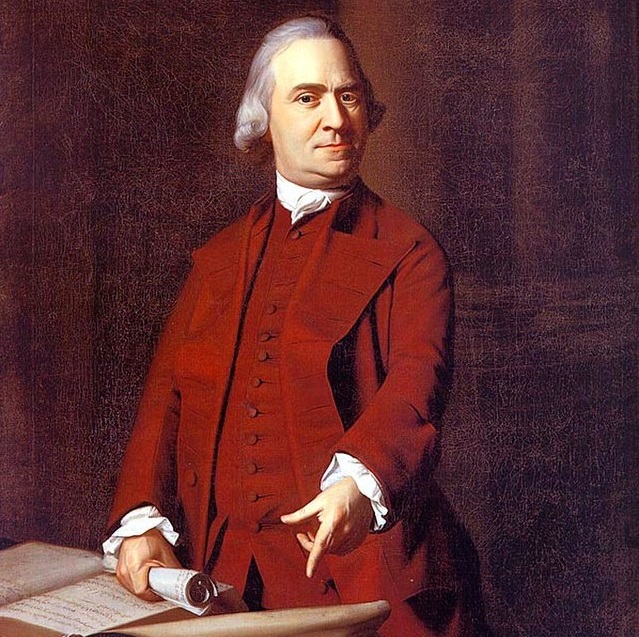
The Revolutionary: Samuel Adams
by Stacy Schiff (b1961)
New York: Little, Brown and Company, 2022
422 pages
If this is your first encounter with Stacy Schiff, you can guess it won’t be your last.
She writes powerful prose that makes you want to linger over the words, to learn more deeply, and to experience her transformation of history into something believable and real.
Samuel Adams was a primary mover of the American revolution.
The British loyalists on this side of the pond and the king and Parliament on the other side recognized his vital role in bringing the colonial Americans around to their ultimate decision to cut the ties that bound them to England and its king.
Samuel Adams tells a whole lot more about the story of the man than you learned before.
Take some time to read it.
* * * * * *
Book review. Copyright © Richard Carl Subber 2026 All rights reserved.
Book review: Waterloo
The slightly Hollywood bravery
of Richard Sharpe,
the butcher’s work done at the battle…
by Bernard Cornwell
–
Empyrean: new poems with 57 free verse poems,
and the rest of my poetry books are for sale on Amazon (paperback and Kindle)
and free in Kindle Unlimited, search Amazon for “Richard Carl Subber”
* * * * * *

by Richard Subber | Aug 18, 2026 | Book reviews, Books, Joys of reading, Language
…death is an anticlimax…
Book review:
Les Liaisons Dangereuses
by Pierre-Ambroise Choderlos de Laclos
Originally published 1782
Translated as Dangerous Liaisons by Ernest Dowson, New York: Doubleday, 1998
Illustrations by Sylvain Sauvage
Les Liaisons Dangereuses is not a garden of delight.
This is a book about love, but the reader will find precious little of it in these pages.
An acquaintance dismissed this voluptuous tale, thus: “All they do is talk.”
Let’s begin there. The language is rich. I daresay that Laclos turns language into an erogenous zone in Les Liaisons Dangereuses.
If you aspire to a working understanding of good and evil, you could do worse than listen to the riveting chatter of the leading personae, who choose each word with careful, deliciously ribald, austerely cruel, and domineering intent. You really don’t want to be a friend, and you most assuredly don’t want to be an enemy.
Men, en garde! The Marquise de Merteuil impulsively thinks of cojones as table ornaments.
Ladies, away! The Vicomte de Valmont is a pirate lover, he sees women as prize ships ready for boarding.
One might wish to believe that the others are innocents: Cécile Volanges, Danceny, the Présidente de Tourvel. But, hold. Each of them seeks to play the game of love, but they are hardly able to distinguish winning from losing.
Yes, this is a boundless exposé of the worst elements—of human intrigue, self indulgence, hubris, vaunting egos, and careless poaching of souls—that masquerade as amour.
Yes, in a sense, the characters are stereotypes, but each is, remarkably, ingeniously, ingenuously, a masterpiece of the type. Laclos uses every pertinent word to make them real.
Yes, Les Liaisons is an ultimately degraded experience for both the characters and readers…ultimately, the reader must condemn the Marquise and the Vicomte for so many lives destroyed…death is an anticlimax in Les Liaisons Dangereuses.
The Marquise and the Vicomte are burdened with a moral framework that shuns the absolute—they have unimaginably unsatisfied desires, and no intellectual elaboration of right and wrong.
Yet, a gentle reader may offer these two a bare shred of pity.
The Marquise de Merteuil and the Vicomte de Valmont swirl through their lives, casually jousting with each other as they amuse themselves in controlling the fates of other men and women, but remaining unaware that they are not in control of their own fates.
Note for bibliophiles: Whether you read this in the original French, or in the lush translation by Ernest Dowson, accept the pain of experiencing a literary style that is no longer in vogue, prepare yourself for Laclos’ fabulous late 18th century style that discards a simple declarative sentence, readily, with apparent joy, whenever a sentence heavily laden with clauses, phrases, and modifiers will do just as well, heedless of the effect on a reader, whose inclination may be to appreciate the writhing drama of this story, with somewhat fewer words.
* * * * * *
Book review. Copyright © Richard Carl Subber 2026 All rights reserved.
Book review: “Bartleby, the Scrivener”
Loneliness beyond understanding…
by Herman Melville
–
many waters: more poems with 53 free verse poems,
and the rest of my poetry books are for sale on Amazon (paperback and Kindle)
and free in Kindle Unlimited, search Amazon for “Richard Carl Subber”
* * * * * *

by Richard Subber | Aug 15, 2026 | Books, History, Reflections, World history
The faux convenience of historical eras…
It was the Renaissance, everybody knows that, right?
You know about the Middle Ages, right? Roughly a thousand years in European history, from the fall of Rome in 476 to the beginning of the Renaissance in the 14th century or so. The Renaissance itself lasted several hundred years, into the 17th century.
The thing is, the folks who lived through those extended dynamic eras didn’t know what they were doing. I mean, they didn’t know it was “the Middle Ages” or “the Renaissance.”
Those words weren’t used in the English language until the early 18th century.
During the Middle Ages, for example, medieval writers referred to historical events as “ancient” and described their own times as “modern.” Beauty is in the eye…
Pundits or philosophers of the future may call our current era the Age of Tomfoolery, or maybe something else…
We’ll never know.
Source:
Owen Barfield, History in English Words (Hudson, NY: The Lindisfarne Press, 1953), 167.
* * * * * *
Book review. Copyright © Richard Carl Subber 2026 All rights reserved.
“The beginning is always today.”
(quote, Mary Shelley)
so get started…
–
My first name was rain: A dreamery of poems with 52 free verse and haiku poems,
and the rest of my poetry books are for sale on Amazon (paperback and Kindle)
and free in Kindle Unlimited, search Amazon for “Richard Carl Subber”
* * * * * *

by Richard Subber | Aug 13, 2026 | Book reviews, Books, Joys of reading, Language
good story-telling…
Kaa’s Hunting (1893)
in The Jungle Book (1894)
by Rudyard Kipling (1865-1936)
Kaa’s Hunting (1893) fills you with thoughts of comradeship, adventure, bravery, loyalty, and jungle stuff. It’s a good introduction to Kipling’s style and to his deep dives into real and fictionalized life events.
Mowgli the man-cub learns much after he is abducted by the monkey people.
The reader learns much about tolerating the way things are, and about doing the right thing to make things better.
* * * * * *
Book review. Copyright © Richard Carl Subber 2026 All rights reserved.
Book review: The Bartender’s Tale
Ivan Doig’s story, I mostly loved it…
–
Empyrean: new poems with 57 free verse poems,
and the rest of my poetry books are for sale on Amazon (paperback and Kindle)
and free in Kindle Unlimited, search Amazon for “Richard Carl Subber”
* * * * * *

by Richard Subber | Aug 6, 2026 | Book reviews, Books, Poetry
we could’ve sent a poet into space…
Book review:
The Universe in Verse:
15 Portals to Wonder Through Science & Poetry
by Maria Popova, North Adams, MA: Storey Publishing, 2024
95 pages
Poetry can be everywhere.
Poets can talk about anything.
Poets can experience everything,
and imagine everything.
For science, the same is true.
For scientists, the same is true.
Maria Popova offers one way of manifesting and combining these truths in The Universe in Verse: 15 Portals to Wonder Through Science & Poetry.
Wanna know what a poet thinks about pi?
Wanna know what Edna St. Vincent Millay wrote about Euclid?
Wanna know why Carl Sagan successfully sought a Voyager picture of Earth, the “pale blue dot” in our solar system?
Wanna know why an astronomer wrote a poem about “dark matter”?
Read The Universe in Verse. Then read it again.
* * * * * *
Book review. Copyright © Richard Carl Subber 2026 All rights reserved.
Movie review: A Doll’s House
Henrik Ibsen’s classic on abuse…
–
Writing Rainbows: Poems for Grown-Ups with 59 free verse and haiku poems,
and the rest of my poetry books are for sale on Amazon (paperback and Kindle)
and free in Kindle Unlimited, search Amazon for “Richard Carl Subber”
* * * * * *

by Richard Subber | Aug 4, 2026 | American history, Book reviews, Books, History, Politics, Power and inequality
too many Americans died…
Book review:
The Premonition: A Pandemic Story
by Michael Lewis
New York: W. W. Norton and Company, 2021
The Premonition is the compelling work by Michael Lewis (of The Big Short fame).
You’ll recognize the narrative nonfiction style—this is the Michael Lewis stuff you love to read.
The Premonition is a fully frightening account of the deadly inability of the Trump government (including the CDC) and corporate America to deal effectively with the COVID-19 pandemic that killed more than 1.2 million Americans. Too many Americans died because Trump and his lackies and the private sector wouldn’t try to do what they were responsible to do.
Lewis won’t make you feel good about the institutions of American national government and the so-called capitalist system.
He is eminently clear, and relentlessly anecdotal.
Michael Lewis never met an anecdote that wasn’t worth repeating.
* * * * * *
Book review. Copyright © Richard Carl Subber 2026 All rights reserved.
Book review: Shawshank Redemption
A world I do not want to know…
by Stephen King
–
Seeing far: Selected poems with 47 free verse and haiku poems,
and the rest of my poetry books are for sale on Amazon (paperback and Kindle)
and free in Kindle Unlimited, search Amazon for “Richard Carl Subber”
* * * * * *
