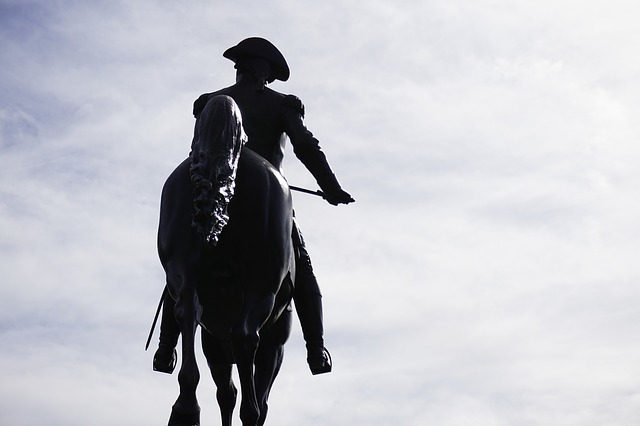
by Richard Subber | Sep 13, 2020 | American history, Book reviews, Books, History, Revolutionary War
Book review:
An Empire on the Edge:
How Britain Came to Fight America
by Nick Bunker
Here’s the short version of Nick Bunker’s thesis:
King George and his government
let the North American colonies slip from their grasp.
A newcomer to the history of the American Revolution might think that this book is a cockeyed way to learn about the “shot heard ‘round the world” and the consequences of the shooting at Lexington and Concord on April 19, 1775.
An informed student of the Revolutionary War probably will find much new material in Bunker’s relentlessly detailed An Empire on the Edge: How Britain Came to Fight America.
On our side of the pond, we don’t have much opportunity to consider the war or the revolution from the British point of view.
Bunker offers devastating detail about the ill-informed, patronizing, self-serving, doctrinaire, and sometimes feckless actions of Lord North and the British government in the years that led to the sanguinary clash of British regulars and American farmers-militiamen on the road from Concord, through Lexington, to Boston on “that famous day and year.”
An Empire on the Edge offers extensive documentation confirming that the British leaders were largely ignorant of the scope and depth of colonial antipathy toward the various punitive measures that Britain sought to impose in North America, as early as 1765 (the Stamp Act) and continuing to the final, ill-fated steps to chastise the city of Boston after the notorious Tea Party in late 1773.
Bunker describes the half-cocked military moves by Lord North and his ministers in the years leading up to the disastrous outing to Lexington-Concord. The king and his government were not prepared to wage war successfully in North America, partly because they waited too long to believe that the colonists actually would fight, and partly because they disdained the colonials’ fighting capacity, and partly because they put higher priority on their Caribbean sugar colonies, and partly because they were pre-occupied with the military threat posed by France and various European intrigues.
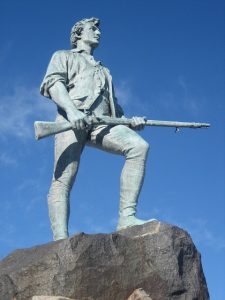 Bunker doesn’t speculate on a question that occurs to me: after that first shot was fired at Lexington, did the British really commit themselves to winning the war?
The king and his government made the commitment to fight. They did not, however, at any time before or during the war, commit all the king’s horses and all the king’s men to the military campaign to regain dominion in North America. As the fighting began, a British victory was not immediately feasible. Perhaps it did not become feasible.
Bunker’s analysis of the planning and wrangling in Lord North’s war room suggests that the British wanted to win, but never pushed the right strategic buttons to bring victory within their grasp.
Book review. Copyright © Richard Carl Subber 2016 All rights reserved.
———
Book review: An Empire Divided
King George and his ministers
wanted the Caribbean sugar islands
more than they wanted the 13 colonies…
by Andrew Jackson O’Shaughnessy
–
My first name was rain: A dreamery of poems with 52 free verse and haiku poems,
and the rest of my poetry books are for sale on Amazon (paperback and Kindle)
and free in Kindle Unlimited, search Amazon for “Richard Carl Subber”
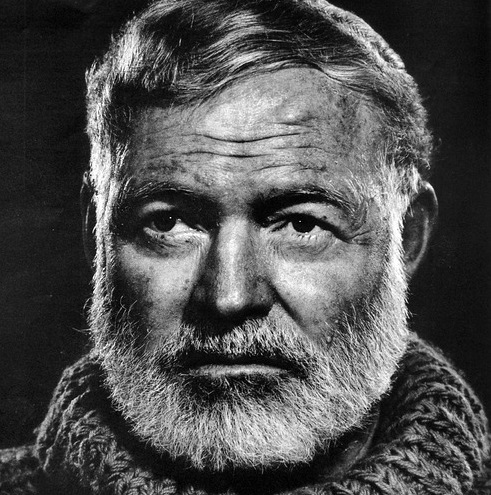
by Richard Subber | Jun 25, 2020 | Book reviews, Books, Joys of reading, Language
…relentlessly realistic dialogue…
(book review)
A Farewell to Arms
Ernest Miller Hemingway (1899-1961)
New York: The Modern Library, 1932.
It’s been a while since I read Hemingway.
A Farewell to Arms is a slow starter, and again I learned to pace myself without too much trouble. The action is restrained but steady, and again I realized gradually that a key element is the relentlessly realistic dialogue.
The American protagonist, Frederick Henry, is involved in every scene. The life of the book is his life. His recurring, desultory involvement in his own life and his role in the Italian Army during World War I is the backdrop of his elaborately recounted relationship with the nurse, Catherine Barkley.
A Farewell to Arms doesn’t really seem to be a war novel. On the other hand, except for brief interludes, the characters really don’t seem to be at peace. For Frederick Henry, it’s an ironic farewell.
* * * * * *
Book review. Copyright © Richard Carl Subber 2020 All rights reserved.
Book review: Seven Gothic Tales
by Isak Dinesen
her lush and memorable stories…
–
Seeing far: Selected poems with 47 free verse and haiku poems,
and the rest of my poetry books are for sale on Amazon (paperback and Kindle)
and free in Kindle Unlimited, search Amazon for “Richard Carl Subber”
* * * * * *

by Richard Subber | Jan 10, 2020 | American history, Book reviews, Books, History, World history
American leadership never was
what we thought it was…
Book review:
Fire in the Lake:
The Vietnamese and the Americans in Vietnam
by Frances FitzGerald (b1940), a Pulitzer Prize winner
Boston: An Atlantic Monthly Press Book, Little Brown and Company, 1972
491 pages
I don’t know how much of an audience there was for Fire in the Lake in 1972. I feel confident in guessing there wasn’t enough.
The American war in Vietnam was far from over in 1972 when FitzGerald wrote this densely researched journalistic review of U. S. policies and actions and ignorance in Southeast Asia. She makes it easier to understand why the American war effort was doomed from its earliest phase.
You should read Fire in the Lake to get the whole story–that is, the whole story as it was knowable in 1972. Be prepared to acknowledge that much of what you previously believed—and thought you knew—was wrong.
The American commitment to “containing Communism” was prominent, and tragically uninformed.
South Vietnam was the wrong place to try to “contain Communism,” no matter what that might mean.
There are more than 58,000 names on the walls of the Vietnam Veterans Memorial.
Some of them are the names of my friends.
* * * * * *
Book review. Copyright © Richard Carl Subber 2020 All rights reserved.
–
many waters: more poems with 53 free verse poems,
and the rest of my poetry books are for sale on Amazon (paperback and Kindle)
and free in Kindle Unlimited, search Amazon for “Richard Carl Subber”
* * * * * *
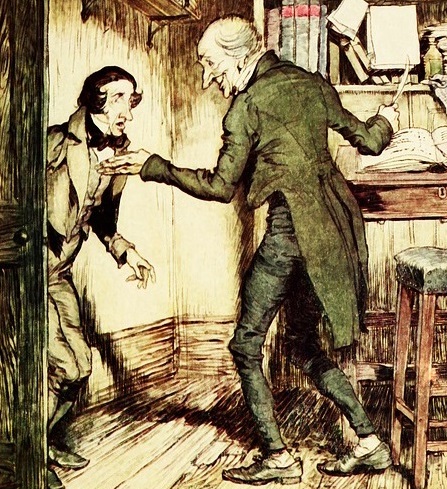
by Richard Subber | Nov 20, 2019 | Book reviews, Books, Human Nature
The language is Dickens, the humanity is Melville…
“Bartleby, the Scrivener: A Story of Wall Street”
A short story by Herman Melville (1819-1891)
First published 1853 in Putnam’s Magazine, and later in Melville’s The Piazza Tales in 1856
If you can read “Bartleby” without suspecting, nay, without more or less believing that it was written by Dickens, you can take pride in your mental discipline whilst reading. I wanted to read it again, and I confess that I briefly searched for “Bartleby” in my rumpled collection of Dickens, which of course does not include The Piazza Tales.
None of Melville’s notorious South Sea elements here. This is straightforward, 19th century prose set in 19th century Wall Street with shabby, luridly eccentric antebellum characters including the narrator and his bedeviled scrivener (copyist), Bartleby.
The circumstances of this desiccated short story are curious, even eccentric, incredulous. The withered and aloof Bartleby is presented, examined,and disdained, until his very dispirited isolation makes him the object of the narrator’s genuine but increasingly troubled caretaking.
Bartleby’s enervating and apparently desperate ennui keeps him always a step removed from the narrator’s efforts to create a little humanity in his life.
The scrivener is lonely beyond understanding. He bears almost in silence the emotional poverty that ultimately kills him.
The reader understands that Bartleby longed, in vain, to be able to repel the Reaper with his simple and inscrutable refrain: “I would prefer not to.”
Despite all temptation, I will prefer not to re-read Melville’s tale on a dreary afternoon.
* * * * * *
Book review. Copyright © Richard Carl Subber 2019 All rights reserved.
Book review: To Serve Them All My Days
by R. F. Delderfield
A beloved teacher,
of course you know this story…
–
Above all: Poems of dawn and more with 74 free verse poems,
and the rest of my poetry books are for sale on Amazon (paperback and Kindle)
and free in Kindle Unlimited, search Amazon for “Richard Carl Subber”
* * * * * *

by Richard Subber | Nov 8, 2019 | Book reviews, Books
the characters walk and talk, but…
Book review:
The Blithedale Romance
by Nathaniel Hawthorne (1804-1864)
Cambridge, MA: The Riverside Press, 1883
The Blithedale Romance is Hawthorne’s third novel, an exemplar of Romantic Era fiction that has been called his “darkest” novel. It’s respected by modern critics.
It’s not a page turner. Hawthorne has what it takes to make sure that the characters are independently brought to life, but their relationships are not credible. Even a diligent and interested reader can feel that the love of Zenobia and Priscilla for Hollingsworth is downright mysterious and despairingly inarticulate. They love him, in two marvelously different styles, but Hawthorne never gets around to really decently explaining why they love him.
The other principal characters—Miles Coverdale (a somewhat autobiographical avatar of Hawthorne himself), Old Moodie, and Westervelt—are satisfactorily developed. Nevertheless, the plotlines are mechanical and chronological rather than explanatory.
In The Blithedale Romance, the characters walk and talk, and they interact with each other, but credible understanding of their relationships never really blooms for the reader.
* * * * * *
Book review. Copyright © Richard Carl Subber 2019 All rights reserved.
Book review: Lafayette by Harlow Unger
Lafayette was a great man. Also rich and lucky.
–
Above all: Poems of dawn and more with 74 free verse poems,
and the rest of my poetry books are for sale on Amazon (paperback and Kindle)
and free in Kindle Unlimited, search Amazon for “Richard Carl Subber”
* * * * * *
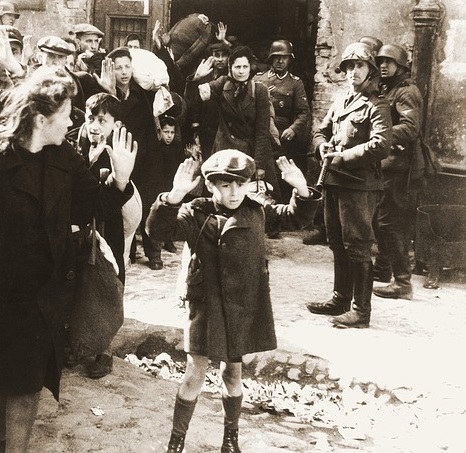
by Richard Subber | Sep 4, 2019 | Book reviews, Books, History, World history
…the supermen were underground…
Book review:
Mila 18
by Leon Uris (1924-2003)
American writer, World War II veteran
Garden City, NY: Doubleday & Company, Inc., 1961
442 pages
Whatever you think you know about the Warsaw ghetto uprising in 1943, you’ll know more after you read Mila 18.
Leon Uris wrote a historically detailed work of realistic fiction that will fill you with gagging horror, and with endless respect for the brave Jewish fighters who kept the Nazi killing machine at bay for a month in 1943.
About 13,000 Jews died in the burning buildings, in the bunkers, and in the sewers inside the ghetto.
Their main resistance command post was in an underground bunker located at ulica Miła 18.
It’s an almost inconceivable irony that the Polish street address can be translated as “18 Pleasant Street.”
* * * * * *
Book review. Copyright © Richard Carl Subber 2019 All rights reserved.
Book review: The Bartender’s Tale
Ivan Doig’s story, I mostly loved it…
–
As with another eye: Poems of exactitude with 55 free verse and haiku poems,
and the rest of my poetry books are for sale on Amazon (paperback and Kindle)
and free in Kindle Unlimited, search Amazon for “Richard Carl Subber”
* * * * * *
