
by Richard Subber | Jan 4, 2026 | Book reviews, Books, History, Human Nature
the work of mortal men and women…
Book review:
The Rise of Christianity:
A Sociologist Reconsiders History
by Rodney Stark (1934-2022)
Princeton, NJ: Princeton University Press, 1996
246 pages
The rise of Christianity in the centuries after the life of Jesus relied on the work of mortal women and men.
Stark offers a patient and compelling description of how Christianity spread from Nazareth in Galilee and became a powerful force throughout the known Greco-Roman world before Emperor Constantine embraced the faith early in the 4th century AD.
This is not a “religious” book. The words “bible,” “hymn,” “communion,” “priest,” “Pope,” and “prayer” are not in the index. The Rise of Christianity acknowledges but does not dwell on the doctrinal aspects of the Christian faith in the early years.
I wouldn’t presume to summarize Stark’s account of the sociological, emotional, and political factors that enabled the rise of Christianity.
You may find it surprising and valuable to know that the new religion appealed to both the rich and the poor, that women were the majority of first converts, that women held leadership positions in the early churches, and that the Christian commitment to help one another notably enabled the Christian communities to do better in surviving the plagues that killed so many people in the early centuries (the pantheons of non-Christian gods were conspicuously unhelpful).
Stark says: “Finally, what Christianity gave to its converts was nothing less than their humanity. In this sense, virtue was its own reward.” (p215)
* * * * * *
Book review. Copyright © Richard Carl Subber 2026 All rights reserved.
–
My first name was rain: A dreamery of poems with 52 free verse and haiku poems,
and the rest of my poetry books are for sale on Amazon (paperback and Kindle)
and free in Kindle Unlimited, search Amazon for “Richard Carl Subber”
* * * * * *

by Richard Subber | Dec 25, 2025 | American history, Book reviews, Books, Joys of reading, Language
“…I feel a goneness…”
Book review:
Golden Tales of New England
May Lamberton Becker, ed.
New York: Bonanza Books, 1931
378 pages
Writers used a different kind of language to create feel-good stories in the 19th century.
Golden Tales of New England is a feel-good sample of 17 of them.
You’ll recognize some of the authors: Hawthorne, Thoreau, Louisa Alcott, Oliver Wendell Holmes, Harriet Beecher Stowe…
The others might be new for you, as they are for me, like the offering of Rose Terry Cooke (1827-1892), “A Town Mouse and a Country Mouse.” It’s an authentic, ample exhibition of New England patois and sturdy New England character. Meet “Mandy” and “M’lindy,” two aging sisters who were born Amanda and Melinda, and who were fated to share their living, mostly at a distance but, in the end, so inescapably together.
Here’s Amanda sadly recounting her sister’s death: “I guess I’ve got through…[Melinda] went an’ married that old Parker, an’ then she up and died. I wish’t I’d ha’ stayed with her longer; mabbe she wouldn’t have died. She wa’n’t old; not nigh so old as I be…I feel a goneness that I never had ketch hold o’ me before…”
Hawthorne’s “Old Esther Dudley” is a dainty adoration of a venerable lady who never gave up being a Tory during the Revolutionary War, and persisted in being the almost ghostly guardian of Province House in Boston after the British departed.
The other Golden Tales are equally exotic morsels of what entertained the citizens of the Republic long before television and Twitter.
* * * * * *
Book review. Copyright © Richard Carl Subber 2025 All rights reserved.
–
Above all: Poems of dawn and more with 74 free verse poems,
and the rest of my poetry books are for sale on Amazon (paperback and Kindle)
and free in Kindle Unlimited, search Amazon for “Richard Carl Subber”
* * * * * *
by Richard Subber | Dec 21, 2025 | American history, Book reviews, Books, Democracy, History, Politics, Power and inequality
“nationalism” is an obstacle
Book review:
This America: The Case for the Nation
by Jill Lepore
New York: Liveright Publishing Corp., 2019
150 pages
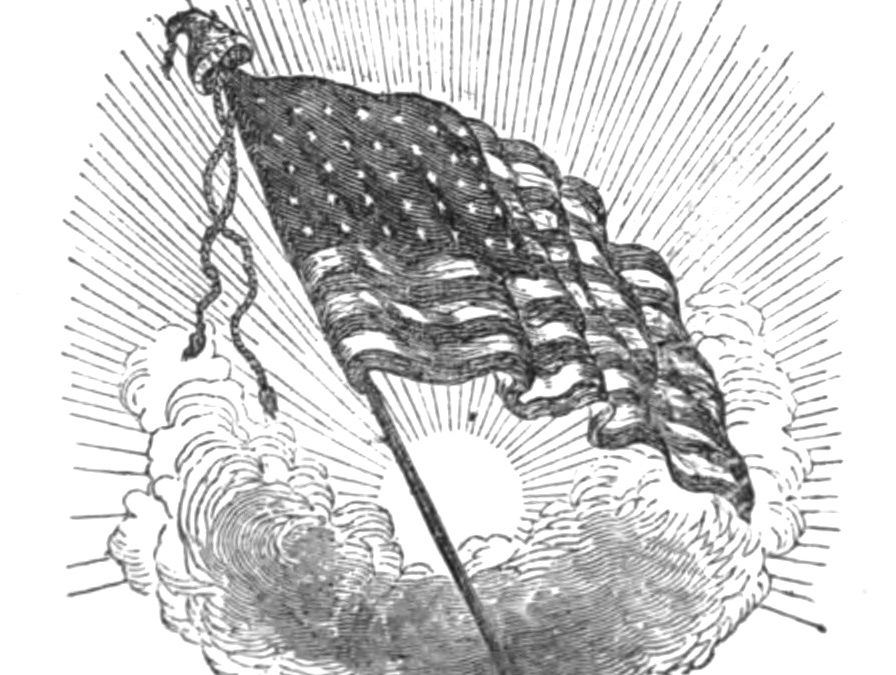
The United States has been a recognizable entity barely—barely—long enough to be a nation.
Today we barely acknowledge our American Indian heritages, which could be part of our nationhood if we thought about it once or twice.
Jill Lepore offers what she is so good at offering: a sensible and informed discussion of what “nation” means, and why “nationalism” is an obstacle to the good life, and why “liberalism” should be what we like to talk about.
Read This America to get her details. Read it and talk about it.
Of course, her book is a political discourse, but it is not rabidly partisan. It’s something to think about.
* * * * * *
Book review. Copyright © Richard Carl Subber 2025 All rights reserved.
Old Friends (book review)
Tracy Kidder tells truth about old age…
–
Above all: Poems of dawn and more with 74 free verse poems,
and the rest of my poetry books are for sale on Amazon (paperback and Kindle)
and free in Kindle Unlimited, search Amazon for “Richard Carl Subber”
* * * * * *
by Richard Subber | Dec 16, 2025 | American history, Book reviews, Books, History, Language, Revolutionary War
what does “self-evident” mean?
Book review:
The Greatest Sentence Ever Written
by Walter Isaacson (b1952)
New York: Simon & Schuster, 2025
67 pages
First, let’s get this straight: it’s worth your time to read this little book.
Maybe you think you know all you want to know about the Declaration of Independence, but I think you’ll learn at least a couple things of interest as you read The Greatest Sentence Ever Written.
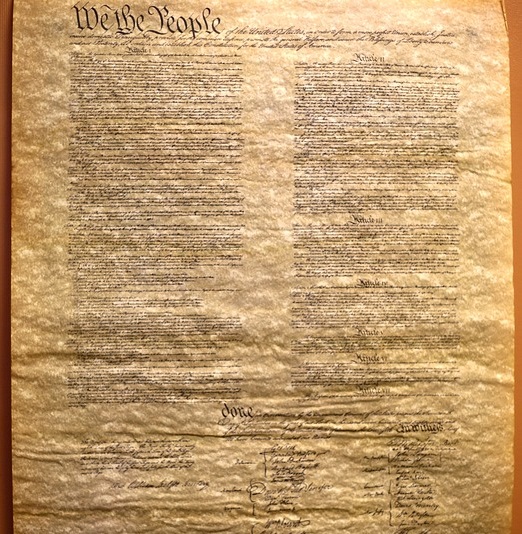
For starters, Thomas Jefferson did not “write” the Declaration. He more or less wrote the first draft, and then his committee—including Benjamin Franklin and John Adams—applied their pens, and then the Continental Congress had its final say.
Isaacson’s “greatest sentence” is the second sentence of the Declaration, beginning “We hold these truths to be self-evident…” The words of the sentence had specific meanings for educated men (no ladies in the Congress) with Enlightenment prejudices in the late 18th century, and the committee and Congress changed a number of the words in Jefferson’s draft. For example, Jefferson originally wrote “We hold these truths to be sacred and undeniable…”
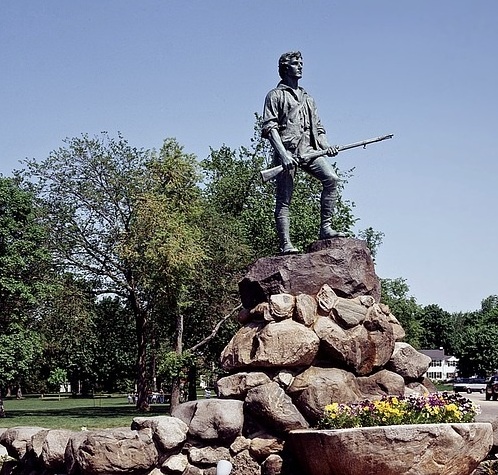
Keep these “undeniable” circumstances in mind: in July 1776 no member of the Congress knew how the whole “revolution” thing would turn out, and the Declaration did not start the revolution: the shooting war had started more than a year earlier in Lexington and Concord.
Isaacson is a popular biographer, and this little book is a good example of his writing talents.
For a more in-depth treatment by a noted historian, try reading American Scripture: Making the Declaration of Independence by Pauline Maier.
* * * * * *
Book review. Copyright © Richard Carl Subber 2026 All rights reserved.
Book review: Grace Notes
Is it prose or poetry?
by Brian Doyle
–
many waters: more poems with 53 free verse poems,
and the rest of my poetry books are for sale on Amazon (paperback and Kindle)
and free in Kindle Unlimited, search Amazon for “Richard Carl Subber”
* * * * * *
by Richard Subber | Dec 9, 2025 | American history, Book reviews, Books, History, Revolutionary War, World history
Did the British really try to win?
I have a lot to learn. With the humility of a student, I ask: how hard did the British try to win the American Revolutionary War?
It’s a research topic that intrigues me. I’m using the question to guide my reading. I’m careful to remind myself, often, that I don’t know the full answer. I think I know enough to believe that the bottom line is: the British wanted to win the war, but they never made the commitment required to do it.
I think I know enough to confirm the validity of the question. Britain had substantial economic engagement with the North American colonies in the latter part of the 18th century. The British West Indies—the Caribbean “sugar islands”—also were an important component of the British Atlantic colonial world. Britain had additional commitments in Florida, as well as military outposts, trading posts and other dependencies in Ireland, the Mediterranean, India, Africa, Central America, the Bahamas, the Bermudas, Nova Scotia, Quebec and Hudson’s Bay. Britain was intensely engaged in diplomacy and threatening entanglements with France, Spain and other European powers. Britain was an economic power, not a military titan.
King George and the British government did not have unlimited military resources. Army and naval forces were allocated to the rebellious American colonies, just as they were to the West Indies and other areas of vital interest. French and Spanish forces continually threatened the British Caribbean islands, an economic bastion of the British monarchy. There were not enough British ships and troops to establish compelling military superiority in every arena of British interest.
Ultimately, British admirals could not prevent a localized French naval superiority in the Chesapeake Bay that forced Cornwallis to surrender his under-sized army to Washington and Rochambeau at Yorktown in October, 1781. The war didn’t end then, but after Yorktown it became manifestly unwinnable for Britain.
Did the British government send enough troops and ships to North America to get the job done when the rebellion broke out? Was winning the war a pre-eminent priority for King George and his ministers? Doubtless the British wanted to win. How hard did they try? Initially they thought the rebellion would wither. Later, I think, they had more important fish to fry.
I’m not looking for a simple answer. I’m interested, first, in understanding the meaningful frames of reference for considering the question.
Sources:
Bowler, R. Arthur. Logistics and the Failure of the British Army in American, 1775-1783. Princeton, NJ: Princeton University Press, 1975.
Corwin, Edward S. French Policy and the American Alliance of 1778.1916. Reprint, Hamden, CT: Archon Books, 1962.
Duffy, Michael. Soldiers, Sugar and Seapower: The British Expeditions to the West Indies and the War Against Revolutionary France. Oxford: Clarendon Press, 1987.
Gipson, Lawrence Henry. The Triumphant Empire: The Empire Beyond the Storm, 1770-1776, vol. 13 of The British Empire Before The American Revolution. New York: Alfred A. Knopf, Inc., 1967.
O’Shaughnessy, Andrew Jackson. An Empire Divided: The American Revolution and the British Caribbean. Philadelphia: University of Pennsylvania Press, 2000.
Seton-Watson, Robert William. Britain In Europe: 1789-1914, A Survey of Foreign Policy. 1937. Reprint, Cambridge: The Cambridge University Press, 1955.
* * * * * *
Book review. Copyright © Richard Carl Subber 2025 All rights reserved.
Home Team: Poems About Baseball (book review)
Edwin Romond hits another homer…
–
many waters: more poems with 53 free verse poems,
and the rest of my poetry books are for sale on Amazon (paperback and Kindle)
and free in Kindle Unlimited, search Amazon for “Richard Carl Subber”
* * * * * *

by Richard Subber | Dec 4, 2025 | American history, Book reviews, Books, History, Human Nature, Reflections
the far side of yourself…
Book review:
The Things They Carried
by Tim O’Brien (b1946)
New York: Broadway Books, 1990
273 pages
Tim O’Brien is a Vietnam war veteran.
If you served in the Vietnam war, you have a perspective for reading The Things They Carried.
If you didn’t go to Vietnam, you have a different perspective.
If you weren’t born until after the war ended, you have a different perspective.
Tim O’Brien speaks to you, read his words any way you want.
All of us are still carrying some of the things we carried in those years.
Can anyone point to feelings that haven’t changed since then?
Whether you’re a veteran or not, O’Brien invites you to get “in touch with the far side of yourself” (p. 123).
The Things They Carried is about burdens and our capacity to accept them.
* * * * * *
Book review. Copyright © Richard Carl Subber 2025 All rights reserved.
Book review: To Serve Them All My Days
by R. F. Delderfield
A beloved teacher,
you know this story…
–
many waters: more poems with 53 free verse poems,
and the rest of my poetry books are for sale on Amazon (paperback and Kindle)
and free in Kindle Unlimited, search Amazon for “Richard Carl Subber”
* * * * * *
