
Home Team: Poems About Baseball (book review)

Home Team: Poems About Baseball (book review)

even baseball in the dark…


Home Team: Poems About Baseball


by Edwin Romond

West Hartford, CT: Grayson Books, 2018


You really don’t have to be a baseball fan to feel the joy that just won’t quit in Romond’s offering of romantic poems about baseball.

I mean romantic in the sense of the 19th century Romantic Era, when practitioners in most of the arts were focused on the many dimensions of intense emotion and esthetic experience.

You will discover that Romond’s poetry has so much of longing, and recognition, and acceptance, and the joys we can find in everyday life, and Home Team has many versions of all that.

My favorite is “Baseball in the Dark,” a ripe recollection of a young boy’s dream that he could again hear radio broadcaster Mel Allen’s “summer voice going, going, on and on…telling me baseball in the dark.” That would be a downright good thing to do, and Romond knows a lot of those things.

You can check out Romond’s poetry books on his website, click here.

*   *   *   *   *   *

Book review. Copyright © Richard Carl Subber 2021 All rights reserved.


The poetic art of Grace Butcher

Poetry for reading out loud…

         it’s that good

Book review: Child, House, World

click here


Seeing far: Selected poems with 47 free verse and haiku poems,
and the rest of my poetry books are for sale on Amazon (paperback and Kindle)
and free in Kindle Unlimited, search Amazon for “Richard Carl Subber”

*   *   *   *   *   *

“…the ravell’d sleeve of care…”

“…the ravell’d sleeve of care…”

Bill had a way with words…


“Methought I heard a voice cry ‘Sleep no more!


Macbeth does murder sleep’, the innocent sleep,


Sleep that knits up the ravell’d sleeve of care…”


Macbeth, Act 2, Scene 2

William Shakespeare (1564-1616)


I am not the heartiest Shakespeare fan in the world. You may agree with me that, often, a little bit of Shakespeare doth goe a longish way, ‘struth it be…

As well, agree with me that Bill was an indubitable master of the King’s English. Shakespeare added more words—hearty words, dumbfoundingly marvelous words—to our language than anyone else. I dare to say that everyone who speaks English mentions every day something that Shakespeare wrote.

This tidbit from Macbeth is a gift to language lovers everywhere. You don’t have to be a poet to recognize that “…knits up the ravell’d sleeve of care…” is a dazzling and profoundly experiential way to say “sleep heals.”

Anyone who nourishes a poetic muse can see that these words transform mundane familiarity with a domestic art into a vision of tender and urgent longing that fills a gaping hole in the mind.

I wish I’d said that.

*   *   *   *   *   *

Copyright © Richard Carl Subber 2020 All rights reserved.


Book review: The Poems of Robert Frost

he hears those bluebirds talking…

click here

many waters: more poems with 53 free verse poems,
and the rest of my poetry books are for sale on Amazon (paperback and Kindle)
and free in Kindle Unlimited, search Amazon for “Richard Carl Subber”

*   *   *   *   *   *
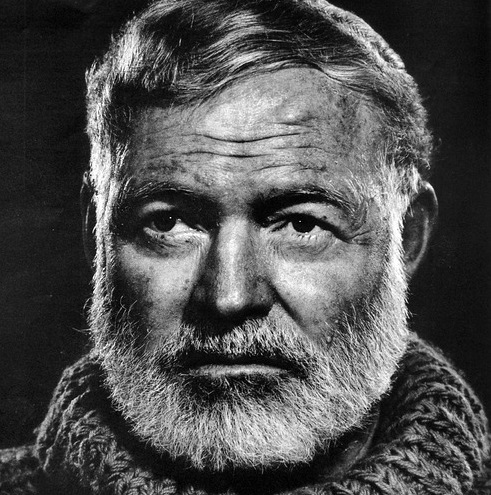
A Farewell to Arms (book review)

A Farewell to Arms (book review)

…relentlessly realistic dialogue…


(book review)

A Farewell to Arms


Ernest Miller Hemingway (1899-1961)

New York: The Modern Library, 1932.


It’s been a while since I read Hemingway.

A Farewell to Arms is a slow starter, and again I learned to pace myself without too much trouble. The action is restrained but steady, and again I realized gradually that a key element is the relentlessly realistic dialogue.

The American protagonist, Frederick Henry, is involved in every scene. The life of the book is his life. His recurring, desultory involvement in his own life and his role in the Italian Army during World War I is the backdrop of his elaborately recounted relationship with the nurse, Catherine Barkley.

A Farewell to Arms doesn’t really seem to be a war novel. On the other hand, except for brief interludes, the characters really don’t seem to be at peace. For Frederick Henry, it’s an ironic farewell.

*   *   *   *   *   *

Book review. Copyright © Richard Carl Subber 2020 All rights reserved.


Book review: Seven Gothic Tales

by Isak Dinesen

her lush and memorable stories…

click here

Above all: Poems of dawn and more with 73 free verse poems,
and the rest of my poetry books are for sale on Amazon (paperback and Kindle)
and free in Kindle Unlimited, search Amazon for “Richard Carl Subber”


*   *   *   *   *   *
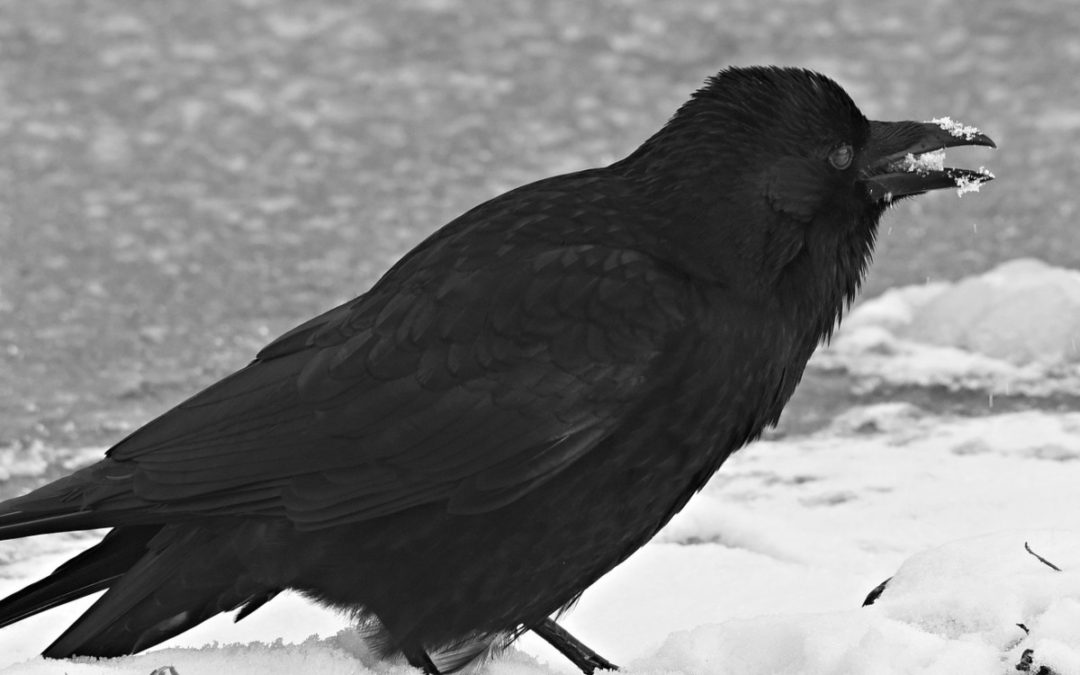
Book review: The Poems of Robert Frost

Book review: The Poems of Robert Frost

no need for a treasure map…


Book review:

The Poems of Robert Frost

With an Introductory Essay “The Constant Symbol”


by Robert Lee Frost (1874-1963)

New York: The Modern Library/Random House, Inc., 1946


In his opening essay, Frost says “…poetry…is metaphor, saying one thing and meaning another, saying one thing in terms of another, the pleasure of ulteriority. Poetry is simply made of metaphor.”

My copy of The Poems of Robert Frost is a treasure ship with two old stained green covers. I’ve been reading it for more than 50 years. It’s a bit beat up, but when I open it, it shines.

I’m not reckless enough to name “my favorite” poem—I keep changing my mind as I read through them again. Frost is a teacher. He has found so many of the right words, and he has put so many of them in the right order.

I always enjoy “The Last Word of a Bluebird (as told to a child).” The Crow carries the little Bluebird’s final message to Lesley. In his low voice he brings word about the north wind and the impending winter cold that drives the Bluebird away. The compassionate bird urges Lesley to be good, and promises that “…perhaps in the spring/He would come back and sing.”

I’m waiting for the spring time, and I have a good book to help me pass the time.

*   *   *   *   *   *

Book review. Copyright © Richard Carl Subber 2019 All rights reserved.

Book review: The End of Greatness

I think Aaron David Miller comes up short…

click here


As with another eye: Poems of exactitude with 55 free verse and haiku poems,
and the rest of my poetry books are for sale on Amazon (paperback and Kindle)
and free in Kindle Unlimited, search Amazon for “Richard Carl Subber”

*   *   *   *   *   *
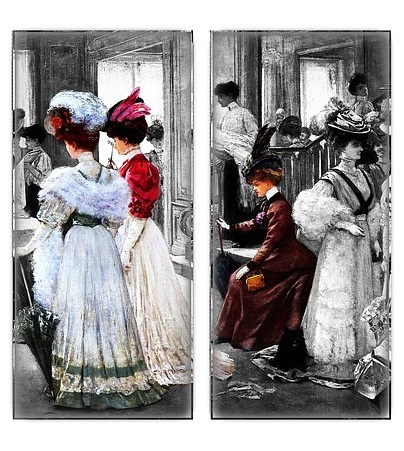
Book review: Sketches by Boz

Book review: Sketches by Boz

The buzz about Boz!


Of course, they don’t write ‘em like this anymore.

Hooray for Charles Dickens (1812-1870). I’m talking about Sketches by Boz, his first book published in 1836.

I’m talking not only about the obvious point (Dickens has been dead these many years), but also about my understanding of the palpably inimitable Dickensian style.

Dickens does not fail to offer, time after time after time, character portraits that spring to life as you turn the pages—he sketches his characters with disinterested honesty, stout-hearted realism, generous indulgence, often a touch of whimsy…

 A case in point: “The Four Sisters,” who inhabit No. 25 Gordon Place in Sketches by Boz. In his brief (five pages) exposition of these cloistered ladies, Dickens ventures to create four personae that are not, will not, cannot be demeaned as a stereotype.

The Miss Willises—the master doesn’t trouble himself about not calling them the Misses Willis—are a scream, in a fastidiously literary kind of way.

Here’s a little taste:

“The house was the perfection of neatness—so were the four Miss Willises. Everything was formal, stiff, and cold—so were the four Miss Willises. Not a single chair of the whole set was ever seen out of its place—not a single Miss Willis of the whole four was ever seen out of hers. There they always sat, in the same places, doing precisely the same things at the same hour…They seemed to have no separate existence, but to have made up their minds just to winter through life together…The eldest Miss Willis grew bilious—the four Miss Willises grew bilious immediately. The eldest Miss Willis grew ill-tempered and religious—the four Miss Willises were ill-tempered and religious directly. Whatever the eldest did, the others did, and whatever anybody else did, they all disapproved of…”

I think this passage, like so many scenes in Dickens, is a singularity.

Re-reading Dickens is a singular treat for me.


You’re absolutely right, this is not quite a book review. I have a love affair with words, the carefully chosen words, words that express in exceptional ways the boundless variety of our thoughts, experiences, and emotions. I think a lot about life, the human condition, loving relationships with others, and the many levels of beauty, serenity, and delight in our natural environment. Reading the pithy words of real wordsmiths is always a learning opportunity.

*   *   *   *   *   *

Book review. Copyright © Richard Carl Subber 2018 All rights reserved.

Book review: The Blithedale Romance

by Nathaniel Hawthorne, it’s not his best…

click here

My first name was rain: A dreamery of poems with 52 free verse and haiku poems,
and the rest of my poetry books are for sale on Amazon (paperback and Kindle)
and free in Kindle Unlimited, search Amazon for “Richard Carl Subber”

*   *   *   *   *   *

Follow Rick on Facebook

Thoughtful book reviews by Rick Subber

Nothing Found

Poets talk about poetry

Poets talk about poetry

…no fractured, disjoint,

       inchoate grab-bags

               of words…


“A poem…begins as a lump in the throat, a sense of wrong,

                                 a homesickness, a lovesickness…” 


Robert Lee Frost  (1874-1963)

in his 1916 letter to Louis Untermeyer (1885-1977)


Frost and Untermeyer exchanged letters (imagine!) for almost 50 years. I’m pretty sure every single one of them involved more than 140 characters and spaces…think about it, when you’re actually scribbling, you don’t have to “write” a space…

There are, I guess, about a million or so ways, more or less, to define “poetry.” In 1827 Samuel Taylor Coleridge (1772-1834) offered his “homely definition” of poetry: “the right words in the right order.” Sometimes I think poetry is the manifestation of lust for the right words.

I have this lust in my heart.

I am a poet, a writer, a teacher, a moralist, a historian, and an unflinching student of human nature. Some things I’d rather not know, but I’m stuck with knowing them. I think a lot. I strive to express truth and give context—both rational and emotional—to reality.

I think words can be pictures, and lovely songs, and bodacious scents, and private flavors, and early morning caresses that wake each part of me, one at a time. I know some of those words, and, from time to time, I write some of them.

Here’s a final thought for consideration: Coleridge also advised (1832) that “…if every verse is not poetry, it [should be], at least, good sense.” That makes good sense to me. I have no tolerance for some poets’ work that is merely a fractured, disjoint, inchoate grab-bag of words. A largely random collection of words is not likely to be a poem. I like to read (and write) a beginning, and an end, and some really meaty sweetie stuff in the middle.

Coleridge’s 1827 definition of poetry is from Specimens of the Table Talk of the late Samuel Taylor Coleridge, written by Henry Nelson Coleridge and published in 1835.

Louis Untermeyer was an American poet, anthologist, critic, and editor. He was appointed the 14th Consultant in Poetry to the Library of Congress in 1961.


For example, read The Poetry of Robert Frost, available on Amazon

*   *   *   *   *   *

My poetry. Copyright © Richard Carl Subber 2017 All rights reserved.

​​
My first name was rain: A dreamery of poems with 52 free verse and haiku poems,
and the rest of my poetry books are for sale on Amazon (paperback and Kindle)
and free in Kindle Unlimited, search Amazon for “Richard Carl Subber”

Book review: Shantung Compound

They didn’t care much

      about each other…

by Langdon Gilkey

click here

*   *   *   *   *   *

Pin It on Pinterest