
by Richard Subber | Jun 17, 2025 | Poetry, Reviews of other poets, Tidbits
being a buttonhole…
“I want to be famous in the way a pulley is famous,
or a buttonhole, not because it did anything spectacular,
but because it never forgot what it could do.”
Keep on doing what you can do.
quote from “Famous” by Naomi Shihab Nye (b1952)
* * * * * *
Copyright © Richard Carl Subber 2025 All rights reserved.
Book review:
Shakespeare: The World as Stage
The Bard was the lucky one…
by Bill Bryson
–
My first name was rain: A dreamery of poems with 53 free verse and haiku poems,
and the rest of my poetry books are for sale on Amazon (paperback and Kindle)
and free in Kindle Unlimited, search Amazon for “Richard Carl Subber”
* * * * * *
by Richard Subber | Apr 12, 2025 | Book reviews, Books, Poetry, Reviews of other poets
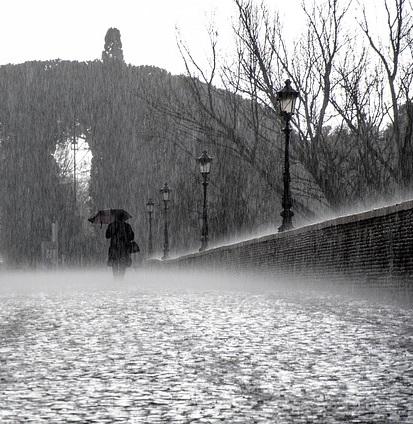
Say “repine” a couple times…
I read lots of poetry—colonial, classic American, modern—and I don’t find much that I like.
I’m a bit puzzled by this. I think hard about what I like and dislike about poetry, especially my own poetry. I confess my sincere failure to discern anything meaningful in the kind of poetry I classify as “obscure,” you know, the wayward romp through disconnected words and disjoint images, and the wanton disregard of verb tense/pronoun antecedents/subject and verb relationships/sentence structure—I think you may have seen this kind of stuff:
“Sky falls cloud sheep bray at starry islands in my hoping
are them my lost love I step around the dog poo….”
I just rapped that out. It doesn’t make me proud.
I’m trying to get to the point:
I’ve read a bit of Henry Wadsworth Longfellow (1807-1882). Longfellow was a lyric poet who tried his hand at free verse, although much of his work is constrained to the often stultifying shackle of line after line and page after page of rhyme. Longfellow wrote at length. I confess I can’t make myself keep turning the pages to read “Evangeline” and “The Song of Hiawatha.” I do understand that this fashion of poetry was written and enjoyed before the successive advents of radio, TV, Sony Walkman, the internet, and social media. I guess reading a poem for an hour or so was more doable in the 19th century.
Longfellow does offer something to me in his more bite-size poetry. He was a capable wordsmith and he dreamed out images and insights and perspectives that appeal to me, and even nudge my sometime muse to wakefulness.
In “Snow-Flakes” he placidly described a snowfall:
“Out of the bosom of the Air,
…The troubled sky reveals
The grief it feels.
This is the poem of the air…”
In “The Rainy Day” he said something we all know:
“…Be still, sad heart! and cease repining;
Behind the clouds is the sun still shining;
Thy fate is the common fate of all,
Into each life some rain must fall,
Some days must be dark and dreary.”
Thus, in Longfellow, something of poetry.
Admit it, we don’t use “repine” often enough in our casual conversations.
* * * * * *
Book review. Copyright © Richard Carl Subber 2025 All rights reserved.
Book review: The Financier
Theodore Dreiser’s villain…
–
Seeing far: Selected poems with 47 free verse and haiku poems,
and the rest of my poetry books are for sale on Amazon (paperback and Kindle)
and free in Kindle Unlimited, search Amazon for “Richard Carl Subber”
* * * * * *

by Richard Subber | Jan 23, 2025 | Book reviews, Books, Poetry, Reviews of other poets
there’s more than structure involved…
Book review:
American Poetry: The Nineteenth Century
Vols. 1 and 2
New York: The Library of America, 1993
Vol. 1 – 1,099 pages
Vol. 2 – 1,049 pages
What can I say?
In general, the poetry of bygone centuries is uninteresting to me.
The poets were convinced that structure was overwhelmingly important, or, perhaps, their readers were convinced that structure was overwhelmingly important, or, perhaps, both.
The word “relentless” comes to my mind. It’s difficult for me to read much of this work—silently or aloud—without bobbing my head, saying the emphasized syllables with increasing vigor and noise, and moving my body to match the all-too-obvious, often drum beat rhythms.
It seems to me that these poets think that the conjunction of selected words is of secondary or tertiary concern, whereas I believe it should be the overriding expression of the poetic arts.
The millions in the past disagreed. So be it.
* * * * * *
Book review. Copyright © Richard Carl Subber 2025 All rights reserved.
Forget about Buffy the Vampire Slayer
Dracula is a scary book, really…
by Bram Stoker
–
Seeing far: Selected poems with 47 free verse and haiku poems,
and the rest of my poetry books are for sale on Amazon (paperback and Kindle)
and free in Kindle Unlimited, search Amazon for “Richard Carl Subber”
* * * * * *

by Richard Subber | Jan 12, 2025 | Book reviews, Books, Joys of reading, Poetry, Reviews of other poets
writing ingenuous truth…
Book review:
Natural Life with No Parole
by Sarah Rossiter
Georgetown, KY: Finishing Line Press, 2016
Rossiter’s poetry is worth a second read.
I think her word choices and line breaks are a bit disorganized, but nevertheless coherent.
Natural Life with No Parole is about what she sees and hears and feels, with genuine verve and ingenuous truth about the reality of human emotions.
She finds it natural to say things like “…That’s all there was, it wasn’t much, but joy is like that.”
Let the flavor of that line wrap around your tongue.
Quoted line is from “Woman in a White Truck, Driving”
* * * * * *
Book review. Copyright © Richard Carl Subber 2025 All rights reserved.
Book review: The Snow Goose
…sensual drama, eminently poetic…
by Paul Gallico
–
My first name was rain: A dreamery of poems with 53 free verse and haiku poems,
and the rest of my poetry books are for sale on Amazon (paperback and Kindle)
and free in Kindle Unlimited, search Amazon for “Richard Carl Subber”
* * * * * *

by Richard Subber | Dec 19, 2024 | Other, Poetry, Reviews of other poets
get hungry…
From John O’Donohue (1956-2008), his poem “For the Artist at the Start of Day.”
O’Donohue invokes a morning that may
“…dwell uniquely
Between the heart and the light
To surprise the hungry eye…”
I try to let my eye be hungry
in the morning when I take my first walk…
* * * * * *
Copyright © Richard Carl Subber 2024 All rights reserved.
Movie review: Same Time, Next Year
all-American adultery, oh yeah…
–
Seeing far: Selected poems with 47 free verse and haiku poems,
and the rest of my poetry books are for sale on Amazon (paperback and Kindle)
and free in Kindle Unlimited, search Amazon for “Richard Carl Subber”
* * * * * *

by Richard Subber | Nov 23, 2024 | Book reviews, Books, Poetry, Reviews of other poets
Teasdale teases…
Book review:
The Collected Poems of Sara Teasdale
by Sara Teasdale (1884-1933)
New York: The Macmillan Co., 1937.
311 pages
Sara Teasdale wrote about 350 poems, and some of them are quite long.
She is literate—no doubt about that, there are plenty of classical allusions to the gods.
For my taste, there is no personality in her Collected Poems—she writes “about” stuff instead of illuminating stuff.
In 1918 she won a Pulitzer Prize for poetry—it must have been a lean year.
There are bright notes here and there:
“Ah, Love, there is no fleeing from thy might,
No lonely place where thou hast never trod,
No desert thou hast left uncarpeted.”
from “Sappho,” p. 109
* * * * * *
Book review. Copyright © Richard Carl Subber 2024 All rights reserved.
Book review: To Serve Them All My Days
by R. F. Delderfield
A beloved teacher,
you know this story…
–
Above all: Poems of dawn and more with 73 free verse poems,
and the rest of my poetry books are for sale on Amazon (paperback and Kindle)
and free in Kindle Unlimited, search Amazon for “Richard Carl Subber”
* * * * * *
