
by Richard Subber | Jun 17, 2023 | History, Human Nature, Reflections, Theater and play reviews
…a perfection of evil…
Movie review:
Conspiracy
The Wannsee Conference in Hitler’s Germany, January 1942
Starring Kenneth Branagh, Stanley Tucci, Colin Firth (2001)
Here’s the short version: watching Conspiracy is like drinking molten lead.
Conspiracy is an almost flawless portrayal of naked evil being done by powerful men, each of whom has lost or abandoned his moral compass.
It is dry, withering, completely transparent, all too believable—not merely because we know it’s all true. We know that there are powerful men and women alive today who are willing to do blasphemously wrong things like killing 6 million Jews.
Conspiracy dramatizes the Wannsee Conference that first officially articulated the Final Solution for the Jews of Europe: the Holocaust.
Stanley Tucci as SS Major Adolph Eichmann, Kenneth Branagh as Hitler’s Chief of Security Reinhard Heydrich, Colin Firth as Dr. Wilhelm Stuckart (a lawyer who wrote the racist Nuremberg Laws), and 12 others show how it was probably done—almost without passion—around a long conference table in a manor house outside Berlin. One of the participants failed to destroy his copy of the minutes. This surviving document was used in the post-WWII Nuremberg Trials.
Conspiracy is frightening, horrifying, and disgusting. It is a perfection of the evil that men can do.
The antidote for watching it is simple: do a good thing every day.
* * * * * *
Movie review. Copyright © Richard Carl Subber 2023 All rights reserved.
Book review: The Comanche Empire
the other story of the American West…
–
Writing Rainbows: Poems for Grown-Ups with 59 free verse and haiku poems,
and the rest of my poetry books are for sale on Amazon (paperback and Kindle)
and free in Kindle Unlimited, search Amazon for “Richard Carl Subber”
* * * * * *
by Richard Subber | May 28, 2023 | American history, Book reviews, Books, History, Human Nature
self-serving lies, and dreams…
Book review:
The Self-Made Man in America:
The Myth of Rags to Riches
by Irvin G. Wyllie (1920-1974)
New York, The Free Press, 1954
210 pages
The Self-Made Man in America is a historian’s delight.
Wyllie offers the multiple meanings of “the self-made man” throughout American history, connecting historical elements of the American dream and the self-serving promotion of the concept by titans of industry and their bankers.
There is a panoply of quotations from key decision-makers throughout the decades that aid the reader in understanding how Americans at all ranks in the socioeconomic spectrum advocated, criticized, and embodied the siren song of “the self-made man.”
To be sure, Wyllie plainly states his verdict: “Throughout all our history the self-made man was the exception not the rule…success has been for the few, not the many….Men who occupy the lowest places in our society have known the facts for a long time…but…men on the bottom need dreams.” (p. 174)
* * * * * *
Book review. Copyright © Richard Carl Subber 2023 All rights reserved.
Book review:
Moral Tribes by Joshua Greene
he’s sincere, but off the mark…
–
As with another eye: Poems of exactitude with 55 free verse and haiku poems,
and the rest of my poetry books are for sale on Amazon (paperback and Kindle)
and free in Kindle Unlimited, search Amazon for “Richard Carl Subber”
* * * * * *
by Richard Subber | Apr 22, 2022 | American history, Book reviews, Books, History, Human Nature
toil and trouble….and craziness
Book review:
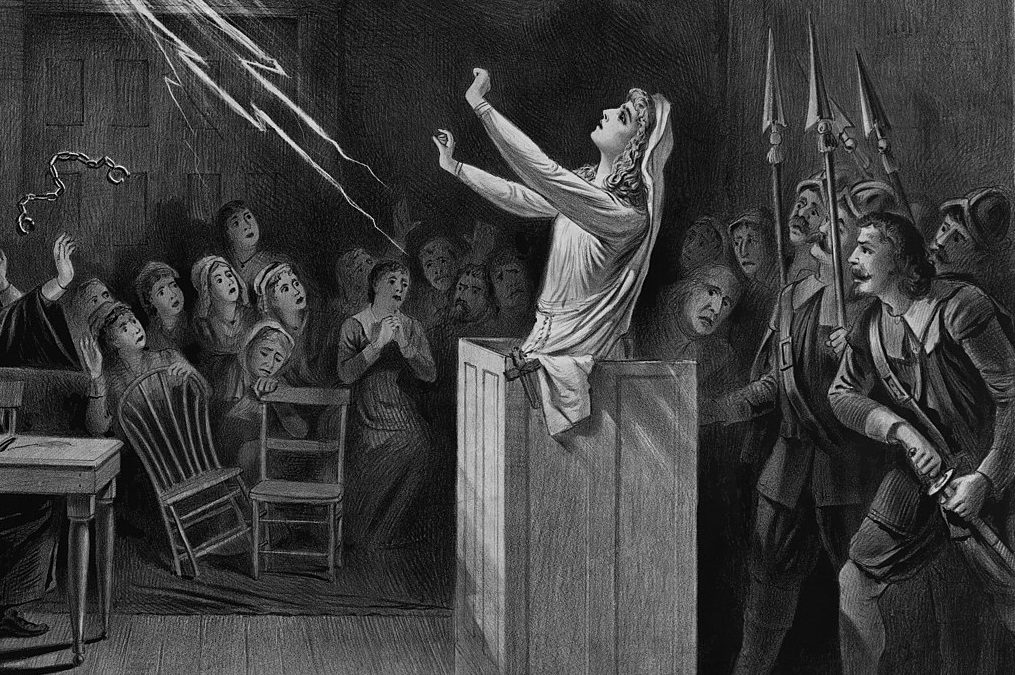
The Witches: Salem, 1692
by Stacy Schiff (b1961)
Little, Brown and Company, New York, 2015
498 pages
It may be that Stacy Schiff has neglected to include some fact or sentiment about the Salem witch trials, but I can’t imagine what it might be. The Witches is an expansive compendium of the whos and whats and whys and wherefores of this compelling—yet essentially impenetrable—story about a community gone crazy.
Maybe you had to be there to understand it.
It’s too easy to suggest that the McCarthy Communism hunting in 1954 is a modern analogy, but it won’t work. The whole dreadful McCarthy thing was a political football, approaching a sideshow even though it attracted the nominal attention of the nation and destroyed many lives.
The Salem witch trials (and the witch hunting that went on in neighboring towns) consumed the waking hours of all the townsfolk, who were deeply convinced that witches exist and that they were in league with satanic forces.
For my taste, Schiff tells too much of the story. I would have been content with a less detailed account. There is repetition that is dispensable.
For my taste, she struck a good balance between telling the story as it happened, and inviting the reader to suspect that the teenage girls were fooling all along, and that too many accusers had a personal reason to “get” the accused, and that too many religious and civic leaders who struggled unsuccessfully with their religious faith and the opposing impulses of their arguably decent selves had quickly figured out that the witch craze was a very nasty game.
You don’t need to read the whole book to figure out that there was some very destructive bogus stuff going on in the Massachusetts Bay Colony in 1692.
You don’t need to read the whole book to be convinced that some folks aren’t continuously motivated by a decent streak of good will and a desire to support communal well-being.
* * * * * *
Book review. Copyright © Richard Carl Subber 2022 All rights reserved.
–
My first name was rain: A dreamery of poems with 52 free verse and haiku poems,
and the rest of my poetry books are for sale on Amazon (paperback and Kindle)
and free in Kindle Unlimited, search Amazon for “Richard Carl Subber”
* * * * * *

by Richard Subber | Jul 30, 2021 | Book reviews, Books, Human Nature, Reflections
Learn to think about being old…
Book review:
Old Friends
by Tracy Kidder (1945-2026)
Boston, Houghton Mifflin Company, 1993
352 pages
Tracy Kidder was an old friend, and I welcome any opportunity to read something he wrote. There is vigor and bitter reality and calm truth and pulsing delight in his stories.
Whatever your age, try Old Friends. You’re going to be someone’s old friend, sooner or later. You can learn to think about how it’s going to be.
Like Kidder’s other books, Old Friends is in its own category. Nevertheless, it has themes you’ll find in his other books. It contains some kinds of the loneliness expressed in Strength in What Remains (2009), and it echoes some of the humanity that pervades Among Schoolchildren (1989).
You’ll be surprised as you get to know Lou and Joe and the others.
They’re like people you already know, and like real people you’re going to get to know.
* * * * * *
Book review. Copyright © Richard Carl Subber 2021 All rights reserved.
–
My first name was rain: A dreamery of poems with 52 free verse and haiku poems,
and the rest of my poetry books are for sale on Amazon (paperback and Kindle)
and free in Kindle Unlimited, search Amazon for “Richard Carl Subber”
* * * * * *

by Richard Subber | Jun 5, 2021 | American history, Book reviews, Books, History, Human Nature, Politics
…the Irish weren’t the only ones…
Book review:
How the Irish Became White
by Noel Ignatiev (1940-2019)
American author and historian
New York: Routledge, 1995
Ignatiev offers enough detail and context to satisfy historians of every stripe.
For the less ambitious reader, there may be a bit more than she cares to know in How the Irish Became White.
Of course, I certainly don’t presume to summarize the author’s careful exposition in 233 pages.
If you really want to know more about how non-black immigrants allowed and persuaded themselves to buy in to the systemic racism that flourished in America since the 17th century, dig in to How the Irish Became White.
One sure point is: don’t pick on the Irish exclusively. They certainly weren’t alone in their transgressions.
* * * * * *
Book review. Copyright © Richard Carl Subber 2021 All rights reserved.
–
Above all: Poems of dawn and more with 74 free verse poems,
and the rest of my poetry books are for sale on Amazon (paperback and Kindle)
and free in Kindle Unlimited, search Amazon for “Richard Carl Subber”
* * * * * *

by Richard Subber | Jan 19, 2021 | Human Nature, Theater and play reviews
a first-class bad guy…
Movie review:
The Wind and the Lion (1975)
Candice Bergen as Mrs. Eden Pedecaris.
Sean Connery as Mulay Achmed Mohammed el-Raisuli, Lord of the Rif and Sultan to the Berbers.
In real life he was Mulai Ahmed er Raisuni (Raisuli) (1871-1925), a Sherif and Lord of the Rif in Morocco, a tribal leader and brigand, “the last of the Barbary pirates.”
The Wind and the Lion is a dramatic interpretation of a real incident in Morocco in 1904. The real Raisuli kidnapped an American, Ion “Jon” Hanford Perdicaris (1840-1925) and his stepson, and held the two for ransom. President Teddy Roosevelt sent U. S. marines to rescue the men. Ultimately, the government of Morocco paid the ransom and the men were released.
The movie is wonderfully dashing, and the brutal details are romantically minimized. The captive American, Candice Bergen, doesn’t quite fall in love with Sean Connery, but it seems to be a close call.
Connery, with all of his moustaches and flowing robes, is a first class bad-guy hero, and he has a good heart. He’s happy to get his money, but he’s sorry to say goodbye to Mrs. Pedecaris.
In the final scene, the Raisuli and his lieutenant, the Sherif of Wazan, are silhouetted on a high beach against the setting sun, and the Sherif plaintively declares “Great Raisuli, we have lost everything. All is drifting on the wind as you said. We have lost everything.”
Raisuli revives the heart throbs: “Sherif, is there not one thing in your life that is worth losing everything for?”
* * * * * *
Movie review. Copyright © Richard Carl Subber 2021 All rights reserved.
Book review: The Proud Tower
…a lot more than a history book…
by Barbara Tuchman
–
many waters: more poems with 53 free verse poems,
and the rest of my poetry books are for sale on Amazon (paperback and Kindle)
and free in Kindle Unlimited, search Amazon for “Richard Carl Subber”
* * * * * *
