
by Richard Subber | Oct 7, 2023 | Theater and play reviews
ya gotta have heart!
Emperor of the North
(1973, rated PG, 118 minutes)
Emperor of the North is a heroic film.
They don’t make too many like this one.
If you plan to watch it, do yourself a favor: plan to watch it twice.
Watch it once so you get the picture: a tramp named A No. 1 (Lee Marvin) is a devil-may-care legendary figure in the hobo camps. He teaches a thing or three to the inexperienced Cigaret (Keith Carradine). He challenges the thuggish railroad policeman, Shack (Ernest Borgnine), there’s a supremely brutal fight on a rolling flatcar, the best ‘bo wins, he finally rides Shack’s “No. 19” to Portland, and, you guessed it, A No. 1 is the king of the road.
Sounds like a few of the “B” movies you’ve seen over the years?
All routinely imaginable stuff, but Marvin’s imperial performance stirs the imagination.
Watch it again. Watch Mr. Marvin show you everything you ever wanted to know about classic heroism of the spirit. See him surpassing his impoverished circumstances to enjoy a rich life, embracing independence, rugged optimism, casually competent leadership, generous mentoring, and the dauntless strength of a Viking in mortal combat.
Finally, A No. 1 abandons the feckless Cigaret. “You had the juice, kid, but you didn’t have the heart!”
A No. 1 rides off, northward, soaring, in high majesty, singing his victory.
American hobo.
American hero.
Emperor of the North.
* * * * * *
Movie review. Copyright © Richard Carl Subber 2023 All rights reserved.
Book review: The Financier
Theodore Dreiser’s villain…
–
In other words: Poems for your eyes and ears with 64 free verse and haiku poems,
and the rest of my poetry books are for sale on Amazon (paperback and Kindle)
and free in Kindle Unlimited, search Amazon for “Richard Carl Subber”
* * * * * *

by Richard Subber | Aug 12, 2023 | Human Nature, Theater and play reviews
rediscover reasons for living…
Scent of a Woman
If you think that all good movies have Super Bowl excitement, don’t bother watching Scent of a Woman (1992, rated R, 157 minutes).
This obviously many-splendored film has grit, gusto, a pretty good tango, a red jaguar with pedal to the metal, a man confronting the downside of his life, a young man struggling with right and wrong, and the mystical mix of truth, justice, and passion.
Army lieutenant colonel Frank Slade (Al Pacino, he won his only Oscar for Best Actor) rides the tiger of his past. He and Baird School student Charlie Simms (Chris O’Donnell) work through the highs and the lows of Slade’s blindness and Charlie’s rush to maturity as they learn about themselves and slowly learn to trust each other.
Pacino won the Oscar for his sensitive portrayal of Slade, who rediscovers reasons for living, his own humanity, his devotion to integrity, and his grandchildren. If you’re a grandparent, you’ll probably agree that the last 90 seconds of the film may not be the best moments, but they are the endearing gift of Scent of a Woman.
* * * * * *
Movie review. Copyright © Richard Carl Subber 2023 All rights reserved.
–
As with another eye: Poems of exactitude with 55 free verse and haiku poems,
and the rest of my poetry books are for sale on Amazon (paperback and Kindle)
and free in Kindle Unlimited, search Amazon for “Richard Carl Subber”
* * * * * *

by Richard Subber | Jun 17, 2023 | History, Human Nature, Reflections, Theater and play reviews
…a perfection of evil…
Movie review:
Conspiracy
The Wannsee Conference in Hitler’s Germany, January 1942
Starring Kenneth Branagh, Stanley Tucci, Colin Firth (2001)
Here’s the short version: watching Conspiracy is like drinking molten lead.
Conspiracy is an almost flawless portrayal of naked evil being done by powerful men, each of whom has lost or abandoned his moral compass.
It is dry, withering, completely transparent, all too believable—not merely because we know it’s all true. We know that there are powerful men and women alive today who are willing to do blasphemously wrong things like killing 6 million Jews.
Conspiracy dramatizes the Wannsee Conference that first officially articulated the Final Solution for the Jews of Europe: the Holocaust.
Stanley Tucci as SS Major Adolph Eichmann, Kenneth Branagh as Hitler’s Chief of Security Reinhard Heydrich, Colin Firth as Dr. Wilhelm Stuckart (a lawyer who wrote the racist Nuremberg Laws), and 12 others show how it was probably done—almost without passion—around a long conference table in a manor house outside Berlin. One of the participants failed to destroy his copy of the minutes. This surviving document was used in the post-WWII Nuremberg Trials.
Conspiracy is frightening, horrifying, and disgusting. It is a perfection of the evil that men can do.
The antidote for watching it is simple: do a good thing every day.
* * * * * *
Movie review. Copyright © Richard Carl Subber 2023 All rights reserved.
Book review: The Comanche Empire
the other story of the American West…
–
Writing Rainbows: Poems for Grown-Ups with 59 free verse and haiku poems,
and the rest of my poetry books are for sale on Amazon (paperback and Kindle)
and free in Kindle Unlimited, search Amazon for “Richard Carl Subber”
* * * * * *

by Richard Subber | Aug 31, 2022 | Book reviews, Books, Joys of reading, Theater and play reviews
the movies ignore the real story…
Movie review:
The Scarlet Letter
by Nathaniel Hawthorne (1804-1864)
Published 1850
I watched three films based on Nathaniel Hawthorne’s iconic story, The Scarlet Letter. My small sample (there are at least nine movies based on the story) confirms that Hollywood really can’t stand the story as Hawthorne wrote it.
Read my review of Hawthorne’s book, click here.
In 1934 Colleen Moore played Hester Prynne and Hardie Albright played Rev. Arthur Dimmesdale in the tale about Puritan condemnation of adultery and children born out of wedlock. Hester is sentenced to wear an embroidered scarlet letter “A” on her bosom, and Dimmesdale endlessly rationalizes his decision to conceal his role as the mysterious father of little Pearl. The movie reflects the production limitations and typical dramatic direction in the 1930s—there’s a lot of staring into the camera, and crowded action scenes.
Meg Foster played Hester and John Heard played Dimmesdale in the 1979 TV miniseries about The Scarlet Letter. There are recognizable scenes from the book. The script is nondescript. It’s a ponderous distillation of Hawthorne’s words.
The 1996 version with Demi Moore as Hester and Gary Oldman as Dimmesdale apparently is the latest in the unsatisfying series of film versions of The Scarlet Letter. It is an almost lurid mal-adaptation of the book. The hot scenes featuring Hester and Dimmesdale attracted to each other are a complete invention—Hawthorne eschews any explicit reference or description of physical intimacy between his principal characters. Demi and Gary get it on, but it ain’t Hawthorne.
In all three films, the role of little Pearl is deliberately underplayed. The child is a principal factor in the story—her feelings, her joie de vivre, her contemplations, her maturation are fully explored in the book, and ignored in the movies.
The mental and emotional quagmires that are explored and endured by Hester and Dimmesdale are generally ignored in the movies. None of the movies uses the ending that fulfills the book.
In short, in my mind, if you want to claim that you are familiar with the themes, plot, and denouement of The Scarlet Letter, you have to read the book.
All of the movies are scandalously thin and false charades of the powerful drama of Hawthorne’s story that was published very successfully in 1850.
If you think you remember reading it a long time ago, try it again.
* * * * * *
Movie review. Copyright © Richard Carl Subber 2022 All rights reserved.
Book review: Shantung Compound
They really didn’t care much
about each other…
by Langdon Gilkey
–
My first name was rain: A dreamery of poems with 52 free verse and haiku poems,
and the rest of my poetry books are for sale on Amazon (paperback and Kindle)
and free in Kindle Unlimited, search Amazon for “Richard Carl Subber”
* * * * * *

by Richard Subber | Jan 19, 2021 | Human Nature, Theater and play reviews
a first-class bad guy…
Movie review:
The Wind and the Lion (1975)
Candice Bergen as Mrs. Eden Pedecaris.
Sean Connery as Mulay Achmed Mohammed el-Raisuli, Lord of the Rif and Sultan to the Berbers.
In real life he was Mulai Ahmed er Raisuni (Raisuli) (1871-1925), a Sherif and Lord of the Rif in Morocco, a tribal leader and brigand, “the last of the Barbary pirates.”
The Wind and the Lion is a dramatic interpretation of a real incident in Morocco in 1904. The real Raisuli kidnapped an American, Ion “Jon” Hanford Perdicaris (1840-1925) and his stepson, and held the two for ransom. President Teddy Roosevelt sent U. S. marines to rescue the men. Ultimately, the government of Morocco paid the ransom and the men were released.
The movie is wonderfully dashing, and the brutal details are romantically minimized. The captive American, Candice Bergen, doesn’t quite fall in love with Sean Connery, but it seems to be a close call.
Connery, with all of his moustaches and flowing robes, is a first class bad-guy hero, and he has a good heart. He’s happy to get his money, but he’s sorry to say goodbye to Mrs. Pedecaris.
In the final scene, the Raisuli and his lieutenant, the Sherif of Wazan, are silhouetted on a high beach against the setting sun, and the Sherif plaintively declares “Great Raisuli, we have lost everything. All is drifting on the wind as you said. We have lost everything.”
Raisuli revives the heart throbs: “Sherif, is there not one thing in your life that is worth losing everything for?”
* * * * * *
Movie review. Copyright © Richard Carl Subber 2021 All rights reserved.
Book review: The Proud Tower
…a lot more than a history book…
by Barbara Tuchman
–
many waters: more poems with 53 free verse poems,
and the rest of my poetry books are for sale on Amazon (paperback and Kindle)
and free in Kindle Unlimited, search Amazon for “Richard Carl Subber”
* * * * * *
by Richard Subber | Jan 16, 2018 | Book reviews, Books, Theater and play reviews
“Millions of women…”
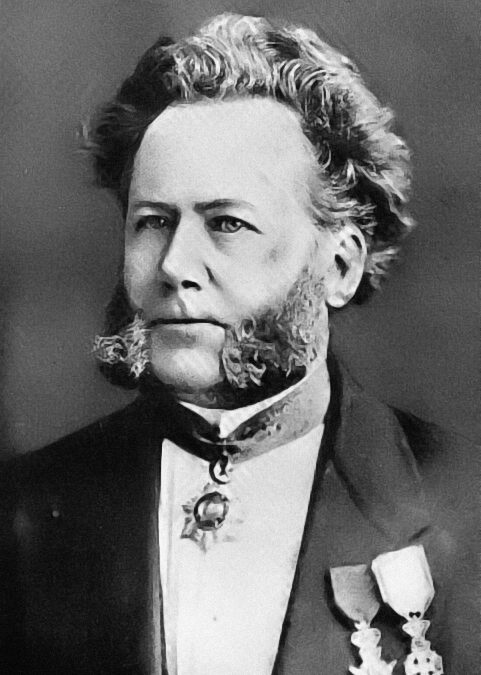
Six Plays by Henrik Ibsen
by Henrik Ibsen (1828-1906)
Norwegian playwright, theater director, and poet
The Modern Library, New York 1957
Translated and with introduction by Eva Le Gallienne
In this volume, for your delectation:
A Doll’s House
Ghosts
An Enemy of the People
Rosmersholm
Hedda Gabler
The Master Builder
Ibsen is OK for beach reading whenever the sun disappears and you have to scooch down in your chair with a blanket and a hoodie to keep warm.
Of course it’s possible to argue with the notion that this is a collection of Ibsen’s best—for my taste, just about any half dozen of Ibsen’s plays is worth putting in the beach bag.
My favorite in Six Plays is “A Doll’s House.” It’s Ibsen’s stark, unforgiving play about men and women, with a dreadful undercurrent of desperation. Torvald Helmer offers only bland, devastating condescension to Nora, whose despair grows ever more public as she realizes that she has drowned herself in the domestic dead end of being Torvald’s “doll-wife.”
If you ache to bash Torvald and comfort Nora as you experience the pervasive and thinly veiled brutality in the Helmer household, then you, like me, must realize how much you wish it could be unimaginable in any way…but in vain…
Nora tells her husband that she had hoped he would take the blame for her transgression, and the disdainful Torvald rebukes her: “…one doesn’t sacrifice one’s honor for love’s sake.”
Nora replies with quiet thunder: “Millions of women have done so.”
Enfin, we understand how Nora could be too hurt to cry, and too happy to remain in a doll’s house…
* * * * * *
Book review. Copyright © Richard Carl Subber 2018 All rights reserved.
Book review: Ethan Frome
not being satisfied with less…
by Edith Wharton
-
My first name was rain: A dreamery of poems with 52 free verse and haiku poems,
and the rest of my poetry books are for sale on Amazon (paperback and Kindle)
and free in Kindle Unlimited, search Amazon for “Richard Carl Subber”
* * * * * *
