
A tempest in a prison

A tempest in a prison

Alas, Atwood didn’t use

   Shakespeare’s pen


Book review:

Hag-Seed


by Margaret Atwood, New York: Hogarth Shakespeare, Crown Publishing Group, 2016


I’m not a fan of writers who write books that are imitations or re-interpretations of other writers’ work. Hag-Seed is a case in point. Let’s be fair. Shakespeare’s plays are complex assemblages of characters, speeches and plots. Atwood’s work, nominally based on The Tempest, has the same characteristics.

Her prose and dialogue are ordinary, for my taste. Her story is about as far as one can get from magical. Of course a reader can figure out which of her characters is aligned with Shakespeare’s Prospero and Caliban and Miranda and so on. Of course a reader can see a transparent image of Shakespeare’s plot.

For my taste, Hag-Seed is an awkward, deliberately mean, and desperately inelegant version of The Tempest.

Cut loose from the Shakespeare connection, Hag-Seed is low-grade storytelling. IMNSHO.

*   *   *   *   *   *

…and now for something completely different:


Hag-seed


Their hands are busy, rhythmic moves,

the three bend in to pace their work,

all hunched, with withered, trembling hands,

with eyes alert,

and silent lips that need not speak

the thoughts they share.


These crones engage each day to toil,

they do not keep a pot a-boil…

but a warming fire, as they need.

From different skeins

they draw their custom works in needled plait,

these hags intent on what’s in hand,

and hushed in awe of what’s at hand,

they huddle, each to each,

all cloaked in drab and drear,

their plainest miens

betray the luminous welling of their keenest joy,

and one of them, in blooming,

swells the hearts of all.


A spark of expectation lights and lightens

the artful labor of their crabbed fingers,

grasping small things of great portent—

a tiny cap, a shawl, a swaddling robe—

for the child to be born.


In waiting they are ladies

bound in common by certainty

and their exaltation

in believing that the babe will be a girl—

a budding rose without a thorn.


January 29, 2017

My poem “Hag-seed” was published January 23, 2018, in my second collection of 47 poems, Seeing far: Selected poems. You can buy it on Amazon (paperback and Kindle), or get it free in Kindle Unlimited, search for “Richard Carl Subber”

It’s easy to remember the sauce

(my nature poem)

“Debut”

click here


The Reader (Der Vorleser)

Not just a rehash of WWII…

by Bernhard Schlink

click here

I offer my kind of thoughtful book summary above. I write a serious review about almost every book I read. You can read other reviewers to get a detailed summary of what the book offers, and to learn specifics about the characters and plot. My reflective commentary is stimulated by the contents and the overall impact of the book, be it a love story or a history or a treatise or classic literature… Generally, I don’t have to post a spoiler alert. I’ll tell you about aspects of the book—the good, the bad, and the ugly—that make it exceptional. I’ll give you something to think about.

Your comments on my poems, book reviews and other posts are welcome.

Book review. My poetry. Copyright © Richard Carl Subber 2018 All rights reserved.

In other words: Poems for your eyes and ears with 64 free verse and haiku poems,
and the rest of my poetry books are for sale on Amazon (paperback and Kindle)
and free in Kindle Unlimited, search Amazon for “Richard Carl Subber”


Follow Rick on Facebook

Thoughtful book reviews by Rick Subber

Nothing Found

Oops, Columbus didn’t “discover” America

Oops, Columbus didn’t “discover” America

America was already

    an “old world”…


October 12, 2025, was the 533rd anniversary of the “discovery” of “the New World” by Christopher Columbus.

Columbus and his men made landfall in the Bahamas, possibly on what is now called San Salvador Island, on October 12, 1492. You may know the song: “the Nina, the Pinta, the Santa Maria, were sailing vessels three…”

Let’s cut to the chase: Columbus never “discovered” America. He never saw the North American continent, much less set foot on it. Columbus made four voyages across the Atlantic Ocean and did a lot of snooping around the Caribbean islands and the northern coast of South America.

An adventurer named Juan Ponce de León gets the teddy bear for being the first European to wade ashore on the coastline of what is now the continental United States. He explored the coast of a land mass that he named “Florida” more than 20 years after the first Columbus gig—on April 2, 1513, de León and his men landed (possibly at the place we now call St. Augustine) and claimed the territory for Spain.

Of course, the Europeans were late to the party.

At least millions of native Americans—probably tens of millions—had been living on the North American continent for thousands of years before the smelly, hairy white men from Europe barged in.

*   *   *   *   *   *

Copyright © Richard Carl Subber 2018 All rights reserved.


Book review: American Colonies

you see, so many and so much

    came before the Pilgrims

by Alan Taylor

click here

My first name was rain: A dreamery of poems with 52 free verse and haiku poems,
and the rest of my poetry books are for sale on Amazon (paperback and Kindle)
and free in Kindle Unlimited, search Amazon for “Richard Carl Subber”
 *   *   *   *   *   *

Follow Rick on Facebook

Thoughtful book reviews by Rick Subber

Nothing Found

How does a poem end?

How does a poem end?

“…such words, the richest fare…”


Finis


To make a race, I mind the end

   and where to start the race, and when.

To craft a plan, the goal is key,

the outcome must be clear to see


To make a poem is not a race,

and not a plan, but what I face

   is how to start—not how to end—

      and what some musing may portend…


Some will say it’s hard to know

   just what comes first and what fills in,

and what sings out, and what can spin,

and what must stay, and what can go.


The ending, though, is something rare,

a mystery while scribbles dare

   to frame the poem, with rhyming, O!


…and then, such words, the richest fare,

in rampant form that lets me know

   the poem is done—the end, just so—

      the marvel: how my pen gets there.


July 2, 2018

This really is not a tutorial on writing poems.

It’s just a story about writing poems.

*   *   *   *   *   *

My poetry. Copyright © Richard Carl Subber 2018 All rights reserved.


My first name was rain: A dreamery of poems with 52 free verse and haiku poems,

and the rest of my poetry books are for sale on Amazon (paperback and Kindle)

and free in Kindle Unlimited, search Amazon for “Richard Carl Subber”

*   *   *   *   *   *

Follow Rick on Facebook

Thoughtful book reviews by Rick Subber

Nothing Found

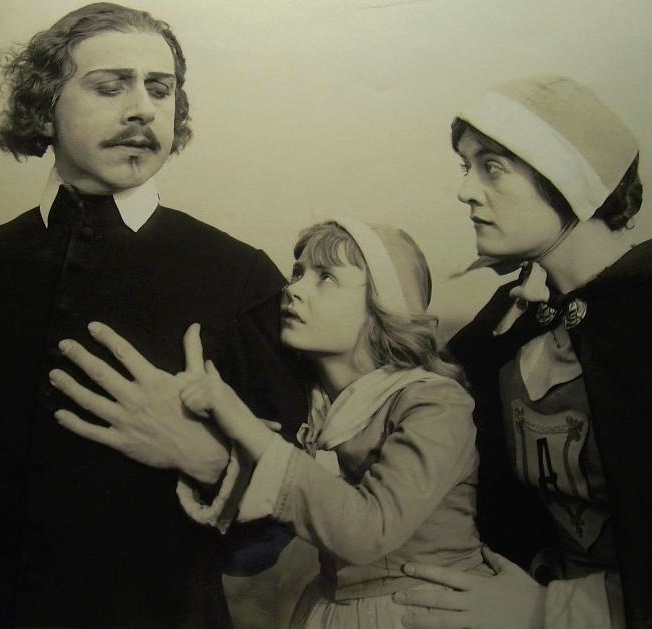
Book review: The Scarlet Letter

Book review: The Scarlet Letter

slow-cooked human nature…


Book review:

The Scarlet Letter


by Nathaniel Hawthorne, London: Collins’ Clear-Type Press, 1850

368 pages


This is magnetic literature. The Scarlet Letter pulls me in, and keeps me connected to Hawthorne’s compelling exposure of slow-cooked human natures.

As I turn the pages, I put my hands on the beating hearts of Arthur Dimmesdale and Hester Prynne.  Dimmesdale flails in the crass miasma of his weakness. Hester does not try to escape her torment, and she creates iconoclastic goodness in nearly everything she does. They came close to escaping their time.

The scarlet letter of Hester’s ignominy is perhaps the least destructive element of this story of love that is a transgression and a transforming secret.

There is so much emotion and too little joy in Hawthorne’s tale of 17th century lovers. Alas, the story line is viciously inescapable.

Here’s another thought: as the story is commonly known and discussed, there is hardly enough engagement with the essential role of little Pearl, the happy-go-lucky and morbidly insightful child whose experience is vital in every chapter. Pearl is a connector in every element of the tale.


I guess you won’t have any trouble believing this:

after publication of The Scarlet Letter, Hawthorne described it as “positively a hell-fired story, into which I found it impossible to throw any cheering light.”

*   *   *   *   *   *

Book review. Copyright © Richard Carl Subber 2018 All rights reserved.


Book review: Lord of the Flies

The story was never more relevant…

by William Golding

click here

 
My first name was rain: A dreamery of poems with 52 free verse and haiku poems,
and the rest of my poetry books are for sale on Amazon (paperback and Kindle)
and free in Kindle Unlimited, search Amazon for “Richard Carl Subber”

*   *   *   *   *   *

Follow Rick on Facebook

Thoughtful book reviews by Rick Subber

Nothing Found

Book review: The Bartender’s Tale

Book review: The Bartender’s Tale

you know this country…


Book review:

     The Bartender’s Tale


by Ivan Doig (1939-2015)

Riverhead Books, Penguin Group (USA) Inc., New York, 2012

387 pages


If you’re an Ivan Doig fan, like me, this one will easily endear itself to you. It’s Ivan Doig-ish and it’s about a 12-year-old boy growing up with his father, in a saloon, in Gros Ventre, a likable-enough town with likable-enough people in Two Medicine country, in Montana, where the sheep are. If you’re an Ivan Doig fan, you sort of know this kind of country.

Spoiler alert: it ain’t This House of Sky. Pause. Repeat, for effect.

On the other hand, 12-year-old Rusty is a magnet for life experiences, he is a perceptive if sometimes innocent observer of what life crams into his young world, he ingenuously feels the first throbs of grown-up sadness, young love, careless aspiration, and fear of life-changing events that he sometimes only clumsily understands. Rusty is the kind of character that Doig understands.

Rusty’s relationship with his dad grows and changes from the first page to the last—for me, this plot thread is at least as compelling as the boy’s fantastic and wonderfully articulate transition from kid to person. Rusty learns from Tom even when Tom isn’t teaching, even when Tom is struggling with mysteries himself. Rusty listens in on Tom’s grown-up and sometimes overwhelming life, especially in the back room of the Medicine Lodge saloon….and the back room is stage center for Rusty and Zoe, his 12-year-old consort in young love and great adventures.

On the other hand, you see, The Bartender’s Tale is about a whole lot more than Rusty, and Tom, and Zoe. Too much more, I dare to say. For my taste, Doig gives us too many secondary characters who have primary roles, too many plot turns jumbled together, and too many momentous surprises, and here I’m trying sincerely to avoid using the distasteful word “contrived” but I think I can’t quite help myself….

Of course, I realize this sounds a bit like the Emperor telling Mozart that his music has “too many notes.” Forgive me.

Mostly I loved The Bartender’s Tale. Really, I couldn’t put it down. Really. Repeat, for effect.

*   *   *   *   *   *

Book review. Copyright © Richard Carl Subber 2018 All rights reserved.

Book review: The Sea Runners

…it informs, it does not soar…

by Ivan Doig

click here

many waters: more poems with 53 free verse poems,
and the rest of my poetry books are for sale on Amazon (paperback and Kindle)
and free in Kindle Unlimited, search Amazon for “Richard Carl Subber”


*   *   *   *   *   *

Follow Rick on Facebook

Thoughtful book reviews by Rick Subber

Nothing Found

Pin It on Pinterest