by Richard Subber | Jun 29, 2020 | American history, History, Tidbits
“The Six Grandfathers”
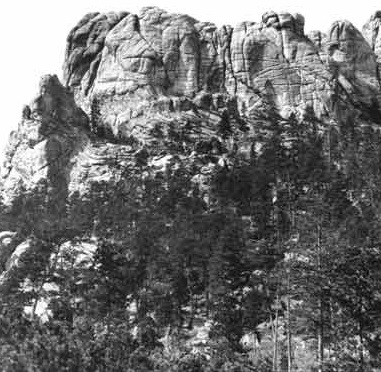
It’s generally believed that Mt. Rushmore was an unremarkable pile of rock before the famous sculptures of presidents were done.
Gutzon Borglum and his son, Lincoln Borglum, did the work starting in 1927, and it was completed in 1941. The Borglums and their crews blasted more than 400,000 tons of stone off the face of the mountain in the Black Hills in Keystone, SD.
Here’s the unfamiliar back story: It wasn’t always called Mt. Rushmore (The granite bluff was named after Charles Rushmore, a wealthy New York lawyer, in 1885).
The Lakota Sioux name for the mountain had been “The Six Grandfathers” (Tȟuŋkášila Šákpe).
It’s too bad the federal government didn’t authorize carving their likenesses into the face of the bluff.
N.B. The image is of Mt. Rushmore in 1905.
* * * * * *
Copyright © Richard Carl Subber 2020 All rights reserved.
Book review: The Snow Goose
…sensual drama, it’s eminently poetic…
by Paul Gallico
–
As with another eye: Poems of exactitude with 55 free verse and haiku poems,
and the rest of my poetry books are for sale on Amazon (paperback and Kindle)
and free in Kindle Unlimited, search Amazon for “Richard Carl Subber”
* * * * * *
by Richard Subber | Jun 25, 2020 | Book reviews, Books, Joys of reading, Language
…relentlessly realistic dialogue…
(book review)
A Farewell to Arms
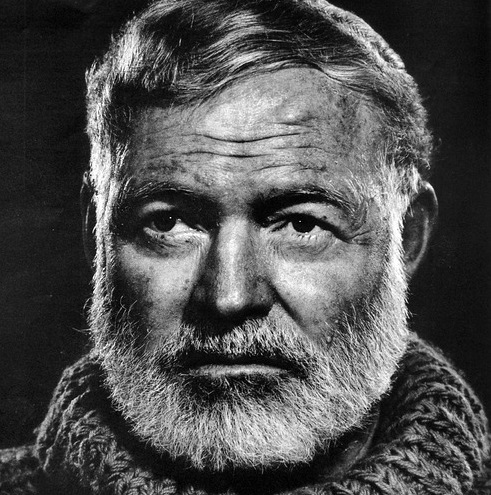
Ernest Miller Hemingway (1899-1961)
New York: The Modern Library, 1932.
It’s been a while since I read Hemingway.
A Farewell to Arms is a slow starter, and again I learned to pace myself without too much trouble. The action is restrained but steady, and again I realized gradually that a key element is the relentlessly realistic dialogue.
The American protagonist, Frederick Henry, is involved in every scene. The life of the book is his life. His recurring, desultory involvement in his own life and his role in the Italian Army during World War I is the backdrop of his elaborately recounted relationship with the nurse, Catherine Barkley.
A Farewell to Arms doesn’t really seem to be a war novel. On the other hand, except for brief interludes, the characters really don’t seem to be at peace. For Frederick Henry, it’s an ironic farewell.
* * * * * *
Book review. Copyright © Richard Carl Subber 2020 All rights reserved.
Book review: Seven Gothic Tales
by Isak Dinesen
her lush and memorable stories…
–
Seeing far: Selected poems with 47 free verse and haiku poems,
and the rest of my poetry books are for sale on Amazon (paperback and Kindle)
and free in Kindle Unlimited, search Amazon for “Richard Carl Subber”
* * * * * *

by Richard Subber | Jan 10, 2020 | American history, Book reviews, Books, History, World history
American leadership never was
what we thought it was…
Book review:
Fire in the Lake:
The Vietnamese and the Americans in Vietnam
by Frances FitzGerald (b1940), a Pulitzer Prize winner
Boston: An Atlantic Monthly Press Book, Little Brown and Company, 1972
491 pages
I don’t know how much of an audience there was for Fire in the Lake in 1972. I feel confident in guessing there wasn’t enough.
The American war in Vietnam was far from over in 1972 when FitzGerald wrote this densely researched journalistic review of U. S. policies and actions and ignorance in Southeast Asia. She makes it easier to understand why the American war effort was doomed from its earliest phase.
You should read Fire in the Lake to get the whole story–that is, the whole story as it was knowable in 1972. Be prepared to acknowledge that much of what you previously believed—and thought you knew—was wrong.
The American commitment to “containing Communism” was prominent, and tragically uninformed.
South Vietnam was the wrong place to try to “contain Communism,” no matter what that might mean.
There are more than 58,000 names on the walls of the Vietnam Veterans Memorial.
Some of them are the names of my friends.
* * * * * *
Book review. Copyright © Richard Carl Subber 2020 All rights reserved.
–
many waters: more poems with 53 free verse poems,
and the rest of my poetry books are for sale on Amazon (paperback and Kindle)
and free in Kindle Unlimited, search Amazon for “Richard Carl Subber”
* * * * * *
by Richard Subber | Nov 20, 2019 | Book reviews, Books, Human Nature
The language is Dickens, the humanity is Melville…
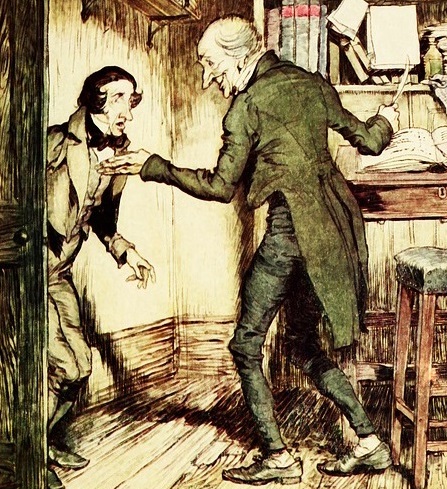
“Bartleby, the Scrivener: A Story of Wall Street”
A short story by Herman Melville (1819-1891)
First published 1853 in Putnam’s Magazine, and later in Melville’s The Piazza Tales in 1856
If you can read “Bartleby” without suspecting, nay, without more or less believing that it was written by Dickens, you can take pride in your mental discipline whilst reading. I wanted to read it again, and I confess that I briefly searched for “Bartleby” in my rumpled collection of Dickens, which of course does not include The Piazza Tales.
None of Melville’s notorious South Sea elements here. This is straightforward, 19th century prose set in 19th century Wall Street with shabby, luridly eccentric antebellum characters including the narrator and his bedeviled scrivener (copyist), Bartleby.
The circumstances of this desiccated short story are curious, even eccentric, incredulous. The withered and aloof Bartleby is presented, examined,and disdained, until his very dispirited isolation makes him the object of the narrator’s genuine but increasingly troubled caretaking.
Bartleby’s enervating and apparently desperate ennui keeps him always a step removed from the narrator’s efforts to create a little humanity in his life.
The scrivener is lonely beyond understanding. He bears almost in silence the emotional poverty that ultimately kills him.
The reader understands that Bartleby longed, in vain, to be able to repel the Reaper with his simple and inscrutable refrain: “I would prefer not to.”
Despite all temptation, I will prefer not to re-read Melville’s tale on a dreary afternoon.
* * * * * *
Book review. Copyright © Richard Carl Subber 2019 All rights reserved.
Book review: To Serve Them All My Days
by R. F. Delderfield
A beloved teacher,
of course you know this story…
–
Above all: Poems of dawn and more with 74 free verse poems,
and the rest of my poetry books are for sale on Amazon (paperback and Kindle)
and free in Kindle Unlimited, search Amazon for “Richard Carl Subber”
* * * * * *

by Richard Subber | Nov 8, 2019 | Book reviews, Books
the characters walk and talk, but…
Book review:
The Blithedale Romance
by Nathaniel Hawthorne (1804-1864)
Cambridge, MA: The Riverside Press, 1883
The Blithedale Romance is Hawthorne’s third novel, an exemplar of Romantic Era fiction that has been called his “darkest” novel. It’s respected by modern critics.
It’s not a page turner. Hawthorne has what it takes to make sure that the characters are independently brought to life, but their relationships are not credible. Even a diligent and interested reader can feel that the love of Zenobia and Priscilla for Hollingsworth is downright mysterious and despairingly inarticulate. They love him, in two marvelously different styles, but Hawthorne never gets around to really decently explaining why they love him.
The other principal characters—Miles Coverdale (a somewhat autobiographical avatar of Hawthorne himself), Old Moodie, and Westervelt—are satisfactorily developed. Nevertheless, the plotlines are mechanical and chronological rather than explanatory.
In The Blithedale Romance, the characters walk and talk, and they interact with each other, but credible understanding of their relationships never really blooms for the reader.
* * * * * *
Book review. Copyright © Richard Carl Subber 2019 All rights reserved.
Book review: Lafayette by Harlow Unger
Lafayette was a great man. Also rich and lucky.
–
Above all: Poems of dawn and more with 74 free verse poems,
and the rest of my poetry books are for sale on Amazon (paperback and Kindle)
and free in Kindle Unlimited, search Amazon for “Richard Carl Subber”
* * * * * *
