by Richard Subber | Sep 4, 2019 | Book reviews, Books, History, World history
…the supermen were underground…
Book review:
Mila 18
by Leon Uris (1924-2003)
American writer, World War II veteran
Garden City, NY: Doubleday & Company, Inc., 1961
442 pages
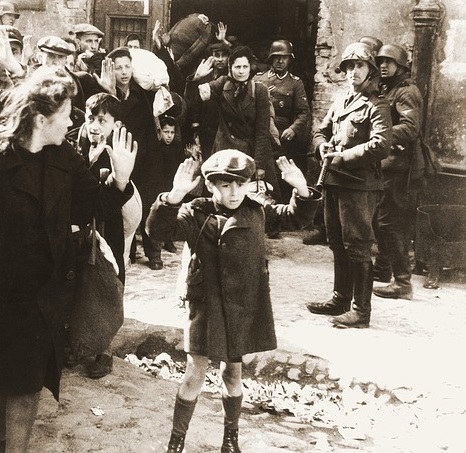
Whatever you think you know about the Warsaw ghetto uprising in 1943, you’ll know more after you read Mila 18.
Leon Uris wrote a historically detailed work of realistic fiction that will fill you with gagging horror, and with endless respect for the brave Jewish fighters who kept the Nazi killing machine at bay for a month in 1943.
About 13,000 Jews died in the burning buildings, in the bunkers, and in the sewers inside the ghetto.
Their main resistance command post was in an underground bunker located at ulica Miła 18.
It’s an almost inconceivable irony that the Polish street address can be translated as “18 Pleasant Street.”
* * * * * *
Book review. Copyright © Richard Carl Subber 2019 All rights reserved.
Book review: The Bartender’s Tale
Ivan Doig’s story, I mostly loved it…
–
As with another eye: Poems of exactitude with 55 free verse and haiku poems,
and the rest of my poetry books are for sale on Amazon (paperback and Kindle)
and free in Kindle Unlimited, search Amazon for “Richard Carl Subber”
* * * * * *
by Richard Subber | Aug 30, 2019 | Book reviews, Books, Human Nature, Tidbits
Think about your own well-being…
Here’s one for your reading list
Tribe: On Homecoming
and Belonging
by Sebastian Junger
In his Introduction, Junger says:
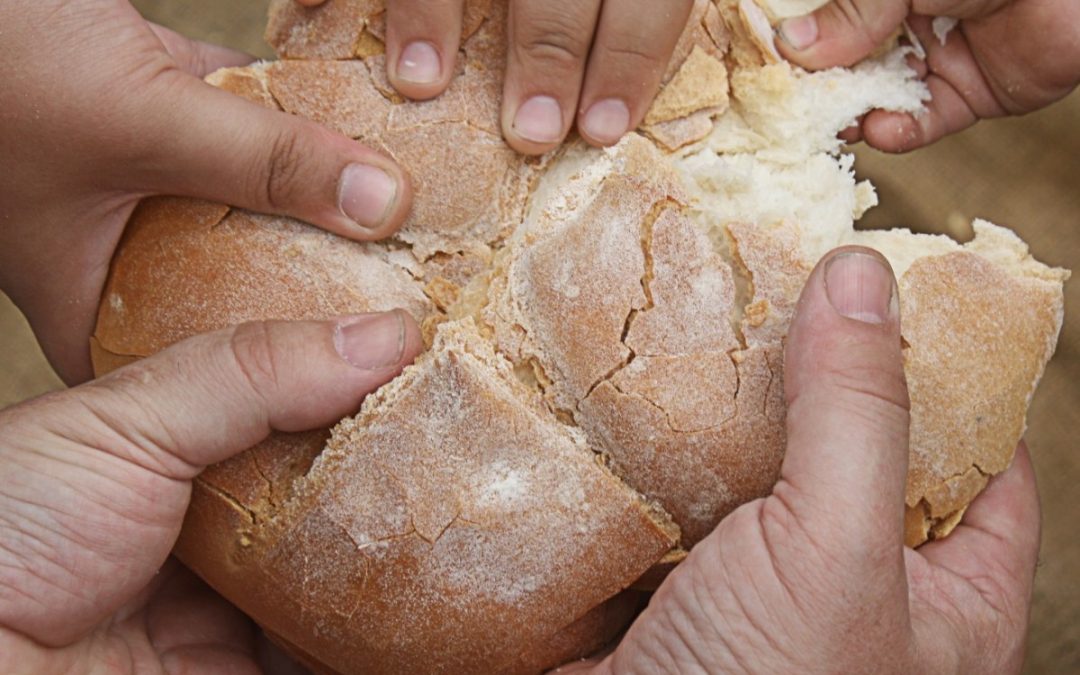
“Robert Frost famously wrote that home is the place where, when you have to go there, they have to take you in. The word ‘tribe’ is far harder to define, but a start might be the people you feel compelled to share the last of your food with…
Tribe is about why [treating someone like a member of your tribe] is such a rare and precious thing in modern society, and how the lack of it has affected us all. It’s about what we can learn from tribal societies about loyalty and belonging and the eternal human quest for meaning.”
It doesn’t take him too long to get right to the point, quoting from a 2012 journal article:
“The economic and marketing forces of modern society have engineered an environment…that maximize[s] consumption at the long-term cost of well-being. In effect, humans have dragged a body with a long hominid history into an overfed, malnourished, sedentary, sunlight-deficient, sleep-deprived, competitive, inequitable, and socially-isolating environment with dire consequences.”
Here’s the thing: if you read that last sentence without saying some of the words right out loud, maybe twice, with feeling and with some awareness of despair, well, maybe you should grab the CliffsNotes version and save yourself some time.
Sebastian Junger, Tribe: On Homecoming and Belonging, New York: Twelve/Hachette Book Group, 2016, xvi-xvii, 23.
* * * * * *
Book review. Copyright © Richard Carl Subber 2017 All rights reserved.
–
Book review: Lord of the Flies
It was never more relevant…
by William Golding
–
My first name was rain: A dreamery of poems with 52 free verse and haiku poems,
and the rest of my poetry books are for sale on Amazon (paperback and Kindle)
and free in Kindle Unlimited, search Amazon for “Richard Carl Subber”
* * * * * *
by Richard Subber | Jul 1, 2019 | Book reviews, Books, Books Commentary, History, World history
much was not lost…
Book review:
The Map of Knowledge:
A Thousand-Year History
of How Classical Ideas Were Lost and Found
Violet Moller
New York: Doubleday, 2019
312 pages
It’s quite possible that Moller offers much more than you already know about Euclid’s The Elements (c300 BCE). and Ptolemy’s The Almagest, (c150 CE), and the many published works on anatomy and medicine by Galen (130-210 CE).
The Map of Knowledge is a scholarly account of the preservation of knowledge from ancient times to the present day. I bet you can guess that it’s not a beach book.
Moller forgot to mention that throughout the centuries, most human beings on the planet couldn’t read or write, and so it was the lucky, the gifted, and the self-selected few who preserved important knowledge for the benefit of succeeding generations. Think about a version of Fahrenheit 451, stretched over the centuries.
Go ahead, read Fahrenheit 451 again. Do it.
* * * * * *
Book review. Copyright © Richard Carl Subber 2019 All rights reserved.
Book review: Tales from Shakespeare
pretty good summaries by Charles and Mary Lamb…
–
As with another eye: Poems of exactitude with 55 free verse and haiku poems,
and the rest of my poetry books are for sale on Amazon (paperback and Kindle)
and free in Kindle Unlimited, search Amazon for “Richard Carl Subber”
* * * * * *
by Richard Subber | Apr 5, 2019 | Book reviews, Joys of reading, Language, Poetry, Reviews of other poets
no need for a treasure map…
Book review:
The Poems of Robert Frost
With an Introductory Essay “The Constant Symbol”
by Robert Lee Frost (1874-1963)
New York: The Modern Library/Random House, Inc., 1946
In his opening essay, Frost says “…poetry…is metaphor, saying one thing and meaning another, saying one thing in terms of another, the pleasure of ulteriority. Poetry is simply made of metaphor.”
My copy of The Poems of Robert Frost is a treasure ship with two old stained green covers. I’ve been reading it for about 60 years. It’s a bit beat up, but when I open it, it shines.
I’m not reckless enough to name “my favorite” poem—I keep changing my mind as I read through them again. Frost is a teacher. He has found so many of the right words, and he has put so many of them in the right order.
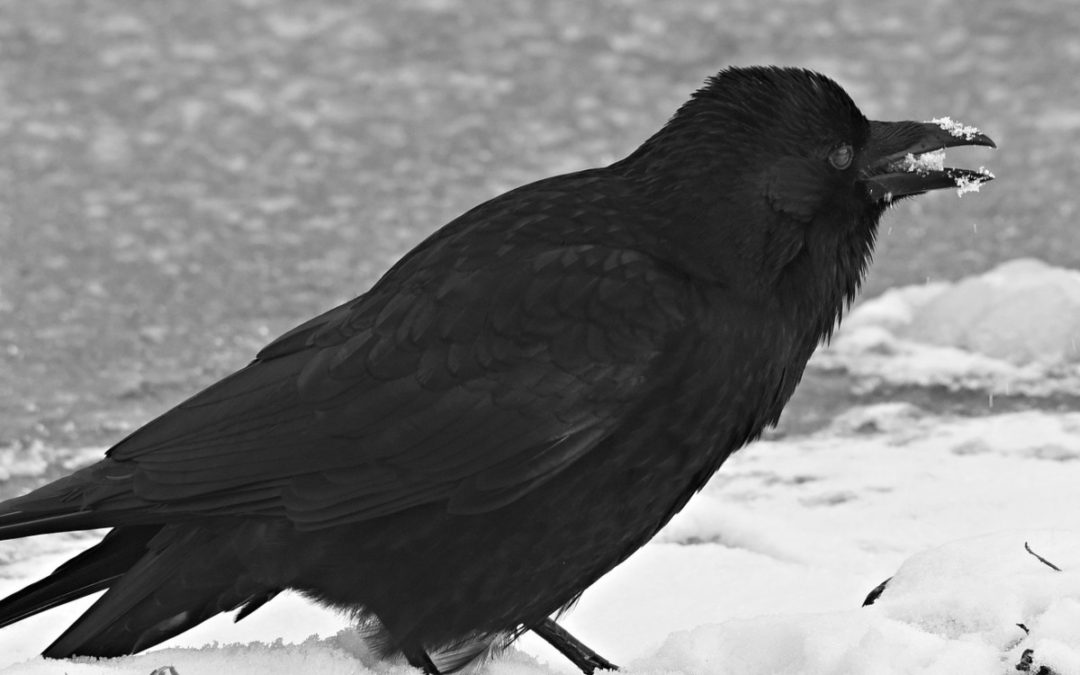
I always enjoy “The Last Word of a Bluebird (as told to a child).” The Crow carries the little Bluebird’s final message to Lesley. In his low voice he brings word about the north wind and the impending winter cold that drives the Bluebird away. The compassionate bird urges Lesley to be good, and promises that “…perhaps in the spring/He would come back and sing.”
I’m waiting for the spring time, and I have a good book to help me pass the time.
* * * * * *
Book review. Copyright © Richard Carl Subber 2019 All rights reserved.
As with another eye: Poems of exactitude with 55 free verse and haiku poems,
and the rest of my poetry books are for sale on Amazon (paperback and Kindle)
and free in Kindle Unlimited, search Amazon for “Richard Carl Subber”
* * * * * *
by Richard Subber | Jan 28, 2019 | American history, Book reviews, Books, History
“…conquerors who saw themselves
more as guardians…”
Book review:
The Comanche Empire
by Pekka Hämäläinen
New Haven: Yale University Press, 2008.
This book will change your mind about how the West was won.
Hint: The Comanches got there first.
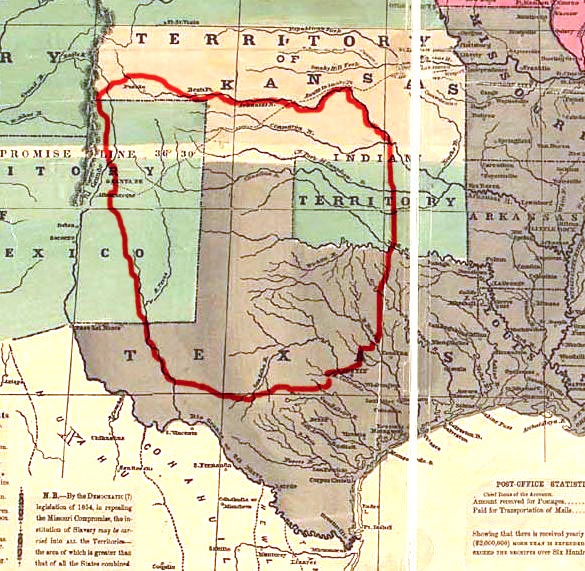
The Comanches arrived obscurely in the American Southwest in 1706. The Comanche Empire provocatively makes the case that the Comanches created an imposing Southwestern American empire that spanned 150 years. They blunted the 18th century colonial ambitions of the Spanish in Mexico and the French in Louisiana, and stalled the westward thrust of Americans and the U.S. government until the middle of the 19th century. A broad coalition of Comanche rancheria chiefs throughout the territory of Comancheria first dominated the Apaches, eventually turned against their Ute allies, and commercially or militarily subjugated numerous lesser tribes.
Comanches managed a succession of peace treaties and conflicts with the Spaniards and completely blocked their repeated efforts to extend colonial settlements northward from Mexico. The political, commercial and military supremacy of the Comanches was based principally on their success in adopting and adapting Spanish horses for efficient transportation, military power, and a thriving and lucrative trade in horses throughout the Southwest.
Hämäläinen‘s central argument invites—indeed it obviously provokes—a reasonable dispute about the credibility of his claim for a Comanche empire. Clearly, in classical political or geopolitical usage, the claim is untenable, at least in part; the Comanche empire had neither fixed borders, nor a single self-sustaining centralized supreme authority, nor a durable bureaucracy, nor a definitive political structure.
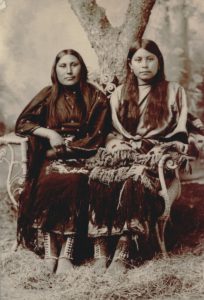 Nevertheless, the Comanches had a respected, recurring broadly representative council of chiefs that planned and organized extensive raids, trading and other commerce, and military operations. Their hunting, pasturing, and trading territories had indistinct geographic borders that were never surveyed or adjudicated; Comanches never sought to occupy and permanently control any specifically delineated territory. In The Comanche Empire, Hämäläinen says they were “conquerors who saw themselves more as guardians than governors of the land and its bounties.” Nonetheless, the geographical extent of the their domains was well known, respected and enforced by the Comanches.
Each Comanche rancheria had its own geographic territory, rigorous socio-military culture and hierarchical organization. The situational circumstances of Comanche military superiority, their control of trade and their ability through the decades to repeatedly impose and maintain obviously favorable terms in their treaty and trade agreements are undeniable evidence of the Comanches’ extended dominance of terrain, physical resources, culture and commerce, and, not least in importance, the Spanish and French colonial enterprises that sought to compete with them.
For decades the Comanches set the terms of their success; no competing power could defeat them, and no Indians or Europeans could evade the Comanches’ dominance in their domain.
It becomes obvious: the Comanches created a de facto empire.
Ultimately, they were marginalized by a combination of drought that constrained their bison hunting and weakened their pastoral horse culture, disruption of trade that limited their access to essential carbohydrate foodstuffs, epidemic disease that repeatedly thinned the Comanche populations, predatory bison hunting by the Americans in the early 1870s that wiped out the Indians’ essential food resource, and, finally, by the irresistible tide of U.S. government-sponsored westward migration that pushed American citizens into Comanche territory.
Too bad the Comanches left no accounts of their own. It would be fascinating to hear this story in their own words.
* * * * * *
Book review. Copyright © Richard Carl Subber 2019 All rights reserved.
many waters: more poems with 53 free verse poems,
and the rest of my poetry books are for sale on Amazon (paperback and Kindle)
and free in Kindle Unlimited, search Amazon for “Richard Carl Subber”
* * * * * *
