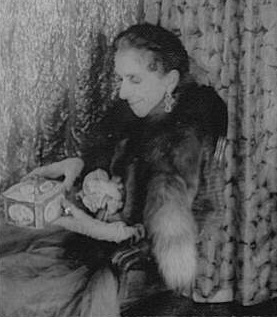
“Fishering,” by Brian Doyle

“Fishering,” by Brian Doyle

“…I think maybe there is much…


The art of Brian Doyle


Brian Doyle (1956-2017) had the gift.

“Fishering” is an obscure, potent piece from his pen that gives me a double whammy: something like a child’s innocent joy of discovery, and something like the experienced master’s startled awareness of a new way of understanding…

Doyle, almost tenderly, pulls back the curtain on a scene of brutal splendor, of nature red in tooth and claw, of the mysterious reality of survival that we humans rarely face, of the beauty of power that does violence without evil in an unresisted cycle of life and death:


“I think maybe there is much

where we think there is nothing.”


Brian Doyle

He was an author and editor of Portland Magazine at the University of Portland

from “Fishering,” in the March 6, 2006, issue of High Country News


Doyle’s story just draws in the horizons until I am in a small space, contemplating a feat of nature that is alien, but beautiful…I guess I hope I never see a ferocious fisher face to face, I’m not too sure I could calmly sit down and watch it as Brian did, but  the monumental fleeting truth is that I wish I could do what he did and see the thing, out there, and have a wonderful, fearful, essential moment of contact to remember…I want to try to be open to the moments in life when there can be much, instead of nothing…

For your delectation, read this excerpt of:


“Fishering” by Brian Doyle


“In the woods here in Oregon there is a creature that eats squirrels like candy, can kill a pursuing dog in less than a second, and is in the habit of deftly flipping over porcupines and scooping out the meat as if the prickle-pig were merely a huge and startled breakfast melon.

“This riveting creature is the fisher, a member of the mustelid family that includes weasels, otter, mink, badger, ferrets, marten, and — at the biggest and most ferocious end of the family — wolverine…

“…Suffice it to say that I have been much graced in these woods, but to see a fisher was not a gift I expected. Yet recently I found loose quills on a path, and then the late owner of the quills, with his or her conqueror atop the carcass staring at me.

“I do not know if the fisher had ever seen a human being before. It evinced none of the usual sensible caution of the wild creature confronted with homo violencia, and it showed no inclination whatsoever to retreat from its prize. We stared at each other for a long moment and then I sat down, thinking that a reduction of my height and a gesture of repose might send the signal that I was not dangerous, and had no particular interest in porcupine meat. Plus, I’d remembered that a fisher can slash a throat in less than a second.

“Long minutes passed. The fisher fed, cautiously. I heard thrushes and wrens. I made no photographs or recordings, and when the fisher decided to evanesce I did not take casts of its tracks, or claim the former porcupine as evidence of fisherness. I just watched and listened and now I tell you. I don’t have any heavy message to share. I was only a witness: Where there are no fishers, there was a fisher. It was a stunning creature, alert, attentive, accomplished, unafraid. I think maybe there is much where we think there is nothing. Where there are no fishers, there was a fisher. Remember that.”

*   *   *   *   *   *

Copyright © Richard Carl Subber 2018 All rights reserved.

My first name was rain: A dreamery of poems with 52 free verse and haiku poems,
and the rest of my poetry books are for sale on Amazon (paperback and Kindle)
and free in Kindle Unlimited, search Amazon for “Richard Carl Subber”

​-


*   *   *   *   *   *

Follow Rick on Facebook

Thoughtful book reviews by Rick Subber

Nothing Found

Book review: Who Built America?

Book review: Who Built America?

…men who brought

    their own shovels to work…


Book review:

Who Built America?

Working People

   and the Nation’s Economy,

   Politics, Culture, and Society,

   Vol. 1 To 1877


by Christopher Clark and Nancy A. Hewitt

New York: Worth Publishers, 2000

721 pages, with a substantial Appendix and index


Who Built America? is a comprehensive, widely sourced reference work that tackles the story of the actual building of America and our cities, commerce/industries, and infrastructures.

Clark and Hewitt give full respect to the groups of people who labored to do so: native Americans, women and children, minorities, and immigrants are fully credited.

I think that a useful feature is the summary chronology and suggested complementary readings at the end of each chapter.

Who Built America? is a go-to reference for any serious student of American history.

Volume 2, covering the Reconstruction through the end of the 20th century, is an equally appealing component of this series published by the American Social History Project, City University of New York.

This 2000 edition of Who Built America? was written by Christopher Clark and Nancy A. Hewitt, based on the original edition written by Levine, Brier, Brundage, Countryman, Fennel, and Rediker.

*   *   *   *   *   *

Book review. Copyright © Richard Carl Subber 2018 All rights reserved.


Book review: Forced Founders

by Woody Holton

The so-called “Founding Fathers”

weren’t the only ones

who helped to shape our independence…

click here

As with another eye: Poems of exactitude with 55 free verse and haiku poems,
and the rest of my poetry books are for sale on Amazon (paperback and Kindle)
and free in Kindle Unlimited, search Amazon for “Richard Carl Subber”


*   *   *   *   *   *
Follow Rick on Facebook

Thoughtful book reviews by Rick Subber

Nothing Found

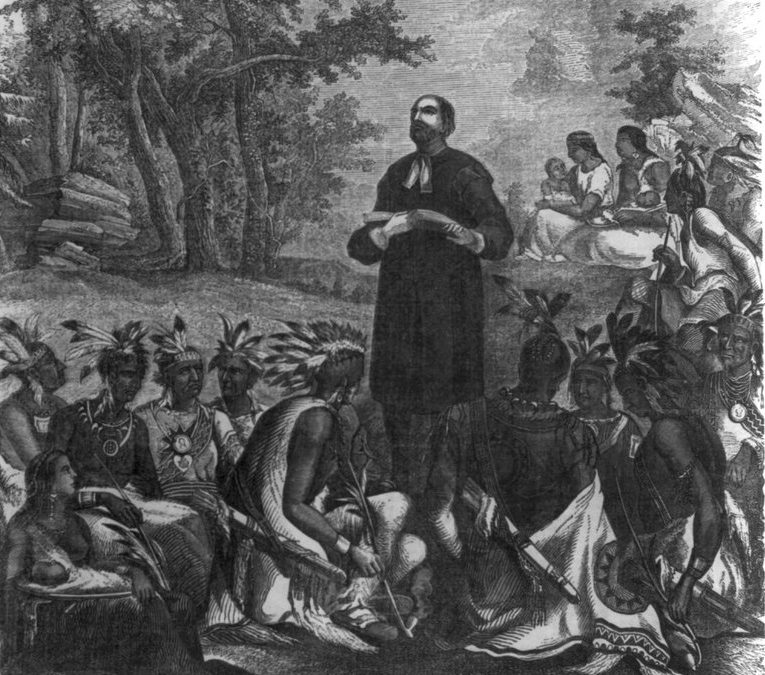
A quote from General Custer

A quote from General Custer

…big talker


“There are not enough Indians

  in the world

  to defeat the Seventh Cavalry.”


General George Armstrong Custer  (1839-1876)


OK, let’s walk that one back a bit…

It wasn’t the quotation that got Custer in trouble.

Let’s talk about the Lakota and Cheyenne and Arapaho warriors—roughly 1,836 of them—at the Little Bighorn River in Montana on June 25, 1876…

Custer may have skipped a couple lectures at West Point, where he graduated at the bottom of his class (the “goat”) in 1861…he amassed 726 demerits, close to the school record.

No one cared about his West Point demerits at the Battle of Greasy Grass.

*   *   *   *   *   *

Copyright © Richard Carl Subber 2018 All rights reserved.


Writing Rainbows: Poems for Grown-Ups with 59 free verse and haiku poems,
and the rest of my poetry books are for sale on Amazon (paperback and Kindle)
and free in Kindle Unlimited, search Amazon for “Richard Carl Subber”

*   *   *   *   *   *
Follow Rick on Facebook

Thoughtful book reviews by Rick Subber

Nothing Found

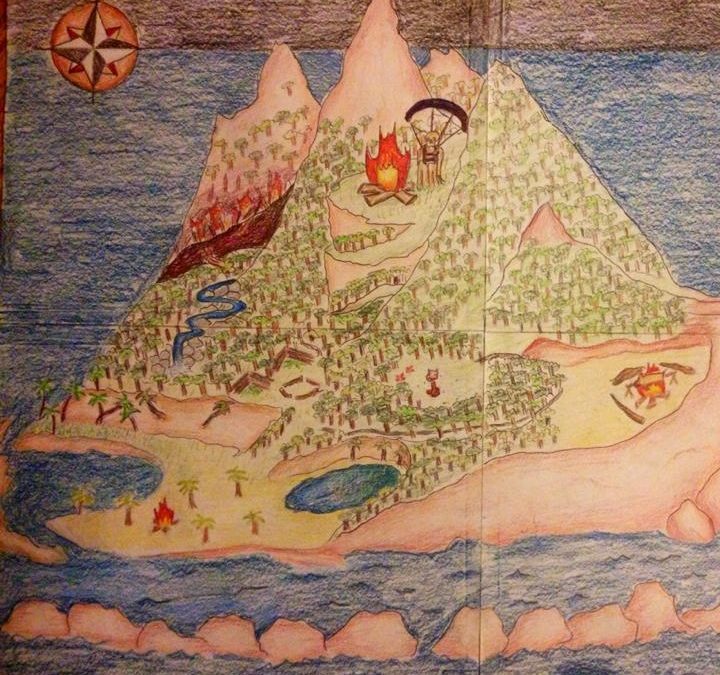
Book review: Seven Gothic Tales

Book review: Seven Gothic Tales

They’re not flamboyant,

     but they are fabulous…


Book review:

Seven Gothic Tales


by Isak Dinesen (1885-1962)

Dorothy Canfield, Introduction

New York: Harrison Smith and Robert Haas, Inc., 1934

420 pages


Isak Dinesen’s story doesn’t stop with Out of Africa. For starters, Isak Dinesen isn’t her name, but you probably know that.

Baroness Karen Christenze von Blixen-Finecke (née Dinesen) was a Danish author who wrote using several pen names, notably Isak Dinesen.

Her oeuvre is lush and memorable. Out of Africa is a compelling classic tale of life and love. Who wouldn’t love Denys Finch Hatton? After you’ve read Babette’s Feast, you don’t have any trouble recalling what it’s about. The films by the same names are authentic delights.

Seven Gothic Tales isn’t flamboyant, but it is fabulous. If you’re a writer, you may feel—a lot, or a little—that you wish you could write like Isak Dinesen. If you’re not a writer, you could wish that you may be one in another life.

Her muse is fertile and friendly—she manages, on page after page, to write what Coleridge identified as “the best words.” The storytelling is warm, the characters are vivid and realistic, and the context is so desirable.

Two of my favorite Gothic tales are “The Old Chevalier” and “The Poet.” The narrator in “The Old Chevalier” mentions, with approval, “I…do not think that I could ever really love a woman who had not, at some time or other, been up on a broomstick.” In “The Old Poet,” one of the characters is “the Councilor,” who “maintained an idea of paradise, for his generation had been brought up on the thought of life everlasting, and the idea of immortality came naturally to him.”

Isak Dinesen writes with casual skill to create worlds in which humanity thrives, and she fills Seven Gothic Tales with civilized entertainment.  

*   *   *   *   *   *

Book review. Copyright © Richard Carl Subber 2018 All rights reserved.


Forget about Buffy the Vampire Slayer

Dracula is a scary book, really…

by Bram Stoker

click here

many waters: more poems with 53 free verse poems,
and the rest of my poetry books are for sale on Amazon (paperback and Kindle)
and free in Kindle Unlimited, search Amazon for “Richard Carl Subber”

*   *   *   *   *   *
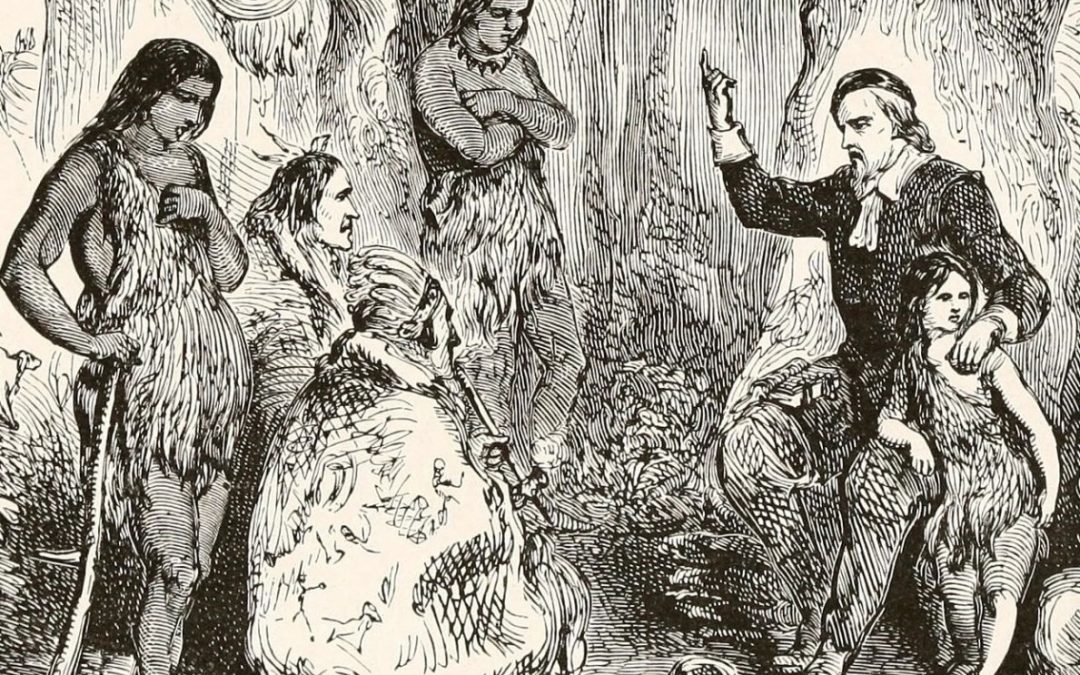
Book review: John Eliot: The Man Who Loved The Indians

Book review: John Eliot: The Man Who Loved The Indians

…a conversational biography…


Book review:

John Eliot:

The Man Who Loved The Indians


by Carleton Beals

New York: Julian Messner, Inc., 1957

192 pages


This is an entertaining biography of the Puritan minister who was known during his lifetime (1604-1690) as the “Apostle to the Indians.” Rev. John Eliot was the colonial leader who was most influential in cooperating with Indian leaders to establish the “Praying Indian” towns in the Massachusetts Bay Colony.

Beals creates a fictionalized biography of convenient length. The narrative is filled with dialogue that is relevant to the story, but is, of course, completely inauthentic in the sense that there is only a fragmentary record of Eliot’s conversations with his fellow colonials and with American Indians. This isn’t a big deal. However, Beals’ conversational tone is not to my taste for serious biographical treatments.

John Eliot: The Man Who Loved The Indians is based on substantial research and offers a bibliography of 46 sources, including many that are well respected and well known to historians and students of the colonial period. There is a useful index.

Beals offers an appealing, if one-sided, complement to serious investigation of cultural and political dynamics in 17th century New England.

Caveat: Beals, without apology, writes his story using the European context. To be sure, Waban and the other Indians are characters in the story.

Beals doesn’t spend a lot of time on the brutality of their demise.

*   *   *   *   *   *


Book review. Copyright © Richard Carl Subber 2018 All rights reserved.


Book review: The Reader (Der Vorleser)

It’s more than a rehash of WWII…

by Bernhard Schlink

click here

My first name was rain: A dreamery of poems with 52 free verse and haiku poems,
and the rest of my poetry books are for sale on Amazon (paperback and Kindle)
and free in Kindle Unlimited, search Amazon for “Richard Carl Subber”

*   *   *   *   *   *
Follow Rick on Facebook

Thoughtful book reviews by Rick Subber

Nothing Found

Pin It on Pinterest