Book review: The Sea Runners

Book review: The Sea Runners

…a relentlessly obvious story…


Book review:

The Sea Runners


by Ivan Doig (1939-2015)

Penguin Books, New York, 1983

279 pages


I want to be fair. This is a novel about everything dogged: determination, courage, loyalty, imagination, strength, stubbornness.

I’m bound to say there’s little excitement in Doig’s first novel. You’d think that death-defying action would add a little bunny-hop to one’s pulse, but think again. There is a relentless context that animates the characters in The Sea Runners, and swaddles all the environmental features of this story of men against the sea. It’s based on an actual event in the northern Pacific Ocean in the middle of the 19th century, so you know how it turns out.

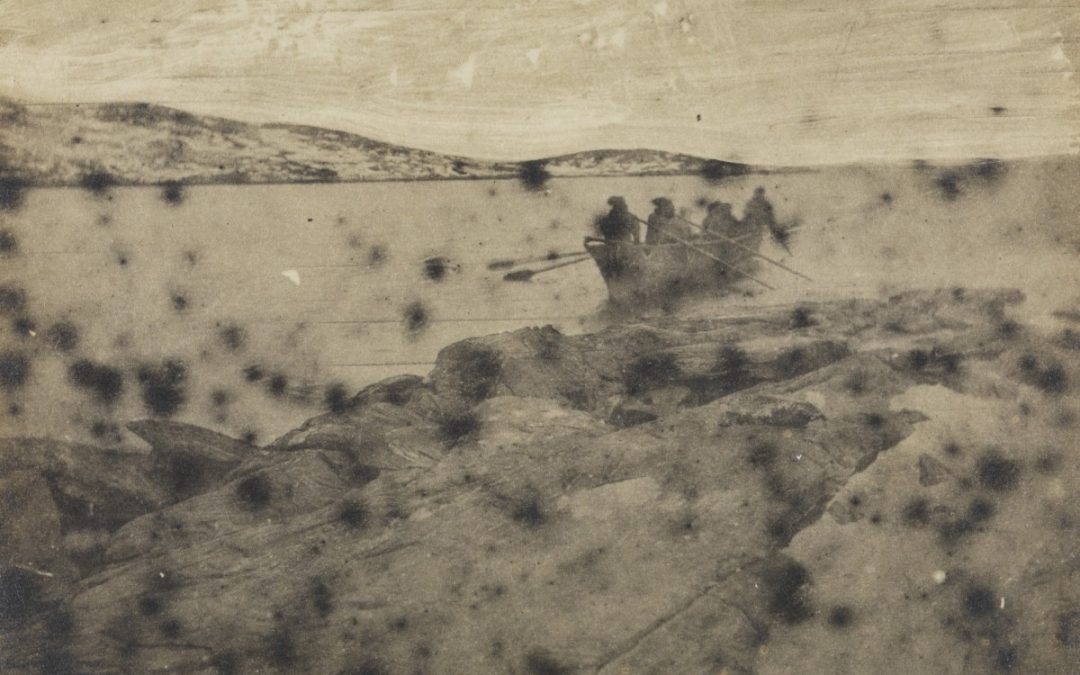
Four Swedes escaped from a Russian work camp and paddled in a stolen canoe for a couple months on the open ocean to reach the American port of Astoria in Oregon. The story is more interesting than that simple summary, but, alas, it merely informs…it does not soar.

I thought of myself as an Ivan Doig fan when I began reading The Sea Runners, and now I understand that I must be specific: I like This House of Sky and I like The Bartender’s Tale, and such.

The emerald clarity of Doig’s stories about the West is a world apart from the drudging redundancy of this book. The character development is relentlessly obvious. Sea Runners is narrow and repetitive. Doig doesn’t resist running his characters through the same paces, over and over again.

The Sea Runners isn’t a bad story. The determination, courage, loyalty, imagination, strength and stubbornness are in plain view, there’s never any doubt about that.

There’s no doubt about just about everything in this story.

Nevertheless, Ivan, I love ya, man. I love some of your stories.

*   *   *   *   *   *

Book review. Copyright © Richard Carl Subber 2017 All rights reserved.

Writing Rainbows: Poems for Grown-Ups with 59 free verse and haiku poems,
and the rest of my poetry books are for sale on Amazon (paperback and Kindle)
and free in Kindle Unlimited, search Amazon for “Richard Carl Subber”
 

*   *   *   *   *   *

Book review: American Scripture: Making the Declaration of Independence

Book review: American Scripture: Making the Declaration of Independence

Basically, it’s trash talk

         to King George


Book review:

American Scripture:

Making the

Declaration of Independence


by Dr. Pauline Maier (1938-2013)

New York: Vintage Books, A Division of Random House Inc., 1998.


The Declaration of Independence was a re-write…

and it didn’t start the Revolution.

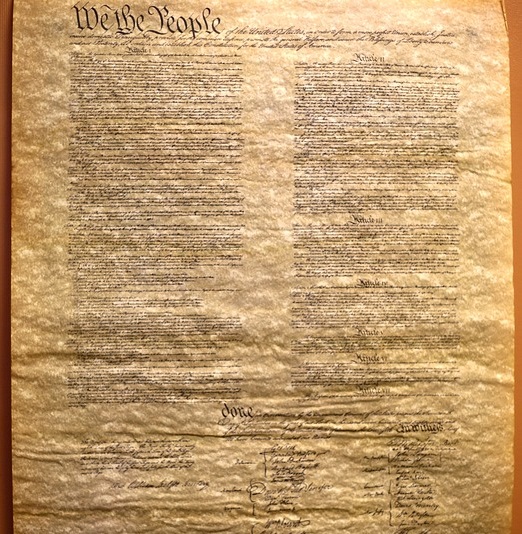
My quick review of what we know about the Declaration, courtesy of Prof. Pauline Maier: basically, it’s trash talk to King George III.

American Scripture exposes the backstory of the Declaration. Yes, Thomas Jefferson wrote the draft in his stuffy room in Philadelphia, but the final document is the work of many hands. The Second Continental Congress substantially reworked Jefferson’s draft. The Declaration didn’t “start” the American Revolution. It wasn’t the “kickoff” event. It was more like a final formality to officially authorize the colonial rebellion that had been evolving for years—and had been a shooting war for more than a year.

A procedural point that’s interesting to me: much of the stirring prose in the Declaration had already been written in various forms by Jefferson and others in the multitude of documents approved locally throughout the colonies, expressing the colonials’ increasing frustration with the failure of their efforts to negotiate a suitable accommodation with the King and his ministers and Parliament. Until the shooting started, there was persistent strong support throughout the colonies for remaining within the empire as long as American self-government could be sustained.

Finally, there is Maier’s take on the Declaration as a late blooming “American Scripture.” She documents, and challenges, the 19th century politicians’ cumulative (and heedlessly incorrect) re-interpretation of the Declaration as a statement of governing principles and a blueprint for American political values and American democracy. Maier also makes a plain case that the Declaration was intended only to demonstrate why, finally, the colonial disdain of King George had made American rebellion necessary and unavoidable.


Here is one note for the serious reader: Chapter 4 incongruously seems to stray into anecdotal commentary on various interpretations by Abraham Lincoln and others. I understand the imputed relevance, but this section of American Scripture seemed to be casually written and insufficiently edited.

*   *   *   *   *   *

Book review. Copyright © Richard Carl Subber 2017 All rights reserved.

A poet is a “maker”

…and it doesn’t have to rhyme…

click here


Book review: Shantung Compound

They didn’t care much

        about each other…

by Langdon Gilkey

click here

many waters: more poems with 53 free verse poems,

and the rest of my poetry books are for sale on Amazon (paperback and Kindle)

and free in Kindle Unlimited, search Amazon for “Richard Carl Subber”
*   *   *   *   *   *


Follow Rick on Facebook

Thoughtful book reviews by Rick Subber

Nothing Found

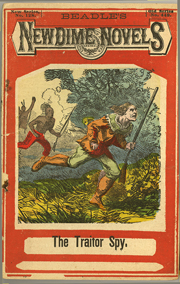
The “dime novels” popular in the Civil War

The “dime novels” popular in the Civil War

“Blood-and-thunder”

                for only 10 cents


Of course there were “westerns” before John Wayne put his mark on them.

The brave men in blue and gray in the Civil War—the ones who could read, and the ones who had buddies who could read—were avid fans of the dime novel.

New printing technologies in 1860 made it possible to churn out an endless succession of the cheap (10 cents, hence “dime novel”) so-called “blood-and-thunder” stories, often about heroes of the American West like Kit Carson.

These dime novels in the mid-19th century were the “westerns” before Hollywood invented the movie genre of the same name in the early 20th century.

The flood of cheap books was unleashed by improvements in the steam printing press and stereotype plates—these were the cast metal plates that used a reversed image of a full page on the press. The resulting increase in productivity and cost reduction permitted publishers to do huge press runs of the formula “western” novels that were written by assembly lines of writers. Some of the more respectable authors cranked out a new book every three months. Some of the hacks claimed to be able to produce a brand new novel in 24 hours. As you might guess, originality and quality weren’t the high priority standards of excellence.

Jill Lepore, in The Story of America: Essays on Origins, notes: “Blood-and-thunders were ‘sent to the army in the field by cords, like unsawed firewood,’ one contemporary reported. After the war, dime novel westerns cultivated a vast, largely Eastern, and altogether male audience: they were the first mass market fiction sold to men and boys.”(1)

Dime novel readers who weren’t Kit Carson (1809-1868) fans must have been a rare breed. Between 1860 and 1900, the American frontiersman was the hero of more than seven of the popular books.


(1) Jill Lepore, The Story of America: Essays on Origins (Princeton, NJ: Princeton University Press, 2012), 212, 217.

*   *   *   *   *   *

Book review. Copyright © Richard Carl Subber 2017 All rights reserved.

Writing Rainbows: Poems for Grown-Ups with 59 free verse and haiku poems,
and the rest of my poetry books are for sale on Amazon (paperback and Kindle)
and free in Kindle Unlimited, search Amazon for “Richard Carl Subber”
*   *   *   *   *   *

Book review: Shakespeare: The World as Stage

Book review: Shakespeare: The World as Stage

Book review:

Shakespeare: The World as Stage


By Bill Bryson (b.1951)

Atlas Books, HarperCollins Publishers, New York, 2007

199 pages


You don’t have to be a great big Shakespeare fan (I’m not) to have a good experience reading this book. If you’re a Bill Bryson (A Walk in the Woods) fan, you have another reason to pick it up.

This is the kind of book that makes me eager to turn each page and read more, and write a new book review. Bryson writes in his usual well-informed style. He marshals entertaining facts and frames of reference. He’s convincing when he debunks some of the notorious myths about The Bard.

F’rinstance, about 5,000 books have been written by folks who don’t think Shakespeare wrote all those plays and sonnets, and who suggest the names of about four dozen 17th century contemporaries who might have been the real author(s). Bryson offers this guidance about the risible claims that other authors created Hamlet and such: “…no one has ever produced…the tiniest particle of evidence to suggest that they actually did so.”(1)

Mostly we don’t know much of anything about Shakespeare’s private and public life. There are several years during his life that are a complete blank in the historical record. He was a successful poet and playwright. He worked closely with a successful thespian troupe. He was a husband and a parent.

Shakespeare Hamlet

Here’s the thing: Shakespeare was not a colossal celebrity during his lifetime. No one knew he would become the most revered genius of English literature. No one realized that he was adding 600 words like critical, excellent, leapfrog, and zany to the English language. No one knew that more or less every English speaker today from time to time uses phrases first conceived by William Shakespeare, like budge an inch and foregone conclusion.


Shakespeare was only one of many playwrights in his time—we know him now because he is a creature of buzz and a beneficiary of a couple gents who decided to publish all his works (the First Folio, published 1623) a number of years after he died.

About 80% of the roughly 3,000 plays by many authors that were performed in Shakespeare’s time are completely lost—we know their titles and nothing more. Most plays were performed only for a short time, and never published.

The fact that we can casually talk about anything “Shakespearean” is more or less the result of serendipity.

Oh, by the way, despite the fact that you and everyone else can recognize the iconic likeness of Shakespeare, there is no surviving portrait that was painted during his lifetime and no one knows what he really looked like.

Note: (1) Bryson, 195

*   *   *   *   *   *


Book review. Copyright © Richard Carl Subber 2017 All rights reserved.

 
Seeing far: Selected poems with 47 free verse and haiku poems,
and the rest of my poetry books are for sale on Amazon (paperback and Kindle)
and free in Kindle Unlimited, search Amazon for “Richard Carl Subber”


*   *   *   *   *   *

Book review: St. Ives, Being the Adventures of a French Prisoner in England

Book review: St. Ives, Being the Adventures of a French Prisoner in England

Taking another look

at Stevenson’s St. Ives


Book review:

St. Ives,

Being the Adventures

of a French Prisoner in England


by Robert Louis Stevenson (1850-1894)

New York: Charles Scribner’s Sons, 1907

438 pages


This is a re-do of my earlier post on Stevenson’s St. Ives, because I now confess that I stopped reading at p. 390. So, don’t worry about spoilers….

I’ve always embraced a coldly mechanical willingness to stop reading a book whenever the time comes….in St. Ives, the time comes at Chapter XXXI.

Stevenson died after writing XXX chapters of St. Ives. Perhaps not too many eyebrows were raised when a respected contemporary writer, Sir Arthur Thomas Quiller-Couch, wrote the remaining six chapters from Stevenson’s notes.

Stevenson’s oeuvre is fastidiously lush, precise, sophisticated, with deeply contextual character development and dialogue that leaves me breathless with anticipation for more. There’s an abstractly beautiful love interest. Did I mention that I’m a fan of 19th century prose?

Quiller-Couch doubtless had his merits as a 19th century writer. Of course, he ain’t no Stevenson.

Q-C’s contribution to St. Ives lacks the prepossessing heartiness of Stevenson’s dialogue and storyline.

Q-C can’t quite gin up the panache and persiflage that RLS animates on nearly every page.

Q-C makes a really sincere but unavailing effort to match the rural patois that Stevenson offers for the reader’s delight.

Q-C bungles the parlous adventures of the eponymous protagonist, injecting a wretched slapstick element that leads an RLS fan to transition uncomfortably into pursed-lips mode.

Stevenson’s prosaic mastery is, sadly, missing in the last six chapters of St. Ives, and, therefore, ignorance shall be my penalty for closing this truncated masterpiece before I reached the end.

*   *   *   *   *   *

Book review. Copyright © Richard Carl Subber 2017 All rights reserved.

 On this website you can read: my poetry in free verse and 5-7-5 format—nature poems, love poems, poems about grandchildren, and a spectrum of other topics—written in a way that makes it possible for you to know, as precisely as possible, what’s going on in my mind and in my imagination; thoughtful book reviews that offer some exceptional critique of the book instead of a simple book summary; examinations of history that did and didn’t happen; examples of my love affair with words; reflections on the quotations, art, and wisdom of famous and not-so-famous people, and occasional comments on politics and human nature.

Your comments on my poems, book reviews and other posts are welcome.


Book review: Grace Notes

Is it prose or poetry?

click here

many waters: more poems with 53 free verse poems,
and the rest of my poetry books are for sale on Amazon (paperback and Kindle)
and free in Kindle Unlimited, search Amazon for “Richard Carl Subber”

*   *   *   *   *   *


Follow Rick on Facebook

Thoughtful book reviews by Rick Subber

Nothing Found

Pin It on Pinterest