
by Richard Subber | Oct 31, 2024 | Book reviews, Books, Human Nature, Theater and play reviews
slow-moving lava love…
Book review:
The Bridges of Madison County
Robert James Waller (1939-2017)
New York: Warner Books Inc., 1992
171 pages
The Bridges of Madison County was a notably popular new book. However, I’m aware that not everyone is a fan.
If you’re looking for highly stoked eroticism and high-rolling lives that throw off sparks when they touch, look elsewhere.
Frankly, for lots of tastes, good advice is: look elsewhere no matter what you’re looking for.
For me, Bridges documents the chance intersection of the putatively unremarkable lives of Francesca and Robert with all the heat and dazzle of slow-moving lava, without its destructive power. They come together, they permit each other to nourish their beautiful personae and they generate a passion that consumes without burning.
Robert likes to talk in philosophical kinds of ways, and Francesca likes to listen.
Francesca and Robert come together too late in their lives, after unbreakable commitments have been made to other cherished persons who, regrettably, are not like themselves.
I am drawn to the unsounded depths of their love and their absolute, cascading, undeniable recognition of each other as the unforgettable objects of their burgeoning desire.
They understand that they must be content with the short lifetime of their dalliance. They honor their love by deeply understanding its nature, and by accepting the permanent separation that their unyielding integrity requires.
Robert whispers to Francesca: “…this kind of certainty comes only once…”
The Bridges of Madison County is a love song, a courtship, a delicate primer on yearning, a too brief opportunity to know how it feels to be in love like that.
Give it a try.
p.s. Clint Eastwood and Meryl Streep made the movie version with the same title in 1995 (rated PG-13, 135 minutes). You’ll love it if you like the book.
Waller’s book and the movie equally reveal the ethereal bond between Robert and Francesca. There is frank eroticism, with different physical and philosophical elements in the film and book, and a shared electric vitality.
The film and the book offer stylistically divergent life dramas that converge to a singular powerful love, and a perpetual loneliness that Robert and Francesca cannot minimize.
Give the film a try.
* * * * * *
Book review. Copyright © Richard Carl Subber 2024 All rights reserved.
Book review: A Cold Welcome
The culprit was global cooling,
500 years ago…
by Sam White
–
As with another eye: Poems of exactitude with 55 free verse and haiku poems,
and the rest of my poetry books are for sale on Amazon (paperback and Kindle)
and free in Kindle Unlimited, search Amazon for “Richard Carl Subber”
* * * * * *
by Richard Subber | Oct 26, 2024 | American history, Book reviews, Books, History, Power and inequality
…they readily went to war…
Book review:
Mayflower:
A Story of Courage, Community, and War
by Nathaniel Philbrick (b1956)
New York: Viking, The Penguin Group, 2006
461 pages
Philbrick offers his usual compelling narrative in Mayflower.
It becomes clear rather quickly that he’s not telling the elementary school version of the Pilgrims and Plymouth Rock and the “first Thanksgiving” that you may remember from your childhood.
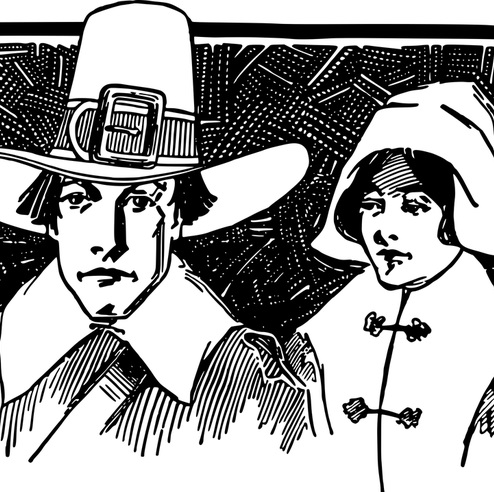
The Pilgrims—the Separatists, as they named themselves—didn’t come to North America to establish religious freedom. They were escaping from limitations on their religious freedom that they had endured in England, and later, to some extent, in Holland. As the years went by in Plymouth and the Massachusetts Bay colony, they certainly did not extend any tolerance of religious freedom to those Europeans and Native Americans who held different religious beliefs.
The Pilgrims were not simply a happy, peaceful people. They readily went to war with the Indians, in both defensive and offensive campaigns.
Many of the Pilgrims suffered gruesome physical privations and many of them died soon after arriving in what greedy European promoters liked to call The New World.
If you’re thinking how wonderful it would have been to be a Pilgrim in Plymouth in 1620, think again.
* * * * * *
Book review. Copyright © Richard Carl Subber 2024 All rights reserved.
–
Writing Rainbows: Poems for Grown-Ups with 59 free verse and haiku poems,
and the rest of my poetry books are for sale on Amazon (paperback and Kindle)
and free in Kindle Unlimited, search Amazon for “Richard Carl Subber”
* * * * * *
by Richard Subber | Oct 3, 2024 | Book reviews, Books, Human Nature, Theater and play reviews
bergin makes it worse…
Play review:
Who’s Afraid of Virginia Woolf?
A 1962 play by Edward Albee
New York: Scribner Classics, 1962, 2003
243 pages
It’s not a feel-good play.
After you start to move again after you finish reading it, probably you’ll end up thinking that your life is better than you thought it was. George and Martha do a pretty good job of proving that hell on earth is possible.
Who’s Afraid of Virginia Woolf? is almost a non-stop exaltation of how to be mean, sad, vicious, heartbroken, desperate, delirious, murderous, inhibited, ignorant, ambitious, empty, and longing, more or less all at the same time.
George and Martha, an aging couple on a rundown college campus, stage their terrible show for the benefit of a young professor, Nick, and his young wife, Honey, in the wee hours of a morning when each of them has something better to do, but isn’t doing it.
None of them make you think of the Cleaver family.
Arthur Hill was George and Uta Hagen was Martha in the first stage presentation in October 1962.
In the gritty 1966 film version, Richard Burton was George and Elizabeth Taylor was Martha.
Both of these productions are slam bang downers, just like the play.
No production of Who’s Afraid of Virginia Woolf? will make you think of the Cleavers.
* * * * * *
Play review. Movie review. Copyright © Richard Carl Subber 2024 All rights reserved.
Book review: Shantung Compound
Really, you see, they didn’t care much
about each other…
by Langdon Gilkey
–
Seeing far: Selected poems with 47 free verse and haiku poems,
and the rest of my poetry books are for sale on Amazon (paperback and Kindle)
and free in Kindle Unlimited, search Amazon for “Richard Carl Subber”
* * * * * *
by Richard Subber | Sep 22, 2024 | Book reviews, Books, History, Human Nature, Power and inequality, World history
not everything is vanity
Book review:
The Bombing of Auschwitz:
Should the Allies have Attempted It?
Michael J. Neufeld and Michael Berenbaum, eds.
New York: St. Martin’s Press, 2000
350 pages with extensive notes, bibliography, and index
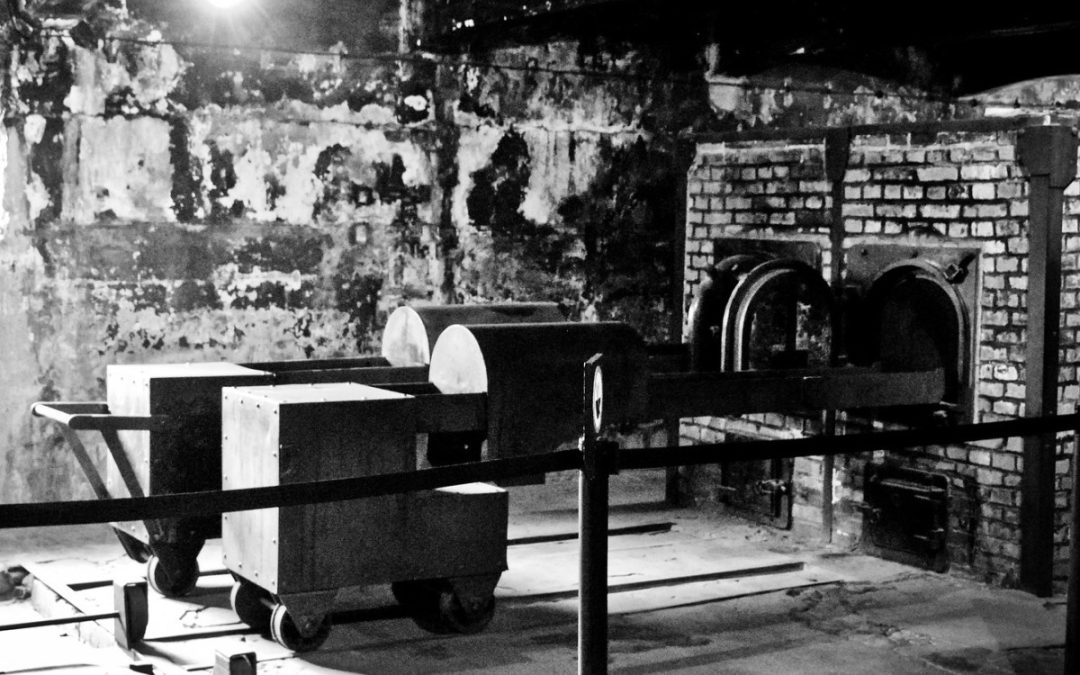
The Bombing of Auschwitz: Should the Allies have Attempted It? is a retrospective, somewhat repetitive but broadly didactic selection of 15 arguments for and against the bombing of Auschwitz, with more than 40 primary source documents.
You’ll learn a lot about the terrible dilemma that the Allies faced—and some of them tried to ignore—during World War II. If the Allies had tried to bomb the crematoria, would Jewish lives have been saved? At what cost to the overall war effort?
Neufeld and Berenbaum offer 15 points of view, but, of course, the questions can’t be answered with full confidence.
Sadly, we can’t re-do the solitary track of history.
* * * * * *
Book review. Copyright © Richard Carl Subber 2024 All rights reserved.
Book review: Lord of the Flies
Never more relevant…
by William Golding
–
Seeing far: Selected poems with 47 free verse and haiku poems,
and the rest of my poetry books are for sale on Amazon (paperback and Kindle)
and free in Kindle Unlimited, search Amazon for “Richard Carl Subber”
* * * * * *
by Richard Subber | Sep 3, 2024 | Book reviews, Books, Human Nature
the sane and the duly goggled
Book review:
Character and Opinion in the United States
by Jorge Agustín Nicolás Ruiz de Santayana y Borrás
[George Santayana (1863-1952)]
Spanish philosopher, poet, novelist
Garden City, NY: Doubleday Anchor Books, 1956 (first published 1920)
Santayana wrote this book in 1920 after he had left the United States for good. He had taught in the philosophy department at Harvard from 1889 to 1912. He returned to Europe, taught at the Sorbonne in Paris, and finally settled in Italy for the remainder of his life.
Much of the book is based on a series of lectures he delivered to British audiences after leaving America. In the Preface to Character and Opinion he says “Only an American—and I am not one except by long association—can speak for the heart of America. I try to understand it, as a family friend may who has a different temperament.”
Santayana took his own sweet time to take a look at the people around him in the United States, and to make his own unhurried assessment of their characters and of their manifestations of human nature.
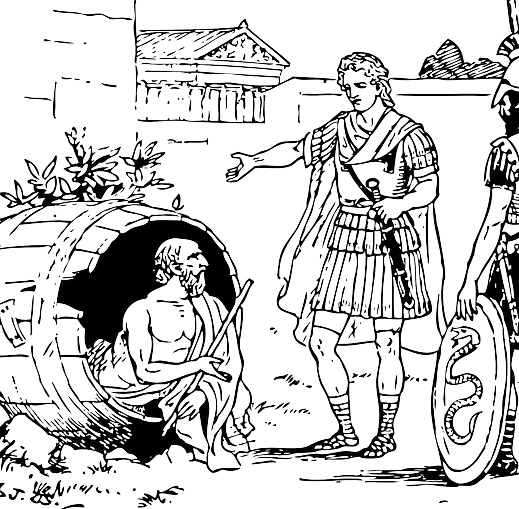
For example, he gave respectful recognition to “…the intellectual cripples and the moral hunchbacks…”—not otherwise explicitly defined—who, notwithstanding their possibly dubious claim to respect, may nevertheless be the beneficiaries of “heavenly influences.” You can make your own determination about the prospective positive impact of such influences. I think Santayana’s point was that we do not fully know the prior byways or the future trajectories of another person’s life.
Moreover, Santayana distinguishes the cripples/hunchbacks and their (presumptively enlightened) presumptive betters—“…the thick-skinned, the sane and the duly goggled…”
These goggled elites are admonished to be wary of their limitations in discerning the realities and the frequency and the potency of “heavenly influences.”
I guess I have, perhaps smugly, collaborated with Santayana in a more than marginally self-satisfied effort to say something like:
“Give the other fellow a break.”
Think about it for another minute.
Here endeth the lesson for today.
Source:
Character and Opinion in the United States, p. 46.
* * * * * *
Book review. Copyright © Richard Carl Subber 2024 All rights reserved.
Seeing far: Selected poems with 47 free verse and haiku poems,
and the rest of my poetry books are for sale on Amazon (paperback and Kindle)
and free in Kindle Unlimited, search Amazon for “Richard Carl Subber”
* * * * * *

by Richard Subber | Aug 24, 2024 | Book reviews, Books, Books Commentary, Joys of reading, Language
…a “man of letters”…
Book review:
Literary Life: A Second Memoir
by Larry McMurtry (1936-2021)
Simon & Schuster, 2009
McMurtry moves me to want more, read more…
It’s incredibly easy to read McMurtry—I’ve read Books: A Memoir, Walter Benjamin at the Dairy Queen, and now Literary Life. Time after time, it seems that he writes in an off-hand way; thoughts and scenes and chapters can end very abruptly. Yet, the work seems polished. The prose is spare, as Larry acknowledges.
I am titillated by his familiar references to so many authors and works. I would love to be a “man of letters,” as McMurtry claims to be. The draw for me is McMurtry’s immersion in books. I would be thrilled to own 200,000 books. Desperately thrilled.
I’m pretty sure that McMurtry’s passionate engagement with books and authors is a believable lifestyle. His many references to re-reading books is a believable commitment.
Since I retired nearly 20 years ago, I have, from time to time, envisioned taking the pledge to read the entire oeuvre of an author I like. Now I am moved to read McMurtry’s books. I plan to re-read Books and Literary Life to get clues about how to read them. I’ll consider reading his works in order by pub date, except for the Lonesome Dove and Berrybender tetralogies, of course.
I don’t think I’ll be disappointed.
* * * * * *
Book review. Copyright © Richard Carl Subber 2024 All rights reserved.
Writing Rainbows: Poems for Grown-Ups with 59 free verse and haiku poems,
and the rest of my poetry books are for sale on Amazon (paperback and Kindle)
and free in Kindle Unlimited, search Amazon for “Richard Carl Subber”
* * * * * *
