by Richard Subber | Aug 4, 2024 | Book reviews, Books, Joys of reading, Language
“Each work is new.”
Book review:
The Eye of the Story: Selected Essays and Reviews
by Eudora Alice Welty (1909-2001)
American short story writer and novelist, Pulitzer Prize winner
New York: Random House, 1977
355 pages
The Eye of the Story is lush, literate, filled with almost languid richness.
I can only imagine being so well read that I could recognize all of her references to other writers and the vast literature of novels and short stories. I envy the breadth of her engagement with the world of fiction.
I’m more interested in what she has to say about writing.
“We who encounter words used in certain ways are persuaded by them to be brought mind and heart within the presence, the power, of the imagination” (p. 134).
“Each work is new” (p. 135). Welty is talking about novels, but this also is true, so true, of poetry. She observes that, in the fiction of her contemplation, “words have been found for which there may be no other words” (p. 137).
“The imagination has to be involved, and more—ignited. How much brighter than the symbol can be the explicit observation that springs firsthand from deep and present feeling…” (p. 139).
“It is through the shaping of the work in the hands of the artist that you most nearly come to know what can be known, on the page, of his mind and heart, and his as apart from the others. No other saw life in an ordering exactly like this” (p. 144).
I find affirmation in The Eye of the Story. Welty declares that writing is an art that uses the literally infinite array of words in sequence to create a spectacular, unique exhibition of what’s in the writer’s mind and in her heart.
“Each work is new.” I believe that each poem is unique. Each engaged reader takes a new step on new ground each time he reads the poem.
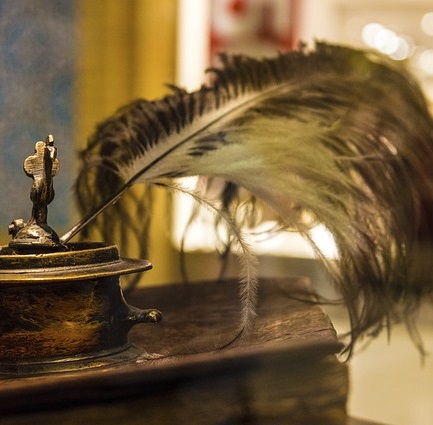
The poet opens a new window in her mind each time she takes the quill in hand.
* * * * * *
Book review. Copyright © Richard Carl Subber 2024 All rights reserved.
A poem about the right thing
…and the lesser incarnation…
“Vanity”
–
Writing Rainbows: Poems for Grown-Ups with 59 free verse and haiku poems,
and the rest of my poetry books are for sale on Amazon (paperback and Kindle)
and free in Kindle Unlimited, search Amazon for “Richard Carl Subber”
* * * * * *
by Richard Subber | Jul 27, 2024 | American history, Book reviews, Books, Democracy, History, Politics, Power and inequality, Reflections
think again about democracy
Book review:
Our Ancient Faith:
Lincoln, Democracy, and the American Experiment
Allen C. Guelzo
New York: Alfred A. Knopf, 2024
247 pages
Despite the title, Guelzo’s estimable book is not primarily or thematically about Abraham Lincoln. It is a densely researched and completely explained treatise on democracy, what it means, and what it might mean.
Our Ancient Faith opens new vistas of thought for me, and I’m thankful for my newly conceptual ideas about democracy, including the good, the bad, and the ugly. Make no mistake, democracy isn’t inherently our salvation. We’ve got a lot to do as we go down that path.
Granted, the reader will learn about Lincoln, although a good grounding in Lincoln’s life story and his times will serve the reader well.
I’m a bit leery of believing that I know for certain what a dead man was thinking when he said this and that. Guelzo perhaps reads too deeply into Lincoln’s recorded words. The book certainly is not hagiographic, and Lincoln certainly was a deep thinker, but I don’t want to forget that Lincoln was an ambitious man and a politician.
I’ll be inclined to read the book again for the expansive exposition of political thought.
The book, with extensive notes, is 247 pages, a very sensible length.
* * * * * *
Book review. Copyright © Richard Carl Subber 2024 All rights reserved.
Book review: The Snow Goose
…sensual drama, eminently poetic…
by Paul Gallico
As with another eye: Poems of exactitude with 55 free verse and haiku poems,
and the rest of my poetry books are for sale on Amazon (paperback and Kindle)
and free in Kindle Unlimited, search Amazon for “Richard Carl Subber”
* * * * * *
by Richard Subber | Jul 23, 2024 | Book reviews, Books, Human Nature
talk a lot, pick a little…
Book review:
What the Robin Knows:
How Birds Reveal the Secrets of the Natural World
Jon Young
Boston: Mariner Books-Houghton Mifflin Harcourt, 2012
241 pages
“Just as scientists have identified elements of human speech that reflect a speaker’s emotions, field experiments have shown that the calls of many animals provide listeners with information about objects and events in the environment. Like human speech, therefore, animal vocalizations simultaneously provide others with information that is both semantic and emotional.”
p. 105 from What the Robin Knows
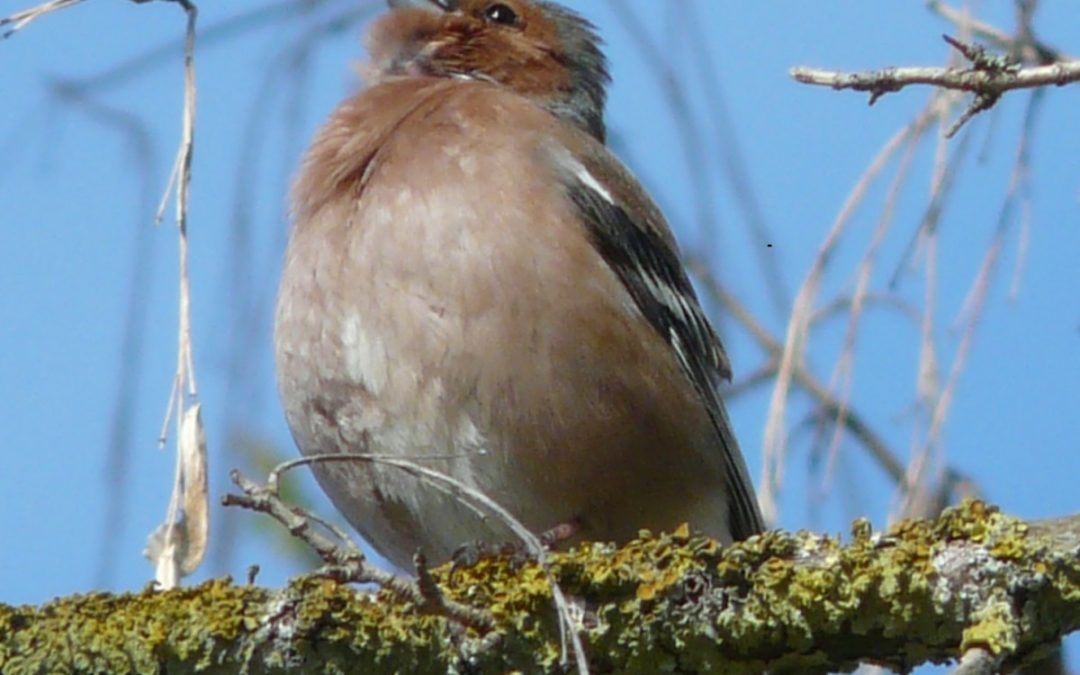
The birds talk to each other. All species of birds and many species of other animals also listen to birds. Both prey and predator species listen to the birds. We can listen to birds.
I suspect that Young’s widely experienced detail must be a bit deceptive. I suspect there is more randomness than Young explains. If there weren’t some randomness, the predators would have figured out the patterns long ago.
…and some other thoughts: suppose the birds are really talking…what if your dog can talk and chooses not to?
* * * * * *
Book review. Copyright © Richard Carl Subber 2024 All rights reserved.
“Fishering,” by Brian Doyle
…what meets the eye…
As with another eye: Poems of exactitude with 55 free verse and haiku poems,
and the rest of my poetry books are for sale on Amazon (paperback and Kindle)
and free in Kindle Unlimited, search Amazon for “Richard Carl Subber”
* * * * * *
by Richard Subber | Jun 13, 2024 | Book reviews, Books, Language, Poetry, Reviews of other poets
dry tears, is all…
Book review:
All of Us: The Collected Poems
by Raymond Carver (1938-1988)
American poet, short story writer
386 pages
Repeat after me: à chacun son goût.
This is my first experience with Carver’s poetry.
I’ll say this right out: I do not disdain Carver’s poems, neither do I feel any urge to read them again.
He didn’t bother with the lyric voice. Don’t look for any sparks. Occasionally, one will feel moved to dry tears.
Carver offers a monochrome oeuvre. It’s prose in disguise. In some dusty corners Carver is included in the loosely defined group of poets who write so-called “dirty realism.” Think Bukowski (but Carver isn’t as strident as Bukowski, not nearly as imperious as Bukowski).
Carver’s poetic efforts are better than dirt, but what he writes really isn’t poetry in any flavor that appeals to me.
…à chacun son goût
* * * * * *
Book review. Copyright © Richard Carl Subber 2024 All rights reserved.
Book review: Shakespeare’s Wife
Germaine Greer went overboard a bit…
In other words: Poems for your eyes and ears with 64 free verse and haiku poems,
and the rest of my poetry books are for sale on Amazon (paperback and Kindle)
and free in Kindle Unlimited, search Amazon for “Richard Carl Subber”
* * * * * *
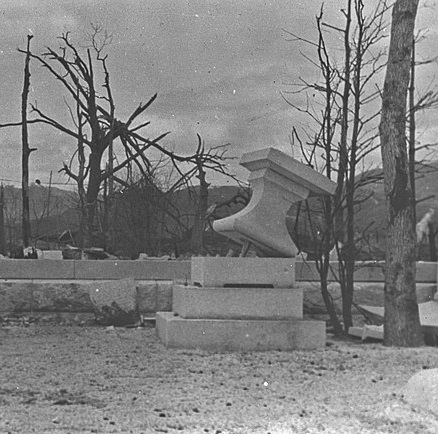
by Richard Subber | Jun 1, 2024 | American history, Book reviews, Books, History, World history
imagine that you had been there…
Book review:
Countdown 1945:
The Extraordinary Story of the Atomic Bomb
and the 116 Days That Changed the World
by Chris Wallace with Mitch Weiss
New York: Avid Reader Press, 2020
312 pages
There is quite tolerable intensity in Countdown 1945, in tandem with the horror of the use of the atomic bomb in Japan at the end of World War II.
There are gripping revelations from all of the principals involved in the development of the bomb and the decision to use it. There is dialogue more or less on every page. Countdown 1945 is not so much a book as it is the integration of tales told by the men and women who were there, doing it, and living through it.
This is one of the very few books I’ve read from cover to cover in the past several years.
It was a learning experience, and I was completely aware that I was vicariously sharing the terrible experiences of the folks who had anything to do with Little Boy and Fat Man.
* * * * * *
Book review. Copyright © Richard Carl Subber 2024 All rights reserved.
“The beginning is always today.”
(quote, Mary Shelley)
so get started…
My first name was rain: A dreamery of poems with 52 free verse and haiku poems,
and the rest of my poetry books are for sale on Amazon (paperback and Kindle)
and free in Kindle Unlimited, search Amazon for “Richard Carl Subber”
* * * * * *
by Richard Subber | May 16, 2024 | American history, Book reviews, Books, History, Politics, Power and inequality
“credit” is P.C. for “lending money”
Book review:
American Bonds:
How Credit Markets Shaped a Nation
by Sarah L. Quinn
Princeton, NJ: Princeton University Press, 2019
288 pages
Quinn writes plain academic prose, and she has a lot to say.
“Credit” is a very polite way of saying “lending money,” which is a very polite way of describing what is elsewhere called “usury.”
It’s no surprise that lending money has been part of the social, economic, and political landscapes since money was invented, and certainly credit markets have always existed in America since colonial times.
American Bonds is a deeply engrossing text (it’s not a casual read) about how folks with money and businesses and the government have used credit availability for personal, corporate, and policy advantages. Credit has always been part of the American story.
You might try reading it a chapter at a time.
* * * * * *
Book review. Copyright © Richard Carl Subber 2024 All rights reserved.
Home Team: Poems About Baseball (book review)
Edwin Romond hits another homer…
My first name was rain: A dreamery of poems with 53 free verse and haiku poems,
and the rest of my poetry books are for sale on Amazon (paperback and Kindle)
and free in Kindle Unlimited, search Amazon for “Richard Carl Subber”
* * * * * *
