
by Richard Subber | Jan 10, 2020 | American history, Book reviews, Books, History, World history
American leadership never was
what we thought it was…
Book review:
Fire in the Lake:
The Vietnamese and the Americans in Vietnam
by Frances FitzGerald (b1940), a Pulitzer Prize winner
Boston: An Atlantic Monthly Press Book, Little Brown and Company, 1972
491 pages
I don’t know how much of an audience there was for Fire in the Lake in 1972. I feel confident in guessing there wasn’t enough.
The American war in Vietnam was far from over in 1972 when FitzGerald wrote this densely researched journalistic review of U. S. policies and actions and ignorance in Southeast Asia. She makes it easier to understand why the American war effort was doomed from its earliest phase.
You should read Fire in the Lake to get the whole story–that is, the whole story as it was knowable in 1972. Be prepared to acknowledge that much of what you previously believed—and thought you knew—was wrong.
The American commitment to “containing Communism” was prominent, and tragically uninformed.
South Vietnam was the wrong place to try to “contain Communism,” no matter what that might mean.
There are more than 58,000 names on the walls of the Vietnam Veterans Memorial.
Some of them are the names of my friends.
* * * * * *
Book review. Copyright © Richard Carl Subber 2020 All rights reserved.
–
many waters: more poems with 53 free verse poems,
and the rest of my poetry books are for sale on Amazon (paperback and Kindle)
and free in Kindle Unlimited, search Amazon for “Richard Carl Subber”
* * * * * *
by Richard Subber | Nov 20, 2019 | Book reviews, Books, Human Nature
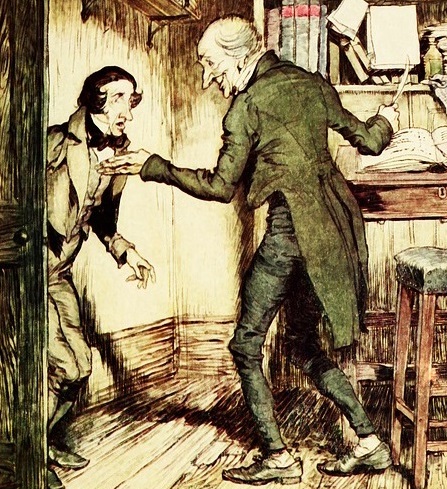
The language is Dickens, the humanity is Melville…
“Bartleby, the Scrivener: A Story of Wall Street”
A short story by Herman Melville (1819-1891)
First published 1853 in Putnam’s Magazine, and later in Melville’s The Piazza Tales in 1856
If you can read “Bartleby” without suspecting, nay, without more or less believing that it was written by Dickens, you can take pride in your mental discipline whilst reading. I wanted to read it again, and I confess that I briefly searched for “Bartleby” in my rumpled collection of Dickens, which of course does not include The Piazza Tales.
None of Melville’s notorious South Sea elements here. This is straightforward, 19th century prose set in 19th century Wall Street with shabby, luridly eccentric antebellum characters including the narrator and his bedeviled scrivener (copyist), Bartleby.
The circumstances of this desiccated short story are curious, even eccentric, incredulous. The withered and aloof Bartleby is presented, examined,and disdained, until his very dispirited isolation makes him the object of the narrator’s genuine but increasingly troubled caretaking.
Bartleby’s enervating and apparently desperate ennui keeps him always a step removed from the narrator’s efforts to create a little humanity in his life.
The scrivener is lonely beyond understanding. He bears almost in silence the emotional poverty that ultimately kills him.
The reader understands that Bartleby longed, in vain, to be able to repel the Reaper with his simple and inscrutable refrain: “I would prefer not to.”
Despite all temptation, I will prefer not to re-read Melville’s tale on a dreary afternoon.
* * * * * *
Book review. Copyright © Richard Carl Subber 2019 All rights reserved.
Book review: To Serve Them All My Days
by R. F. Delderfield
A beloved teacher,
of course you know this story…
–
Above all: Poems of dawn and more with 74 free verse poems,
and the rest of my poetry books are for sale on Amazon (paperback and Kindle)
and free in Kindle Unlimited, search Amazon for “Richard Carl Subber”
* * * * * *

by Richard Subber | Nov 8, 2019 | Book reviews, Books
the characters walk and talk, but…
Book review:
The Blithedale Romance
by Nathaniel Hawthorne (1804-1864)
Cambridge, MA: The Riverside Press, 1883
The Blithedale Romance is Hawthorne’s third novel, an exemplar of Romantic Era fiction that has been called his “darkest” novel. It’s respected by modern critics.
It’s not a page turner. Hawthorne has what it takes to make sure that the characters are independently brought to life, but their relationships are not credible. Even a diligent and interested reader can feel that the love of Zenobia and Priscilla for Hollingsworth is downright mysterious and despairingly inarticulate. They love him, in two marvelously different styles, but Hawthorne never gets around to really decently explaining why they love him.
The other principal characters—Miles Coverdale (a somewhat autobiographical avatar of Hawthorne himself), Old Moodie, and Westervelt—are satisfactorily developed. Nevertheless, the plotlines are mechanical and chronological rather than explanatory.
In The Blithedale Romance, the characters walk and talk, and they interact with each other, but credible understanding of their relationships never really blooms for the reader.
* * * * * *
Book review. Copyright © Richard Carl Subber 2019 All rights reserved.
Book review: Lafayette by Harlow Unger
Lafayette was a great man. Also rich and lucky.
–
Above all: Poems of dawn and more with 74 free verse poems,
and the rest of my poetry books are for sale on Amazon (paperback and Kindle)
and free in Kindle Unlimited, search Amazon for “Richard Carl Subber”
* * * * * *
by Richard Subber | Sep 4, 2019 | Book reviews, Books, History, World history
…the supermen were underground…
Book review:
Mila 18
by Leon Uris (1924-2003)
American writer, World War II veteran
Garden City, NY: Doubleday & Company, Inc., 1961
442 pages
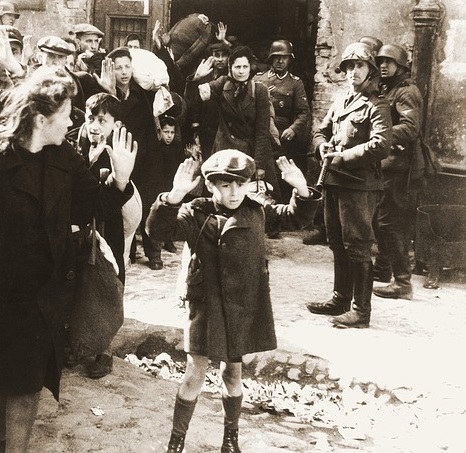
Whatever you think you know about the Warsaw ghetto uprising in 1943, you’ll know more after you read Mila 18.
Leon Uris wrote a historically detailed work of realistic fiction that will fill you with gagging horror, and with endless respect for the brave Jewish fighters who kept the Nazi killing machine at bay for a month in 1943.
About 13,000 Jews died in the burning buildings, in the bunkers, and in the sewers inside the ghetto.
Their main resistance command post was in an underground bunker located at ulica Miła 18.
It’s an almost inconceivable irony that the Polish street address can be translated as “18 Pleasant Street.”
* * * * * *
Book review. Copyright © Richard Carl Subber 2019 All rights reserved.
Book review: The Bartender’s Tale
Ivan Doig’s story, I mostly loved it…
–
As with another eye: Poems of exactitude with 55 free verse and haiku poems,
and the rest of my poetry books are for sale on Amazon (paperback and Kindle)
and free in Kindle Unlimited, search Amazon for “Richard Carl Subber”
* * * * * *

by Richard Subber | Aug 30, 2019 | Book reviews, Books, Human Nature, Tidbits
Think about your own well-being…
Here’s one for your reading list
Tribe: On Homecoming
and Belonging
by Sebastian Junger
In his Introduction, Junger says:
“Robert Frost famously wrote that home is the place where, when you have to go there, they have to take you in. The word ‘tribe’ is far harder to define, but a start might be the people you feel compelled to share the last of your food with…
Tribe is about why [treating someone like a member of your tribe] is such a rare and precious thing in modern society, and how the lack of it has affected us all. It’s about what we can learn from tribal societies about loyalty and belonging and the eternal human quest for meaning.”
It doesn’t take him too long to get right to the point, quoting from a 2012 journal article:
“The economic and marketing forces of modern society have engineered an environment…that maximize[s] consumption at the long-term cost of well-being. In effect, humans have dragged a body with a long hominid history into an overfed, malnourished, sedentary, sunlight-deficient, sleep-deprived, competitive, inequitable, and socially-isolating environment with dire consequences.”
Here’s the thing: if you read that last sentence without saying some of the words right out loud, maybe twice, with feeling and with some awareness of despair, well, maybe you should grab the CliffsNotes version and save yourself some time.
Sebastian Junger, Tribe: On Homecoming and Belonging, New York: Twelve/Hachette Book Group, 2016, xvi-xvii, 23.
* * * * * *
Book review. Copyright © Richard Carl Subber 2017 All rights reserved.
–
Book review: Lord of the Flies
It was never more relevant…
by William Golding
–
My first name was rain: A dreamery of poems with 52 free verse and haiku poems,
and the rest of my poetry books are for sale on Amazon (paperback and Kindle)
and free in Kindle Unlimited, search Amazon for “Richard Carl Subber”
* * * * * *
by Richard Subber | Jul 1, 2019 | Book reviews, Books, Books Commentary, History, World history
much was not lost…
Book review:
The Map of Knowledge:
A Thousand-Year History
of How Classical Ideas Were Lost and Found
Violet Moller
New York: Doubleday, 2019
312 pages
It’s quite possible that Moller offers much more than you already know about Euclid’s The Elements (c300 BCE). and Ptolemy’s The Almagest, (c150 CE), and the many published works on anatomy and medicine by Galen (130-210 CE).
The Map of Knowledge is a scholarly account of the preservation of knowledge from ancient times to the present day. I bet you can guess that it’s not a beach book.
Moller forgot to mention that throughout the centuries, most human beings on the planet couldn’t read or write, and so it was the lucky, the gifted, and the self-selected few who preserved important knowledge for the benefit of succeeding generations. Think about a version of Fahrenheit 451, stretched over the centuries.
Go ahead, read Fahrenheit 451 again. Do it.
* * * * * *
Book review. Copyright © Richard Carl Subber 2019 All rights reserved.
Book review: Tales from Shakespeare
pretty good summaries by Charles and Mary Lamb…
–
As with another eye: Poems of exactitude with 55 free verse and haiku poems,
and the rest of my poetry books are for sale on Amazon (paperback and Kindle)
and free in Kindle Unlimited, search Amazon for “Richard Carl Subber”
* * * * * *
