Book review: The Snow Goose

Book review: The Snow Goose

“ Philip, I love ‘ee ”


Book review:

The Snow Goose


by Paul Gallico (1897-1976)

Alfred A. Knopf, New York, 1960

58 pages

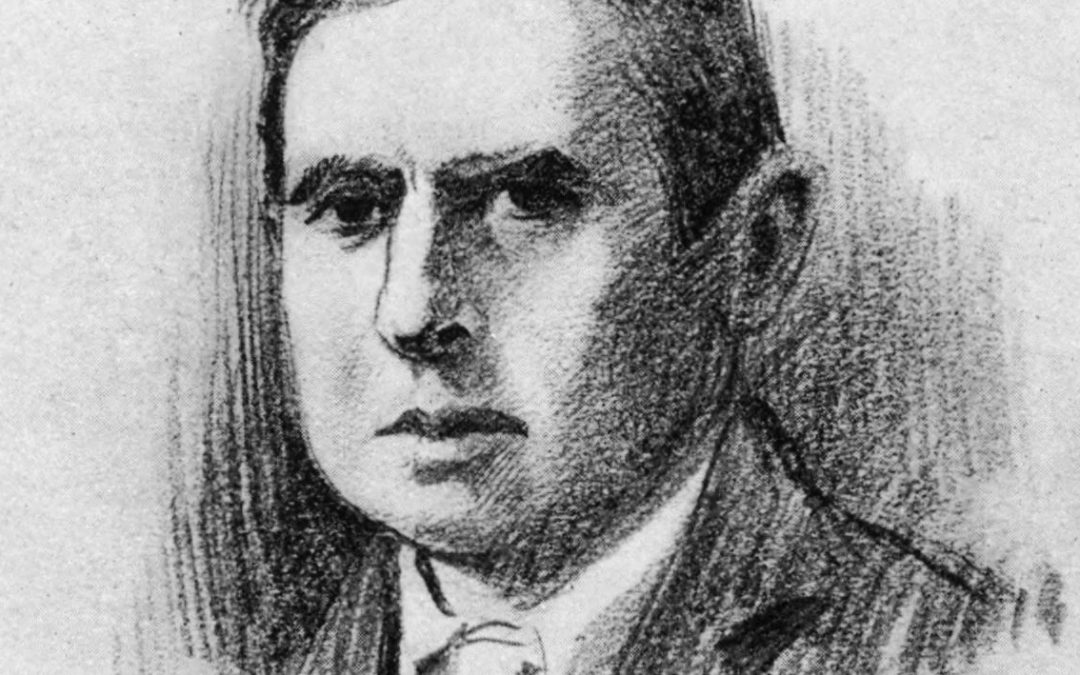
Paul Gallico Wikimedia

Paul Gallico (1897-1976)

Paul Gallico is an author I need to get to know better. The Snow Goose is my first attempt.

This justly famous short story is surprisingly simple in its construction and densely emotional in its impact. There are familiar plot elements: ugly old man meets beautiful young girl, and they develop a close relationship. In some ways one is moved to think of Silas Marner—there are both rich and rigid qualities in their love, never consummated, sharply constrained.

The snow goose imagery is pervasive. Gallico uses the obviously proper word pinion repeatedly and not always, perhaps, with the same definition in mind, but this is quibbling…despite Philip Rhayader’s intimate knowledge of the birds he paints, there is no compelling total image of the bird. What does a snow goose really look like?

The primitive eroticism of Rhayader’s relationship with the girl, Fritha, is bursting out of the story repeatedly before the final scenes. Think of the sensual heat of Girl With A Pearl Earring, deeply heartfelt and almost completely unexpressed. Vermeer painted the girl from life; Rhayader painted his girl from memory, a symbolic reflection of his restrained character and the repressed relationship.

The story line of Snow Goose is mostly mundane, but Gallico easily sustains a dramatic tension, although the Dunkirk evacuation scenes are almost a charade with the blunt Cockney accents dominating the dialog.

Snow Goose is eminently poetic—the ending that every reader can anticipate occurs with realistic sadness and realistic revelation. Fritha feels the words in her heart: “Philip, I love ‘ee.” 

The long-patient reader is finally released to wordless exultation.


*  *  *  *

I admit the abundant pleasures of re-reading The Snow Goose in February 2021. I happily engaged more fully with the character of the young girl Fritha, and the pathos of her isolation without parents in a hard community that took no notice of her friendship with the lonely artist. Fritha survives, and shares her memories and her private, splendid isolation with the beautiful bird.

———-

Among other treatments, this beautiful short story was transformed to film (television) in 1971 by the BBC and shown on the Hallmark Hall of Fame, with Richard Harris as Rhayader and Jenny Agutter as Fritha. See it in five installments on YouTube here.

*   *   *   *   *   *

Book review. Copyright © Richard Carl Subber 2021 All rights reserved.

Book review: The Chosen

Life: exuberant, and otherwise…

by Chaim Potok

click here

My first name was rain: A dreamery of poems with 52 free verse and haiku poems,
and the rest of my poetry books are for sale on Amazon (paperback and Kindle)
and free in Kindle Unlimited, search Amazon for “Richard Carl Subber”

*   *   *   *   *   *

Follow Rick on Facebook

Thoughtful book reviews by Rick Subber

Nothing Found

Book review: Thieves in the Night

Book review: Thieves in the Night

the “milliohnim” and “the promised land” 


Book review:

Thieves in the Night:

   Chronicle of an Experiment


by Arthur Koestler (1905-1983)

The Macmillan Company, New York, 1946

357 pages


Koestler, a Hungarian-British writer and journalist, more famously wrote Darkness at Noon, a critique of Communism and totalitarianism.

Thieves in the Night, written later, is a gently powerful story. Koestler recounts the travails and limited joys of only a few of the “milliohnim” who sought a promised land. His characters are Jews, creating new settlements on purchased Arab land in the Holy Land, prior to World War II.

Men and women who create settlements live a tough life. A reader like me learns almost too much about the vagaries and drudgery of deliberately, fully conscious communal life on Ezra’s Tower, an isolated hilltop in Galilee. First, establish the security perimeter, then erect the watchtower, build the children’s dorm, construct the cowshed, set up the showers…in that order. The dining hall, the sleeping huts for the men and women, and the lavatories are to be built later.

The Mukhtar and his clan in the nearby Arab village do not welcome the Hebrew newcomers. Soon, the leader of the village delegation gives morbid advice to the settlers: “You young fools and children of death, you don’t know what may happen to you.” Bauman responds curtly: “We are prepared.” The Jewish settlement at Ezra’s Tower is not a resort.

The story of the settlers’ life at Ezra’s Tower is mostly drab. Koestler’s exploration of their mindset, their politics, their philosophy, and their religion all swirled together is stunning. Their aspirations and their misgivings, and their palpable legacy of homelessness and their transforming experiences, are irresistible.

Thieves in the Night is an adventure for the open and inquiring mind. Occasional sympathetic despair is a perfectly understandable reaction.

After you read this novel, look around you and ask yourself: do you see things a bit differently? Do you like your new conception of “a thief in the night.”

*   *   *   *   *   *

Book review. Copyright © Richard Carl Subber 2020 All rights reserved.

Old Friends (book review)  

Tracy Kidder tells so much truth about old age…

click here

My first name was rain: A dreamery of poems with 53 free verse and haiku poems,
and the rest of my poetry books are for sale on Amazon (paperback and Kindle)
and free in Kindle Unlimited, search Amazon for “Richard Carl Subber”

*   *   *   *   *   *
An Empire on the Edge (book review)

An Empire on the Edge (book review)

Book review:

An Empire on the Edge:

How Britain Came to Fight America


by Nick Bunker


Here’s the short version of Nick Bunker’s thesis:

King George and his government

     let the North American colonies slip from their grasp.


A newcomer to the history of the American Revolution might think that this book is a cockeyed way to learn about the “shot heard ‘round the world” and the consequences of the shooting at Lexington and Concord on April 19, 1775.

An informed student of the Revolutionary War probably will find much new material in Bunker’s relentlessly detailed An Empire on the Edge: How Britain Came to Fight America.

On our side of the pond, we don’t have much opportunity to consider the war or the revolution from the British point of view.

Bunker offers devastating detail about the ill-informed, patronizing, self-serving, doctrinaire, and sometimes feckless actions of Lord North and the British government in the years that led to the sanguinary clash of British regulars and American farmers-militiamen on the road from Concord, through Lexington, to Boston on “that famous day and year.”

An Empire on the Edge offers extensive documentation confirming that the British leaders were largely ignorant of the scope and depth of colonial antipathy toward the various punitive measures that Britain sought to impose in North America, as early as 1765 (the Stamp Act) and continuing to the final, ill-fated steps to chastise the city of Boston after the notorious Tea Party in late 1773.

Bunker describes the half-cocked military moves by Lord North and his ministers in the years leading up to the disastrous outing to Lexington-Concord. The king and his government were not prepared to wage war successfully in North America, partly because they waited too long to believe that the colonists actually would fight, and partly because they disdained the colonials’ fighting capacity, and partly because they put higher priority on their Caribbean sugar colonies, and partly because they were pre-occupied with the military threat posed by France and various European intrigues.

lexington-180975_640Bunker doesn’t speculate on a question that occurs to me: after that first shot was fired at Lexington, did the British really commit themselves to winning the war?

The king and his government made the commitment to fight. They did not, however, at any time before or during the war, commit all the king’s horses and all the king’s men to the military campaign to regain dominion in North America. As the fighting began, a British victory was not immediately feasible. Perhaps it did not become feasible.

Bunker’s analysis of the planning and wrangling in Lord North’s war room suggests that the British wanted to win, but never pushed the right strategic buttons to bring victory within their grasp.


Book review. Copyright © Richard Carl Subber 2016 All rights reserved.

———

Book review: An Empire Divided

King George and his ministers

wanted the Caribbean sugar islands

more than they wanted the 13 colonies…

by Andrew Jackson O’Shaughnessy

click here

My first name was rain: A dreamery of poems with 52 free verse and haiku poems,
and the rest of my poetry books are for sale on Amazon (paperback and Kindle)
and free in Kindle Unlimited, search Amazon for “Richard Carl Subber”


Follow Rick on Facebook

Thoughtful book reviews by Rick Subber

Nothing Found

A Farewell to Arms (book review)

A Farewell to Arms (book review)

…relentlessly realistic dialogue…


(book review)

A Farewell to Arms


Ernest Miller Hemingway (1899-1961)

New York: The Modern Library, 1932.


It’s been a while since I read Hemingway.

A Farewell to Arms is a slow starter, and again I learned to pace myself without too much trouble. The action is restrained but steady, and again I realized gradually that a key element is the relentlessly realistic dialogue.

The American protagonist, Frederick Henry, is involved in every scene. The life of the book is his life. His recurring, desultory involvement in his own life and his role in the Italian Army during World War I is the backdrop of his elaborately recounted relationship with the nurse, Catherine Barkley.

A Farewell to Arms doesn’t really seem to be a war novel. On the other hand, except for brief interludes, the characters really don’t seem to be at peace. For Frederick Henry, it’s an ironic farewell.

*   *   *   *   *   *

Book review. Copyright © Richard Carl Subber 2020 All rights reserved.


Book review: Seven Gothic Tales

by Isak Dinesen

her lush and memorable stories…

click here

Above all: Poems of dawn and more with 73 free verse poems,
and the rest of my poetry books are for sale on Amazon (paperback and Kindle)
and free in Kindle Unlimited, search Amazon for “Richard Carl Subber”


*   *   *   *   *   *
Fire in the Lake (book review)

Fire in the Lake (book review)

American leadership never was

      what we thought it was…


Book review:

Fire in the Lake:

The Vietnamese and the Americans in Vietnam


by Frances FitzGerald (b1940), a Pulitzer Prize winner

Boston: An Atlantic Monthly Press Book, Little Brown and Company, 1972

491 pages


I don’t know how much of an audience there was for Fire in the Lake in 1972. I feel confident in guessing there wasn’t enough.

The American war in Vietnam was far from over in 1972 when FitzGerald wrote this densely researched journalistic review of U. S. policies and actions and ignorance in Southeast Asia. She makes it easier to understand why the American war effort was doomed from its earliest phase.

You should read Fire in the Lake to get the whole story–that is, the whole story as it was knowable in 1972. Be prepared to acknowledge that much of what you previously believed—and thought you knew—was wrong.

The American commitment to “containing Communism” was prominent, and tragically uninformed.

South Vietnam was the wrong place to try to “contain Communism,” no matter what that might mean.

There are more than 58,000 names on the walls of the Vietnam Veterans Memorial.

Some of them are the names of my friends.

*   *   *   *   *   *

Book review. Copyright © Richard Carl Subber 2020 All rights reserved.

many waters: more poems with 53 free verse poems,
and the rest of my poetry books are for sale on Amazon (paperback and Kindle)
and free in Kindle Unlimited, search Amazon for “Richard Carl Subber”

*   *   *   *   *   *

Book review: “Bartleby, the Scrivener”

Book review: “Bartleby, the Scrivener”

The language is Dickens, the humanity is Melville…


“Bartleby, the Scrivener: A Story of Wall Street”


A short story by Herman Melville (1819-1891)

First published 1853 in Putnam’s Magazine, and later in Melville’s The Piazza Tales in 1856


If you can read “Bartleby” without suspecting, nay, without more or less believing that it was written by Dickens, you can take pride in your mental discipline whilst reading. I wanted to read it again, and I confess that I briefly searched for “Bartleby” in my rumpled collection of Dickens, which of course does not include The Piazza Tales.

None of Melville’s notorious South Sea elements here. This is straightforward, 19th century prose set in 19th century Wall Street with shabby, luridly eccentric antebellum characters including the narrator and his bedeviled scrivener (copyist), Bartleby.

The circumstances of this desiccated short story are curious, even eccentric, incredulous. The withered and aloof Bartleby is presented, examined,and disdained, until his very dispirited isolation makes him the object of the narrator’s genuine but increasingly troubled caretaking.

Bartleby’s enervating and apparently desperate ennui keeps him always a step removed from the narrator’s efforts to create a little humanity in his life.

The scrivener is lonely beyond understanding. He bears almost in silence the emotional poverty that ultimately kills him.

The reader understands that Bartleby longed, in vain, to be able to repel the Reaper with his simple and inscrutable refrain: “I would prefer not to.”

Despite all temptation, I will prefer not to re-read Melville’s tale on a dreary afternoon.

*   *   *   *   *   *

Book review. Copyright © Richard Carl Subber 2019 All rights reserved.


Book review: To Serve Them All My Days

by R. F. Delderfield

A beloved teacher,

     of course you know this story…

click here

Writing Rainbows: Poems for Grown-Ups with 59 free verse and haiku poems,
and the rest of my poetry books are for sale on Amazon (paperback and Kindle)
and free in Kindle Unlimited, search Amazon for “Richard Carl Subber”

*   *   *   *   *   *

Pin It on Pinterest