by Richard Subber | Jul 4, 2026 | American history, Book reviews, Books, History, Poetry
the new railroads carried books west…
Book review:
Literary Publishing in America: 1790-1850
by William Charvat
Philadelphia, PA: University of Pennsylvania Press, 1959
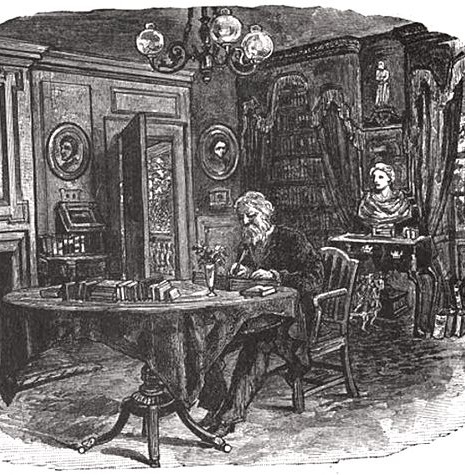
William Charvat offers, probably, more appealing detail than you ever imagined about American novels, short stories, and poems around the turn of the 19th century.
Writing was then, as it is now, a tough business for writers and publishers. Literary Publishing in America confirms that most writers didn’t get rich, and more than a few publishers managed to turn a really good buck.
In America, the market-expanding extension of railroads westward from the east coast had a lot to do with publishing success and the evolution of American reading taste.
Hint: the inland readers largely went for the romance-based novels, trashy and otherwise.
Hint: poetry has always been a tough slog for poets—ain’t much money in it.
Hint: history, and a historical context, were significantly important in the formation of the reading public’s taste for fiction.
* * * * * *
Book review. Copyright © Richard Carl Subber 2026 All rights reserved.
The Collected Poems of Sara Teasdale…book review
Literate, but impersonal
–
As with another eye: Poems of exactitude with 55 free verse and haiku poems,
and the rest of my poetry books are for sale on Amazon (paperback and Kindle)
and free in Kindle Unlimited, search Amazon for “Richard Carl Subber”
* * * * * *
by Richard Subber | Jun 23, 2026 | American history, Book reviews, Books, History
upright folks made the start
Book review:
One Small Candle
by Thomas J. Fleming (1927-2017)
New York: W. W. Norton & Company, Inc., 1964
222 pages
Wow! One Small Candle is a satisfyingly readable, confidently written, fully researched book about the terrifyingly precarious lives of the Mayflower crew and passengers in 1620. You didn’t want to be there. So many of them died at sea or too soon after they landed at Plymouth Bay.
Fleming just tells it like it was. For long times, they had too little food and drink, couldn’t wash, couldn’t change their clothes , and watched their sick family members and friends die because nothing could be done to help them.
Think about living for weeks in a small house with unthinkably low ceilings and no bathrooms and 100 other people. Even if you like the other people, that ain’t fun.
I don’t want to gloss over this part: Fleming makes the common mistake of calling the native inhabitants “savages.” They weren’t “savages.” They weren’t Europeans, of course. They were among millions who lived in and civilized North America for thousands of years before the Europeans “discovered” it.
They Mayflower passengers were an upright mix of dedicated religious folk and mostly hearty adventurers. Many of them gave their lives in their quest to build new lives at Plymouth. They struggled mightily to light one small candle, and sometimes they happily sang around the candle. Their candle burns still, and we have to be careful that we don’t snuff it out.
* * * * * *
Book review. Copyright © Richard Carl Subber 2026 All rights reserved.
Book review: The Sea Runners
…it informs, it does not soar…
by Ivan Doig
–
many waters: more poems with 53 free verse poems,
and the rest of my poetry books are for sale on Amazon (paperback and Kindle)
and free in Kindle Unlimited, search Amazon for “Richard Carl Subber”
* * * * * *
by Richard Subber | Jun 18, 2026 | American history, Book reviews, Books, Democracy, History, Politics, Revolutionary War
the so-called “Founding Fathers” feared chaos
Book review:
The American Revolution: A History
by Gordon S. Wood, New York: A Modern Library Chronicles Book/The Modern Library, c2002 repr. 2003
190 pages
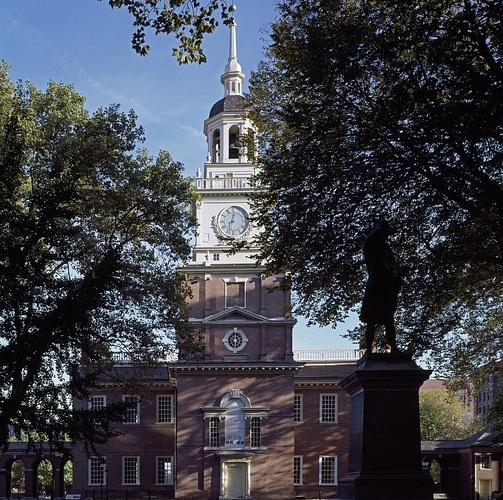
American Revolution is well worth a read, especially if you think the average bear knows less than you know about the Revolutionary period.
For example, Wood suggests that the strong federal Constitution adopted in 1788 was a direct consequence of the “factious and tyrannical” majorities of voters who, in the 1780s, filled their bumbling, politicized state legislatures with ambitious local spokesmen for special interests. The framers of the Constitution saw a chaos of “elective despotism,” with “a spirit of locality” destroying “the aggregate interests of the community.”
That problem hasn’t been solved yet.
I’m going to keep reading more of Gordon Wood’s books, and I guess I’m going to get used to telling myself to keep reading each of them every time I get to a place that makes me think I want to stop.
For me, I think it’s mostly an issue of Wood’s style and not his acumen, knowledge, or scholarship. He slips occasionally into what I guess I’ll call his casual mode, using somewhat colloquial language, simplified (I resist saying simplistic) characterizations, and dismissive descriptions. Maybe I need to suspect that Wood’s editor needs a couple wake-up calls.
It’s such a relief to get past those clunky segments. For example, in discussing the religious and cultural milieu of the post-war period, Wood refers repeatedly to the “common people” with no clear definition of the folks he’s discussing.
* * * * * *
Book review. Copyright © Richard Carl Subber 2026 All rights reserved.
Book review: The Sea Runners
…it informs, it does not soar…
by Ivan Doig
–
My first name was rain: A dreamery of poems with 52 free verse and haiku poems,
and the rest of my poetry books are for sale on Amazon (paperback and Kindle)
and free in Kindle Unlimited, search Amazon for “Richard Carl Subber”
* * * * * *

by Richard Subber | Jun 11, 2026 | Book reviews, Books
…achingly real characters, such love…
”And here I have lamely related to you
the uneventful chronicle
of two foolish children in a flat
who most unwisely sacrificed
for each other
the greatest treasures of their house.”
from “The Gift of the Magi” in The Four Million
by O. Henry (William Sydney Porter, 1862-1910)
Published April 1906
If you’re an O. Henry fan, you know the whole story of Della and Jim, the two foolish children who sold a beloved gold pocket watch and an entrancing fall of brown hair to buy innocently painful Christmas gifts for each other…even if you’re not an O. Henry fan, I’ll bet you know the story.
“The Gift of the Magi” is a signature O. Henry piece, with achingly real characters slip-sliding through lives shackled by just a touch too much hardship and garlanded with magnificently understated and oh-so-richly-expressed love, such love as never recedes or withers…
Mr. and Mrs. James Dillingham Young unselfconsciously give a master class in young love. The reader wants to be one of them despite their shabby flat and the narrow strictures of a tiny income and the endless prospect of a lesser cut of chops frying in the pan on the back of the tiny stove. The single-minded devotion—their profound and profligate endearment—of Jim and Della illuminates the power of O. Henry’s prose, and the delicacy of his imagination.
William Sydney Porter (1862-1910) used his pen name, O. Henry, for his published work. “The Gift of the Magi” was part of The Four Million, his second short story collection, when it appeared in 1906. He wrote more than 300 short stories.
* * * * * *
Book review. Copyright © Richard Carl Subber 2026 All rights reserved.
Movie review: Same Time, Next Year
all-American adultery, oh yeah…
–
Above all: Poems of dawn and more with 74 free verse poems,
and the rest of my poetry books are for sale on Amazon (paperback and Kindle)
and free in Kindle Unlimited, search Amazon for “Richard Carl Subber”
* * * * * *
by Richard Subber | Jun 6, 2026 | American history, Book reviews, Books, History
They’re not in the family albums…
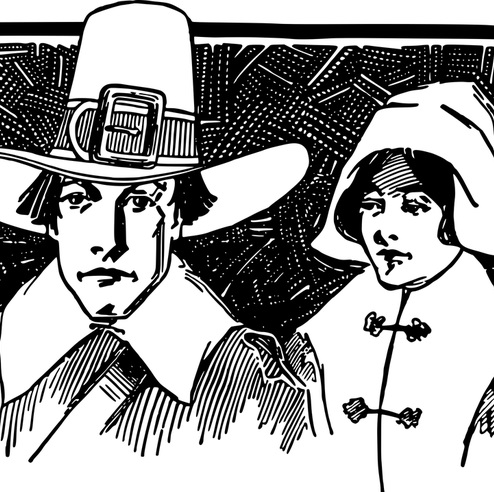
I guess only American kids who are too young for preschool have never seen a picture of the Pilgrims who went ashore in Cape Cod Bay in November 1620.
There were 102 passengers on the Mayflower. Maybe you know that only about half of them were religious Separatists, the refugees from persecution in England that we now know as Pilgrims. Many in the other half came, for non-religious reasons, to what no one was yet calling “New England.”
The “Pilgrim” image is so well known I won’t annoy you with an extended description. You know, the black hat with the buckle, the fowling piece with a bulge at the end of the barrel, the (arguably apocryphal) Thanksgiving scene with Indians and overflowing tables and rosy-cheeked women and kids having a good time…
Here’s a thing: more or less, we don’t know what the Pilgrims looked like. There is only one surviving portrait (Edward Winslow) of those hardy pioneers. Francis Dillon, in his book The Pilgrims, says that the surviving first-person accounts include a description of someone’s beard, and a reference to the height and hair color of one man.
Otherwise, nada. Of course, no selfies. Nothing on YouTube. No family albums.
How many people alive right now in America have never been photographed?
Four hundred years from now, it’s a good bet that someone will be able to figure out how good looking you are right now.
Source:
The Pilgrims, New York: Doubleday & Company, Inc., 1975
by Francis Dillon
from the Preface
* * * * * *
Book review. Copyright © Richard Carl Subber 2026 All rights reserved.
Book review: Lord of the Flies
Never more relevant…
by William Golding
–
many waters: more poems with 53 free verse poems,
and the rest of my poetry books are for sale on Amazon (paperback and Kindle)
and free in Kindle Unlimited, search Amazon for “Richard Carl Subber”
* * * * * *

by Richard Subber | May 26, 2026 | Book reviews, Books, Poetry, Reviews of other poets
over-engineered and under-imagined…
Book review:
Collected Poems
by Charles Kenneth “C. K.” Williams (1936-2015)
Won the 2000 Pulitzer Prize for Poetry
New York: Farrar, Straus, and Giroux, 2006
682 pages
Williams was a prolific poet.
His work is relentlessly structural, to the point of being stylized. He’s in love with lines that are almost the same length, and too long for the page. In too many of his Collected Poems, Williams allows every line of text to stray down to the next line, thus abandoning most of the dramatic effects of artful enjambment.
Williams has over-engineered his poetry, for my taste. I tried reading the poems aloud, but that tiresome exercise confirmed my ennui instead of adding some vitality.
For me, whatever Williams was trying to say has been lost in the dusty storeroom where he has neatly boxed and labeled his poems.
* * * * * *
Book review. Copyright © Richard Carl Subber 2026 All rights reserved.
St. Ives, another look…
less than meets the eye
by Robert Louis Stevenson
(a book review)
–
Writing Rainbows: Poems for Grown-Ups with 59 free verse and haiku poems,
and the rest of my poetry books are for sale on Amazon (paperback and Kindle)
and free in Kindle Unlimited, search Amazon for “Richard Carl Subber”
* * * * * *
