
by Richard Subber | May 21, 2026 | Book reviews, Books, Joys of reading, Language, Reviews of other poets
Kids will love it
Book review:
Sad underwear and other complications
by Judith Viorst (b1931)
New York: Atheneum Books for Young Readers, Simon & Schuster, 1995
78 pages
This is a great book of great poems that will make little kids laugh, and make big kids laugh, and make parents laugh.
Such as:
The Seventh Swimming Lesson
Stop the presses.
Call a reporter.
Sally just put her face in the water.
How do I know it’s a great book? I’m a grandfather, and it makes me laugh.
* * * * * *
Book review. Copyright © Richard Carl Subber 2026 All rights reserved.
Movie review: A Doll’s House
Henrik Ibsen’s classic on abuse…
–
Seeing far: Selected poems with 47 free verse and haiku poems,
and the rest of my poetry books are for sale on Amazon (paperback and Kindle)
and free in Kindle Unlimited, search Amazon for “Richard Carl Subber”
* * * * * *

by Richard Subber | May 14, 2026 | Book reviews, Books, Poetry, Reviews of other poets
una canción
Book review:
Bookjoy, Wordjoy
by Pat Mora (b1942)
New York: Lee and Low Books, Inc., 2018
32 pages
“una canción del corazón”
a song of the heart, Pat Mora’s Bookjoy, Wordjoy
If you read these poems aloud, your feet will start dancing.
* * * * * *
Book review. Copyright © Richard Carl Subber 2026 All rights reserved.
Movie review: Same Time, Next Year
all-American adultery, oh yeah…
–
In other words: Poems for your eyes and ears with 64 free verse and haiku poems,
and the rest of my poetry books are for sale on Amazon (paperback and Kindle)
and free in Kindle Unlimited, search Amazon for “Richard Carl Subber”
* * * * * *
by Richard Subber | May 9, 2026 | American history, Book reviews, Books, Power and inequality
they had full lives…
Book review:
Daily Life of Native Americans:
From Post-Columbian through
Nineteenth-Century America
Alice Nash and Christoph Strobel
Westport, CT: Greenwood Press, 2006
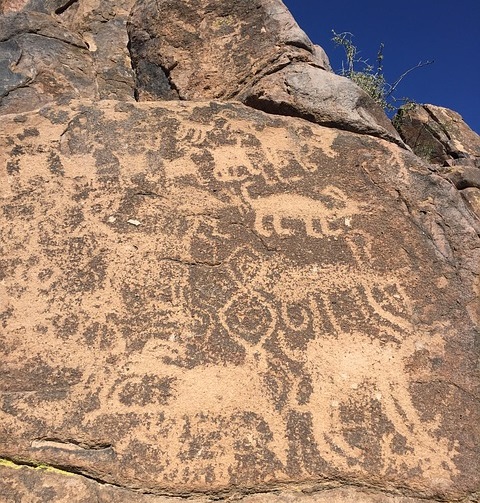
Daily Life of Native Americans is a completely accessible and well-researched account of the daily lives—in social, religious, emotional, and human frames of reference—of Native Americans in the early centuries of their interaction with other peoples of the world.
Nash and Strobel provide ample context for the challenging and devastating changes that Indians faced, surmounted, and accepted in the decades after Europeans “discovered” that two unknown continents existed, populated by millions of people who had developed their own civilizations for thousands of years.
The end-of-chapter notes and the bibliography are a bounty for students of history.
* * * * * *
Book review. Copyright © Richard Carl Subber 2026 All rights reserved.
Book review: Waterloo
The slightly Hollywood bravery
of Richard Sharpe,
the butcher’s work done at the battle…
by Bernard Cornwell
–
As with another eye: Poems of exactitude with 55 free verse and haiku poems,
and the rest of my poetry books are for sale on Amazon (paperback and Kindle)
and free in Kindle Unlimited, search Amazon for “Richard Carl Subber”
* * * * * *

by Richard Subber | Apr 28, 2026 | American history, Book reviews, Books, History
…where the buffalo stopped roaming…
Book review:
Crazy Horse
by Larry McMurtry (1936-2021)
Bibliophile, novelist, Pulitzer Prize winner
New York: Penguin Group, 1999 (Penguin Lives series)
148 pages
Apparently it was Larry McMurtry’s goal in life to avoid writing everything I don’t like.
Crazy Horse is a gem: crisp, appealing, well-informed, in McMurtry’s signature style—crafted words, no nonsense, literate. This is a candid assessment of the life and times of Ta-Shunka-Witco (“His horse is crazy”) (c1840-1877).
If there had been no relentless assault against the American Indians by white America and its government, Crazy Horse might have been an anonymous, eccentric figure among the Oglala Sioux. His compatriots probably understood him about as well as we do—that is, not much.
From several points of view, in the middle of the 19th century and now, Crazy Horse was a loner and a lone eagle. McMurtry did a commendable job of trying to see the world as Crazy Horse saw it. The world as Crazy Horse wanted it to be was shriveling around him during his entire life.
It’s too bad that Crazy Horse wasn’t born in an earlier, less contentious, more agreeable time. It’s too bad that he couldn’t simply have made his home where the buffalo roamed.
* * * * * *
Book review. Copyright © Richard Carl Subber 2026 All rights reserved.
Book review: The Bartender’s Tale
Ivan Doig’s story, I mostly loved it…
–
My first name was rain: A dreamery of poems with 52 free verse and haiku poems,
and the rest of my poetry books are for sale on Amazon (paperback and Kindle)
and free in Kindle Unlimited, search Amazon for “Richard Carl Subber”
* * * * * *

by Richard Subber | Apr 23, 2026 | American history, Book reviews, Books, History
Three dynamic decades in America…
Book review:
Society and Culture in America: 1830-1860
Russell Blaine Nye (1913-1993)
The New American Nation Series, Henry Steele Commager and Richard B. Morris, eds.
New York: Harper & Row, Publishers, 1974
432 pages
Nye tells a great big story, in sufficient detail for the serious student, and with enough style to satisfy any more casual, interested reader. If you don’t find a lot in this volume that matches and illuminates your interests, then you need to get out more.
In Society and Culture in America: 1830-1860, the decades before the American Civil War are remarkably filled with Americans and American society spreading and maturing in all directions.
Wagon trains were crossing the largely unmapped west (the transcontinental railroad wasn’t completed until May 1869).
European performing artists were getting top billing all over the United States—that is, all 33 of the states—while American musical arts were building up steam.
Education became effectively accessible for quite a few of the 20 million Americans who were eager to learn. “Sunday schools” (based on a British philanthropist’s program to set up schools for poor kids in Britain on Sundays, when the kids weren’t working) started catching on after the turn of the 19th century, and then they blossomed when churches got into the business to teach reading and writing, and, of course, elements of their respective faiths. All kinds of volunteer societies established “institutes” to spread learning. The “lyceum”—a locally sponsored program of uplifting lectures—was popular everywhere. By 1860, every state in the union offered at least elementary and secondary education, funded by tax dollars.
I could go on and on. Nye did so for 432 pages. The life of the nation in three dynamic decades, 1830-1860, is a great big story.
* * * * * *
Book review. Copyright © Richard Carl Subber 2026 All rights reserved.
Book review: Saint Joan
by George Bernard Shaw
–
Above all: Poems of dawn and more with 74 free verse poems,
and the rest of my poetry books are for sale on Amazon (paperback and Kindle)
and free in Kindle Unlimited, search Amazon for “Richard Carl Subber”
* * * * * *

by Richard Subber | Apr 16, 2026 | Book reviews, Books, Human Nature, Reflections
give your arm to a loved one…
Book review:
The Gifts of Imperfection:
Let Go of Who You Think You’re Supposed to Be
and Embrace Who You Are
by Dr. C. Brené Brown (b1965)
Center City, MN: Hazelden, 2010
135 pages
Dr. Brown offers this “tough lesson” from her life:
“How much we know and understand ourselves is critically important,
but there is something that is even more essential
to living a Wholehearted life: loving ourselves.”
This book moved me to think about changing the way I think about life, and my life.
Give yourself a gift: take time to read The Gifts of Imperfection and then D.I.G. into your life.
That is, start consciously thinking about wholehearted living and tell yourself a lot of truth, and then:
Get Deliberate about doing the right things for you, in all your glorious imperfections,
Get Inspired to acknowledge what you’re doing in all your loving relationships, and
Get Going, take the next steps in actually living a love affair with yourself and all you can be…
…and don’t mind if you stumble now and then, and give your arm to a loved one now and then…
…and have good intentions, and take the agony and the ecstasy as they come.
Quote is from The Gifts of Imperfection, p. xi.
* * * * * *
Book review. Copyright © Richard Carl Subber 2026 All rights reserved.
Book review: Colonial America
A Very Short Introduction
by Alan Taylor
–
Above all: Poems of dawn and more with 74 free verse poems,
and the rest of my poetry books are for sale on Amazon (paperback and Kindle)
and free in Kindle Unlimited, search Amazon for “Richard Carl Subber”
* * * * * *
