by Richard Subber | Apr 12, 2026 | American history, Book reviews, Books, History, Joys of reading
This is good storytelling
Book review:
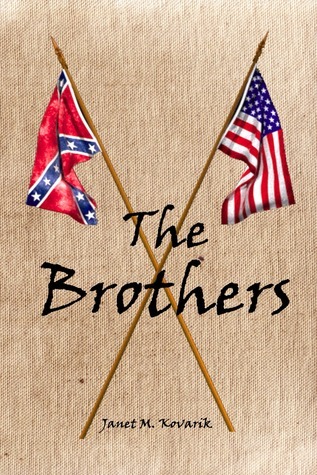
The Brothers
by Janet M. Kovarik
2014
If you’re a student of the Civil War, you’ll recognize the actual historical figures who are part of the story, and you’ll quickly feel comfortably familiar with Stu and Beau and Sarah and their families, because they embody some of the compelling human agents of the wartime drama.
These characters are three-dimensional. There is human urgency in their speech and actions. These are cerebral characters who are articulately reflective, thoughtful about their circumstances and their life journeys, and passionate about love and rectitude and their personal legacies and futures.
The Brothers is the first novel in The McCullough Saga. The twins, Beau and Stu, have explicitly distinct personalities but their lives have remarkably similar if unconventional trajectories. They are the central figures in a human story, on a human scale, with a conspicuously realistic historical setting. Storm Haven, their deep South plantation, is convincingly researched, as are the gritty battle scenes, the economics and logistics of the war, the arduous success of the Underground Railroad and the delights of antebellum southern cuisine.
The Brothers is a dialogue-rich offering of historical fiction. I’m a dialogue fan. This is good storytelling.
* * * * * *
Book review. Copyright © Richard Carl Subber 2026 All rights reserved.
The Bridges of Madison County
book/movie review
If you’re looking for highly stoked eroticism,
look elsewhere.
–
many waters: more poems with 53 free verse poems,
and the rest of my poetry books are for sale on Amazon (paperback and Kindle)
and free in Kindle Unlimited, search Amazon for “Richard Carl Subber”
* * * * * *
by Richard Subber | Mar 19, 2026 | American history, Book reviews, Books, History, Politics, Power and inequality
it’s about money, not journalism
Book review:
Newspapers and Democracy:
International Essays on a Changing Medium
Anthony Smith, ed.
Cambridge, MA: The MIT Press, 1980
Newspapers and Democracy may be of most interest to informed readers who understand the basics of the history and the modern business model of newspapers, and want more historical context.
The essays were published in 1980. There is no mention of the internet or Google or social media or any of the digital manifestations that have crowded the traditional newspaper audience into a small corner.
There is no substantial or convincing assessment of the putative public service mission of “the press” that has been blatantly claimed by newspaper owners and journalists for at least more than 60 years.
Newspapers and Democracy is a museum piece, not an explanation of the alleged “power” of the alleged “free press.”
* * * * * *
Book review. Copyright © Richard Carl Subber 2026 All rights reserved.
–
Seeing far: Selected poems with 47 free verse and haiku poems,
and the rest of my poetry books are for sale on Amazon (paperback and Kindle)
and free in Kindle Unlimited, search Amazon for “Richard Carl Subber”
* * * * * *

by Richard Subber | Mar 15, 2026 | Book reviews, Books, Joys of reading, Language
We’re all connected…
Book review:
The Mother Tongue: English & How It Got That Way
by Bill Bryson (b1951)
New York: Harper Perennial, 1990
270 pages
The Mother Tongue is a fascinating collection of details you haven’t dreamed of about the English language. It’s easy enough to skim the parts that you don’t need to read in detail.
If you think that English stands alone as our primary means of communication, think again, and then think again.
We’re all connected by words, and the connections are everywhere.
As it happens, English is the pre-eminent language of the world. Of course, that doesn’t mean that English speakers are pre-eminent, but it does mean that if the little guys ever step out of the spaceship from Mars, it won’t take them long to figure out which language they want to learn first.
There is a really elaborate bibliography if you want to know more.
* * * * * *
Book review. Copyright © Richard Carl Subber 2026 All rights reserved.
Book review: Shakespeare’s Wife
Germaine Greer went overboard a bit…
–
Above all: Poems of dawn and more with 74 free verse poems,
and the rest of my poetry books are for sale on Amazon (paperback and Kindle)
and free in Kindle Unlimited, search Amazon for “Richard Carl Subber”
* * * * * *

by Richard Subber | Mar 3, 2026 | Book reviews, Books, Human Nature
good and bad, a great story
Book review:
Strange Case of Dr Jekyll and Mr Hyde
by Robert Louis Stevenson (1850-1894)
Scottish novelist
141 pages
Originally published in 1886 as Strange Case of Dr Jekyll and Mr Hyde, this iconic novella was an immediate hit and sold 250,000 copies in the United States.
(Later publishers added “The” and punctuation to the title in a gratuitous fit of grammatical purity).
It’s a masterly drama and a quaint exploration of the Manichean theme of good and evil in man. In my most recent re-reading, Jekyll seems to be a much less respectable character than in my previous experience with this classic: he is weak, licentious and mostly unrepentant.
His alter ego, Hyde, is still a bad boy.
The narrator’s reflections on human nature are thoughtful and instructive.
* * * * * *
Book review. Copyright © Richard Carl Subber 2026 All rights reserved.
Old Friends (book review)
Tracy Kidder tells truth about old age…
–
Above all: Poems of dawn and more with 74 free verse poems,
and the rest of my poetry books are for sale on Amazon (paperback and Kindle)
and free in Kindle Unlimited, search Amazon for “Richard Carl Subber”
* * * * * *
by Richard Subber | Feb 19, 2026 | Book reviews, Books, Human Nature, Joys of reading, Language
Faulks has so many words that mean “ache”…
Book review:
The Girl at the Lion d’Or
by Sebastian Faulks (b1953)
New York: Vintage International/Vintage Books/A Division of Random House, Inc., 1989.
246 pages
Sebastian Faulks writes about the vagaries of life, the daily choices in our lives, the uncountable futures, and the singularity of the past. We think we remember various pasts, and we may struggle to reconcile them.
In The Girl at the Lion d’Or, Faulks invites us to live in the minds of Hartmann and Anne. Sometimes the reader realizes that confusion is in their minds, usually their failures are clear enough, and their successes of the moments must be cherished for their bounty.
Richly Gallic, redolent of the interwar period in Europe, The Girl at the Lion d’Or is a cumulative revelation of Anne (the girl) and a steadily burdensome understanding of the sad hindrances in her life. She comes to love Hartmann, who is ultimately contemptibly weak and viciously temporizing.
I wanted to read faster near the end so I could learn the outcome, but I resisted the impulse.
Faulks makes it worthwhile to read every word. His prose is tenaciously literate and evocative; he has no mere words—he writes passages that invite the reader to understand deeply and to feel deeply.
* * * * * *
Book review. Copyright © Richard Carl Subber 2026 All rights reserved.
Book review: The Proud Tower
…a lot more than a history book…
by Barbara Tuchman
–
many waters: more poems with 53 free verse poems,
and the rest of my poetry books are for sale on Amazon (paperback and Kindle)
and free in Kindle Unlimited, search Amazon for “Richard Carl Subber”
* * * * * *

by Richard Subber | Feb 15, 2026 | Book reviews, Books, Theater and play reviews
a paucity of drama
Book review:
The Birthday Party and The Room:
Two Plays by Harold Pinter
by Harold Pinter (1930-2008)
New York: Grove Press, Inc., 1959, 1960
118 pages
It is possible that a talented cast could breathe some life into Pinter’s words on stage.
It is possible that stage design could invest some reality into Pinter’s words.
Maybe you have to be in a narrow frame of mind to experience some drama and some human wisdom when you read a Pinter play.
If you can ignore the tiresome repetition, and the not-so-pregnant pauses, and the paucity of drama in the dialogues, then maybe you can enjoy reading a Pinter play.
* * * * * *
Book review. Copyright © Richard Carl Subber 2026 All rights reserved.
Book review: The Bartender’s Tale
Ivan Doig’s story, I mostly loved it…
–
many waters: more poems with 53 free verse poems,
and the rest of my poetry books are for sale on Amazon (paperback and Kindle)
and free in Kindle Unlimited, search Amazon for “Richard Carl Subber”
* * * * * *
