
by Richard Subber | Feb 19, 2026 | Book reviews, Books, Human Nature, Joys of reading, Language
Faulks has so many words that mean “ache”…
Book review:
The Girl at the Lion d’Or
by Sebastian Faulks (b1953)
New York: Vintage International/Vintage Books/A Division of Random House, Inc., 1989.
246 pages
Sebastian Faulks writes about the vagaries of life, the daily choices in our lives, the uncountable futures, and the singularity of the past. We think we remember various pasts, and we may struggle to reconcile them.
In The Girl at the Lion d’Or, Faulks invites us to live in the minds of Hartmann and Anne. Sometimes the reader realizes that confusion is in their minds, usually their failures are clear enough, and their successes of the moments must be cherished for their bounty.
Richly Gallic, redolent of the interwar period in Europe, The Girl at the Lion d’Or is a cumulative revelation of Anne (the girl) and a steadily burdensome understanding of the sad hindrances in her life. She comes to love Hartmann, who is ultimately contemptibly weak and viciously temporizing.
I wanted to read faster near the end so I could learn the outcome, but I resisted the impulse.
Faulks makes it worthwhile to read every word. His prose is tenaciously literate and evocative; he has no mere words—he writes passages that invite the reader to understand deeply and to feel deeply.
* * * * * *
Book review. Copyright © Richard Carl Subber 2026 All rights reserved.
Book review: The Proud Tower
…a lot more than a history book…
by Barbara Tuchman
–
many waters: more poems with 53 free verse poems,
and the rest of my poetry books are for sale on Amazon (paperback and Kindle)
and free in Kindle Unlimited, search Amazon for “Richard Carl Subber”
* * * * * *

by Richard Subber | Dec 25, 2025 | American history, Book reviews, Books, Joys of reading, Language
“…I feel a goneness…”
Book review:
Golden Tales of New England
May Lamberton Becker, ed.
New York: Bonanza Books, 1931
378 pages
Writers used a different kind of language to create feel-good stories in the 19th century.
Golden Tales of New England is a feel-good sample of 17 of them.
You’ll recognize some of the authors: Hawthorne, Thoreau, Louisa Alcott, Oliver Wendell Holmes, Harriet Beecher Stowe…
The others might be new for you, as they are for me, like the offering of Rose Terry Cooke (1827-1892), “A Town Mouse and a Country Mouse.” It’s an authentic, ample exhibition of New England patois and sturdy New England character. Meet “Mandy” and “M’lindy,” two aging sisters who were born Amanda and Melinda, and who were fated to share their living, mostly at a distance but, in the end, so inescapably together.
Here’s Amanda sadly recounting her sister’s death: “I guess I’ve got through…[Melinda] went an’ married that old Parker, an’ then she up and died. I wish’t I’d ha’ stayed with her longer; mabbe she wouldn’t have died. She wa’n’t old; not nigh so old as I be…I feel a goneness that I never had ketch hold o’ me before…”
Hawthorne’s “Old Esther Dudley” is a dainty adoration of a venerable lady who never gave up being a Tory during the Revolutionary War, and persisted in being the almost ghostly guardian of Province House in Boston after the British departed.
The other Golden Tales are equally exotic morsels of what entertained the citizens of the Republic long before television and Twitter.
* * * * * *
Book review. Copyright © Richard Carl Subber 2025 All rights reserved.
–
Above all: Poems of dawn and more with 74 free verse poems,
and the rest of my poetry books are for sale on Amazon (paperback and Kindle)
and free in Kindle Unlimited, search Amazon for “Richard Carl Subber”
* * * * * *

by Richard Subber | Nov 20, 2025 | Human Nature, Joys of reading, Language, Reflections
take time to share…
“In the life of each of us, I said to myself,
there is a place remote and islanded,
and given to endless regret or secret happiness…”
from
Sarah Orne Jewett: Novels and Stories
by Sarah Orne Jewett (1849-1909)
The Library of America
New York: Literary Classics of the United States, Inc., 1994
937 pages
p. 444
…sharing is what comes to my mind
* * * * * *
Copyright © Richard Carl Subber 2025 All rights reserved.
–
My first name was rain: A dreamery of poems with 52 free verse and haiku poems,
and the rest of my poetry books are for sale on Amazon (paperback and Kindle)
and free in Kindle Unlimited, search Amazon for “Richard Carl Subber”
* * * * * *

by Richard Subber | Nov 11, 2025 | Book reviews, Books, Joys of reading, Language, Poetry, Reflections, Reviews of other poets
you don’t have to put it down…
Book review:
A Thousand Mornings
by Mary Oliver (1935-2019)
New York, The Penguin Press, 2012
82 pages
If you know nothing about Mary Oliver, this book is as good as any to make your acquaintance.
The poems in A Thousand Mornings are recognizable Mary Oliver stuff:
“…which thought made me feel
for a little while
quite beautiful myself.” (“Poem of the one world”)
“I hardly move though really I’m traveling
a terrific distance.
Stillness. One of the doors
into the temple.” (“Today”)
This is a slim volume, a light collection.
You can read it in one sitting if you want to.
You just might want to.
* * * * * *
Book review. Copyright © Richard Carl Subber 2025 All rights reserved.
Book review: The Financier
Theodore Dreiser’s villain…
–
Seeing far: Selected poems with 47 free verse and haiku poems,
and the rest of my poetry books are for sale on Amazon (paperback and Kindle)
and free in Kindle Unlimited, search Amazon for “Richard Carl Subber”
* * * * * *
by Richard Subber | Oct 30, 2025 | Book reviews, Books, Human Nature, Joys of reading
the fish isn’t the thing…
Book review:
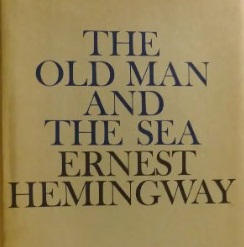
The Old Man and the Sea
Ernest Hemingway (1899-1961)
New York: Charles Scribner’s Sons, 1952
127 pages
The old man has a name. Santiago. He is a perilously old fisherman. He has befriended a boy, a helper—but he fishes alone.
The Old Man and the Sea isn’t about the sea. You know what it’s about. It’s about the old man, a big fish, and the vicissitudes of life concentrated in one long, lonely, painful, heroic, unsatisfying, and redemptive fishing trip.
Santiago lives a life after he hooks a marlin that is too big for him to catch. He suffers, he marvels, he learns about himself, he lives a dire philosophy, he yearns for help as he endures the hours, he accepts again and again that he is responsible for his life that may end quickly.
Santiago unknowingly shares his boat with fate and chance. He gives up his illusion of control when the sharks begin to destroy his prize.
He returns to his solitary life ashore, and the battered carcass of the fish tells no tales.
* * * * * *
Book review. Copyright © Richard Carl Subber 2025 All rights reserved.
Book review: The Blithedale Romance
by Nathaniel Hawthorne, not his best…
–
As with another eye: Poems of exactitude with 55 free verse and haiku poems,
and the rest of my poetry books are for sale on Amazon (paperback and Kindle)
and free in Kindle Unlimited, search Amazon for “Richard Carl Subber”
* * * * * *
by Richard Subber | Oct 26, 2025 | Book reviews, Books, Books Commentary, Joys of reading
Spread the word
Book review:
History in English Words
Owen Barfield
Hudson, NY: The Lindisfarne Press, 1953
240 pages
I have found a beautiful book, and I want to share it with you. Indulge me.
Owen Barfield, an Oxford graduate who loves language even more than I love it, wrote History in English Words. In his Foreword, W. H. Auden calls this delicate, powerful work “a weapon in the unending battle between civilisation and barbarism.” All foes of barbarism should procure a copy immediately.
This is not an easy read, but it’s easy to keep reading it. Barfield brings his remarkable erudition to nearly every page; the reader learns much about words—in English, Latin, Greek, Sanskrit, and the Indo-European protolanguage—and learns much about history, philosophy, religion, literature, culture, mind, and the deep structures of consciously human society. I’m not kidding. This book is unique in my experience.
Here’s a casual teaser:
“…it has been said that there are more [new words] in Shakespeare’s plays than in all the rest of the English poets put together.”
Examples of the Bard’s imagination:
advantageous, amazement, critic, dishearten, dwindle, generous, invulnerable, majestic, obscene, pedant, pious, radiance, reliance, sanctimonious
Throughout 240 pages, Barfield implicitly emphasizes a dynamic point: new words are created continuously in all languages by all peoples, and old words continuously acquire new meanings in all cultures.
The way we think and express our thoughts and feelings today could not have been done—in the fullness of our modern meanings and understandings—as little as 100 years ago.
Take a minute and speak three carefully considered sentences about three topics that you think are important or exciting. Almost certainly, no human being has ever before experienced your exact thought processes and used precisely your words to express them.
Spread the word.
* * * * * *
Book review. Copyright © Richard Carl Subber 2025 All rights reserved.
–
My first name was rain: A dreamery of poems with 52 free verse and haiku poems,
and the rest of my poetry books are for sale on Amazon (paperback and Kindle)
and free in Kindle Unlimited, search Amazon for “Richard Carl Subber”
* * * * * *
