
by Richard Subber | Apr 21, 2026 | Books, Joys of reading, My poetry, Poetry
be ready…
Book-ish
Pick up that book again.
Yes, too many words,
too many pages.
In there, somewhere,
a lustrous phrase
you didn’t see,
a deepest thought
you didn’t think,
a relic of song
you didn’t sing,
a wayward dream
you didn’t know,
a sequence of best words,
they were a blur.
Take the book again,
open it where you will,
be ready for something more.
June 20, 2025
* * * * * *
My poetry. Copyright © Richard Carl Subber 2026 All rights reserved.
–
Empyrean: new poems with 57 free verse poems,
and the rest of my poetry books are for sale on Amazon (paperback and Kindle)
and free in Kindle Unlimited, search Amazon for “Richard Carl Subber”
Your comments are welcome—tell me what you’re thinking.
* * * * * *
by Richard Subber | Apr 12, 2026 | American history, Book reviews, Books, History, Joys of reading
This is good storytelling
Book review:
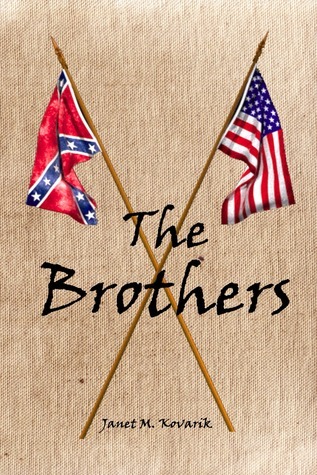
The Brothers
by Janet M. Kovarik
2014
If you’re a student of the Civil War, you’ll recognize the actual historical figures who are part of the story, and you’ll quickly feel comfortably familiar with Stu and Beau and Sarah and their families, because they embody some of the compelling human agents of the wartime drama.
These characters are three-dimensional. There is human urgency in their speech and actions. These are cerebral characters who are articulately reflective, thoughtful about their circumstances and their life journeys, and passionate about love and rectitude and their personal legacies and futures.
The Brothers is the first novel in The McCullough Saga. The twins, Beau and Stu, have explicitly distinct personalities but their lives have remarkably similar if unconventional trajectories. They are the central figures in a human story, on a human scale, with a conspicuously realistic historical setting. Storm Haven, their deep South plantation, is convincingly researched, as are the gritty battle scenes, the economics and logistics of the war, the arduous success of the Underground Railroad and the delights of antebellum southern cuisine.
The Brothers is a dialogue-rich offering of historical fiction. I’m a dialogue fan. This is good storytelling.
* * * * * *
Book review. Copyright © Richard Carl Subber 2026 All rights reserved.
The Bridges of Madison County
book/movie review
If you’re looking for highly stoked eroticism,
look elsewhere.
–
many waters: more poems with 53 free verse poems,
and the rest of my poetry books are for sale on Amazon (paperback and Kindle)
and free in Kindle Unlimited, search Amazon for “Richard Carl Subber”
* * * * * *
by Richard Subber | Apr 9, 2026 | Joys of reading, Language, Reviews of other poets
I’m open to being tantalized…
“We are the hollow men
We are the stuffed men”
from “The Hollow Men,” 1925, by T. S. Eliot
Thomas Stearns Eliot (1888-1965)
American-British writer, popularly acclaimed as a great poet of the 20th century
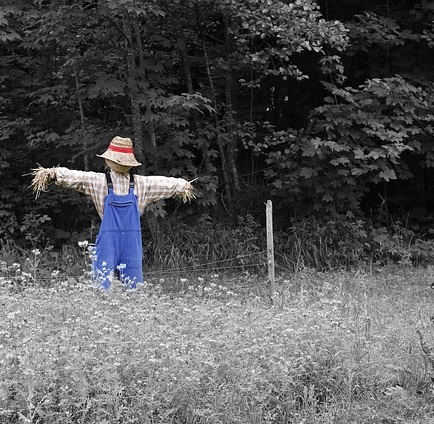
At long last, I’ve tried T. S. Eliot’s poetry.
I respectfully think that T. S. Eliot’s poetry is a bloomin’ wasteland…
Maybe I’ll put Collected Poems of T. S. Eliot back on the shelf, and try again after a while.
Maybe not.
It’s not that I mind Eliot’s deliberate contradictions so much. I’m willing to be provoked. I’m open to being tantalized. I’m ready to be pushed or pulled outside my comfort zone.
The sticky point for me, with Eliot’s poetry, is that I never seem to get to the point, or maybe I simply don’t get the point. When I get to the end of one of his longish poems, I’m really not sure where I started, or where I wandered, or where I arrived.
I find little coherence in Eliot’s words and phrases and passages.
I think of myself as a wordsmith, and I love the beauty of elegant phrases and shimmering, specific, steely, selective, stately, splendid words that tell a delicious story or evoke a bloom of emotion.
For my taste, T. S. Eliot’s poetry isn’t tasty, and it’s a bloomin’ wasteland of jumbled words, fractured images, and unfinished imaginations.
If you’re wondering where all the flowers have gone, don’t look for answers in Eliot’s work.
Source: T. S. Eliot, Collected Poems of T. S. Eliot (New York: Harcourt, Brace & Company, 1958), 101.
* * * * * *
Copyright © Richard Carl Subber 2026 All rights reserved.
“Fishering,” by Brian Doyle
…what meets the eye…
–
Above all: Poems of dawn and more with 74 free verse poems,
and the rest of my poetry books are for sale on Amazon (paperback and Kindle)
and free in Kindle Unlimited, search Amazon for “Richard Carl Subber”
* * * * * *
by Richard Subber | Mar 17, 2026 | Books, Joys of reading, My poetry, Poetry
not just any book…
old books
A book is not just a book.
The writer knows the book,
at least, the wholeness of it,
and what was left unscribed.
Each reader knows the book,
at least, the meaning of the words
in their order,
and in their revelation,
and in their singularity,
their growth as understanding molds them.
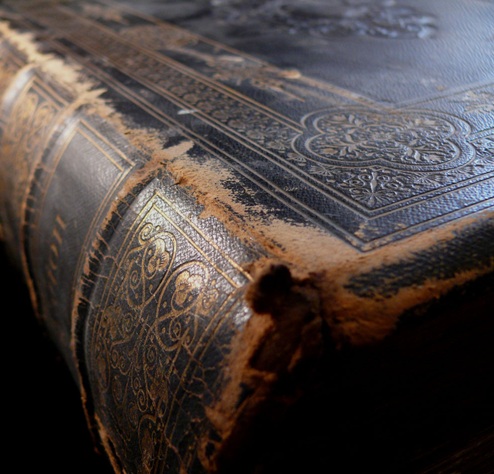
An old book is a shell of its time,
a memento of its era,
a souvenir of thought and thinking,
a precious invitation
to live in the past,
a reality of expectations,
generations of meaning,
a companion of other words.
December 24, 2025
* * * * * *
My poetry. Copyright © Richard Carl Subber 2026 All rights reserved.
Book review: Sketches by Boz
…the Miss Willises are a scream…
by Charles Dickens
–
As with another eye: Poems of exactitude with 55 free verse and haiku poems,
and the rest of my poetry books are for sale on Amazon (paperback and Kindle)
and free in Kindle Unlimited, search Amazon for “Richard Carl Subber”
Your comments are welcome—tell me what you’re thinking.
* * * * * *

by Richard Subber | Mar 15, 2026 | Book reviews, Books, Joys of reading, Language
We’re all connected…
Book review:
The Mother Tongue: English & How It Got That Way
by Bill Bryson (b1951)
New York: Harper Perennial, 1990
270 pages
The Mother Tongue is a fascinating collection of details you haven’t dreamed of about the English language. It’s easy enough to skim the parts that you don’t need to read in detail.
If you think that English stands alone as our primary means of communication, think again, and then think again.
We’re all connected by words, and the connections are everywhere.
As it happens, English is the pre-eminent language of the world. Of course, that doesn’t mean that English speakers are pre-eminent, but it does mean that if the little guys ever step out of the spaceship from Mars, it won’t take them long to figure out which language they want to learn first.
There is a really elaborate bibliography if you want to know more.
* * * * * *
Book review. Copyright © Richard Carl Subber 2026 All rights reserved.
Book review: Shakespeare’s Wife
Germaine Greer went overboard a bit…
–
Above all: Poems of dawn and more with 74 free verse poems,
and the rest of my poetry books are for sale on Amazon (paperback and Kindle)
and free in Kindle Unlimited, search Amazon for “Richard Carl Subber”
* * * * * *
by Richard Subber | Feb 21, 2026 | Books, Books Commentary, Joys of reading, Tidbits
no such thing as too many books
“O quam dulcis vita fuit dum sedebamus in quieti . .
inter librorum copias.”
Alcuin of York (c735-804)
Advisor to Charlemagne
“Oh, how sweet life was when we sat quietly . . .midst all these books.”
All of the books in Alcuin’s library were written by hand, of course.
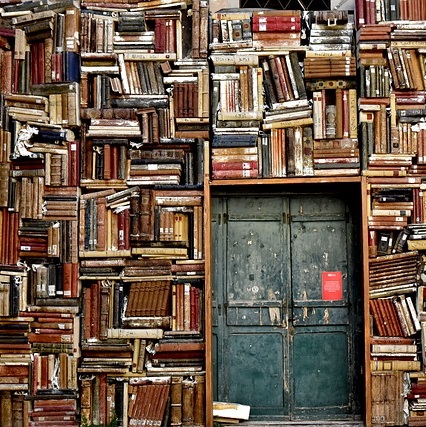
Read his reflection on books a couple of times, you may see a different image each time…
* * * * * *
Copyright © Richard Carl Subber 2026 All rights reserved.
Book review:
John Eliot: “Apostle to the Indians”
…a righteous man of his times
by Ola Elizabeth Winslow
–
As with another eye: Poems of exactitude with 55 free verse and haiku poems,
and the rest of my poetry books are for sale on Amazon (paperback and Kindle)
and free in Kindle Unlimited, search Amazon for “Richard Carl Subber”
* * * * * *
