
by Richard Subber | Aug 24, 2024 | Book reviews, Books, Books Commentary, Joys of reading, Language
…a “man of letters”…
Book review:
Literary Life: A Second Memoir
by Larry McMurtry (1936-2021)
Simon & Schuster, 2009
McMurtry moves me to want more, read more…
It’s incredibly easy to read McMurtry—I’ve read Books: A Memoir, Walter Benjamin at the Dairy Queen, and now Literary Life. Time after time, it seems that he writes in an off-hand way; thoughts and scenes and chapters can end very abruptly. Yet, the work seems polished. The prose is spare, as Larry acknowledges.
I am titillated by his familiar references to so many authors and works. I would love to be a “man of letters,” as McMurtry claims to be. The draw for me is McMurtry’s immersion in books. I would be thrilled to own 200,000 books. Desperately thrilled.
I’m pretty sure that McMurtry’s passionate engagement with books and authors is a believable lifestyle. His many references to re-reading books is a believable commitment.
Since I retired nearly 20 years ago, I have, from time to time, envisioned taking the pledge to read the entire oeuvre of an author I like. Now I am moved to read McMurtry’s books. I plan to re-read Books and Literary Life to get clues about how to read them. I’ll consider reading his works in order by pub date, except for the Lonesome Dove and Berrybender tetralogies, of course.
I don’t think I’ll be disappointed.
* * * * * *
Book review. Copyright © Richard Carl Subber 2024 All rights reserved.
Writing Rainbows: Poems for Grown-Ups with 59 free verse and haiku poems,
and the rest of my poetry books are for sale on Amazon (paperback and Kindle)
and free in Kindle Unlimited, search Amazon for “Richard Carl Subber”
* * * * * *
by Richard Subber | Aug 4, 2024 | Book reviews, Books, Joys of reading, Language
“Each work is new.”
Book review:
The Eye of the Story: Selected Essays and Reviews
by Eudora Alice Welty (1909-2001)
American short story writer and novelist, Pulitzer Prize winner
New York: Random House, 1977
355 pages
The Eye of the Story is lush, literate, filled with almost languid richness.
I can only imagine being so well read that I could recognize all of her references to other writers and the vast literature of novels and short stories. I envy the breadth of her engagement with the world of fiction.
I’m more interested in what she has to say about writing.
“We who encounter words used in certain ways are persuaded by them to be brought mind and heart within the presence, the power, of the imagination” (p. 134).
“Each work is new” (p. 135). Welty is talking about novels, but this also is true, so true, of poetry. She observes that, in the fiction of her contemplation, “words have been found for which there may be no other words” (p. 137).
“The imagination has to be involved, and more—ignited. How much brighter than the symbol can be the explicit observation that springs firsthand from deep and present feeling…” (p. 139).
“It is through the shaping of the work in the hands of the artist that you most nearly come to know what can be known, on the page, of his mind and heart, and his as apart from the others. No other saw life in an ordering exactly like this” (p. 144).
I find affirmation in The Eye of the Story. Welty declares that writing is an art that uses the literally infinite array of words in sequence to create a spectacular, unique exhibition of what’s in the writer’s mind and in her heart.
“Each work is new.” I believe that each poem is unique. Each engaged reader takes a new step on new ground each time he reads the poem.
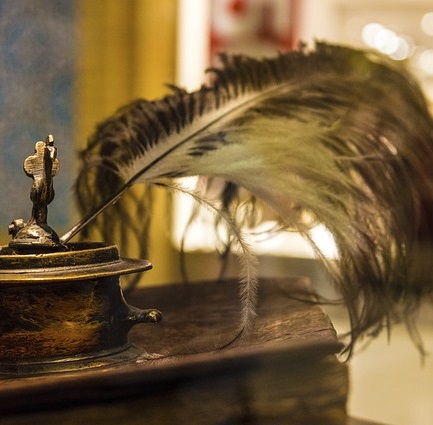
The poet opens a new window in her mind each time she takes the quill in hand.
* * * * * *
Book review. Copyright © Richard Carl Subber 2024 All rights reserved.
A poem about the right thing
…and the lesser incarnation…
“Vanity”
–
Writing Rainbows: Poems for Grown-Ups with 59 free verse and haiku poems,
and the rest of my poetry books are for sale on Amazon (paperback and Kindle)
and free in Kindle Unlimited, search Amazon for “Richard Carl Subber”
* * * * * *
by Richard Subber | Jan 9, 2024 | Book reviews, Books, Human Nature, Joys of reading
a sustaining emotional roadmap…
Book review:
The Woman at the Washington Zoo:
Writings on Politics, Family, and Fate
by Marjorie Williams (1958-2005)
Timothy Noah, ed.
New York: PublicAffairs, Perseus Books Group, 2005
358 pages
I wish I had known about Marjorie Williams’ work when she was an active staff writer at The Washington Post.
She had a pungent, penetrating style, and she carefully offered reasoned judgment as well as what we can nostalgically think of today as “facts.”
In The Woman at the Washington Zoo, her personal memoirs about her life and her cancer are wholly human, and they remain as a sustaining emotional roadmap for an engaged reader.
* * * * * *
Book review. Copyright © Richard Carl Subber 2024 All rights reserved.
“…and dipped in folly…”
only Poe knows how to say it…
Writing Rainbows: Poems for Grown-Ups with 59 free verse and haiku poems,
and the rest of my poetry books are for sale on Amazon (paperback and Kindle)
and free in Kindle Unlimited, search Amazon for “Richard Carl Subber”
* * * * * *

by Richard Subber | Nov 16, 2023 | Book reviews, Books, Joys of reading
a new take on the Western…
Book review:
The Complete Western Stories of Elmore Leonard
New York: William Morris, an imprint of HarperCollinsPublishers, 2004
528 pages
I’m late to the game of reading Elmore Leonard, and I confess right here that I’m not a big fan of the broadly defined “Western” genre, excepting of course the “must reads” like “The Outcasts of Poker Flat” and “To Build a Fire” and “The Call of the Wild.”
Even so, I’m engaged with Leonard’s short story style, and I plan to return to The Complete Western Stories of Elmore Leonard—his 30 Western shorts including possibly familiar titles like “Three-Ten to Yuma” and “Moment of Vengeance” and “Only Good Ones.”
The prose is direct, realistic, and dialogue-rich, and there is legitimate suspense that gives individuality to each story.
Try a few.
* * * * * *
Book review. Copyright © Richard Carl Subber 2023 All rights reserved.
–
My first name was rain: A dreamery of poems with 52 free verse and haiku poems,
and the rest of my poetry books are for sale on Amazon (paperback and Kindle)
and free in Kindle Unlimited, search Amazon for “Richard Carl Subber”
* * * * * *

by Richard Subber | Aug 31, 2022 | Book reviews, Books, Joys of reading, Theater and play reviews
the movies ignore the real story…
Movie review:
The Scarlet Letter
by Nathaniel Hawthorne (1804-1864)
Published 1850
I watched three films based on Nathaniel Hawthorne’s iconic story, The Scarlet Letter. My small sample (there are at least nine movies based on the story) confirms that Hollywood really can’t stand the story as Hawthorne wrote it.
Read my review of Hawthorne’s book, click here.
In 1934 Colleen Moore played Hester Prynne and Hardie Albright played Rev. Arthur Dimmesdale in the tale about Puritan condemnation of adultery and children born out of wedlock. Hester is sentenced to wear an embroidered scarlet letter “A” on her bosom, and Dimmesdale endlessly rationalizes his decision to conceal his role as the mysterious father of little Pearl. The movie reflects the production limitations and typical dramatic direction in the 1930s—there’s a lot of staring into the camera, and crowded action scenes.
Meg Foster played Hester and John Heard played Dimmesdale in the 1979 TV miniseries about The Scarlet Letter. There are recognizable scenes from the book. The script is nondescript. It’s a ponderous distillation of Hawthorne’s words.
The 1996 version with Demi Moore as Hester and Gary Oldman as Dimmesdale apparently is the latest in the unsatisfying series of film versions of The Scarlet Letter. It is an almost lurid mal-adaptation of the book. The hot scenes featuring Hester and Dimmesdale attracted to each other are a complete invention—Hawthorne eschews any explicit reference or description of physical intimacy between his principal characters. Demi and Gary get it on, but it ain’t Hawthorne.
In all three films, the role of little Pearl is deliberately underplayed. The child is a principal factor in the story—her feelings, her joie de vivre, her contemplations, her maturation are fully explored in the book, and ignored in the movies.
The mental and emotional quagmires that are explored and endured by Hester and Dimmesdale are generally ignored in the movies. None of the movies uses the ending that fulfills the book.
In short, in my mind, if you want to claim that you are familiar with the themes, plot, and denouement of The Scarlet Letter, you have to read the book.
All of the movies are scandalously thin and false charades of the powerful drama of Hawthorne’s story that was published very successfully in 1850.
If you think you remember reading it a long time ago, try it again.
* * * * * *
Movie review. Copyright © Richard Carl Subber 2022 All rights reserved.
Book review: Shantung Compound
They really didn’t care much
about each other…
by Langdon Gilkey
–
My first name was rain: A dreamery of poems with 52 free verse and haiku poems,
and the rest of my poetry books are for sale on Amazon (paperback and Kindle)
and free in Kindle Unlimited, search Amazon for “Richard Carl Subber”
* * * * * *

by Richard Subber | Jan 23, 2022 | Book reviews, Books, Books Commentary, Joys of reading
a really good book about books…
Book review:
84, Charing Cross Road
by Helene Hanff
New York: Grossman Publishers, 1970
84, Charing Cross Road is a perhaps iconic epistolary opus and a minor delight for bibliophile readers.
Helene Hanff (1916-1997) was an antiquarian book freak in New York City who was thrilled to have a 20-year long-distance relationship by mail with the staff of a small book shop in London at 84, Charing Cross Road, namely, Marks & Co.
Her love of books, her humanity, and her blithe spirit are on display, as is the somewhat reserved and very British geniality of Frank Doel and the staffers at Marks & Co. who kept Helene supplied with the obscure old books that she loved so much.
If you’re still reading this review, you probably are ready to start reading the book.
Otherwise, you know…
* * * * * *
Book review. Copyright © Richard Carl Subber 2022 All rights reserved.
Book review: Hag-Seed
by Margaret Atwood…it ain’t Shakespeare
–
In other words: Poems for your eyes and ears with 64 free verse and haiku poems,
and the rest of my poetry books are for sale on Amazon (paperback and Kindle)
and free in Kindle Unlimited, search Amazon for “Richard Carl Subber”
* * * * * *
