
The Scarlet Letter, victim of Hollywood

The Scarlet Letter, victim of Hollywood

the movies ignore the real story…


Movie review:

The Scarlet Letter


by Nathaniel Hawthorne  (1804-1864)

Published 1850


I watched three films based on Nathaniel Hawthorne’s iconic story, The Scarlet Letter. My small sample (there are at least nine movies based on the story) confirms that Hollywood really can’t stand the story as Hawthorne wrote it.

Read my review of Hawthorne’s book, click here.

In 1934 Colleen Moore played Hester Prynne and Hardie Albright played Rev. Arthur Dimmesdale in the tale about Puritan condemnation of adultery and children born out of wedlock. Hester is sentenced to wear an embroidered scarlet letter “A” on her bosom, and Dimmesdale endlessly rationalizes his decision to conceal his role as the mysterious father of little Pearl. The movie reflects the production limitations and typical dramatic direction in the 1930s—there’s a lot of staring into the camera, and crowded action scenes.

Meg Foster played Hester and John Heard played Dimmesdale in the 1979 TV miniseries about The Scarlet Letter. There are recognizable scenes from the book. The script is nondescript. It’s a ponderous distillation of Hawthorne’s words.

The 1996 version with Demi Moore as Hester and Gary Oldman as Dimmesdale apparently is the latest in the unsatisfying series of film versions of The Scarlet Letter. It is an almost lurid mal-adaptation of the book. The hot scenes featuring Hester and Dimmesdale attracted to each other are a complete invention—Hawthorne eschews any explicit reference or description of physical intimacy between his principal characters. Demi and Gary get it on, but it ain’t Hawthorne.

In all three films, the role of little Pearl is deliberately underplayed. The child is a principal factor in the story—her feelings, her joie de vivre, her contemplations, her maturation are fully explored in the book, and ignored in the movies.

The mental and emotional quagmires that are explored and endured by Hester and Dimmesdale are generally ignored in the movies. None of the movies uses the ending that fulfills the book.

In short, in my mind, if you want to claim that you are familiar with the themes, plot, and denouement of The Scarlet Letter, you have to read the book.

All of the movies are scandalously thin and false charades of the powerful drama of Hawthorne’s story that was published very successfully in 1850.

If you think you remember reading it a long time ago, try it again.

*   *   *   *   *   *

Movie review. Copyright © Richard Carl Subber 2022 All rights reserved.


Book review: Shantung Compound

They really  didn’t care much

        about each other…

by Langdon Gilkey

click here

As with another eye: Poems of exactitude with 55 free verse and haiku poems,
and the rest of my poetry books are for sale on Amazon (paperback and Kindle)
and free in Kindle Unlimited, search Amazon for “Richard Carl Subber”

*   *   *   *   *   *

84, Charing Cross Road (book review)

84, Charing Cross Road (book review)

a really good book about books…


Book review:

84, Charing Cross Road


by Helene Hanff

New York: Grossman Publishers, 1970


84, Charing  Cross Road is a perhaps iconic epistolary opus and a minor delight for bibliophile readers.

Helene Hanff (1916-1997) was an antiquarian book freak in New York City who was thrilled to have a 20-year long-distance relationship by mail with the staff of a small book shop in London at 84, Charing Cross Road, namely, Marks & Co.

Her love of books, her humanity, and her blithe spirit are on display, as is the somewhat reserved and very British geniality of Frank Doel and the staffers at Marks & Co. who kept Helene supplied with the obscure old books that she loved so much.

If you’re still reading this review, you probably are ready to start reading the book.

Otherwise, you know…

*   *   *   *   *   *

Book review. Copyright © Richard Carl Subber 2022 All rights reserved.


Book review: Hag-Seed

by Margaret Atwood…it ain’t Shakespeare

click here

In other words: Poems for your eyes and ears with 64 free verse and haiku poems,
and the rest of my poetry books are for sale on Amazon (paperback and Kindle)
and free in Kindle Unlimited, search Amazon for “Richard Carl Subber”

*   *   *   *   *   *
“Tear it up,” says Kurt Vonnegut

“Tear it up,” says Kurt Vonnegut

I won’t show you mine…


You can learn something from Kurt Vonnegut Jr. (1922-2007)

Now, Vonnegut isn’t my favorite writer. Yes, of course, I’ve read Slaughterhouse-Five. OK, that puts me in the “I’ve read Slaughterhouse-Five” category. To paraphrase Woody Allen, the novel has to do with World War II and stuff…

OK, sorry about that downer intro. I don’t incline to sound like a Vonnegut fan when I say that the following anecdote is a glorious insight that moves me.

In 2006, shortly before his death, Vonnegut gave some advice to five New York City high school guys who had written to him:

“. . . Here’s an assignment for tonight,

and I hope Ms. Lockwood will flunk you if you don’t do it:

Write a six line poem, about anything, but rhymed . . .

Make it as good as you possibly can.

But don’t tell anybody what you’re doing.

Don’t show it or recite it to anybody,

not even your girlfriend or parents or whatever, or Ms. Lockwood. OK?

Tear it up into teeny-weeny pieces, and discard them . . .

You will find that you have already been

         gloriously rewarded for your poem.

You have experienced becoming,

         learned a lot more about what’s inside you,

                    and you have made your soul grow.”


Oh yes, I’m writing my poem now.

Don’t show me yours.

*   *   *   *   *   *

Copyright © Richard Carl Subber 2022 All rights reserved.

In other words: Poems for your eyes and ears with 64 free verse and haiku poems,
and the rest of my poetry books are for sale on Amazon (paperback and Kindle)
and free in Kindle Unlimited, search Amazon for “Richard Carl Subber”

*   *   *   *   *   *

Home Team: Poems About Baseball (book review)

Home Team: Poems About Baseball (book review)

even baseball in the dark…


Home Team: Poems About Baseball


by Edwin Romond

West Hartford, CT: Grayson Books, 2018


You really don’t have to be a baseball fan to feel the joy that just won’t quit in Romond’s offering of romantic poems about baseball.

I mean romantic in the sense of the 19th century Romantic Era, when practitioners in most of the arts were focused on the many dimensions of intense emotion and esthetic experience.

You will discover that Romond’s poetry has so much of longing, and recognition, and acceptance, and the joys we can find in everyday life, and Home Team has many versions of all that.

My favorite is “Baseball in the Dark,” a ripe recollection of a young boy’s dream that he could again hear radio broadcaster Mel Allen’s “summer voice going, going, on and on…telling me baseball in the dark.” That would be a downright good thing to do, and Romond knows a lot of those things.

You can check out Romond’s poetry books on his website, click here.

*   *   *   *   *   *

Book review. Copyright © Richard Carl Subber 2021 All rights reserved.


The poetic art of Grace Butcher

Poetry for reading out loud…

         it’s that good

Book review: Child, House, World

click here


Seeing far: Selected poems with 47 free verse and haiku poems,
and the rest of my poetry books are for sale on Amazon (paperback and Kindle)
and free in Kindle Unlimited, search Amazon for “Richard Carl Subber”

*   *   *   *   *   *

A Farewell to Arms (book review)

A Farewell to Arms (book review)

…relentlessly realistic dialogue…


(book review)

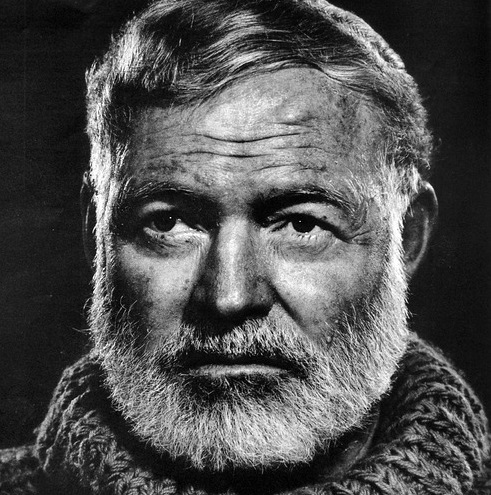
A Farewell to Arms


Ernest Miller Hemingway (1899-1961)

New York: The Modern Library, 1932.


It’s been a while since I read Hemingway.

A Farewell to Arms is a slow starter, and again I learned to pace myself without too much trouble. The action is restrained but steady, and again I realized gradually that a key element is the relentlessly realistic dialogue.

The American protagonist, Frederick Henry, is involved in every scene. The life of the book is his life. His recurring, desultory involvement in his own life and his role in the Italian Army during World War I is the backdrop of his elaborately recounted relationship with the nurse, Catherine Barkley.

A Farewell to Arms doesn’t really seem to be a war novel. On the other hand, except for brief interludes, the characters really don’t seem to be at peace. For Frederick Henry, it’s an ironic farewell.

*   *   *   *   *   *

Book review. Copyright © Richard Carl Subber 2020 All rights reserved.


Book review: Seven Gothic Tales

by Isak Dinesen

her lush and memorable stories…

click here

Above all: Poems of dawn and more with 73 free verse poems,
and the rest of my poetry books are for sale on Amazon (paperback and Kindle)
and free in Kindle Unlimited, search Amazon for “Richard Carl Subber”


*   *   *   *   *   *

Book review: Shooting an Elephant and Other Essays

Book review: Shooting an Elephant and Other Essays

a discursive ramble…


Book review:

Shooting an Elephant and Other Essays


by George Orwell (1903-1950)

Jeremy Paxman, intro.

New York: Penguin Books, 2009

375 pages


Of course, Shooting an Elephant has Orwell’s must read piece: “Politics and the English Language” (1946).

“Why I Write” is a peacefully discursive ramble in the mind of a consummate writer. Orwell candidly says “…I think there are four great motives for writing, at any rate for writing prose.”

These are:

  1. Sheer egoism—“It is sheer humbug to pretend that this is not a motive, and a strong one.”
  2. Aesthetic enthusiasm—“Perception of beauty in the external world, or, on the other hand, in words and their right arrangement.”
  3. Historical impulse—“Desire to see things as they are, to find out true facts and store them up for the use of posterity.”
  4. Political purpose—“using the word ‘political’ in the widest possible sense. Desire to push the world in a certain direction, to alter other people’s idea of the kind of society that they should strive after.”

“Bookshop Memories” is half a martini’s worth of good reading for any book lover who has spent a little time (or a lot of time) in an old used book store that has that old book smell, and shelves stuffed with books from floor to ceiling so you have to kneel down to inspect the ones on the bottom shelf, and an old guy with a careless beard at the ancient cash register, and a cat that can’t be bothered to pay any attention to the loitering bibliophiles…

Orwell is one of the types of writer that Coleridge had in mind when he mentioned that good prose is “words in their best order.”

Paxman’s introduction is a decent substitute for a reflective conversation with Orwell about writing.

Shooting an Elephant has almost two dozen examples of what Orwell could do with pen and paper. He died too young.

*   *   *   *   *   *

Book review. Copyright © Richard Carl Subber 2019 All rights reserved.

Above all: Poems of dawn and more with 74 free verse poems,
and the rest of my poetry books are for sale on Amazon (paperback and Kindle)
and free in Kindle Unlimited, search Amazon for “Richard Carl Subber”

*   *   *   *   *   *

Pin It on Pinterest