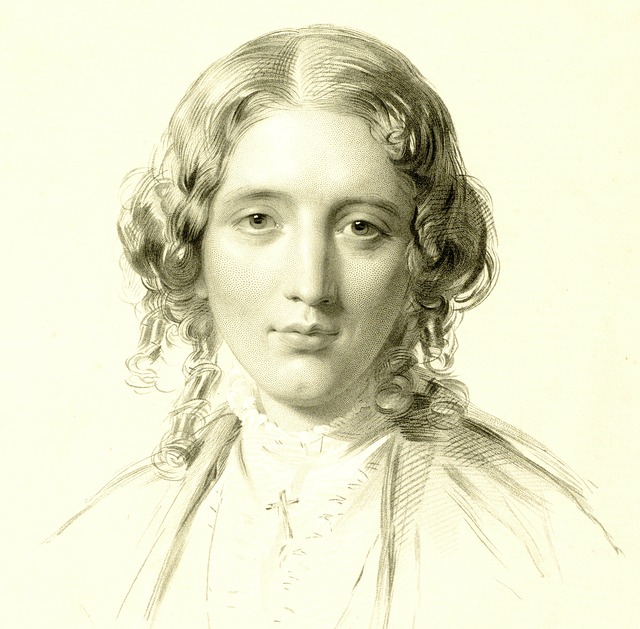
On the Beach by Nevil Shute (book review)

On the Beach by Nevil Shute (book review)

It’s worth a second read…


Book review:

On the Beach


by Nevil Shute (1899-1960)

New York: Vintage International, Vintage Books, 1957

312 pages


I could not read On the Beach again without taking on some of the terminal burden of the characters. I awakened some of my disturbing memories (Weltschmerz, perhaps) of reading it the first time, almost 60 years ago.

Maybe you think you know the story line: in the aftermath of worldwide nuclear destruction, an inescapable deadly radioactive miasma is finally devastating Australia. The land down under is the last refuge of human beings on the planet.

All of them know they’re going to die in a couple months. Many of them choose to live as if they don’t know it.

The reader doesn’t need to apply much imagination. On the Beach is a baldly powerful chronicle of the unyielding imperatives of human nature, including the impulse to work side by side with someone you love, planting a garden, hoping to share a rich crop next year, ignoring the darkness in the northern sky.

Nevil Shute’s story is not out of date.

I desperately fear that my grandchildren may be re-reading this book as they survive in the hills, trying to ignore the advancing seas below.

*   *   *   *   *   *

Book review. Copyright © Richard Carl Subber 2020 All rights reserved.


Book review: Shantung Compound

They didn’t care much

        about each other…

by Langdon Gilkey

click here

As with another eye: Poems of exactitude with 55 free verse and haiku poems,
and the rest of my poetry books are for sale on Amazon (paperback and Kindle)
and free in Kindle Unlimited, search Amazon for “Richard Carl Subber”

*   *   *   *   *   *
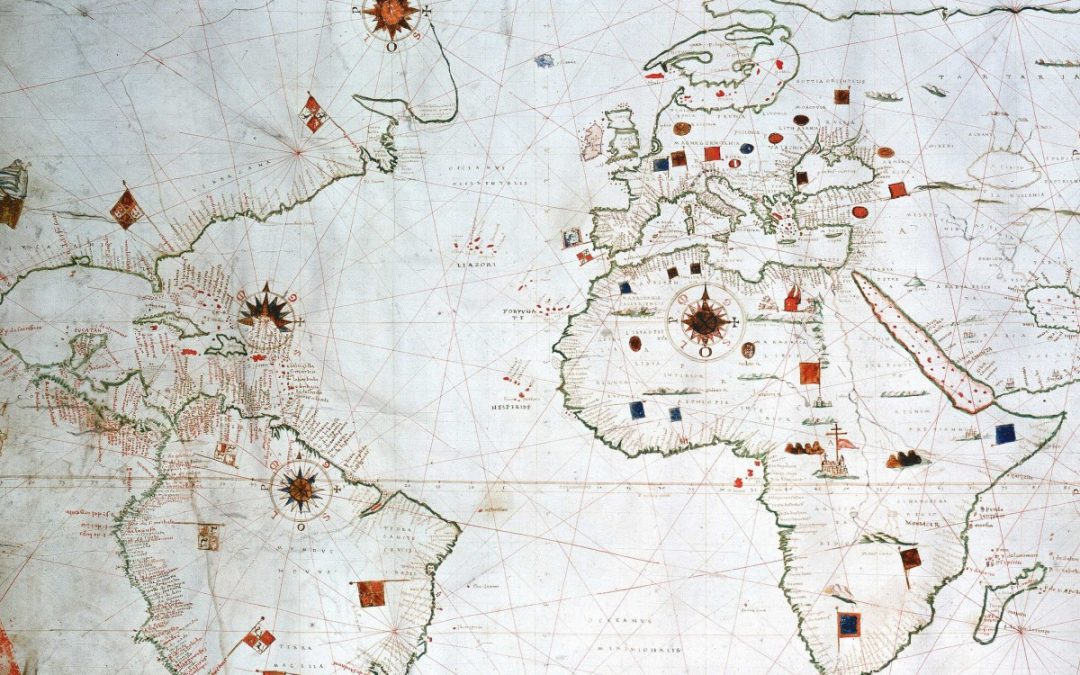
Book review: The Lost History of Stars

Book review: The Lost History of Stars

…a painful growth to womanhood…


Book review:

The Lost History of Stars


by Dave Boling (b1951)

Chapel Hill, NC: Algonquin Books of Chapel Hill, 2017

340 pages


This is a delicate story about sturdy people who try to preserve loving relationships in a brutal war.

It is an emotionally rasping challenge to read so much reserved conversation about the monstrous incivilities, tribulations, and hardships of Dutch farmers and their families who opposed the British Tommies during the Boer War (1899-1902) in South Africa.

Lettie, the 14-year-old oldest daughter on the Venter family homestead, cannot avoid her painful growth to womanhood. Against the agonizing deprivations and losses caused by the war, she matches her very innocent courage and her freshening longing for love.

Bina is a young African woman who teaches Lettie that “deeds live.”

In time Lettie learns that deeds live in hearts, and that hearts can be broken, and that lives can be remade with loved ones who survive.


(Image courtesy of Boer War Colourised Photographs on Wikimedia)

*   *   *   *   *   *

Book review. Copyright © Richard Carl Subber 2019 All rights reserved.


Book review: Seven Gothic Tales

by Isak Dinesen,

these are such lush and memorable stories…

click here

Writing Rainbows: Poems for Grown-Ups with 59 free verse and haiku poems,
and the rest of my poetry books are for sale on Amazon (paperback and Kindle)
and free in Kindle Unlimited, search Amazon for “Richard Carl Subber”

*   *   *   *   *   *
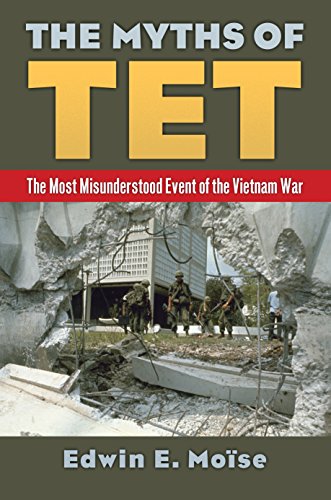
Book review: Mila 18

Book review: Mila 18

…the supermen were underground…


Book review:

Mila 18


by Leon Uris (1924-2003)

American writer, World War II veteran

Garden City, NY: Doubleday & Company, Inc., 1961

442 pages


Whatever you think you know about the Warsaw ghetto uprising in 1943, you’ll know more after you read Mila 18.

Leon Uris wrote a historically detailed work of realistic fiction that will fill you with gagging horror, and with endless respect for the brave Jewish fighters who kept the Nazi killing machine at bay for a month in 1943.

About 13,000 Jews died in the burning buildings, in the bunkers, and in the sewers inside the ghetto.

Their main resistance command post was in an underground bunker located at ulica Miła 18.

It’s an almost inconceivable irony that the Polish street address can be translated as “18 Pleasant Street.”

*   *   *   *   *   *

Book review. Copyright © Richard Carl Subber 2019 All rights reserved.


Book review: The Bartender’s Tale

Ivan Doig’s story, I mostly loved it…

click here

Above all: Poems of dawn and more with 74 free verse poems,
and the rest of my poetry books are for sale on Amazon (paperback and Kindle)
and free in Kindle Unlimited, search Amazon for “Richard Carl Subber”

*   *   *   *   *   *

Book review: The Map of Knowledge

much was not lost…


Book review:

     The Map of Knowledge:

     A Thousand-Year History

     of How Classical Ideas Were Lost and Found


Violet Moller

New York: Doubleday, 2019

312 pages


It’s quite possible that Moller offers much more than you already know about Euclid’s The Elements (c300 BCE). and Ptolemy’s The Almagest, (c150 CE), and the many published works on anatomy and medicine by Galen (130-210 CE).

The Map of Knowledge is a scholarly account of the preservation of knowledge from ancient times to the present day. I bet you can guess that it’s not a beach book.

Moller forgot to mention that throughout the centuries, most human beings on the planet couldn’t read or write, and so it was the lucky, the gifted, and the self-selected few who preserved important knowledge for the benefit of succeeding generations. Think about a version of Fahrenheit 451, stretched over the centuries.

Go ahead, read Fahrenheit 451 again. Do it.

*   *   *   *   *   *

Book review. Copyright © Richard Carl Subber 2019 All rights reserved.


Book review: Tales from Shakespeare

pretty good summaries by Charles and Mary Lamb…

click here

As with another eye: Poems of exactitude with 55 free verse and haiku poems,

and the rest of my poetry books are for sale on Amazon (paperback and Kindle)

and free in Kindle Unlimited, search Amazon for “Richard Carl Subber”


*   *   *   *   *   *
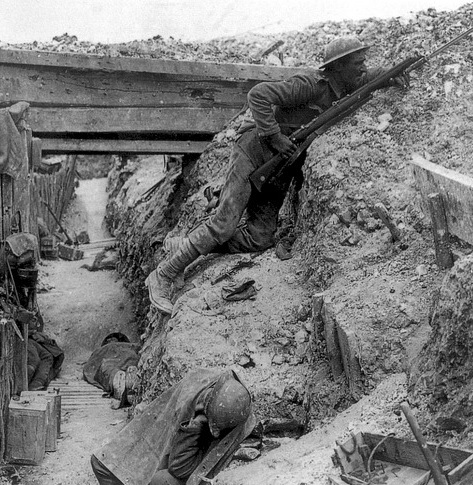
Book review: The Comanche Empire

Book review: The Comanche Empire

“…conquerors who saw themselves

        more as guardians…”


Book review:

The Comanche Empire


by Pekka Hämäläinen

New Haven: Yale University Press, 2008.


This book will change your mind about how the West was won.

Hint: The Comanches got there first.

The Comanches arrived obscurely in the American Southwest in 1706. The Comanche Empire provocatively makes the case that the Comanches created an imposing Southwestern American empire that spanned 150 years. They blunted the 18th century colonial ambitions of the Spanish in Mexico and the French in Louisiana, and stalled the westward thrust of Americans and the U.S. government until the middle of the 19th century. A broad coalition of Comanche rancheria chiefs throughout the territory of Comancheria first dominated the Apaches, eventually turned against their Ute allies, and commercially or militarily subjugated numerous lesser tribes.

Comanches managed a succession of peace treaties and conflicts with the Spaniards and completely blocked their repeated efforts to extend colonial settlements northward from Mexico. The political, commercial and military supremacy of the Comanches was based principally on their success in adopting and adapting Spanish horses for efficient transportation, military power, and a thriving and lucrative trade in horses throughout the Southwest.

Hämäläinen‘s central argument invites—indeed it obviously provokes—a reasonable dispute about the credibility of his claim for a Comanche empire. Clearly, in classical political or geopolitical usage, the claim is untenable, at least in part; the Comanche empire had neither fixed borders, nor a single self-sustaining centralized supreme authority, nor a durable bureaucracy, nor a definitive political structure.

Comanche girls wikimedia Comanche_girlsNevertheless, the Comanches had a respected, recurring broadly representative council of chiefs that planned and organized extensive raids, trading and other commerce, and military operations. Their hunting, pasturing, and trading territories had indistinct geographic borders that were never surveyed or adjudicated; Comanches never sought to occupy and permanently control any specifically delineated territory. In The Comanche Empire, Hämäläinen says they were “conquerors who saw themselves more as guardians than governors of the land and its bounties.” Nonetheless, the geographical extent of the their domains was well known, respected and enforced by the Comanches.

Each Comanche rancheria had its own geographic territory, rigorous socio-military culture and hierarchical organization. The situational circumstances of Comanche military superiority, their control of trade  and their ability through the decades to repeatedly impose and maintain obviously favorable terms in their treaty and trade agreements are undeniable evidence of the Comanches’ extended dominance of terrain, physical resources, culture and commerce, and, not least in importance, the Spanish and French colonial enterprises that sought to compete with them.

For decades the Comanches set the terms of their success; no competing power could defeat them, and no Indians or Europeans could evade the Comanches’ dominance in their domain.

It becomes obvious: the Comanches created a de facto empire.

Ultimately, they were marginalized by a combination of drought that constrained their bison hunting and weakened their pastoral horse culture, disruption of trade that limited their access to essential carbohydrate foodstuffs, epidemic disease that repeatedly thinned the Comanche populations, predatory bison hunting by the Americans in the early 1870s that wiped out the Indians’ essential food resource, and, finally, by the irresistible tide of U.S. government-sponsored westward migration that pushed American citizens into Comanche territory.

Too bad the Comanches left no accounts of their own. It would be fascinating to hear this story in their own words.

*   *   *   *   *   *

Book review. Copyright © Richard Carl Subber 2019 All rights reserved.


many waters: more poems with 53 free verse poems,
and the rest of my poetry books are for sale on Amazon (paperback and Kindle)
and free in Kindle Unlimited, search Amazon for “Richard Carl Subber”

*   *   *   *   *   *
Book review: Lafayette by Harlow Unger

Book review: Lafayette by Harlow Unger

A hero, not a saint


Book review:

Lafayette


by Harlow Giles Unger (b.1931)

Hoboken, NJ: John Wiley & Sons, Inc., 2002

452 pages


I acknowledge the obvious: Unger fully entertains in recounting that Marie-Joseph-Paul-Yves-Roch-Gilbert du Motier de la Fayette was a national, military, political and, indeed, a paternal hero to millions in America and France during the American and (several) French revolutions.

There is no doubt that, despite the fact that he was one of the richest French nobles of his time, Lafayette was publicly and privately dedicated to republican government and a social/economic order that was far more egalitarian than the monarchical and aristocratic structures that prevailed.

Was he a great man? Unger, like many of his biographers, says yes. Lafayette was a courageous battlefield leader, he was an enlightened manorial lord who enhanced the lives of his peasants, and he was both outspoken and fearless, repeatedly, in literally dangerous political situations for a couple decades in Revolutionary and Napoleonic France. Unger amply—even poetically—demonstrates these lifelong characteristics of the man Americans called “our Marquis.”

I also feel obliged to call attention to some countervailing factors that Unger fully describes but does not adequately interpret.

Lafayette put his money where his mouth was. He repeatedly used his great personal wealth to pay and outfit the troops he commanded, when government funds and supplies ran low. I suggest a case could be made that the Marquis, uniquely among American commanders, paid for his military success in the Revolutionary War. Throughout the war, the options and operations of colonial commanders were significantly hindered by short funds and short supplies. If Lafayette had not been able to pay, feed, clothe, and arm his troops with his personal resources, could he have been as winning a general as he was? I suspect the answer is “No.”

Some biographers refer to Lafayette as the “victor” at Yorktown in 1781. Unger calls him a “hero” of Yorktown. Lafayette was not the only American general at Yorktown, and he wasn’t the only French general. Lafayette did use his small force to isolate Cornwallis in Yorktown, but he had to wait until Washington, Rochambeau and others arrived with sufficient forces before he participated in the final assaults.

In France he repeatedly declined to step up to the plate and take executive leadership, during the revolutionary and Napoleonic convulsions, when the French people and the contentious military/political factions would have handed the throne or the presidency of France to him on a velvet pillow. The Marquis repeatedly risked his life to defuse explosive situations by his personal, courageous intervention. However, Unger fastidiously details Lafayette’s repeated reluctance to take the final step and take control when, arguably, he could have stabilized dangerous situations, and forestalled or prevented catastrophic consequences. Lafayette wasn’t responsible for the violence, but, time after time, he left a void that unfortunately was filled by lesser men.

Was Lafayette a great man? Yes. A successful general? Yes. Was he a really lucky guy? Yes. Did he and his reputation benefit immensely from great wealth and fortuitous circumstances? Yes. Did he live up to his potential in serving France and the French nation? Maybe not.

There’s just one other thing: Unger profligately demonstrates that Lafayette and Washington had a deeply affectionate man-to-man—explicitly, like father and son—relationship, by using far too many excerpts from their numerous letters. It’s no biggie, but I had to stop reading them about halfway through the book…they bonded, I get it.

*   *   *   *   *   *

Book review. Copyright © Richard Carl Subber 2018 All rights reserved.

As with another eye: Poems of exactitude with 55 free verse and haiku poems,
and the rest of my poetry books are for sale on Amazon (paperback and Kindle)
and free in Kindle Unlimited, search Amazon for “Richard Carl Subber”

*   *   *   *   *   *

Follow Rick on Facebook

Thoughtful book reviews by Rick Subber

Nothing Found

Pin It on Pinterest