Book review: Saint Joan

Book review: Saint Joan

Shaw’s calm dissection

      of the myths…


Book review:

Saint Joan


by George Bernard Shaw

Baltimore, MD: Penguin Books, 1964

159 pages, with extended Preface by Shaw and Epilogue


I read Saint Joan as a high school kid in 1964. I don’t remember much about that reading, except that I never forgot these words that Shaw wrote for his Joan: “I cannot bear to be hurt.”

It always seemed to me that Jehanne d’Arc (c1412-1431) could be the symbol of an innocent, profoundly driven young woman who was victimized by events that made a sweep in history, yet had only personal inspiration for her.

Joan of arc drawing wikimedia 1429 Contemporaine_afb_jeanne_d_arc

Sketch of Joan from life, 1429

In France, Joan is familiar as “the maid.” Did “la pucelle d’Orléans” (the maid of Orleans) really see and hear the Archangel Michael, St. Margaret, and St. Catherine? Who knows? Was Jehanne a religious nutcase who made confession every day and liked to play soldier? Who knows? Did she inspire great and not-so-great men to do mighty and courageous things in the service of their masters and for the glory of France? She did.


Shaw’s lengthy Preface to his play is a calm dissection of the myths and reality of this young woman, a noble and pitiable mover-and-shaker who led French armies to victory and who was burned at the stake for heresy and for cross-dressing. In Saint Joan, Shaw has few kind words for the men who resisted, accepted, honored, used, betrayed, burned, and finally beatified a peasant girl from Domrémy-la-Pucelle in northeastern France.

The folks in her home town finally named the village for her in 1578. You could say it was the least they could do while they were waiting for the Catholic church to make her a saint in 1920.


Shaw’s sympathetic treatment of The Maid inspired me to write this poem:


la pucelle


Joan, Joan, Joan…

O, you trusted your dream,

you thought it was enough to heed your voices,

you thought that God was on your side

and nothing else mattered,

you risked your beautiful soul

to save France,

and you didn’t understand

that too many of the men wanted

to win something else,

you went to the fire believing

in an eternity of goodness,

and you never knew

how little of your dream was left

for the people who loved you.


October 22, 2018

Inspired by George Bernard Shaw’s Saint Joan

My poem “la pucelle” was published in my fourth collection of 55 poems, As with another eye: Poems of exactitude. You can buy it on Amazon (paperback and Kindle), or get it free in Kindle Unlimited (search for “Richard Carl Subber”)

*   *   *   *   *   *

Book review. My poetry. Copyright © Richard Carl Subber 2018 All rights reserved.


As with another eye: Poems of exactitude with 55 free verse and haiku poems,
and the rest of my poetry books are for sale on Amazon (paperback and Kindle)
and free in Kindle Unlimited, search Amazon for “Richard Carl Subber”

*   *   *   *   *   *

Follow Rick on Facebook

Thoughtful book reviews by Rick Subber

Nothing Found

Oops, Columbus didn’t “discover” America

Oops, Columbus didn’t “discover” America

America was already

    an “old world”…


October 12, 2025, was the 533rd anniversary of the “discovery” of “the New World” by Christopher Columbus.

Columbus and his men made landfall in the Bahamas, possibly on what is now called San Salvador Island, on October 12, 1492. You may know the song: “the Nina, the Pinta, the Santa Maria, were sailing vessels three…”

Let’s cut to the chase: Columbus never “discovered” America. He never saw the North American continent, much less set foot on it. Columbus made four voyages across the Atlantic Ocean and did a lot of snooping around the Caribbean islands and the northern coast of South America.

An adventurer named Juan Ponce de León gets the teddy bear for being the first European to wade ashore on the coastline of what is now the continental United States. He explored the coast of a land mass that he named “Florida” more than 20 years after the first Columbus gig—on April 2, 1513, de León and his men landed (possibly at the place we now call St. Augustine) and claimed the territory for Spain.

Of course, the Europeans were late to the party.

At least millions of native Americans—probably tens of millions—had been living on the North American continent for thousands of years before the smelly, hairy white men from Europe barged in.

*   *   *   *   *   *

Copyright © Richard Carl Subber 2018 All rights reserved.


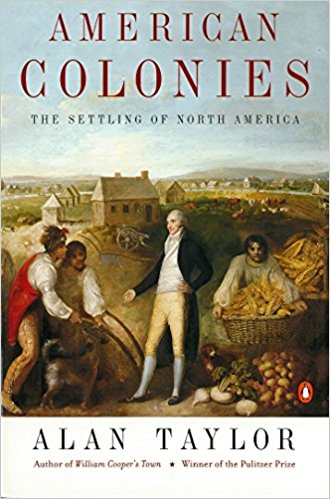
Book review: American Colonies

you see, so many and so much

    came before the Pilgrims

by Alan Taylor

click here

My first name was rain: A dreamery of poems with 52 free verse and haiku poems,
and the rest of my poetry books are for sale on Amazon (paperback and Kindle)
and free in Kindle Unlimited, search Amazon for “Richard Carl Subber”

 *   *   *   *   *   *

Follow Rick on Facebook

Thoughtful book reviews by Rick Subber

Nothing Found

Book review: Who Built America?

Book review: Who Built America?

…men who brought

    their own shovels to work…


Book review:

Who Built America?

Working People

   and the Nation’s Economy,

   Politics, Culture, and Society,

   Vol. 1 To 1877


by Christopher Clark and Nancy A. Hewitt

New York: Worth Publishers, 2000

721 pages, with a substantial Appendix and index


Who Built America? is a comprehensive, widely sourced reference work that tackles the story of the actual building of America and our cities, commerce/industries, and infrastructures.

Clark and Hewitt give full respect to the groups of people who labored to do so: native Americans, women and children, minorities, and immigrants are fully credited.

I think that a useful feature is the summary chronology and suggested complementary readings at the end of each chapter.

Who Built America? is a go-to reference for any serious student of American history.

Volume 2, covering the Reconstruction through the end of the 20th century, is an equally appealing component of this series published by the American Social History Project, City University of New York.

This 2000 edition of Who Built America? was written by Christopher Clark and Nancy A. Hewitt, based on the original edition written by Levine, Brier, Brundage, Countryman, Fennel, and Rediker.

*   *   *   *   *   *

Book review. Copyright © Richard Carl Subber 2018 All rights reserved.


Book review: Forced Founders

by Woody Holton

The so-called “Founding Fathers”

weren’t the only ones

who helped to shape our independence…

click here

As with another eye: Poems of exactitude with 55 free verse and haiku poems,
and the rest of my poetry books are for sale on Amazon (paperback and Kindle)
and free in Kindle Unlimited, search Amazon for “Richard Carl Subber”


*   *   *   *   *   *

Follow Rick on Facebook

Thoughtful book reviews by Rick Subber

Nothing Found

Book review: John Eliot: The Man Who Loved The Indians

Book review: John Eliot: The Man Who Loved The Indians

…a conversational biography…


Book review:

John Eliot:

The Man Who Loved The Indians


by Carleton Beals

New York: Julian Messner, Inc., 1957

192 pages


This is an entertaining biography of the Puritan minister who was known during his lifetime (1604-1690) as the “Apostle to the Indians.” Rev. John Eliot was the colonial leader who was most influential in cooperating with Indian leaders to establish the “Praying Indian” towns in the Massachusetts Bay Colony.

Beals creates a fictionalized biography of convenient length. The narrative is filled with dialogue that is relevant to the story, but is, of course, completely inauthentic in the sense that there is only a fragmentary record of Eliot’s conversations with his fellow colonials and with American Indians. This isn’t a big deal. However, Beals’ conversational tone is not to my taste for serious biographical treatments.

John Eliot: The Man Who Loved The Indians is based on substantial research and offers a bibliography of 46 sources, including many that are well respected and well known to historians and students of the colonial period. There is a useful index.

Beals offers an appealing, if one-sided, complement to serious investigation of cultural and political dynamics in 17th century New England.

Caveat: Beals, without apology, writes his story using the European context. To be sure, Waban and the other Indians are characters in the story.

Beals doesn’t spend a lot of time on the brutality of their demise.

*   *   *   *   *   *


Book review. Copyright © Richard Carl Subber 2018 All rights reserved.


Book review: The Reader (Der Vorleser)

It’s more than a rehash of WWII…

by Bernhard Schlink

click here

My first name was rain: A dreamery of poems with 52 free verse and haiku poems,
and the rest of my poetry books are for sale on Amazon (paperback and Kindle)
and free in Kindle Unlimited, search Amazon for “Richard Carl Subber”

*   *   *   *   *   *

Follow Rick on Facebook

Thoughtful book reviews by Rick Subber

Nothing Found

Book review: John Eliot: “Apostle to the Indians”

Book review: John Eliot: “Apostle to the Indians”

…a very busy life…


Book review:

John Eliot: “Apostle to the Indians”


by Ola Elizabeth Winslow (1885-1977)

Boston: Houghton Mifflin Company, 1968

225 pages


John Eliot is a detailed, respectful biography of the mid-17th century Puritan minister who organized Praying Indian towns in the Massachusetts Bay Colony and translated (with the help of James the Printer and other Indians) the Geneva Bible into the Algonquian language of the eastern Massachusetts Indians.

Winslow offers a  competent account of Eliot’s very busy life, and provides decent political and sociological context for his personal, tenacious, and domineering commitment to “civilize” the Indians and convert them to Christianity. Eliot’s tribulations and triumphs are clearly presented, and Winslow underscores the judgment of his contemporaries and of three centuries of scholarship that demonstrate that Eliot was a vigorous, decent, and exemplary man who did his lifelong best to promote the welfare of the Indians—as he conceived it.

There is a useful index, an extensive bibliography, and instructive notes to the text.

Caveat: Prof. Winslow was no ethnohistorian, and she wrote in a style that may be more valuable to a student than to a sincere historian. She endorses, without any apparent reluctance, the discredited conception of the indigenous Indians as “savages” who were “degraded” and burdened with “dark” minds that invited the self-conceived redemptive efforts of the colonists to “civilize” them and bring them into the English church.

This careless error—indeed, this gratuitous insult to 17th century native Americans who had a vibrant culture, lifestyle, and faith—is a very annoying distraction.

*   *   *   *   *   *

Book review. Copyright © Richard Carl Subber 2018 All rights reserved.


A poet is a “maker”

…and it doesn’t have to rhyme…

click here


many waters: more poems with 53 free verse poems,
and the rest of my poetry books are for sale on Amazon (paperback and Kindle)
and free in Kindle Unlimited, search Amazon for “Richard Carl Subber”


*   *   *   *   *   *

Follow Rick on Facebook

Thoughtful book reviews by Rick Subber

Nothing Found

Book review: Harriet Beecher Stowe: A Spiritual Life

Book review: Harriet Beecher Stowe: A Spiritual Life

a zealous missionary

           without portfolio…


Book review:

Harriet Beecher Stowe:

A Spiritual Life


by Nancy Koester

William B. Eerdmans Publishing Company, Grand Rapids, MI, 2014

371 pages, with index


A Spiritual Life is a robust telling of the story of Harriet Beecher Stowe.

From the first page to the last, you can’t doubt that Stowe cared deeply about most aspects of private life, her faith, and the all-encompassing religious framework of the civitas. As a woman in the mid-19th century, she was a zealous missionary without portfolio.

No surprise here, Koester gives comprehensive analysis of the writing and impact of Uncle Tom’s Cabin (published 1852). It was a best-seller in the United States and in Great Britain. It moved multitudes to hate slavery or hate Harriet Beecher Stowe. It did not, despite President Lincoln’s mocking jest when he met Stowe at the White House, start “this great war.” During the run-up to the American Civil War, Uncle Tom’s Cabin did help to clarify existing polemical doctrines of opposing camps.

Koester’s aim is to illuminate Stowe’s spiritual life and her very public commitment to advocating her faith and the importance of religious observance and conviction.

If that’s not to your taste, I think reading A Spiritual Life will be drudgery. For me, it was illuminating.

For my taste, Koester mentions but does not usefully detail the context of other aspects of Stowe’s life and impact on American society. She was a woman who conspicuously did not abide by the social conventions that dictated a passive, private, familial role for women. She wrote and was published extensively (I was surprised to learn that she was a prolific writer, including novels, tracts and political broadsides). She had lots of contact with the great and near-great, including President Lincoln and Queen Victoria. Stowe more or less supported her extended family with her writing—it would be interesting to know how much money she made from her writing, because Stowe persisted in a socially risky career and lifestyle that might have been unattainable without a (relatively) high income. I suspect that Stowe was not one of the 99% in her time.

Koester nobly attempts to make her case that Harriet Beecher Stowe was a mover and shaker, non pareil, in the anti-slavery movement before, during and after the Civil War. I suggest that this is a circumstantial biography of a notable lady who was notably revered—and notably tolerated—by a great many of her contemporaries.

If the South actually had won the Civil War, I think it’s possible that Uncle Tom’s Cabin, and Harriet Beecher Stowe, would be more than a tad less familiar to us.

*   *   *   *   *   *

Book review. Copyright © Richard Carl Subber 2018 All rights reserved.

-​

many waters: more poems with 53 free verse poems,
and the rest of my poetry books are for sale on Amazon (paperback and Kindle)
and free in Kindle Unlimited, search Amazon for “Richard Carl Subber”

*   *   *   *   *   *

Follow Rick on Facebook

Thoughtful book reviews by Rick Subber

Nothing Found

Pin It on Pinterest