by Richard Subber | Nov 12, 2024 | Book reviews, Books, History, Human Nature, World history
a corpse in the mirror
Book review:
Night
by Elie Wiesel (1928-2016)
Buchenwald survivor
Stella Rodway, trans.
New York: Bantam Books, 1958
109 pages
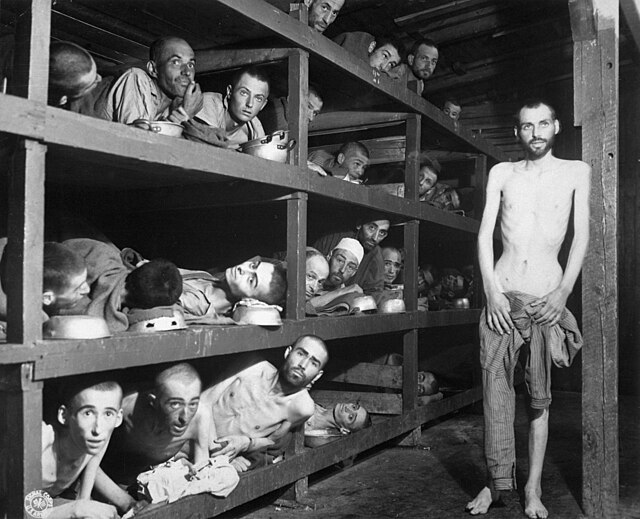
In Night, Elie Wiesel tells his story of being a teenage boy in the death camps of Nazi Germany during World War II.
He uses the necessary words, and he speaks from the depths.
Wiesel lost his mother, his father, and his young sister in the camps.
He was liberated from Buchenwald by American soldiers on April 11, 1945.
Wiesel recalls that after he was freed, he saw his reflection in a mirror for the first time since he was transported:
“From the depths of the mirror, a corpse gazed back at me.”
* * * * * *
Book review. Copyright © Richard Carl Subber 2024 All rights reserved.
Home Team: Poems About Baseball (book review)
Edwin Romond hits one more homer…
–
Writing Rainbows: Poems for Grown-Ups with 59 free verse and haiku poems,
and the rest of my poetry books are for sale on Amazon (paperback and Kindle)
and free in Kindle Unlimited, search Amazon for “Richard Carl Subber”
* * * * * *

by Richard Subber | Sep 22, 2024 | Book reviews, Books, History, Human Nature, Power and inequality, World history
not everything is vanity
Book review:
The Bombing of Auschwitz:
Should the Allies have Attempted It?
Michael J. Neufeld and Michael Berenbaum, eds.
New York: St. Martin’s Press, 2000
350 pages with extensive notes, bibliography, and index
The Bombing of Auschwitz: Should the Allies have Attempted It? is a retrospective, somewhat repetitive but broadly didactic selection of 15 arguments for and against the bombing of Auschwitz, with more than 40 primary source documents.
You’ll learn a lot about the terrible dilemma that the Allies faced—and some of them tried to ignore—during World War II. If the Allies had tried to bomb the crematoria, would Jewish lives have been saved? At what cost to the overall war effort?
Neufeld and Berenbaum offer 15 points of view, but, of course, the questions can’t be answered with full confidence.
Sadly, we can’t re-do the solitary track of history.
* * * * * *
Book review. Copyright © Richard Carl Subber 2024 All rights reserved.
Book review: Lord of the Flies
Never more relevant…
by William Golding
–
Seeing far: Selected poems with 47 free verse and haiku poems,
and the rest of my poetry books are for sale on Amazon (paperback and Kindle)
and free in Kindle Unlimited, search Amazon for “Richard Carl Subber”
* * * * * *
by Richard Subber | Jun 1, 2024 | American history, Book reviews, Books, History, World history
imagine that you had been there…
Book review:
Countdown 1945:
The Extraordinary Story of the Atomic Bomb
and the 116 Days That Changed the World
by Chris Wallace with Mitch Weiss
New York: Avid Reader Press, 2020
312 pages
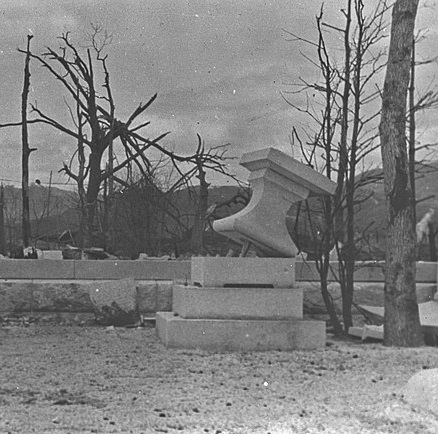
There is quite tolerable intensity in Countdown 1945, in tandem with the horror of the use of the atomic bomb in Japan at the end of World War II.
There are gripping revelations from all of the principals involved in the development of the bomb and the decision to use it. There is dialogue more or less on every page. Countdown 1945 is not so much a book as it is the integration of tales told by the men and women who were there, doing it, and living through it.
This is one of the very few books I’ve read from cover to cover in the past several years.
It was a learning experience, and I was completely aware that I was vicariously sharing the terrible experiences of the folks who had anything to do with Little Boy and Fat Man.
* * * * * *
Book review. Copyright © Richard Carl Subber 2024 All rights reserved.
“The beginning is always today.”
(quote, Mary Shelley)
so get started…
My first name was rain: A dreamery of poems with 52 free verse and haiku poems,
and the rest of my poetry books are for sale on Amazon (paperback and Kindle)
and free in Kindle Unlimited, search Amazon for “Richard Carl Subber”
* * * * * *

by Richard Subber | May 12, 2024 | Book reviews, Books, History, Human Nature, Power and inequality, World history
energy is the bottom line…
Book review:
Foragers, Farmers, and Fossil Fuels:
How Human Values Evolve
by Ian Morris
Princeton, NJ: Princeton University Press, 2015
Contributors:
Richard Seaford
Jonathan D. Spence
Christine M. Korsgaard
Margaret Atwood
369 pages
Ian Morris says right up front that not everyone thinks he’s got it exactly right, but his story is an eye opener: how are human values and moral norms related to how human beings use energy?
Human beings need energy to survive, and obviously we need sources of energy.
The first human-like hunter-gatherers used energy that they could kill or pick up, and the first farmers planted their energy sources and domesticated a few animals, and now we depend (fatally?) on fossil fuel energy to live our lives.
Morris explains (attributes causes for) the different ways of “capturing” energy that are connected to how we feel about ourselves and how we deal with others.
If you think you’re satisfied with what you know about your code of values and the “do unto others…” stuff, then read Foragers, Farmers, and Fossil Fuels and learn some actual new stuff.
* * * * * *
Book review. Copyright © Richard Carl Subber 2024 All rights reserved.
Book review: The Map of Knowledge
it’s a slo-mo version of Fahrenheit 451
by Violet Moller
My first name was rain: A dreamery of poems with 52 free verse and haiku poems,
and the rest of my poetry books are for sale on Amazon (paperback and Kindle)
and free in Kindle Unlimited, search Amazon for “Richard Carl Subber”
* * * * * *
by Richard Subber | Oct 3, 2023 | American history, Book reviews, Books, History, World history
a nightmare in slow motion
Book review:
Goodbye, Darkness: A Memoir of the Pacific War
by William Manchester (1922-2004)
Boston: Little, Brown and Company, 1980
401 pages
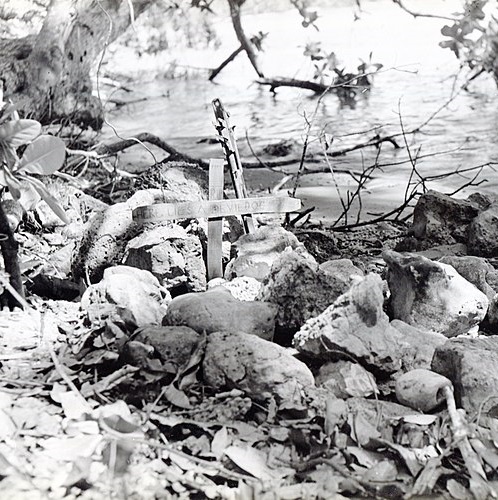
Manchester’s quietly passionate memories of being a young Marine fighting in the Pacific theater in World War II are terrible to behold.
In Goodbye, Darkness he tells all of his story: the good, the bad, and the really hard to read parts.
Reading Goodbye, Darkness means watching another man’s nightmare in slow motion.
* * * * * *
Book review. Copyright © Richard Carl Subber 2023 All rights reserved.
Book review: An Empire on the Edge
by Nick Bunker
Of course the British really wanted to win
the Revolutionary War,
but they had good reasons
for not trying too hard…
–
As with another eye: Poems of exactitude with 55 free verse and haiku poems,
and the rest of my poetry books are for sale on Amazon (paperback and Kindle)
and free in Kindle Unlimited, search Amazon for “Richard Carl Subber”
* * * * * *

by Richard Subber | Sep 5, 2023 | Book reviews, Books, History, World history
more than one Christianity…
Book review:
Christendom:
The Triumph of a Religion, AD 300-1300
by Peter Heather (b1960
New York: Alfred A. Knopf, 2022
704 pages
Christendom is not a cheerleading book written by a true believer.
Heather makes it plain that Christianity never had an unchallenged inside track to be the dominant religion in the Western world, although it has predominated for centuries.
There was more than one variety of Christianity from the beginning, and papal leadership was not established until the 11th century.
Christian leadership is a largely manmade circumstance.
The reader has the opportunity to learn much about the Christian church and Christendom that was unacknowledged until historians started to dig deeper in the modern era.
* * * * * *
Book review. Copyright © Richard Carl Subber 2023 All rights reserved.
Book review: Seven Gothic Tales
by Isak Dinesen,
these are lush and memorable stories…
–
In other words: Poems for your eyes and ears with 64 free verse and haiku poems,
and the rest of my poetry books are for sale on Amazon (paperback and Kindle)
and free in Kindle Unlimited, search Amazon for “Richard Carl Subber”
* * * * * *
