by Richard Subber | Apr 9, 2026 | Joys of reading, Language, Reviews of other poets
I’m open to being tantalized…
“We are the hollow men
We are the stuffed men”
from “The Hollow Men,” 1925, by T. S. Eliot
Thomas Stearns Eliot (1888-1965)
American-British writer, popularly acclaimed as a great poet of the 20th century
At long last, I’ve tried T. S. Eliot’s poetry.
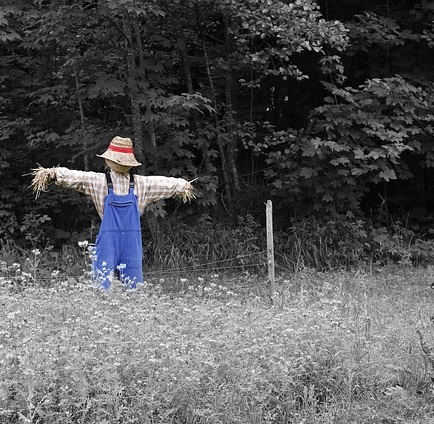
I respectfully think that T. S. Eliot’s poetry is a bloomin’ wasteland…
Maybe I’ll put Collected Poems of T. S. Eliot back on the shelf, and try again after a while.
Maybe not.
It’s not that I mind Eliot’s deliberate contradictions so much. I’m willing to be provoked. I’m open to being tantalized. I’m ready to be pushed or pulled outside my comfort zone.
The sticky point for me, with Eliot’s poetry, is that I never seem to get to the point, or maybe I simply don’t get the point. When I get to the end of one of his longish poems, I’m really not sure where I started, or where I wandered, or where I arrived.
I find little coherence in Eliot’s words and phrases and passages.
I think of myself as a wordsmith, and I love the beauty of elegant phrases and shimmering, specific, steely, selective, stately, splendid words that tell a delicious story or evoke a bloom of emotion.
For my taste, T. S. Eliot’s poetry isn’t tasty, and it’s a bloomin’ wasteland of jumbled words, fractured images, and unfinished imaginations.
If you’re wondering where all the flowers have gone, don’t look for answers in Eliot’s work.
Source: T. S. Eliot, Collected Poems of T. S. Eliot (New York: Harcourt, Brace & Company, 1958), 101.
* * * * * *
Copyright © Richard Carl Subber 2026 All rights reserved.
“Fishering,” by Brian Doyle
…what meets the eye…
–
Above all: Poems of dawn and more with 74 free verse poems,
and the rest of my poetry books are for sale on Amazon (paperback and Kindle)
and free in Kindle Unlimited, search Amazon for “Richard Carl Subber”
* * * * * *

by Richard Subber | Mar 15, 2026 | Book reviews, Books, Joys of reading, Language
We’re all connected…
Book review:
The Mother Tongue: English & How It Got That Way
by Bill Bryson (b1951)
New York: Harper Perennial, 1990
270 pages
The Mother Tongue is a fascinating collection of details you haven’t dreamed of about the English language. It’s easy enough to skim the parts that you don’t need to read in detail.
If you think that English stands alone as our primary means of communication, think again, and then think again.
We’re all connected by words, and the connections are everywhere.
As it happens, English is the pre-eminent language of the world. Of course, that doesn’t mean that English speakers are pre-eminent, but it does mean that if the little guys ever step out of the spaceship from Mars, it won’t take them long to figure out which language they want to learn first.
There is a really elaborate bibliography if you want to know more.
* * * * * *
Book review. Copyright © Richard Carl Subber 2026 All rights reserved.
Book review: Shakespeare’s Wife
Germaine Greer went overboard a bit…
–
Above all: Poems of dawn and more with 74 free verse poems,
and the rest of my poetry books are for sale on Amazon (paperback and Kindle)
and free in Kindle Unlimited, search Amazon for “Richard Carl Subber”
* * * * * *

by Richard Subber | Mar 12, 2026 | Language, Reviews of other poets, Tidbits
not the best, but…
“…the mad wind’s night-work,
The frolic architecture of the snow.”
from “The Snow-Storm” (1841) by Ralph Waldo Emerson (1803-1882)
in Vol. 1 of American Poetry: The Nineteenth Century
Generally Emerson’s poetry isn’t the best of the best,
in my mind,
but he does put some of the best words
in the best order sometimes.
* * * * * *
Copyright © Richard Carl Subber 2026 All rights reserved.
“The beginning is always today.”
(quote, Mary Shelley)
so get started…
–
Seeing far: Selected poems with 47 free verse and haiku poems,
and the rest of my poetry books are for sale on Amazon (paperback and Kindle)
and free in Kindle Unlimited, search Amazon for “Richard Carl Subber”
* * * * * *
by Richard Subber | Feb 19, 2026 | Book reviews, Books, Human Nature, Joys of reading, Language
Faulks has so many words that mean “ache”…
Book review:
The Girl at the Lion d’Or
by Sebastian Faulks (b1953)
New York: Vintage International/Vintage Books/A Division of Random House, Inc., 1989.
246 pages
Sebastian Faulks writes about the vagaries of life, the daily choices in our lives, the uncountable futures, and the singularity of the past. We think we remember various pasts, and we may struggle to reconcile them.
In The Girl at the Lion d’Or, Faulks invites us to live in the minds of Hartmann and Anne. Sometimes the reader realizes that confusion is in their minds, usually their failures are clear enough, and their successes of the moments must be cherished for their bounty.
Richly Gallic, redolent of the interwar period in Europe, The Girl at the Lion d’Or is a cumulative revelation of Anne (the girl) and a steadily burdensome understanding of the sad hindrances in her life. She comes to love Hartmann, who is ultimately contemptibly weak and viciously temporizing.
I wanted to read faster near the end so I could learn the outcome, but I resisted the impulse.
Faulks makes it worthwhile to read every word. His prose is tenaciously literate and evocative; he has no mere words—he writes passages that invite the reader to understand deeply and to feel deeply.
* * * * * *
Book review. Copyright © Richard Carl Subber 2026 All rights reserved.
Book review: The Proud Tower
…a lot more than a history book…
by Barbara Tuchman
–
many waters: more poems with 53 free verse poems,
and the rest of my poetry books are for sale on Amazon (paperback and Kindle)
and free in Kindle Unlimited, search Amazon for “Richard Carl Subber”
* * * * * *

by Richard Subber | Dec 25, 2025 | American history, Book reviews, Books, Joys of reading, Language
“…I feel a goneness…”
Book review:
Golden Tales of New England
May Lamberton Becker, ed.
New York: Bonanza Books, 1931
378 pages
Writers used a different kind of language to create feel-good stories in the 19th century.
Golden Tales of New England is a feel-good sample of 17 of them.
You’ll recognize some of the authors: Hawthorne, Thoreau, Louisa Alcott, Oliver Wendell Holmes, Harriet Beecher Stowe…
The others might be new for you, as they are for me, like the offering of Rose Terry Cooke (1827-1892), “A Town Mouse and a Country Mouse.” It’s an authentic, ample exhibition of New England patois and sturdy New England character. Meet “Mandy” and “M’lindy,” two aging sisters who were born Amanda and Melinda, and who were fated to share their living, mostly at a distance but, in the end, so inescapably together.
Here’s Amanda sadly recounting her sister’s death: “I guess I’ve got through…[Melinda] went an’ married that old Parker, an’ then she up and died. I wish’t I’d ha’ stayed with her longer; mabbe she wouldn’t have died. She wa’n’t old; not nigh so old as I be…I feel a goneness that I never had ketch hold o’ me before…”
Hawthorne’s “Old Esther Dudley” is a dainty adoration of a venerable lady who never gave up being a Tory during the Revolutionary War, and persisted in being the almost ghostly guardian of Province House in Boston after the British departed.
The other Golden Tales are equally exotic morsels of what entertained the citizens of the Republic long before television and Twitter.
* * * * * *
Book review. Copyright © Richard Carl Subber 2025 All rights reserved.
–
Above all: Poems of dawn and more with 74 free verse poems,
and the rest of my poetry books are for sale on Amazon (paperback and Kindle)
and free in Kindle Unlimited, search Amazon for “Richard Carl Subber”
* * * * * *
by Richard Subber | Dec 16, 2025 | American history, Book reviews, Books, History, Language, Revolutionary War
what does “self-evident” mean?
Book review:
The Greatest Sentence Ever Written
by Walter Isaacson (b1952)
New York: Simon & Schuster, 2025
67 pages
First, let’s get this straight: it’s worth your time to read this little book.
Maybe you think you know all you want to know about the Declaration of Independence, but I think you’ll learn at least a couple things of interest as you read The Greatest Sentence Ever Written.
For starters, Thomas Jefferson did not “write” the Declaration. He more or less wrote the first draft, and then his committee—including Benjamin Franklin and John Adams—applied their pens, and then the Continental Congress had its final say.
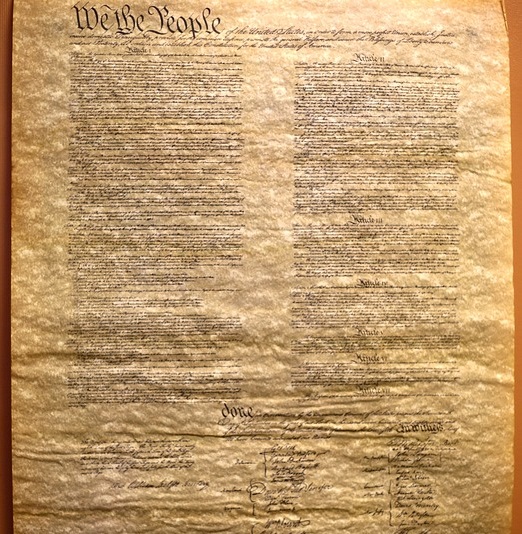
Isaacson’s “greatest sentence” is the second sentence of the Declaration, beginning “We hold these truths to be self-evident…” The words of the sentence had specific meanings for educated men (no ladies in the Congress) with Enlightenment prejudices in the late 18th century, and the committee and Congress changed a number of the words in Jefferson’s draft. For example, Jefferson originally wrote “We hold these truths to be sacred and undeniable…”
Keep these “undeniable” circumstances in mind: in July 1776 no member of the Congress knew how the whole “revolution” thing would turn out, and the Declaration did not start the revolution: the shooting war had started more than a year earlier in Lexington and Concord.
Isaacson is a popular biographer, and this little book is a good example of his writing talents.
For a more in-depth treatment by a noted historian, try reading American Scripture: Making the Declaration of Independence by Pauline Maier.
* * * * * *
Book review. Copyright © Richard Carl Subber 2026 All rights reserved.
Book review: Grace Notes
Is it prose or poetry?
by Brian Doyle
–
many waters: more poems with 53 free verse poems,
and the rest of my poetry books are for sale on Amazon (paperback and Kindle)
and free in Kindle Unlimited, search Amazon for “Richard Carl Subber”
* * * * * *
