
by Richard Subber | Jul 14, 2026 | Human Nature, My poetry, Poetry, Reflections, Tidbits
it’s the dancing…
mantra
Let your hands pray,
let your eyes dance,
let your self embrace
the beginning
of the rest
of your life.
April 13, 2026
* * * * * *
My poetry. Copyright © Richard Carl Subber 2026 All rights reserved.
Book review: A Cold Welcome
The culprit was global cooling,
500 years ago…
by Sam White
–
many waters: more poems with 53 free verse poems,
and the rest of my poetry books are for sale on Amazon (paperback and Kindle)
and free in Kindle Unlimited, search Amazon for “Richard Carl Subber”
Your comments are welcome—tell me what you’re thinking.
* * * * * *

by Richard Subber | Jul 12, 2026 | Human Nature, Reflections, Tidbits
pass it forward…
The Roman Stoic Marcus Aurelius (121-180) said
“…be satisfied with
even the smallest step forward…”
He saw so clearly that it’s a process: achieve that small step, and start working on the next step immediately.
Pass it forward.
* * * * * *
Copyright © Richard Carl Subber 2026 All rights reserved.
The Bridges of Madison County
book/movie review
If you’re looking for highly stoked eroticism,
look elsewhere.
–
As with another eye: Poems of exactitude with 55 free verse and haiku poems,
and the rest of my poetry books are for sale on Amazon (paperback and Kindle)
and free in Kindle Unlimited, search Amazon for “Richard Carl Subber”
* * * * * *

by Richard Subber | Jun 9, 2026 | Human Nature, My poetry, Poetry, Reflections
heartbeats on display
allegro
The boy was bouncing,
hopping, jumping,
he was on the move,
kids make their world a motion,
an energy,
a swirl,
they test their arms,
and legs,
and fingers,
and their voices,
and their faces,
and ways to look around
and through their spaces,
and sounds that are new words
in their worlds,
they do not share
their racing thoughts,
but they put their heartbeats on display,
their disporting has no end.
Do you remember that part of you
is a child?
Will you let that part of you
bounce with joy?
Your inner child wants to jump,
now.
March 28, 2026
* * * * * *
My poetry. Copyright © Richard Carl Subber 2026 All rights reserved.
The Reader (Der Vorleser)
Not just a rehash of WWII…
by Bernhard Schlink
–
In other words: Poems for your eyes and ears with 64 free verse and haiku poems,
and the rest of my poetry books are for sale on Amazon (paperback and Kindle)
and free in Kindle Unlimited, search Amazon for “Richard Carl Subber”
Your comments are welcome—tell me what you’re thinking.
* * * * * *

by Richard Subber | May 31, 2026 | Human Nature, Theater and play reviews
many splendored smiles…
Movie review:
Carol
starring Cate Blanchett and Rooney Mara
Cate Blanchett has a many-splendored smile. You see several of them in Carol (2015, rated R, 118 minutes).
Blanchett’s smile is deep, almost inexplicably alluring, enduring, and profoundly feminine. Sexy? You decide.
Rooney Mara is an almost new pair of eyes for me (think The Girl with the Dragon Tattoo). She uses her face like Blanchett does: her face exalts her feelings, you wouldn’t mind seeing it on a stadium-size screen.
Carol is a 1950s-era exploration of how two ladies can fall in love and then wander in their lives until they figure out what love means. Carol (Blanchett) discovers Therese (Mara)—or is it the other way?—and they can’t escape living their previous lives while they mature into their new life together.
The movie is based on the novel The Price of Salt by Patricia Highsmith.
* * * * * *
Movie review. Copyright © Richard Carl Subber 2026 All rights reserved.
The “dime novels” in the Civil War
Think “blood-and-thunder”…
–
Writing Rainbows: Poems for Grown-Ups with 59 free verse and haiku poems,
and the rest of my poetry books are for sale on Amazon (paperback and Kindle)
and free in Kindle Unlimited, search Amazon for “Richard Carl Subber”
* * * * * *
by Richard Subber | May 7, 2026 | Human Nature, Joys of reading, Language, Reflections, Tidbits
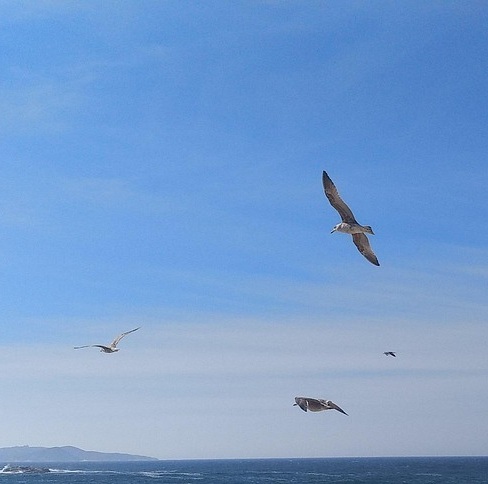
the ducks don’t think about us…
“…he looked ahead and saw a flight of wild ducks
etching themselves against the sky over the water,
then blurring, then etching again
and he knew no man was ever alone on the sea.”
from:
The Old Man and the Sea
Ernest Hemingway (1899-1961)
New York: Charles Scribner’s Sons, 1952
127 pages
pp. 60-61
* * * * * *
Copyright © Richard Carl Subber 2026 All rights reserved.
Book review: “Bartleby, the Scrivener”
Loneliness beyond understanding…
by Herman Melville
–
In other words: Poems for your eyes and ears with 64 free verse and haiku poems,
and the rest of my poetry books are for sale on Amazon (paperback and Kindle)
and free in Kindle Unlimited, search Amazon for “Richard Carl Subber”
* * * * * *

by Richard Subber | May 5, 2026 | Human Nature, Theater and play reviews
they figured it out…
Movie review:
An Officer and a Gentleman
This is a girl-gets-boy, boy-gets-girl kind of movie, with bells on.
Don’t waste a lot of time being thrilled and appalled by the harsh antics of basic military training—Louis Gossett Jr. won an Oscar for being the tough guy Sgt. Foley, but he is really background for Richard Gere slowly becoming an adult as the wannabe Navy pilot, Zack.
Zack almost without knowing it falls in love with Paula (Debra Winger), a townie who comes to need Zack in her life.
An Officer and a Gentleman (1982, rated R, 124 minutes) is a love story hiding in a coming-of-age movie about a boy and girl who finally figure out how to walk off together.
* * * * * *
Movie review. Copyright © Richard Carl Subber 2026 All rights reserved.
Book review: “The Gentle Boy”
The Puritans had a dark side…
by Nathaniel Hawthorne
–
As with another eye: Poems of exactitude with 55 free verse and haiku poems,
and the rest of my poetry books are for sale on Amazon (paperback and Kindle)
and free in Kindle Unlimited, search Amazon for “Richard Carl Subber”
* * * * * *
