
by Richard Subber | Apr 18, 2026 | Human Nature, Reflections, Tidbits
think it over…
“If all your life you endure
the consequences of a single deed,
then you cannot imagine life before it…”
from The Girl at the Lion d’Or
by Sebastian Faulks
New York: Vintage International/Vintage Books/A Division of Random House, Inc., 1989.
246 pages
p. 43
* * * * * *
Copyright © Richard Carl Subber 2026 All rights reserved.
Movie review: A Doll’s House
Henrik Ibsen’s classic on abuse…
–
My first name was rain: A dreamery of poems with 52 free verse and haiku poems,
and the rest of my poetry books are for sale on Amazon (paperback and Kindle)
and free in Kindle Unlimited, search Amazon for “Richard Carl Subber”
* * * * * *

by Richard Subber | Apr 16, 2026 | Book reviews, Books, Human Nature, Reflections
give your arm to a loved one…
Book review:
The Gifts of Imperfection:
Let Go of Who You Think You’re Supposed to Be
and Embrace Who You Are
by Dr. C. Brené Brown (b1965)
Center City, MN: Hazelden, 2010
135 pages
Dr. Brown offers this “tough lesson” from her life:
“How much we know and understand ourselves is critically important,
but there is something that is even more essential
to living a Wholehearted life: loving ourselves.”
This book moved me to think about changing the way I think about life, and my life.
Give yourself a gift: take time to read The Gifts of Imperfection and then D.I.G. into your life.
That is, start consciously thinking about wholehearted living and tell yourself a lot of truth, and then:
Get Deliberate about doing the right things for you, in all your glorious imperfections,
Get Inspired to acknowledge what you’re doing in all your loving relationships, and
Get Going, take the next steps in actually living a love affair with yourself and all you can be…
…and don’t mind if you stumble now and then, and give your arm to a loved one now and then…
…and have good intentions, and take the agony and the ecstasy as they come.
Quote is from The Gifts of Imperfection, p. xi.
* * * * * *
Book review. Copyright © Richard Carl Subber 2026 All rights reserved.
Book review: Colonial America
A Very Short Introduction
by Alan Taylor
–
Above all: Poems of dawn and more with 74 free verse poems,
and the rest of my poetry books are for sale on Amazon (paperback and Kindle)
and free in Kindle Unlimited, search Amazon for “Richard Carl Subber”
* * * * * *
by Richard Subber | Mar 31, 2026 | American history, Books, History, Human Nature, Politics, Power and inequality, World history
guns and germs…
Book review:
1491: New Revelations of the Americas Before Columbus
by Charles Mann
New York: Vintage Books, 2011
553 pages
Everything you never knew about civilized people in the Americas before the Europeans arrived and killed most of them (OK, many died in battle, but it was European diseases, mostly). Maybe close to 100 million “native” people died within 100 years or so of the “discovery” by Columbus…but hold on, this book is not about Wounded Knee-type criticism or ex post facto self-flagellation.
In 1491, Mann beautifully describes the marvelous sophistication of cultures, cities, agriculture, arts and science that blossomed in North America, Central America, and South America thousands of years ago, in many cases predating achievements and growth and civilization in Europe. Yes, the Incas never used the wheel except for children’s toys. And yes, the Mississippian city of Cahokia was a bustling port and a trading center with population equal to Paris in France—and that was 500 years before Columbus sailed.
And yes, there were grand cities (e.g., Cahokia) in the Americas before there was pyramid-building in Egypt. And yes, the Olmec culture in what is now Mexico invented the zero whole centuries before mathematicians in India did the same.
My recollection of schoolboy learning about the history of the Americas is that the dates and events were tied to discovery and conquest and colonization by Europeans. The implication was that, before the white men with guns, germs, and steel arrived, nothing much was going on in whole continents characterized more by “virgin land” and “endless wilderness” than by people who had agriculture, city life, art, trade, commerce, religion, science, kings, and philosophers.
Mann offers 1491: New Revelations of the Americas Before Columbus. For me, the joy of reading this book is learning about the multiplicity of cultures that flourished in the Americas, and learning how they tamed and managed and very greenly conserved their environment…and for me, the sad revelation of this book is understanding that the peoples of the Americas were human beings whose achievements were noble and notable, and yet, lamentably, their cultural legacies are largely lost and the losses are barely mourned.
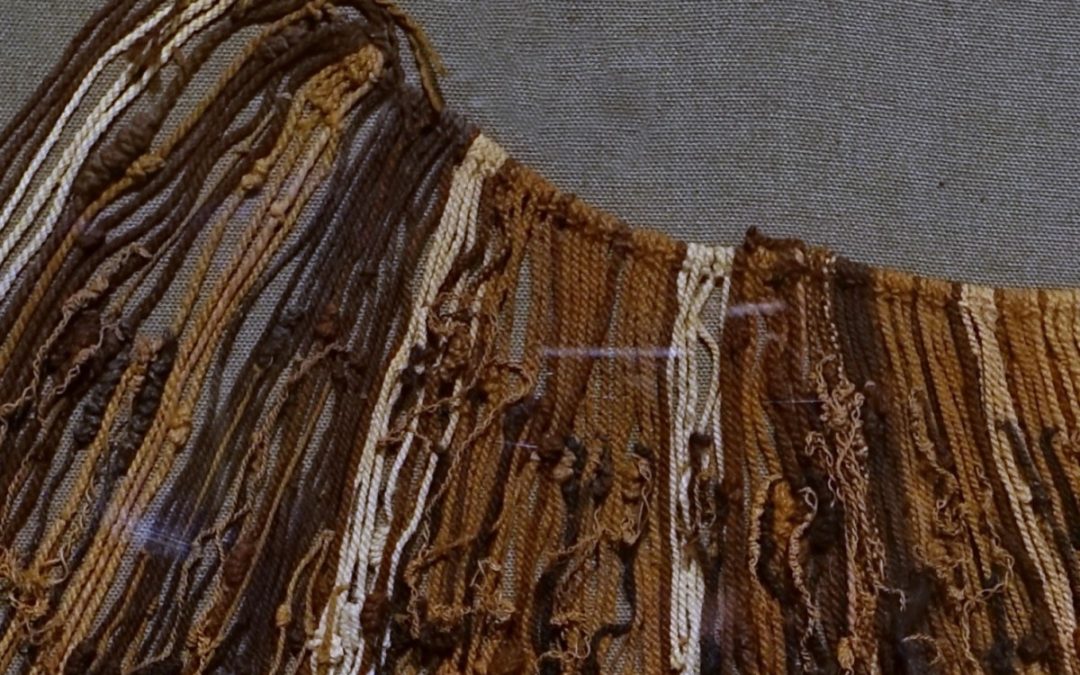
In 1533 Pizarro and his conquistadors at Cuzco precipitated the decline of the 300-year-old Inca empire in Peru. Fifty years later, the Spanish colonial administrators in Peru ordered the burning of all the Incan “khipu” knotted string records because they were “idolatrous objects.” Khipu were the Incas’ only form of writing. The smoke from the burning of their books gets in your eyes, forever and ever.
* * * * * *
Book review. Copyright © Richard Carl Subber 2026 All rights reserved.
Book review: Shantung Compound
They didn’t care much
about each other…
by Langdon Gilkey
–
Writing Rainbows: Poems for Grown-Ups with 59 free verse and haiku poems,
and the rest of my poetry books are for sale on Amazon (paperback and Kindle)
and free in Kindle Unlimited, search Amazon for “Richard Carl Subber”
* * * * * *
by Richard Subber | Mar 3, 2026 | Book reviews, Books, Human Nature
good and bad, a great story
Book review:
Strange Case of Dr Jekyll and Mr Hyde
by Robert Louis Stevenson (1850-1894)
Scottish novelist
141 pages
Originally published in 1886 as Strange Case of Dr Jekyll and Mr Hyde, this iconic novella was an immediate hit and sold 250,000 copies in the United States.
(Later publishers added “The” and punctuation to the title in a gratuitous fit of grammatical purity).
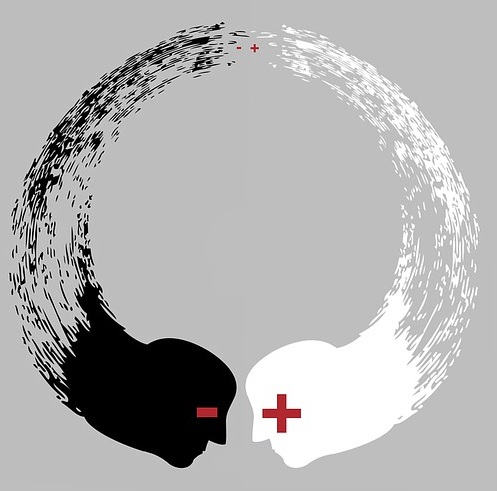
It’s a masterly drama and a quaint exploration of the Manichean theme of good and evil in man. In my most recent re-reading, Jekyll seems to be a much less respectable character than in my previous experience with this classic: he is weak, licentious and mostly unrepentant.
His alter ego, Hyde, is still a bad boy.
The narrator’s reflections on human nature are thoughtful and instructive.
* * * * * *
Book review. Copyright © Richard Carl Subber 2026 All rights reserved.
Old Friends (book review)
Tracy Kidder tells truth about old age…
–
Above all: Poems of dawn and more with 74 free verse poems,
and the rest of my poetry books are for sale on Amazon (paperback and Kindle)
and free in Kindle Unlimited, search Amazon for “Richard Carl Subber”
* * * * * *
by Richard Subber | Feb 26, 2026 | Democracy, Human Nature, Other, Power and inequality, Tidbits
tyranny, face up to it
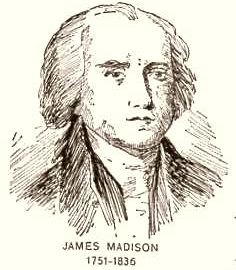
The wisdom of James Madison:
“If men were angels,
no government would be necessary….
Is there no virtue among us?—
If there be not, we are in a wretched situation.
No theoretical checks—
no form of government, can render us secure.”
James Madison was a potent voice in the political wrangling and public debate that preceded the ratification of the U. S. Constitution in June 1788.
He was an articulate supporter of the Constitution and a leader among the Federalists who favored creation of a national government with a broad range of federal powers that constrained the powers of the states.
Madison shared the fear of his educated elite contemporaries that the “tyranny of the majority” was a notably possible flaw in a system of government based on elected representatives of the people.
If Madison were alive today he might say something like:
“Forsooth, we never imagined it might turn out this bad. We must rally the true friends of the Republic.”
Source:
To Begin the World Anew: The Genius and Ambiguities of the American Founders
Bernard Bailyn, New York: Vintage Books, A Division of Random House, Inc., c2003, repr. 2004, 34.
* * * * * *
Book review. Copyright © Richard Carl Subber 2026 All rights reserved.
Book review: Tales from Shakespeare
summaries by Charles and Mary Lamb…
–
many waters: more poems with 53 free verse poems,
and the rest of my poetry books are for sale on Amazon (paperback and Kindle)
and free in Kindle Unlimited, search Amazon for “Richard Carl Subber”
* * * * * *
by Richard Subber | Feb 19, 2026 | Book reviews, Books, Human Nature, Joys of reading, Language
Faulks has so many words that mean “ache”…
Book review:
The Girl at the Lion d’Or
by Sebastian Faulks (b1953)
New York: Vintage International/Vintage Books/A Division of Random House, Inc., 1989.
246 pages
Sebastian Faulks writes about the vagaries of life, the daily choices in our lives, the uncountable futures, and the singularity of the past. We think we remember various pasts, and we may struggle to reconcile them.
In The Girl at the Lion d’Or, Faulks invites us to live in the minds of Hartmann and Anne. Sometimes the reader realizes that confusion is in their minds, usually their failures are clear enough, and their successes of the moments must be cherished for their bounty.
Richly Gallic, redolent of the interwar period in Europe, The Girl at the Lion d’Or is a cumulative revelation of Anne (the girl) and a steadily burdensome understanding of the sad hindrances in her life. She comes to love Hartmann, who is ultimately contemptibly weak and viciously temporizing.
I wanted to read faster near the end so I could learn the outcome, but I resisted the impulse.
Faulks makes it worthwhile to read every word. His prose is tenaciously literate and evocative; he has no mere words—he writes passages that invite the reader to understand deeply and to feel deeply.
* * * * * *
Book review. Copyright © Richard Carl Subber 2026 All rights reserved.
Book review: The Proud Tower
…a lot more than a history book…
by Barbara Tuchman
–
many waters: more poems with 53 free verse poems,
and the rest of my poetry books are for sale on Amazon (paperback and Kindle)
and free in Kindle Unlimited, search Amazon for “Richard Carl Subber”
* * * * * *
