by Richard Subber | Jun 5, 2021 | American history, Book reviews, Books, History, Human Nature, Politics
…the Irish weren’t the only ones…
Book review:
How the Irish Became White
by Noel Ignatiev (1940-2019)
American author and historian
New York: Routledge, 1995
Ignatiev offers enough detail and context to satisfy historians of every stripe.
For the less ambitious reader, there may be a bit more than she cares to know in How the Irish Became White.
Of course, I certainly don’t presume to summarize the author’s careful exposition in 233 pages.
If you really want to know more about how non-black immigrants allowed and persuaded themselves to buy in to the systemic racism that flourished in America since the 17th century, dig in to How the Irish Became White.
One sure point is: don’t pick on the Irish exclusively. They certainly weren’t alone in their transgressions.
* * * * * *
Book review. Copyright © Richard Carl Subber 2021 All rights reserved.
–
Above all: Poems of dawn and more with 74 free verse poems,
and the rest of my poetry books are for sale on Amazon (paperback and Kindle)
and free in Kindle Unlimited, search Amazon for “Richard Carl Subber”
* * * * * *

by Richard Subber | Jan 19, 2021 | Human Nature, Theater and play reviews
a first-class bad guy…
Movie review:
The Wind and the Lion (1975)
Candice Bergen as Mrs. Eden Pedecaris.
Sean Connery as Mulay Achmed Mohammed el-Raisuli, Lord of the Rif and Sultan to the Berbers.
In real life he was Mulai Ahmed er Raisuni (Raisuli) (1871-1925), a Sherif and Lord of the Rif in Morocco, a tribal leader and brigand, “the last of the Barbary pirates.”
The Wind and the Lion is a dramatic interpretation of a real incident in Morocco in 1904. The real Raisuli kidnapped an American, Ion “Jon” Hanford Perdicaris (1840-1925) and his stepson, and held the two for ransom. President Teddy Roosevelt sent U. S. marines to rescue the men. Ultimately, the government of Morocco paid the ransom and the men were released.
The movie is wonderfully dashing, and the brutal details are romantically minimized. The captive American, Candice Bergen, doesn’t quite fall in love with Sean Connery, but it seems to be a close call.
Connery, with all of his moustaches and flowing robes, is a first class bad-guy hero, and he has a good heart. He’s happy to get his money, but he’s sorry to say goodbye to Mrs. Pedecaris.
In the final scene, the Raisuli and his lieutenant, the Sherif of Wazan, are silhouetted on a high beach against the setting sun, and the Sherif plaintively declares “Great Raisuli, we have lost everything. All is drifting on the wind as you said. We have lost everything.”
Raisuli revives the heart throbs: “Sherif, is there not one thing in your life that is worth losing everything for?”
* * * * * *
Movie review. Copyright © Richard Carl Subber 2021 All rights reserved.
Book review: The Proud Tower
…a lot more than a history book…
by Barbara Tuchman
–
many waters: more poems with 53 free verse poems,
and the rest of my poetry books are for sale on Amazon (paperback and Kindle)
and free in Kindle Unlimited, search Amazon for “Richard Carl Subber”
* * * * * *
by Richard Subber | Aug 16, 2020 | Human Nature, Tidbits
resist the temptation…
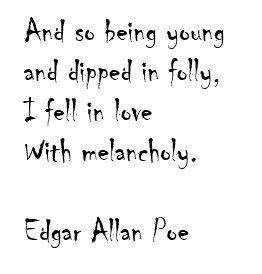
Edgar Allan Poe (1809-1849) offers much to like to so many people. I think his poetry is under-appreciated…and try reading “The Tell-Tale Heart” when you’re home alone some evening, and it’s nasty outside, and you would really prefer to feel pleasant inside, except you’re reading the masterpiece…
I confess, I only like the first half of Poe’s snippet about folly, you see, melancholy ain’t my thing…”dipped in folly” suggests the exotic and self-indulgent excess of youth, mostly not fatal because it’s usually hauled along by optimism and rescued once in a while by love, for which we may be endlessly thankful…
If you’re not personally in the youth category any more, be prepared to supply the love.
Let’s just keep pushing melancholy into the next county somewhere…
* * * * * *
Copyright © Richard Carl Subber 2020 All rights reserved.
Movie review: Same Time, Next Year
well, it’s all-American adultery, oh yeah…
–
Above all: Poems of dawn and more with 74 free verse poems,
and the rest of my poetry books are for sale on Amazon (paperback and Kindle)
and free in Kindle Unlimited, search Amazon for “Richard Carl Subber”
* * * * * *

by Richard Subber | Jun 29, 2020 | American history, History, Tidbits
“The Six Grandfathers”
It’s generally believed that Mt. Rushmore was an unremarkable pile of rock before the famous sculptures of presidents were done.
Gutzon Borglum and his son, Lincoln Borglum, did the work starting in 1927, and it was completed in 1941. The Borglums and their crews blasted more than 400,000 tons of stone off the face of the mountain in the Black Hills in Keystone, SD.
Here’s the unfamiliar back story: It wasn’t always called Mt. Rushmore (The granite bluff was named after Charles Rushmore, a wealthy New York lawyer, in 1885).
The Lakota Sioux name for the mountain had been “The Six Grandfathers” (Tȟuŋkášila Šákpe).
It’s too bad the federal government didn’t authorize carving their likenesses into the face of the bluff.
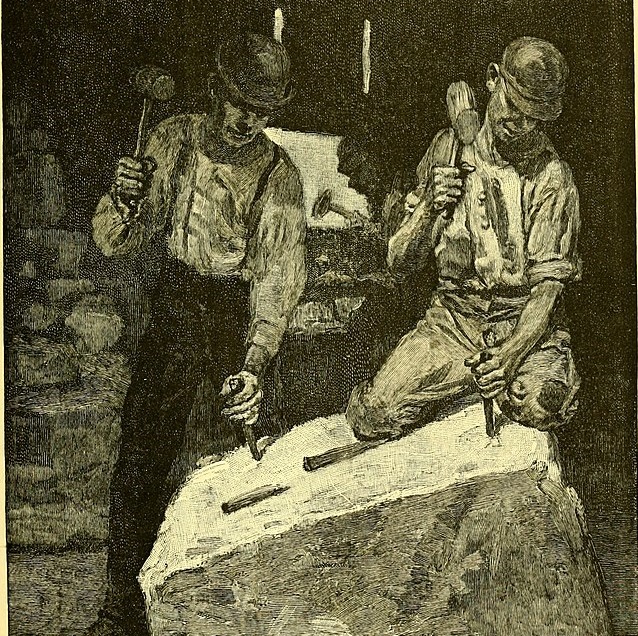
N.B. The image is of Mt. Rushmore in 1905.
* * * * * *
Copyright © Richard Carl Subber 2020 All rights reserved.
Book review: The Snow Goose
…sensual drama, it’s eminently poetic…
by Paul Gallico
–
As with another eye: Poems of exactitude with 55 free verse and haiku poems,
and the rest of my poetry books are for sale on Amazon (paperback and Kindle)
and free in Kindle Unlimited, search Amazon for “Richard Carl Subber”
* * * * * *
by Richard Subber | Nov 20, 2019 | Book reviews, Books, Human Nature
The language is Dickens, the humanity is Melville…
“Bartleby, the Scrivener: A Story of Wall Street”
A short story by Herman Melville (1819-1891)
First published 1853 in Putnam’s Magazine, and later in Melville’s The Piazza Tales in 1856
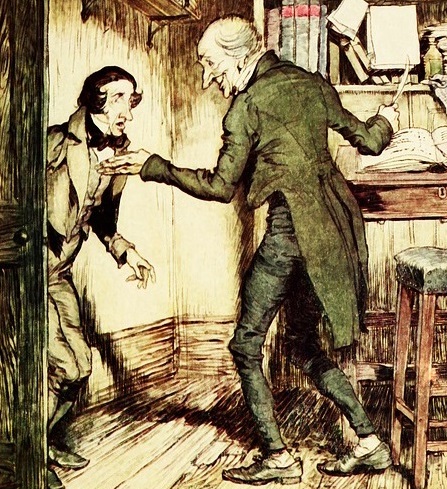
If you can read “Bartleby” without suspecting, nay, without more or less believing that it was written by Dickens, you can take pride in your mental discipline whilst reading. I wanted to read it again, and I confess that I briefly searched for “Bartleby” in my rumpled collection of Dickens, which of course does not include The Piazza Tales.
None of Melville’s notorious South Sea elements here. This is straightforward, 19th century prose set in 19th century Wall Street with shabby, luridly eccentric antebellum characters including the narrator and his bedeviled scrivener (copyist), Bartleby.
The circumstances of this desiccated short story are curious, even eccentric, incredulous. The withered and aloof Bartleby is presented, examined,and disdained, until his very dispirited isolation makes him the object of the narrator’s genuine but increasingly troubled caretaking.
Bartleby’s enervating and apparently desperate ennui keeps him always a step removed from the narrator’s efforts to create a little humanity in his life.
The scrivener is lonely beyond understanding. He bears almost in silence the emotional poverty that ultimately kills him.
The reader understands that Bartleby longed, in vain, to be able to repel the Reaper with his simple and inscrutable refrain: “I would prefer not to.”
Despite all temptation, I will prefer not to re-read Melville’s tale on a dreary afternoon.
* * * * * *
Book review. Copyright © Richard Carl Subber 2019 All rights reserved.
Book review: To Serve Them All My Days
by R. F. Delderfield
A beloved teacher,
of course you know this story…
–
Above all: Poems of dawn and more with 74 free verse poems,
and the rest of my poetry books are for sale on Amazon (paperback and Kindle)
and free in Kindle Unlimited, search Amazon for “Richard Carl Subber”
* * * * * *
by Richard Subber | Aug 30, 2019 | Book reviews, Books, Human Nature, Tidbits
Think about your own well-being…
Here’s one for your reading list
Tribe: On Homecoming
and Belonging
by Sebastian Junger
In his Introduction, Junger says:
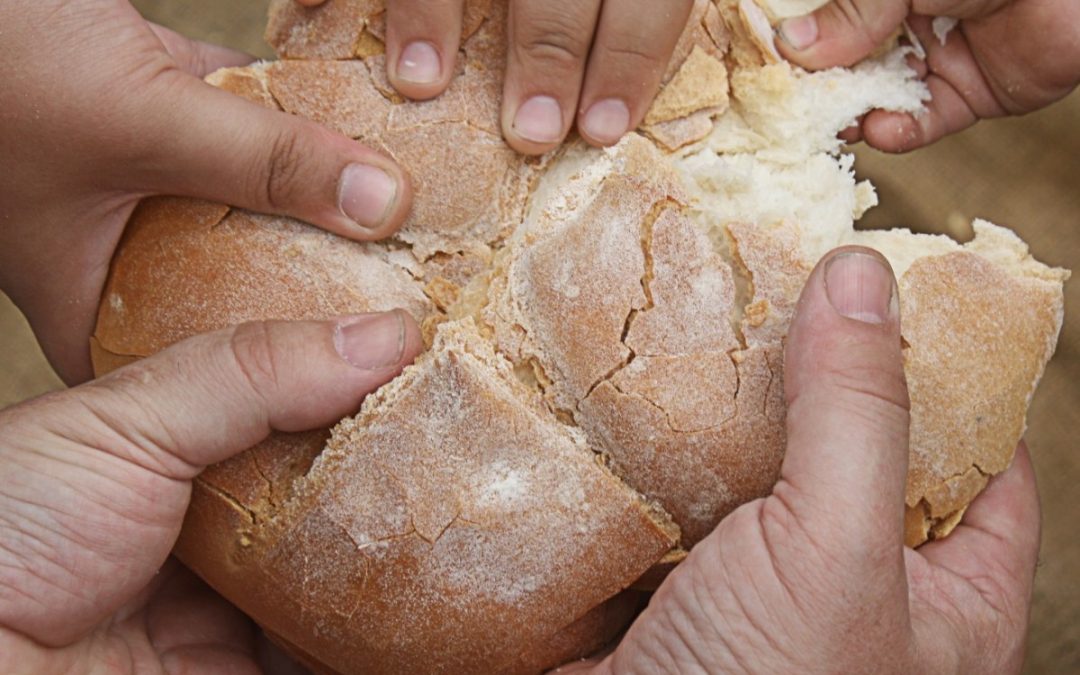
“Robert Frost famously wrote that home is the place where, when you have to go there, they have to take you in. The word ‘tribe’ is far harder to define, but a start might be the people you feel compelled to share the last of your food with…
Tribe is about why [treating someone like a member of your tribe] is such a rare and precious thing in modern society, and how the lack of it has affected us all. It’s about what we can learn from tribal societies about loyalty and belonging and the eternal human quest for meaning.”
It doesn’t take him too long to get right to the point, quoting from a 2012 journal article:
“The economic and marketing forces of modern society have engineered an environment…that maximize[s] consumption at the long-term cost of well-being. In effect, humans have dragged a body with a long hominid history into an overfed, malnourished, sedentary, sunlight-deficient, sleep-deprived, competitive, inequitable, and socially-isolating environment with dire consequences.”
Here’s the thing: if you read that last sentence without saying some of the words right out loud, maybe twice, with feeling and with some awareness of despair, well, maybe you should grab the CliffsNotes version and save yourself some time.
Sebastian Junger, Tribe: On Homecoming and Belonging, New York: Twelve/Hachette Book Group, 2016, xvi-xvii, 23.
* * * * * *
Book review. Copyright © Richard Carl Subber 2017 All rights reserved.
–
Book review: Lord of the Flies
It was never more relevant…
by William Golding
–
My first name was rain: A dreamery of poems with 52 free verse and haiku poems,
and the rest of my poetry books are for sale on Amazon (paperback and Kindle)
and free in Kindle Unlimited, search Amazon for “Richard Carl Subber”
* * * * * *
