Book review: The Financier

Book review: The Financier

channeling Gordon Gekko…


Book review:

The Financier


by Theodore Dreiser (1871-1945)

First published 1912, Harper and Bros., New York.


The Financier was written before its time.

It’s just amazing that Dreiser wrote this gritty novel in 1912, before anyone even thought of derivatives, credit default swaps, sub-prime “liar loan” mortgages, no-fault (for bankers and brokers, that is) national financial meltdowns, and politically-motivated government shutdowns. Frank Cowperwood is the ethically-challenged “financier” whose star and fortunes rise so marvelously and then collapse with equal flare. He seems so absolutely convincingly contemporary that I had recurring transient episodes of reverse déjà vu as I learned about his desperate ambition and burnout.

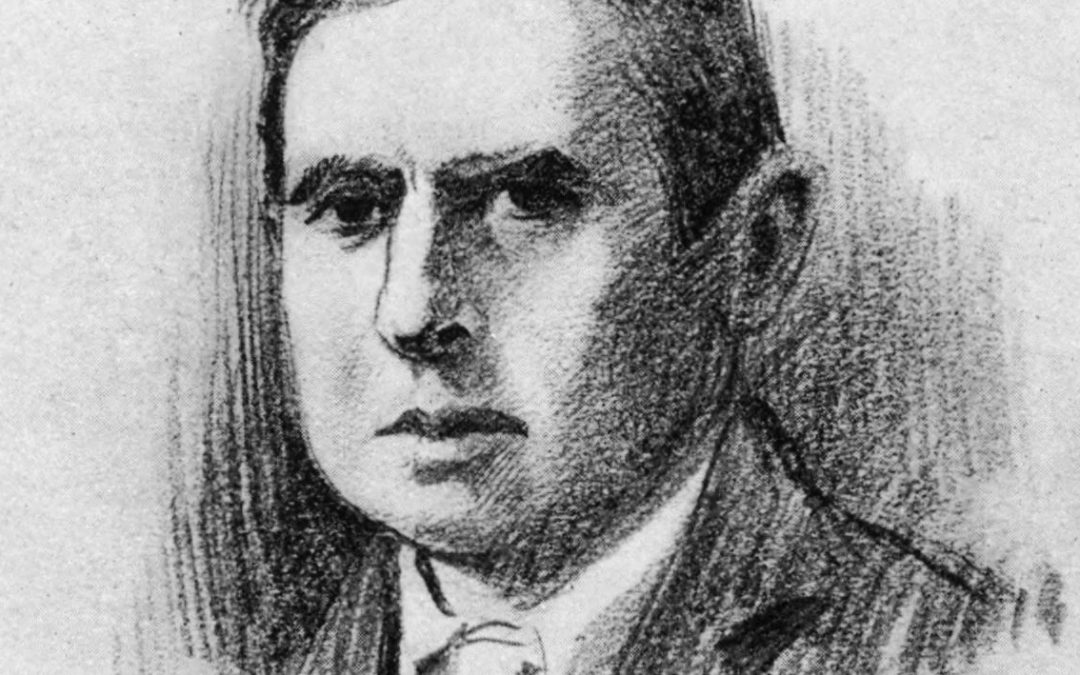
Frank is a first-rate villain in The Financier. He burns his friends and enemies with equal disdain, he channels Gordon Gekko with suitably theatrical energy, and he is most deliciously unrepentant when his schemes go awry, his loans get called, and then his empire crashes around him.

I guess that I must emphasize “deliciously unrepentant” because, unlike the contemporary villainous free spirits of Wall Street, Frank promptly goes to jail for his crimes.

The Financier so obviously is the kind of novel that might be written by a baroque clone of Michael Lewis. If you’d like to work out a bit of the residual rage you feel about the man-made financial cesspool we wallow in, then try this American classic.

*   *   *   *   *   *

Book review. Copyright © Richard Carl Subber 2018 All rights reserved.

Writing Rainbows: Poems for Grown-Ups with 59 free verse and haiku poems,
and the rest of my poetry books are for sale on Amazon (paperback and Kindle)
and free in Kindle Unlimited, search Amazon for “Richard Carl Subber”

*   *   *   *   *   *

Follow Rick on Facebook

Thoughtful book reviews by Rick Subber

Nothing Found

Book review: Lafayette by Harlow Unger

Book review: Lafayette by Harlow Unger

A hero, not a saint


Book review:

Lafayette


by Harlow Giles Unger (b.1931)

Hoboken, NJ: John Wiley & Sons, Inc., 2002

452 pages


I acknowledge the obvious: Unger fully entertains in recounting that Marie-Joseph-Paul-Yves-Roch-Gilbert du Motier de la Fayette was a national, military, political and, indeed, a paternal hero to millions in America and France during the American and (several) French revolutions.

There is no doubt that, despite the fact that he was one of the richest French nobles of his time, Lafayette was publicly and privately dedicated to republican government and a social/economic order that was far more egalitarian than the monarchical and aristocratic structures that prevailed.

Was he a great man? Unger, like many of his biographers, says yes. Lafayette was a courageous battlefield leader, he was an enlightened manorial lord who enhanced the lives of his peasants, and he was both outspoken and fearless, repeatedly, in literally dangerous political situations for a couple decades in Revolutionary and Napoleonic France. Unger amply—even poetically—demonstrates these lifelong characteristics of the man Americans called “our Marquis.”

I also feel obliged to call attention to some countervailing factors that Unger fully describes but does not adequately interpret.

Lafayette put his money where his mouth was. He repeatedly used his great personal wealth to pay and outfit the troops he commanded, when government funds and supplies ran low. I suggest a case could be made that the Marquis, uniquely among American commanders, paid for his military success in the Revolutionary War. Throughout the war, the options and operations of colonial commanders were significantly hindered by short funds and short supplies. If Lafayette had not been able to pay, feed, clothe, and arm his troops with his personal resources, could he have been as winning a general as he was? I suspect the answer is “No.”

Some biographers refer to Lafayette as the “victor” at Yorktown in 1781. Unger calls him a “hero” of Yorktown. Lafayette was not the only American general at Yorktown, and he wasn’t the only French general. Lafayette did use his small force to isolate Cornwallis in Yorktown, but he had to wait until Washington, Rochambeau and others arrived with sufficient forces before he participated in the final assaults.

In France he repeatedly declined to step up to the plate and take executive leadership, during the revolutionary and Napoleonic convulsions, when the French people and the contentious military/political factions would have handed the throne or the presidency of France to him on a velvet pillow. The Marquis repeatedly risked his life to defuse explosive situations by his personal, courageous intervention. However, Unger fastidiously details Lafayette’s repeated reluctance to take the final step and take control when, arguably, he could have stabilized dangerous situations, and forestalled or prevented catastrophic consequences. Lafayette wasn’t responsible for the violence, but, time after time, he left a void that unfortunately was filled by lesser men.

Was Lafayette a great man? Yes. A successful general? Yes. Was he a really lucky guy? Yes. Did he and his reputation benefit immensely from great wealth and fortuitous circumstances? Yes. Did he live up to his potential in serving France and the French nation? Maybe not.

There’s just one other thing: Unger profligately demonstrates that Lafayette and Washington had a deeply affectionate man-to-man—explicitly, like father and son—relationship, by using far too many excerpts from their numerous letters. It’s no biggie, but I had to stop reading them about halfway through the book…they bonded, I get it.

*   *   *   *   *   *

Book review. Copyright © Richard Carl Subber 2018 All rights reserved.

As with another eye: Poems of exactitude with 55 free verse and haiku poems,
and the rest of my poetry books are for sale on Amazon (paperback and Kindle)
and free in Kindle Unlimited, search Amazon for “Richard Carl Subber”

*   *   *   *   *   *

Follow Rick on Facebook

Thoughtful book reviews by Rick Subber

Nothing Found

Book review: Saint Joan

Book review: Saint Joan

Shaw’s calm dissection

      of the myths…


Book review:

Saint Joan


by George Bernard Shaw

Baltimore, MD: Penguin Books, 1964

159 pages, with extended Preface by Shaw and Epilogue


I read Saint Joan as a high school kid in 1964. I don’t remember much about that reading, except that I never forgot these words that Shaw wrote for his Joan: “I cannot bear to be hurt.”

It always seemed to me that Jehanne d’Arc (c1412-1431) could be the symbol of an innocent, profoundly driven young woman who was victimized by events that made a sweep in history, yet had only personal inspiration for her.

Joan of arc drawing wikimedia 1429 Contemporaine_afb_jeanne_d_arc

Sketch of Joan from life, 1429

In France, Joan is familiar as “the maid.” Did “la pucelle d’Orléans” (the maid of Orleans) really see and hear the Archangel Michael, St. Margaret, and St. Catherine? Who knows? Was Jehanne a religious nutcase who made confession every day and liked to play soldier? Who knows? Did she inspire great and not-so-great men to do mighty and courageous things in the service of their masters and for the glory of France? She did.


Shaw’s lengthy Preface to his play is a calm dissection of the myths and reality of this young woman, a noble and pitiable mover-and-shaker who led French armies to victory and who was burned at the stake for heresy and for cross-dressing. In Saint Joan, Shaw has few kind words for the men who resisted, accepted, honored, used, betrayed, burned, and finally beatified a peasant girl from Domrémy-la-Pucelle in northeastern France.

The folks in her home town finally named the village for her in 1578. You could say it was the least they could do while they were waiting for the Catholic church to make her a saint in 1920.


Shaw’s sympathetic treatment of The Maid inspired me to write this poem:


la pucelle


Joan, Joan, Joan…

O, you trusted your dream,

you thought it was enough to heed your voices,

you thought that God was on your side

and nothing else mattered,

you risked your beautiful soul

to save France,

and you didn’t understand

that too many of the men wanted

to win something else,

you went to the fire believing

in an eternity of goodness,

and you never knew

how little of your dream was left

for the people who loved you.


October 22, 2018

Inspired by George Bernard Shaw’s Saint Joan

My poem “la pucelle” was published in my fourth collection of 55 poems, As with another eye: Poems of exactitude. You can buy it on Amazon (paperback and Kindle), or get it free in Kindle Unlimited (search for “Richard Carl Subber”)

*   *   *   *   *   *

Book review. My poetry. Copyright © Richard Carl Subber 2018 All rights reserved.


As with another eye: Poems of exactitude with 55 free verse and haiku poems,
and the rest of my poetry books are for sale on Amazon (paperback and Kindle)
and free in Kindle Unlimited, search Amazon for “Richard Carl Subber”

*   *   *   *   *   *

Follow Rick on Facebook

Thoughtful book reviews by Rick Subber

Nothing Found

A tempest in a prison

A tempest in a prison

Alas, Atwood didn’t use

   Shakespeare’s pen


Book review:

Hag-Seed


by Margaret Atwood, New York: Hogarth Shakespeare, Crown Publishing Group, 2016


I’m not a fan of writers who write books that are imitations or re-interpretations of other writers’ work. Hag-Seed is a case in point. Let’s be fair. Shakespeare’s plays are complex assemblages of characters, speeches and plots. Atwood’s work, nominally based on The Tempest, has the same characteristics.

Her prose and dialogue are ordinary, for my taste. Her story is about as far as one can get from magical. Of course a reader can figure out which of her characters is aligned with Shakespeare’s Prospero and Caliban and Miranda and so on. Of course a reader can see a transparent image of Shakespeare’s plot.

For my taste, Hag-Seed is an awkward, deliberately mean, and desperately inelegant version of The Tempest.

Cut loose from the Shakespeare connection, Hag-Seed is low-grade storytelling. IMNSHO.

*   *   *   *   *   *

…and now for something completely different:


Hag-seed


Their hands are busy, rhythmic moves,

the three bend in to pace their work,

all hunched, with withered, trembling hands,

with eyes alert,

and silent lips that need not speak

the thoughts they share.


These crones engage each day to toil,

they do not keep a pot a-boil…

but a warming fire, as they need.

From different skeins

they draw their custom works in needled plait,

these hags intent on what’s in hand,

and hushed in awe of what’s at hand,

they huddle, each to each,

all cloaked in drab and drear,

their plainest miens

betray the luminous welling of their keenest joy,

and one of them, in blooming,

swells the hearts of all.


A spark of expectation lights and lightens

the artful labor of their crabbed fingers,

grasping small things of great portent—

a tiny cap, a shawl, a swaddling robe—

for the child to be born.


In waiting they are ladies

bound in common by certainty

and their exaltation

in believing that the babe will be a girl—

a budding rose without a thorn.


January 29, 2017

My poem “Hag-seed” was published January 23, 2018, in my second collection of 47 poems, Seeing far: Selected poems. You can buy it on Amazon (paperback and Kindle), or get it free in Kindle Unlimited, search for “Richard Carl Subber”

It’s easy to remember the sauce

(my nature poem)

“Debut”

click here


The Reader (Der Vorleser)

Not just a rehash of WWII…

by Bernhard Schlink

click here

I offer my kind of thoughtful book summary above. I write a serious review about almost every book I read. You can read other reviewers to get a detailed summary of what the book offers, and to learn specifics about the characters and plot. My reflective commentary is stimulated by the contents and the overall impact of the book, be it a love story or a history or a treatise or classic literature… Generally, I don’t have to post a spoiler alert. I’ll tell you about aspects of the book—the good, the bad, and the ugly—that make it exceptional. I’ll give you something to think about.

Your comments on my poems, book reviews and other posts are welcome.

Book review. My poetry. Copyright © Richard Carl Subber 2018 All rights reserved.

My first name was rain: A dreamery of poems with 52 free verse and haiku poems,
and the rest of my poetry books are for sale on Amazon (paperback and Kindle)
and free in Kindle Unlimited, search Amazon for “Richard Carl Subber”

Follow Rick on Facebook

Thoughtful book reviews by Rick Subber

Nothing Found

Oops, Columbus didn’t “discover” America

Oops, Columbus didn’t “discover” America

America was already

    an “old world”…


October 12, 2025, was the 533rd anniversary of the “discovery” of “the New World” by Christopher Columbus.

Columbus and his men made landfall in the Bahamas, possibly on what is now called San Salvador Island, on October 12, 1492. You may know the song: “the Nina, the Pinta, the Santa Maria, were sailing vessels three…”

Let’s cut to the chase: Columbus never “discovered” America. He never saw the North American continent, much less set foot on it. Columbus made four voyages across the Atlantic Ocean and did a lot of snooping around the Caribbean islands and the northern coast of South America.

An adventurer named Juan Ponce de León gets the teddy bear for being the first European to wade ashore on the coastline of what is now the continental United States. He explored the coast of a land mass that he named “Florida” more than 20 years after the first Columbus gig—on April 2, 1513, de León and his men landed (possibly at the place we now call St. Augustine) and claimed the territory for Spain.

Of course, the Europeans were late to the party.

At least millions of native Americans—probably tens of millions—had been living on the North American continent for thousands of years before the smelly, hairy white men from Europe barged in.

*   *   *   *   *   *

Copyright © Richard Carl Subber 2018 All rights reserved.


Book review: American Colonies

you see, so many and so much

    came before the Pilgrims

by Alan Taylor

click here

My first name was rain: A dreamery of poems with 52 free verse and haiku poems,
and the rest of my poetry books are for sale on Amazon (paperback and Kindle)
and free in Kindle Unlimited, search Amazon for “Richard Carl Subber”

 *   *   *   *   *   *

Follow Rick on Facebook

Thoughtful book reviews by Rick Subber

Nothing Found

Pin It on Pinterest