
by Richard Subber | May 12, 2024 | Book reviews, Books, History, Human Nature, Power and inequality, World history
energy is the bottom line…
Book review:
Foragers, Farmers, and Fossil Fuels:
How Human Values Evolve
by Ian Morris
Princeton, NJ: Princeton University Press, 2015
Contributors:
Richard Seaford
Jonathan D. Spence
Christine M. Korsgaard
Margaret Atwood
369 pages
Ian Morris says right up front that not everyone thinks he’s got it exactly right, but his story is an eye opener: how are human values and moral norms related to how human beings use energy?
Human beings need energy to survive, and obviously we need sources of energy.
The first human-like hunter-gatherers used energy that they could kill or pick up, and the first farmers planted their energy sources and domesticated a few animals, and now we depend (fatally?) on fossil fuel energy to live our lives.
Morris explains (attributes causes for) the different ways of “capturing” energy that are connected to how we feel about ourselves and how we deal with others.
If you think you’re satisfied with what you know about your code of values and the “do unto others…” stuff, then read Foragers, Farmers, and Fossil Fuels and learn some actual new stuff.
* * * * * *
Book review. Copyright © Richard Carl Subber 2024 All rights reserved.
Book review: The Map of Knowledge
it’s a slo-mo version of Fahrenheit 451
by Violet Moller
My first name was rain: A dreamery of poems with 52 free verse and haiku poems,
and the rest of my poetry books are for sale on Amazon (paperback and Kindle)
and free in Kindle Unlimited, search Amazon for “Richard Carl Subber”
* * * * * *

by Richard Subber | Apr 14, 2024 | American history, Book reviews, Books, Democracy, History, Human Nature, Politics, Power and inequality
the American crisis…
Book review:
Twilight of the Elites: America After Meritocracy
by Christopher Hayes
New York: Crown Publishers, 2012
292 pages
Twilight of the Elites is a frightening assessment of our culture, our government—our civitas.
“We are in the midst of a broad and devastating crisis of authority” (p. 13). You bet we are—and Hayes was writing before Trump was even a speck in your eye.
Americans embrace the American Dream, the Horatio Alger thing, that is, meritocracy: the acceptance and endorsement of the goodness of the idea that we should help ourselves to prosper and be successful, and that those among us with the greatest talent and strength and ambition should enjoy greater prosperity and greater success. It is an article of faith among most Americans that the cream will rise to the top, and deservedly so. Honest hard work will and should be rewarded. One of Hayes’ definitions of a benign meritocracy is “the aristocracy of talent.”
An obvious characteristic of meritocracy, of course, is inequality. “It is precisely our collective embrace of inequality that has produced a cohort of socially distant, blinkered, and self-dealing elites. It is those same elites who have been responsible for the cascade of institutional failure that has produced the crisis of authority through which we are now living…the consistent theme that unites [these failures] is elite malfeasance and elite corruption” (pp. 22-23). This acceptance of the meritocracy mythology “allows everyone to imagine the possibility of deliverance [from unfavorable circumstances], to readily conjure the image of a lavish and wildly successful future” (p. 47).
Hayes points out, however, that “a deep recognition of the slow death of the meritocratic dream underlies the decline of trust in public institutions and the crisis of authority in which we are now mired. Since people cannot bring themselves to disbelieve in the central premise of the American dream, they focus their ire and skepticism instead on the broken institutions it has formed” (p. 63). There is ample attention to the dreadful failure of the media, among other institutions, to sustain our communal understanding and respect for facts and the truth.
A suggestion about one possible agent of positive change identifies a “radicalized upper middle class” that bridges the liberal-conservative division, and forces accountability on our institutions of government, justice, education and finance. Hayes imagines “a crisis…necessary upheaval and social transformation,” and acknowledges the obvious: those with power never want to give it up.
Twilight reminds us that the ultra-wealthy, ultra-powerful 1% will hang on to what they’ve got—and keep trying to get more—until their reality changes.
Hayes tells many truths about the devastation that wracks American culture and most Americans, because the myth of the American dream is enabling a tiny elite to amass wealth and power, and use both to corrupt our society.
Americans must accept the frightening hardships
of a sincere commitment to change things.
Let’s get started.
* * * * * *
Book review. Copyright © Richard Carl Subber 2024 All rights reserved.
Book review: Tales from Shakespeare
summaries by Charles and Mary Lamb…
Seeing far: Selected poems with 47 free verse and haiku poems,
and the rest of my poetry books are for sale on Amazon (paperback and Kindle)
and free in Kindle Unlimited, search Amazon for “Richard Carl Subber”
* * * * * *
by Richard Subber | Jan 9, 2024 | Book reviews, Books, Human Nature, Joys of reading
a sustaining emotional roadmap…
Book review:
The Woman at the Washington Zoo:
Writings on Politics, Family, and Fate
by Marjorie Williams (1958-2005)
Timothy Noah, ed.
New York: PublicAffairs, Perseus Books Group, 2005
358 pages
I wish I had known about Marjorie Williams’ work when she was an active staff writer at The Washington Post.
She had a pungent, penetrating style, and she carefully offered reasoned judgment as well as what we can nostalgically think of today as “facts.”
In The Woman at the Washington Zoo, her personal memoirs about her life and her cancer are wholly human, and they remain as a sustaining emotional roadmap for an engaged reader.
* * * * * *
Book review. Copyright © Richard Carl Subber 2024 All rights reserved.
“…and dipped in folly…”
only Poe knows how to say it…
Writing Rainbows: Poems for Grown-Ups with 59 free verse and haiku poems,
and the rest of my poetry books are for sale on Amazon (paperback and Kindle)
and free in Kindle Unlimited, search Amazon for “Richard Carl Subber”
* * * * * *
by Richard Subber | Dec 24, 2023 | American history, Book reviews, Books, History
strange men are shooting…
Book review:
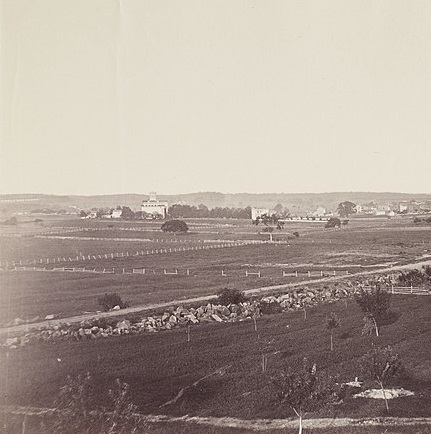
The Diary of a Lady of Gettysburg, Pennsylvania
From June 15 to July 15, 1863
by Pennsylvania Lady of Gettysburg
Ithaca, NY: The Cornell University Library Digital Collections, 2023
29 pages
There is not much fireworks in The Diary of a Lady of Gettysburg, Pennsylvania.
Rather, this largely muted account of a civilian lady in Gettysburg during the famous battle is a compelling tribute to the civilians and combatants who unhappily endured the terrible fighting and killing that could have effectively ended the American Civil War, but didn’t.
A devastating insight into the civilians’ prolonged stress and suffering is this: during most of the battle, they really didn’t know very much about what was going on. The civilians who stayed in the town (most of them) repeatedly hunkered down in their cellars and waited until the artillery bombardments ceased. The civilians repeatedly talked with both Union and Confederate soldiers who were in or moving through the town. The civilians, in the main, tried to care for the wounded men of both sides who happened to be nearby.
The battle of Gettysburg was terrifying for the civilian residents of the town, and, luckily for them, it didn’t last too long.
Try to imagine hiding in your house for four or five days, desperately wondering what’s going on, while strange men are walking and running through the streets, shooting at everything, and cannon balls are hitting buildings every so often.
* * * * * *
Book review. Copyright © Richard Carl Subber 2023 All rights reserved.
Book review: The Sea Runners
…it informs, but it does not soar…
by Ivan Doig
In other words: Poems for your eyes and ears with 64 free verse and haiku poems,
and the rest of my poetry books are for sale on Amazon (paperback and Kindle)
and free in Kindle Unlimited, search Amazon for “Richard Carl Subber”
* * * * * *

by Richard Subber | Nov 23, 2023 | Book reviews, Books, Poetry, Reviews of other poets
her words are arrows…
Book review:
Evidence
by Mary Oliver (1935-2019)
Boston: Beacon Press, 2009
74 pages
Guilty, guilty, guilty. With Evidence, Mary Oliver is guilty once again of nailing me to the floor so I can read every single poem in her book, one after the other.
Her style encourages me to think that I can write more and better poetry, because she makes it seem so easy to choose the right words, in the right order. Mary speaks straight from her heart, she uses exacting words as arrows to find precise targets in vision and imagination, and she leaves out all the other stuff.
Despite the mountain of her years, we have Evidence: Mary Oliver climbed to the highest branches. Here’s an excerpt from “About Angels and About Trees”:
“…what I know is that
they rest, sometimes,
in the tops of the trees
and you can see them,
or almost see them,
or, anyway, think: what a
wonderful idea…
The trees, anyway, are
miraculous, full of
angels…and certainly
ready to be
the resting place of
strange, winged creatures
that we, in this world, have loved.”
* * * * * *
Book review. Copyright © Richard Carl Subber 2023 All rights reserved.
Above all: Poems of dawn and more with 74 free verse poems,
and the rest of my poetry books are for sale on Amazon (paperback and Kindle)
and free in Kindle Unlimited, search Amazon for “Richard Carl Subber”
* * * * * *
by Richard Subber | Nov 16, 2023 | Book reviews, Books, Joys of reading
a new take on the Western…
Book review:
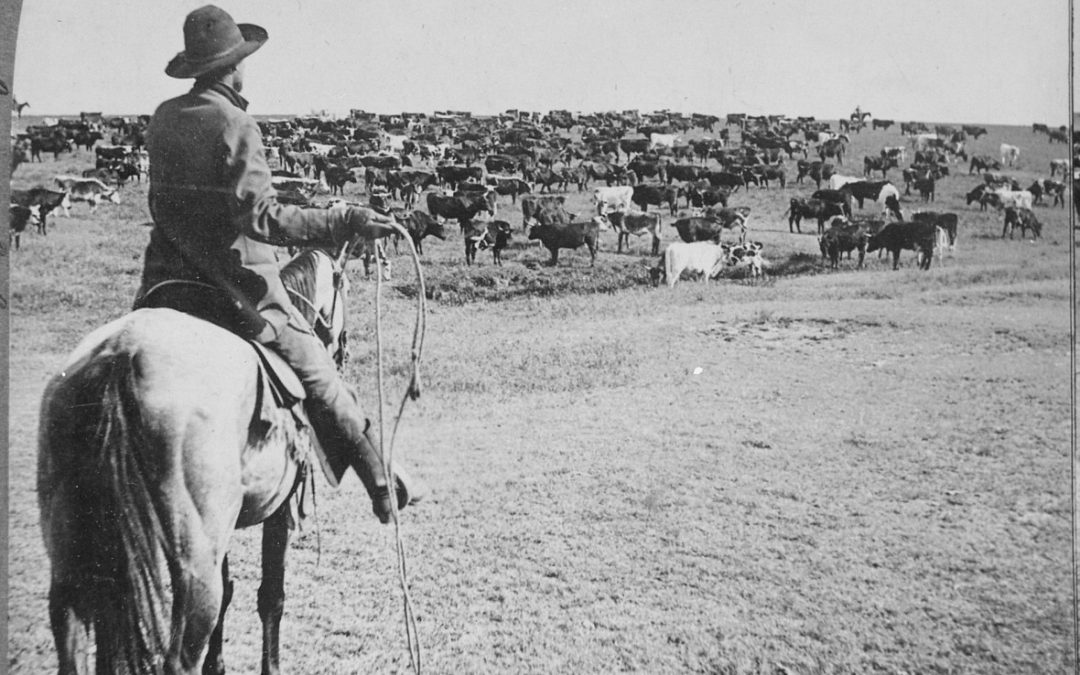
The Complete Western Stories of Elmore Leonard
New York: William Morris, an imprint of HarperCollinsPublishers, 2004
528 pages
I’m late to the game of reading Elmore Leonard, and I confess right here that I’m not a big fan of the broadly defined “Western” genre, excepting of course the “must reads” like “The Outcasts of Poker Flat” and “To Build a Fire” and “The Call of the Wild.”
Even so, I’m engaged with Leonard’s short story style, and I plan to return to The Complete Western Stories of Elmore Leonard—his 30 Western shorts including possibly familiar titles like “Three-Ten to Yuma” and “Moment of Vengeance” and “Only Good Ones.”
The prose is direct, realistic, and dialogue-rich, and there is legitimate suspense that gives individuality to each story.
Try a few.
* * * * * *
Book review. Copyright © Richard Carl Subber 2023 All rights reserved.
–
My first name was rain: A dreamery of poems with 52 free verse and haiku poems,
and the rest of my poetry books are for sale on Amazon (paperback and Kindle)
and free in Kindle Unlimited, search Amazon for “Richard Carl Subber”
* * * * * *
